Local
What court reporters do, and how transcripts get made
Meet in Common connects news with real conversations. Use ThinkMatch to arrange a Roundtable and meet people to discuss this story.
Source: Daily Detective News
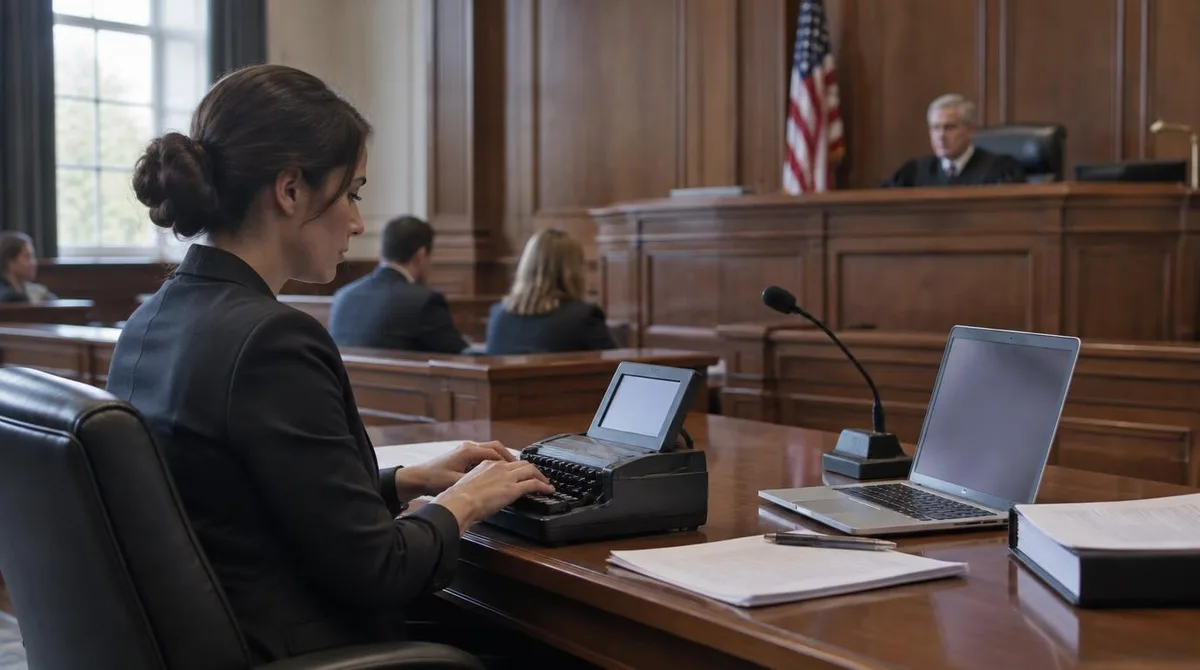
A court reporter makes the official record of a court proceeding. The reporter takes down testimony word for word as it is spoken. The certified written transcript follows, made on request. Federal law requires a verbatim record of what is said in court. The tools are shorthand, stenotype, stenomask, or a sound recorder, and the district judge picks. The job sits at the center of how courts remember. Appeals, sentencing, and daily case management all run on the transcript. None of it works by memory alone. Rules govern what the record looks like years later, and those rules are public. What must a court reporter record? Federal law answers this directly. The Court Reporter Statute, 28 U.S.C. Section 753, lists what must be recorded, per the federal courts' published guidance. It covers every session of a criminal case held in open court. It also covers open-court sessions in other cases, unless the parties and the judge agree otherwise. A judge can add any session by rule or order.
This excerpt comes from the named source. Read the original for the full reporting.
Read the original at Daily Detective News


