Local
What if Tribal Nations wrote their own Declaration of Independence?
A Roundtable is a way to meet new people and discuss this article in person at a local coffee shop or other venue.
Roundtables are designed for groups of four, with a shared subject and room for everyone to speak. Come for discussion, with no dating expectation.
Source: Lakeville Journal
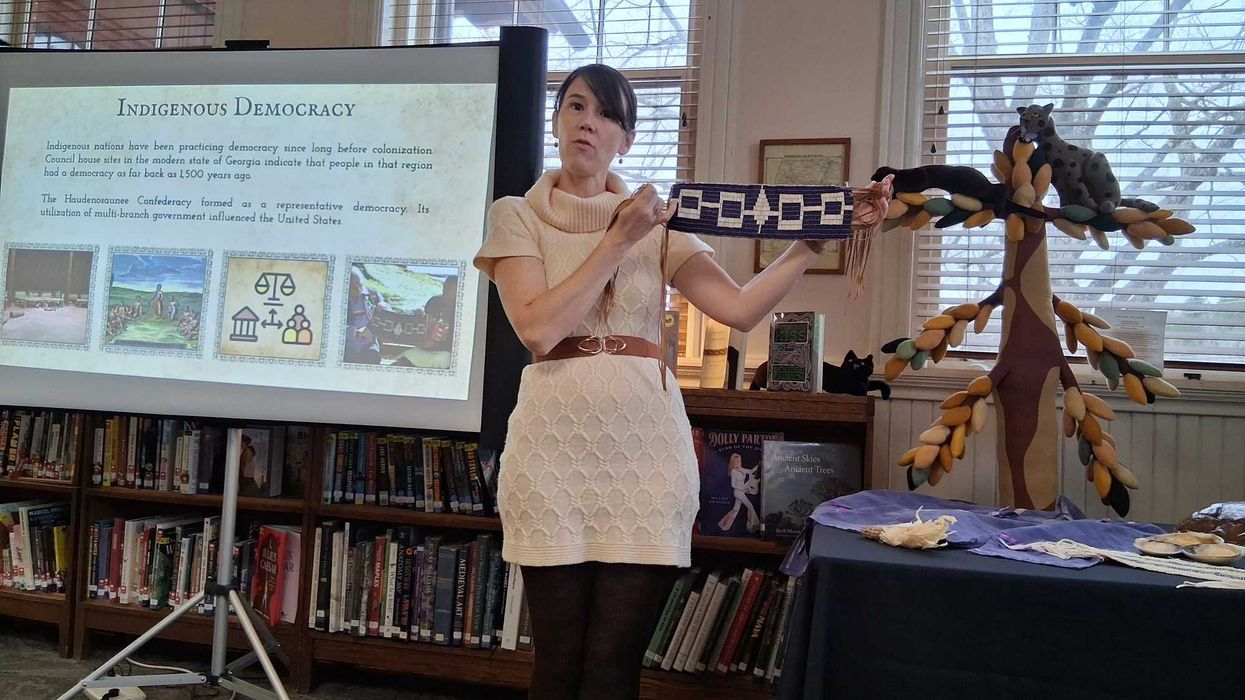
FALLS VILLAGE — The Declaration of Independence includes a long list of grievances against King George III. At the David M. Hunt Library on Nov. 14, Irene Norman asked what those grievances would sound like if Tribal Nations were making their case against the United States. Norman, director of educational programming at the Institute for American Indian Studies in Washington, Connecticut, drew parallels between the colonists’ complaints and the treatment of Native Americans, from forced removal in the 19th century to disputes over federal authority today. The Declaration “has no inherent legal authority,” Norman said. She argued that its proclamation that “all men are created equal” applied in practice to white male landowners, while their understanding of property encompassed enslaved people and Indigenous lands.
This excerpt comes from the named source. Read the original for the full reporting.
Read the original at Lakeville Journal