Local
Wheeler-dealer: Junior’s big game leads Bishop Guilfoyle in offensive shootout
A Roundtable is a way to meet new people and discuss this article in person at a local coffee shop or other venue.
Roundtables are designed for groups of four, with a shared subject and room for everyone to speak. Come for discussion, with no dating expectation.
Source: Altoona Mirror
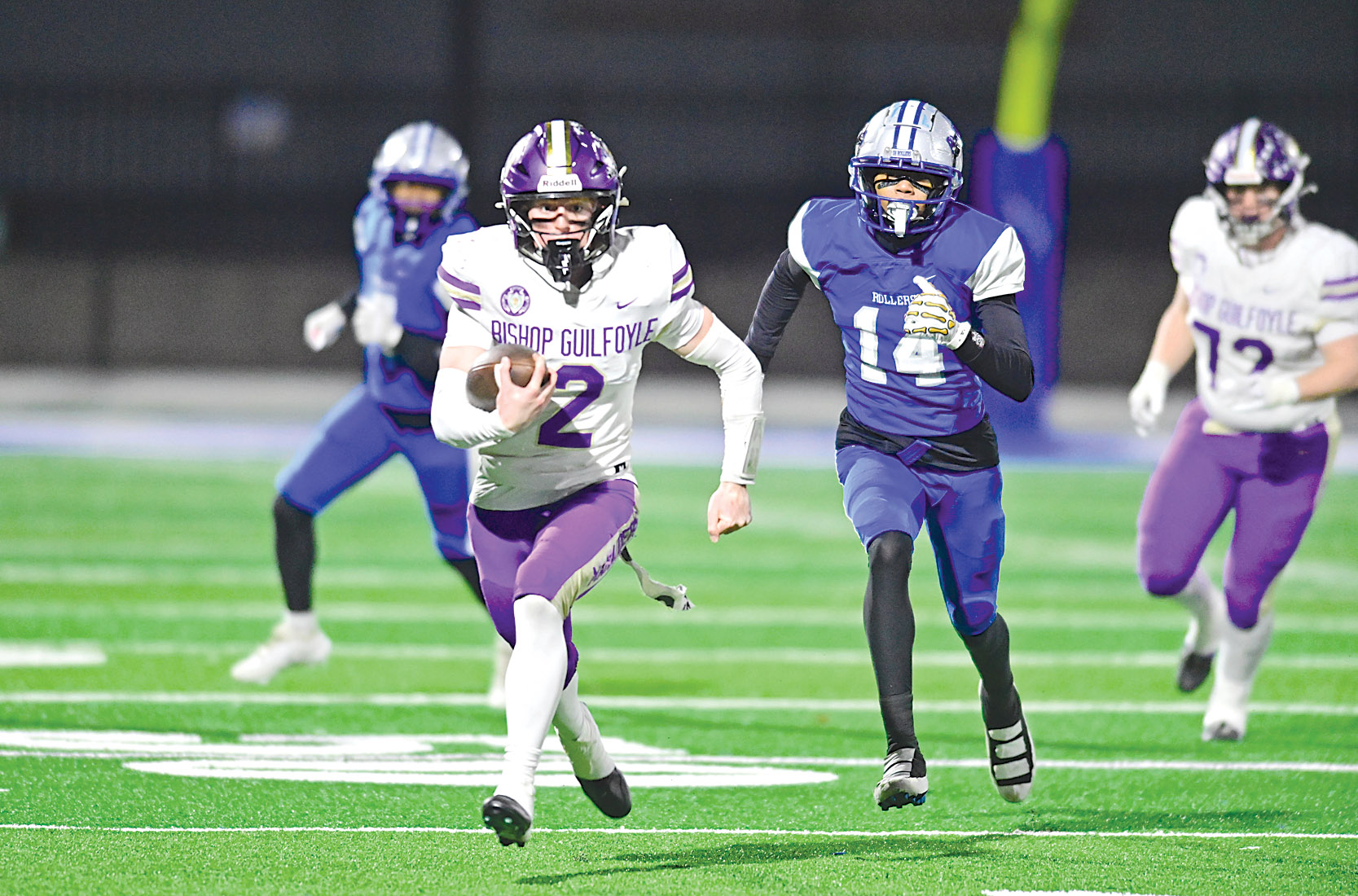
BEDFORD — Bishop Guilfoyle Academy football coach Justin Wheeler said the last couple of years have led to heightened emotions every time the Marauders win, lose or do anything of significance. The reason for that is the emergence of his son, Jay Wheeler, as one of the top players in the region. But as good as the junior quarterback had been prior to Friday’s game against District 3 champion Steelton-Highspire, his play against the Rollers went to another level when his team had its back against the wall. Wheeler ran for 332 yards and six touchdowns, ran in a two-point conversion and had an interception defensively in Bishop Guilfoyle’s 66-50 victory in a PIAA Class 1A quarterfinal game the Marauders trailed at halftime. “It’s hard for me not to be a fan while I’m trying to coach too,” Coach Wheeler said. “Because he loves big games, and he works so hard. I get to see it firsthand at home.
This excerpt comes from the named source. Read the original for the full reporting.
Read the original at Altoona Mirror


