Local
Why 2026 was the biggest midterm backlash ever
A Roundtable is a way to meet new people and discuss this article in person at a local coffee shop or other venue.
Roundtables are designed for groups of four, with a shared subject and room for everyone to speak. Come for discussion, with no dating expectation.
Source: The Downballot
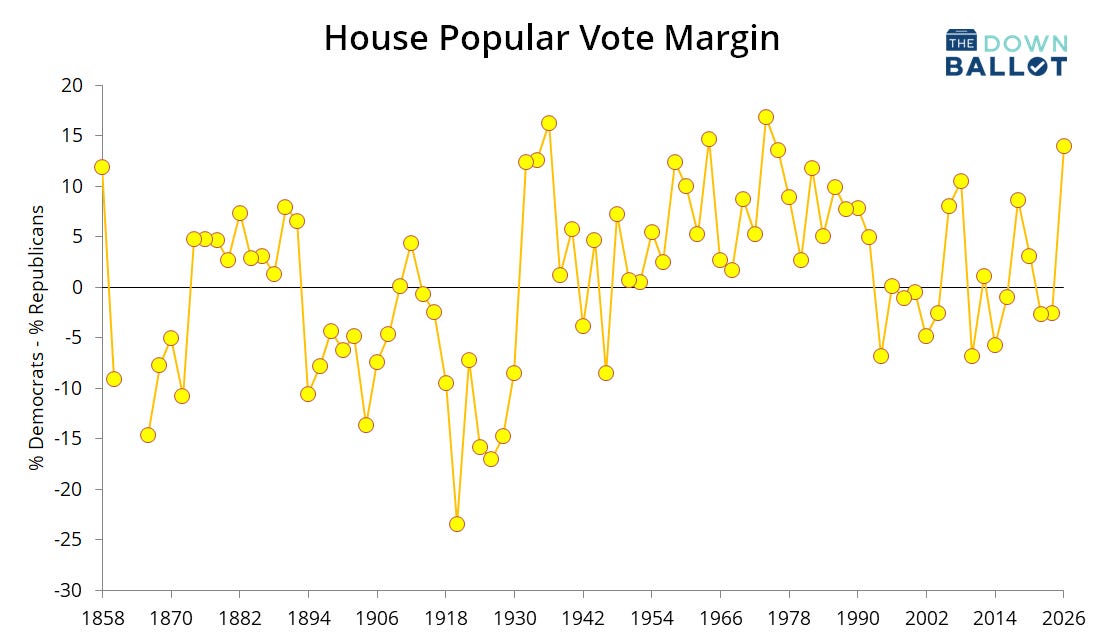
With Democrats sitting on a 14-point advantage in the House popular vote, winning Senate seats in Alaska, Kansas, Texas, South Carolina, and even Mississippi, and flipping control of a dozen state legislatures, November’s repudiation of the GOP feels like the most dramatic midterm election in many, many years. But how big was it really? Simply put, the biggest. Ever. A backlash wave election has multiple components. As with a wave at the beach, when we judge its size, we think about how far it washed up on shore, how high it loomed above the surface, and what damage it ended up doing. First, there’s the strength of the wave: how high up the beach the wave can reach. The graph below shows the House popular vote margin going back to the birth of the Republican Party. Since 1858, there have been 20 elections where one party or the other has won by double digits. These are shown in yellow, with Democratic wins toward the top and Republican wins toward the bottom.
This excerpt comes from the named source. Read the original for the full reporting.
Read the original at The Downballot