Local
Williams explains ‘The Responsibility for Encouragement’
A Roundtable is a way to meet new people and discuss this article in person at a local coffee shop or other venue.
Roundtables are designed for groups of four, with a shared subject and room for everyone to speak. Come for discussion, with no dating expectation.
Source: The Alabama Baptist
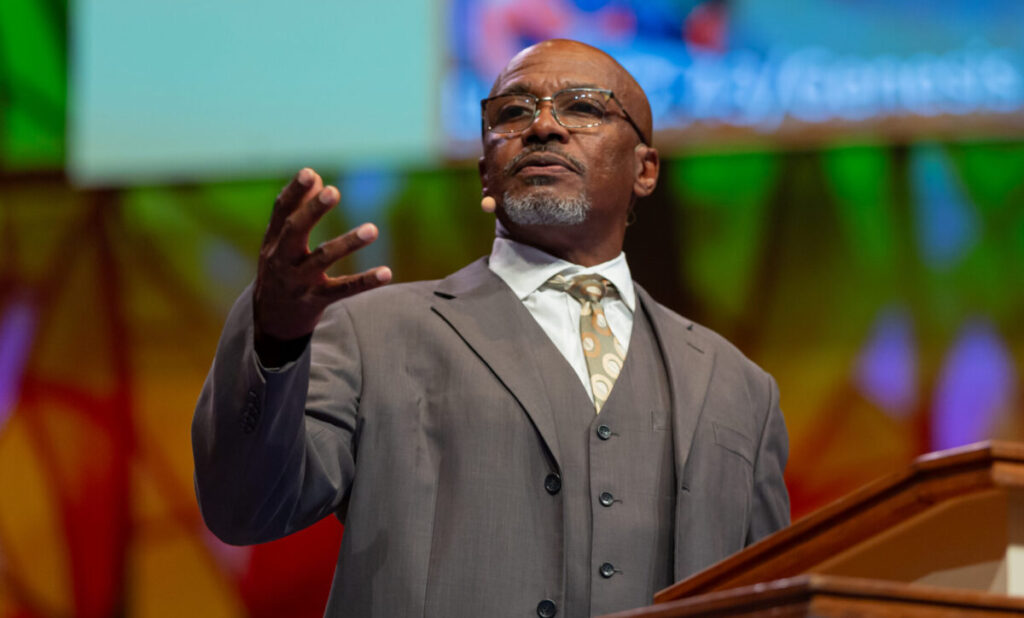
“The angels in scripture give us a transactional image of encouragement,” said Alabama A&M University campus minister Stanley Williams. “Their example helps us learn how to fulfill the responsibility for encouragement.” Williams expounded the second “Encouragers” theme on the afternoon of Nov. 17 at The Gathering of the 2026 Alabama Baptist State Convention annual meeting. He shared a number of images on screen illustrating the work of angels and the need to be encouragers. “God wants to use the local community of faith first to do his work—he prefers to personalize us–but he also deploys angels to assist,” he said. Williams cited a painting in the Vatican by Giovanni based on Luke 22 portraying an angel with a chalice offering strength to Jesus at the time of his passion in the Garden of Gethsemane.
This excerpt comes from the named source. Read the original for the full reporting.
Read the original at The Alabama Baptist