Local
Young Adults, AI, Migrants, Racial Justice and Updated Pro-Life Plan Round Out Bishops’ Meeting
A Roundtable is a way to meet new people and discuss this article in person at a local coffee shop or other venue.
Roundtables are designed for groups of four, with a shared subject and room for everyone to speak. Come for discussion, with no dating expectation.
Source: The Tablet
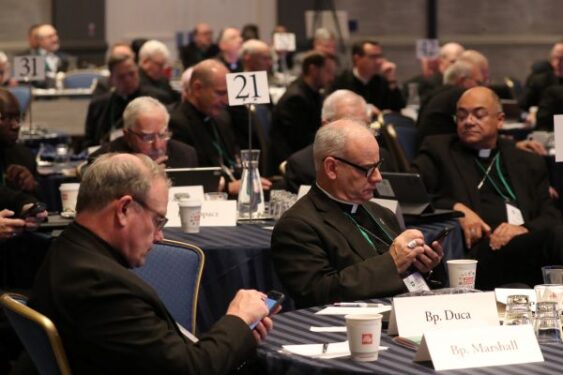
by Peter Jesserer Smith BALTIMORE (OSV News) — Evangelization of young adults, the challenges of the artificial intelligence revolution, overhauling the bishops’ pro-life priorities, fighting racism with a day of prayer, and solidarity with immigrants rounded out the second day of public sessions at the U.S. bishops’ fall plenary assembly. The morning of Nov. 18 began with the bishops quickly approving items they had discussed the day before, the first day of public sessions during the Nov. 16-19 meeting in Baltimore. The bishops voted overwhelmingly to approve a new Mass lectionary and Book of the Gospels, without any amendments, which will make the readings at Mass harmonize with the texts Catholics can read in the forthcoming Catholic American Bible. The bishops also voted overwhelmingly to approve a resolution on diocesan financial reporting through 2031 and the updated “Socially Responsible Investment Guidelines for the U.S. Conference of Catholic Bishops.” Archbishop Charles C.
This excerpt comes from the named source. Read the original for the full reporting.
Read the original at The Tablet