Can AI Replace Your Marketing Agency? Not So Fast Why clean conversion tracking, sufficient campaign data, and human oversight remain essential for small-business advertising. Google Ads is becoming increasingly automated. It can generate advertisements, adjust bids, expand targeting, and recommend search terms. But what happens when the AI does not have enough reliable information about the business it is supposed to promote? In this solo episode of Beginner’s Guide to AI, I examine the data problem behind Google Ads automation. Drawing on my daily work with small and medium-sized businesses, I explain why a limited advertising budget often creates limited conversion data, and why incorrect tracking can be even worse than having no data. Automated ad creation has improved significantly. Some of Google’s generated advertisements are now better than the work produced by people without Google Ads experience. But creating an ad is not the difficult part. The real challenge is controlling
Venture capital is booming again, with $750 billion invested in 2026 and AI startups attracting extraordinary valuations. But is this the greatest opportunity in VC history, or are we witnessing another speculative bubble? In this episode of the Market Maker Podcast, Stephen Barnett explores how artificial intelligence is transforming venture capital, from billion-dollar seed rounds and trillion-dollar startup valuations to the growing dominance of Silicon Valley. We unpack why investors are pouring unprecedented amounts of money into AI startups, how venture capital funds actually make money, and why the biggest winners may be pulling further ahead while others struggle to generate returns. With companies like OpenAI, Anthropic and SpaceX reshaping expectations, one question remains: is this time really different? 00:00 Introduction: The State of Venture Capital 07:00 AI Startups and Trillion-Dollar Valuations 16:31 Why Silicon Valley Dominates Venture Capital 19:30 The Liquidity Prob
Special Edition: The FAA's Friday the 13th Meltdown - Scott McCartney with Co-Host Oscar Munoz. Also: United bans AI booking agents; Running an airline during Thanksgiving season; Listener input from a top-tier road warrior, bag fees, AI bots.
The average 20 gig phone plan in Canada costs more than twice the cheapest one, and the story goes back to Bell around 1900. Ottawa has tried 3 times to get more competition, the big 3 bought most of the newcomers, and the cheap brands often run on the same towers. What I do: buy my phone outright and use the cheapest prepaid plan on an eSIM. What you can do: 1. Check your real data use in your phone settings. 2. Try the cheaper brand on your own network. 3. Call your carrier with a competitor's plan and ask for a match. 4. If a bill is wrong and won't get fixed, the CCTS is free. 5. Re-shop once a year. More at calmmoneycoach.com Prices checked November 2026 and vary by province.
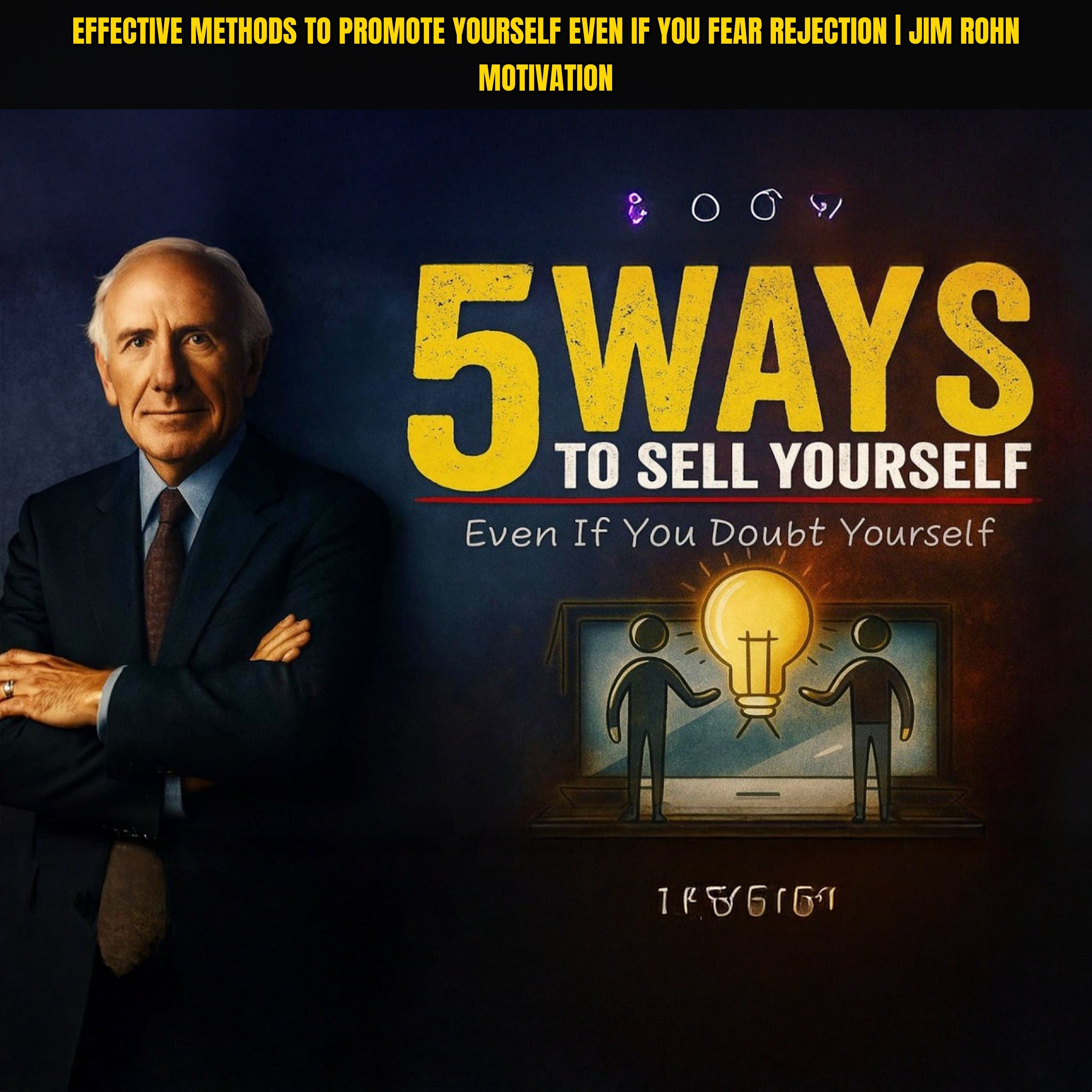
In this Jim Rohn Motivation speech, discover how to conquer the fear of rejection, strengthen your belief in yourself, and develop the resilience needed to thrive in life and business. Key Topics From This Motivational speech: Understanding the true impact of rejection Building belief before persuasion The power of clarity and conviction Transforming feedback into growth Why consistency is the foundation of success This Jim Rohn motivational speech dives deep into one of the biggest hidden fears: rejection. From quiet hesitation to lost opportunities, this message reveals how overcoming the fear of hearing "no" can unlock your full potential. Learn why belief in yourself is the first sale you must ever make, and how every rejection is actually a step closer to your breakthrough. This Jim Rohn Motivational speech Is Perfect For: Entrepreneurs facing challenges in sales or outreach Aspiring leaders seeking to boost their confidence Anyone held back by fear of criticism or failure Student
Northwest Registered Agent: Level Up Your Business's Online Presence Today at https://www.northwestregisteredagent.com/ich Ethos: Get Your FREE Life Insurance Quote at https://ethos.com/icedcoffee Timestamps: 00:00:00 - Intro 00:02:17 - Is Now The Best Time To Buy a House? 00:07:37 - When Will Mortgage Rates Finally Drop? 00:13:53 - Sponsor: Northwest Registered Agent 00:14:58 - The $2 Billion Lottery Winner Jason Missed 00:19:13 - Is There Really a Housing Affordability Crisis? 00:26:16 - How Long To Make $1 Million Starting Over? 00:30:56 - Sponsor: Ethos 00:32:09 - Sponsor: Faire 00:33:16 - How To Turn $1 Million Into $10 Million 00:41:24 - Why Jason Is All In On Tesla & SpaceX 00:46:55 - The Viral Tesla Video That Sold Hundreds of Cars 00:51:35 - How Much Money Does It Take To Be Happy? 00:58:52 - How Much Jason Spends Every Month 01:08:39 - Will AI Replace Real Estate Agents? 01:14:39 - Why AI Will Help The Poor The Most 01:19:44 - The $100,000 Wardrobe Jason Gave Graham 01:26:08
Baseball is a multi-billion-dollar sport in the US and has a following elsewhere, from Japan to Venezuela, but it’s never really taken off in Europe. Can it, and if so, what is its business potential? We travel to Italy to look at the obstacles facing this most American of sports, and talk to Italians with a passion for the game. Presented and produced by Sean Allsop (Picture: Players from the Roma Brewers baseball team practice on a diamond in Rome. Credit: Sean Allsop)
Bitcoin plunges $14,000 in seven days as nearly $2 billion exits U.S. Bitcoin ETFs and fear spreads across the crypto market. With BTC falling into the low $60,000s, traders are questioning whether the bottom is in or another devastating selloff is coming. Meanwhile, Michael Saylor responds to the crash with a message for Bitcoin bears as Strategy holds 850,364 BTC. Strive CEO Matt Cole doubles down on his bullish conviction, while Kalshi prediction markets reveal the odds of Bitcoin falling below $55,000 or even $50,000 before the end of 2026. Prefer video?
Markets got caught with Nvidia’s pants down. If you weren’t listening – diversification proved invaluable. Oh the Fed – what did they say anyway ? We have some clips. 3 crisis in 3 days – something seems to be off. Looking at the Fed’s next move with our guest – Danielle DiMartino Booth – the “Fed watcher” DOWNLOAD THIS EPISODE’S AI GENERATED SHOW NOTES (Guest Segment) (https://thedisciplinedinvestor.com/blog/wp-content/uploads/2026/11/TDI-Notes-and-Summary-999.pdf) As Founder & CEO of Quill Intelligence (https://quillintelligence.com/), Danielle DiMartino Booth (http://dimartinobooth.com/) set out to launch a #ResearchRevolution, redefining how markets intelligence is conceived and delivered. To build QI, she brought together a core team of investing veterans to analyze the trends and provide critical analysis on what is driving the markets – both in the United States and globally. A global thought leader on monetary policy, economics and finance, DiMartino Booth founded Quill Intelli
Most US stock indices closed lower on Friday amid a renewed selloff in chipmakers. The S&P 500 lost 0.4%, the Nasdaq fell 1.2%, and the Dow inched up 51 points. Chipmakers dragged the indices down in another rout triggered by the Nvidia crisis. Beyond CEO Huang’s resignation over an alleged relationship with a suspected Chinese spy, Nvidia faces heightened regulatory scrutiny, including probes into whether US export restrictions were circumvented in sales to Chinese companies. Dip buyers remained cautious on the AI trade ahead of Nvidia’s earnings next week. Nvidia fell 2%, Broadcom tumbled 4.9%, AMD sank 8.7%, and Micron lost 2.5%. Cisco sank 6.2% despite raising its FY2027 guidance, while Applied Materials fell 2.8% despite record revenues. Meanwhile, fresh PPI data showed high energy prices raising factory costs in core sectors, reinforcing bets for multiple Fed rate hikes this cycle. On the week, the S&P 500 rose 1.4%, the Nasdaq 100 gained 2.1%, and the Dow added 472 points. SPI d
Calculate your net worth (https://ter.li/0cu4ys8k) Start your free budget today. Download the EveryDollar app! (https://ter.li/1vgt2y) Next Steps: Have a question for the show? Call 888-825-5225 weekdays from 2–5 p.m. Connect with our Sponsors: Explore more from Ramsey Network: ️The Ramsey Show (https://ter.li/vuhftj) The Dr. John Delony Show (https://ter.li/8igfgf) Smart Money Happy Hour (https://ter.li/8glqru) The Rachel Cruze Show (https://ter.li/j2myuh) George Kamel (https://ter.li/za59q3) EntreLeadership (https://ter.li/wffxnr)
In this Jim Rohn Motivation speech, discover the hidden barriers holding you back from success. Explore the subtle, often unspoken fear of success and how it shapes your thoughts, actions, and potential. Learn actionable steps to overcome self-doubt, procrastination, and perfectionism, and unlock the path to personal growth and fulfillment. Key Topics From This Motivational speech: - The subtle nature of the fear of success - How procrastination and self-sabotage hinder growth - The role of relationships and societal expectations in shaping fear - Strategies to reframe your mindset and embrace change - Cultivating resilience and self-trust in the pursuit of success Fear of success isn’t about avoiding failure; it’s about navigating the responsibilities and changes that come with achievement. Jim Rohn helps illuminate this internal struggle and offers practical strategies to move beyond hesitation, procrastination, and self-sabotage. Recognize how to shift your mindset, break down intim
When was the last time you did a job all the way to the end? Not eighty percent. Not good enough. All the way. The last ten percent, the part nobody would ever notice if you skipped it. Most people can't remember, because most people have trained themselves to stop at good enough. Uploaded 21-10-26 Good enough feels efficient. It feels smart. You tell yourself you're saving your energy for the things that really matter. But you're not saving it. You're spending it on a thousand little exits, and all those exits add up to a life that looks almost like the one you wanted, but never quite becomes it. Here is the truth: your future is decided not in the big dramatic moments you've been waiting for, but in the small things nobody else will bother to master. This seminar unpacks the single mechanic behind why some people quietly pull ahead while most stay exactly where they are. CHAPTERS 0:00 Intro — The last ten percent 2:50 What the small things actually are 4:40 Why people skip them: no f
Meb Faber of Cambria Investment Management opens up his personal portfolio and explains how he balances building wealth with keeping it. His approach brings together a globally diversified public portfolio, trend following, real assets and hundreds of startup investments, all shaped by the fact that much of his net worth is tied to his own business. On Show Us Your Portfolio, Meb joins Cullen Roche to discuss how those pieces fit his life and why staying invested matters more to him than finding the highest possible return. They explore what makes an asset safe over different time horizons, why U.S. investors often overlook foreign markets and real assets, and how a portfolio can accommodate both patience and ambition. Meb also explains why trend following makes up half of his Trinity strategy, why shareholder yield includes buybacks as well as dividends, and how his family’s farming history influenced his investments. He closes with the lessons from more than a decade of angel investi
Wall Street ended mostly lower on Friday as renewed concerns about the AI trade weighed on tech stocks ahead of Nvidia's highly anticipated earnings. The ASX is poised for a flat start to a busy week, with Anthropic's upcoming IPO and key Australian economic data also in focus. Plus, what's behind Bitcoin's sharp sell-off and its slide to a four-month low. Join James Gruber, Equity Market Strategist and James Tao, Equity Market Commentator at CommSec, as they take you through all the key numbers. Instagram (https://www.instagram.com/commsec/) YouTube (https://www.youtube.com/@CommSecTV/featured) TikTok (https://www.tiktok.com/tag/commsec)
In this episode, Michael Harvey and Oskar Mitchell unpack the latest Australian food inflation story and what retailer results are telling us about changing grocery behaviour given that Australian households are still feeling the squeeze.
Are we still paying for the 2008 financial crisis, and could countries usually seen as safe face risks investors underestimate? On the Australian Investors Podcast, Owen Rask sits down with VanEck’s Eric Fine to explore what decades in global markets have taught him about money, debt and the limits of certainty. Above all, Eric makes the case for changing your mind when the evidence changes and thinking through unlikely but consequential scenarios before a crisis arrives. This is both the story of an unusual investing career and a challenge to assumptions about which markets are truly resilient. Episode resources – Speak with the Rask Advice team (https://rask.com.au/advice) Show partner resources – ETF investor? Rask resources – All services (https://bit.ly/R-services) – Financial Planning (https://bit.ly/R-plan) – Invest with us (https://bit.ly/R-invest) – Access Show Notes (https://bit.ly/R-notes) – Ask a question (https://bit.ly/R-quest) – We love feedback! (https://raskau.typeform
In this Jim Rohn Motivation speech, learn how unstoppable confidence is not inherited but constructed through discipline, clarity, and daily follow-through. Confidence isn’t ego — it’s ownership over your behavior, your standards, and your mindset. Key Topics From This Motivational speech: Why confidence is earned, not given How to build self-trust through small daily promises The power of challenging your comfort zone Why your internal dialogue defines your identity The importance of finishing what you start This Jim Rohn motivational speech dismantles the myth that confidence is something you wait to feel. It reveals confidence as a system — a series of repeatable, intentional actions. When you confront patterns, shift your self-talk, and honor your commitments, you don't chase confidence — you carry it. It becomes who you are, not something you need to find. This Jim Rohn Motivational speech Is Perfect For: Anyone struggling with self-doubt or imposter syndrome Individuals seeking t
You've spent years being careful with money. What would you actually be happy to splash out on? A woman in her 50s had her eye on a Chanel bag. Her friends told her she'd earned it. She picked the bag and booked the appointment. When it came time to hand over her card, she changed her mind. Maybe you know the feeling. You can afford the nicer room on holiday and still open six tabs to find the cheapest one. Then there are the things you'd gladly pay for, if you gave yourself a minute to think about what would actually make your life better. The Chanel story got Paul Benson thinking about what he'd call a luxury. In this episode of Financial Autonomy, he shares a few things that make his list, including one you might appreciate the next time you've had a rotten day at work. Inside this episode What happened at the Chanel counter after everyone told her to go for it The luxury you'll want most on the day you've had enough of your job The payday decision that can change how you feel about
Aaron Christie-David is Residential Mortgage Broker of the Year. 23,000 brokers, one winner - and the 10-year Australian property journey behind it.Episode 300. Aaron and Bernie go behind the scenes of the win. The first awards night where they watched someone else take it home and thought, that’ll never be us. Then a decade of work to change that.From renting two properties on one salary while the business took every dollar, to Australia’s top residential broking award. Why Aaron calls the trophy a poisoned chalice, and the promise they made to never let the business cost them their marriage. The blank cheque challenge from Glen Carlson that changed how Aaron thinks. Why he believes 2027 could be one of the hardest years Australians face financially. And for the first time, they open up their own portfolio and their roadmap to being mortgage-free.Whether you’re an ambitious investor, a business owner chasing your own version of the win, or a couple trying to get on the same page with
Monday 16th November 2026 In this episode, Phil and NAB’s Ray Attrill examine a surging US dollar that has pushed the Australian dollar down to 67.7 US cents—its lowest level since January. The slide reflects a significant shift in yield differentials, with Australian 10-year bond yields dipping below US Treasuries last week for the first time since August as markets increasingly price in RBA rate cuts for the second half of next year, while US yields climb on hawkish Fed commentary and stubborn inflation. Meanwhile, in-line US Producer Price Index (PPI) numbers offered a small sliver of relief ahead of the Fed's preferred PCE deflator, Brent crude held steady near US$96.80 a barrel amid conflicting Middle East conflict headlines and rising global oil inventories, and investors look ahead to Canadian inflation data, Japanese Q3 GDP, and Chinese retail sales. Hosted on Acast.
Every week someone tells you where house prices will bottom or what a stock is worth. This week Steve and Jacob ask where those numbers actually come from. They start with the Jensen Huang story and what it could mean for Nvidia, AI and the push for regulation. Then it’s back to Aussie property: 25 years of credit growing at about 7% a year while the economy grew at about 3%, and why lending, not population, has driven prices. The main segment is on models. Change one input in thirty and a $64 valuation becomes $51. Engineers build in a margin for error because people’s lives depend on it. Economists rarely do. Steve explains why that matters for your portfolio, why the S&P 500’s earnings yield of about 3.5% is worth watching, and why a margin of safety beats a confident forecast. Got a question for the show? Send it through and we might answer it on air. Total Money Management | AFSL 568642.
Scenario and case study interview questions can be some of the hardest to prepare for. After all, how do you practice answering a question when you have no idea what situation you'll be presented with? The challenge isn't necessarily knowing what you would do, but being able to explain your thought process, justify your decisions and talk through all the little details you'd normally consider without even thinking. In this week's episode, Sarah and Emma explain how reflecting on real-life experiences can help you prepare for hypothetical scenarios, unpack the decision-making process behind your actions, and build a checklist of things to consider so you can walk into your next job interview feeling more confident. Shoot Your Shot - Shoutout to 'From Desperate to Empowered' who bought us 3 coffees! This listener is a single mum in the US who, after 24 years with the same organisation, was facing redundancy. After months of job hunting, interview preparation and setbacks, she landed a se
Arianne Sackville built Bell & Bone to take on a category giant without the biggest voice. Seven years on, it’s in 700 stores, and her second brand, Snug (https://snugpetco.com.au/), has just launched into almost 900 Coles stores. When her first cat range flopped, Arianne switched off the ads and used the cat owners who hated it to build a better one. That range has just picked up 300 new stores. In this episode: Grow the category - why bringing new shoppers down the aisle matters more to retailers than stealing share Own your mistakes - how a failed cat launch turned critics into advocates Two brands, one website - why Snug is moving to its own Shopify site Getting ready for the holidays? See Klaviyo’s holiday shopping trends (https://www.klaviyo.com/au/bfcm/holiday-shopping-trends). Connect with Arianne Sackville (https://www.linkedin.com/in/arianne-sackville-64a19032/) Explore Bell & Bone (https://bellandbone.com.au/) and Snug Pet Co (https://snugpetco.com.au/) Connect with Nathan B