On May 1, 2020, the Regulations Amending the Regulations Prescribing Certain Firearms and Other Weapons, Components and Parts of Weapons, Accessories, Cartridge Magazines, Ammunition and Projectiles as Prohibited, Restricted or Non-Restricted, SOR/2020-96, came into force. The new Regulations effectively prohibited over 1,500 firearms previously legal for licensed ownership and use.The Regulations were challenged by licensed firearm owners, hunters, sport shooters, shooting clubs, business owners, and the Canadian Coalition for Firearm Rights. Their applications for judicial review were heard together. The Federal Court dismissed the applications. Four appeals from the Federal Court judgment were consolidated and heard together. The Federal Court of Appeal dismissed the appeals. Argued Date 2026-11-09 Keywords Administrative law — Judicial review — Subordinate legislation — Firearms — Governor in Council (GIC) making regulations prohibiting firearms which had previously been legal for
On May 1, 2020, the Regulations Amending the Regulations Prescribing Certain Firearms and Other Weapons, Components and Parts of Weapons, Accessories, Cartridge Magazines, Ammunition and Projectiles as Prohibited, Restricted or Non-Restricted, SOR/2020-96, came into force. The new Regulations effectively prohibited over 1,500 firearms previously legal for licensed ownership and use.The Regulations were challenged by licensed firearm owners, hunters, sport shooters, shooting clubs, business owners, and the Canadian Coalition for Firearm Rights. Their applications for judicial review were heard together. The Federal Court dismissed the applications. Four appeals from the Federal Court judgment were consolidated and heard together. The Federal Court of Appeal dismissed the appeals. Argued Date 2026-11-09 Keywords Administrative law — Judicial review — Subordinate legislation — Firearms — Governor in Council (GIC) making regulations prohibiting firearms which had previously been legal for
When the Taliban seized Afghanistan in August 2021, they gained control of the government but discovered that billions in central bank reserves remained beyond their reach. This episode examines how financial restrictions became instruments of geopolitical leverage, why intelligence assessments of Taliban leadership mattered, and how Washington attempted to prevent Afghanistan's reserves from strengthening the new regime.
Dr. Chris Frueh joins Jon Becker to unpack "Operator Syndrome" — the term he coined to describe the cluster of medical, psychological, and social injuries common among special operators, military veterans, and first responders after years of high-tempo service. Rather than treating TBI, hormonal dysregulation, chronic pain, insomnia, addiction, and existential angst as isolated diagnoses, Frueh argues they're predictable consequences of the job that must be understood together to be effectively treated. Drawing on 35 years of clinical work with veterans and tactical operators, Frueh shares the personal history that shaped his career and explains why naming this pattern matters for those who serve on the front lines.
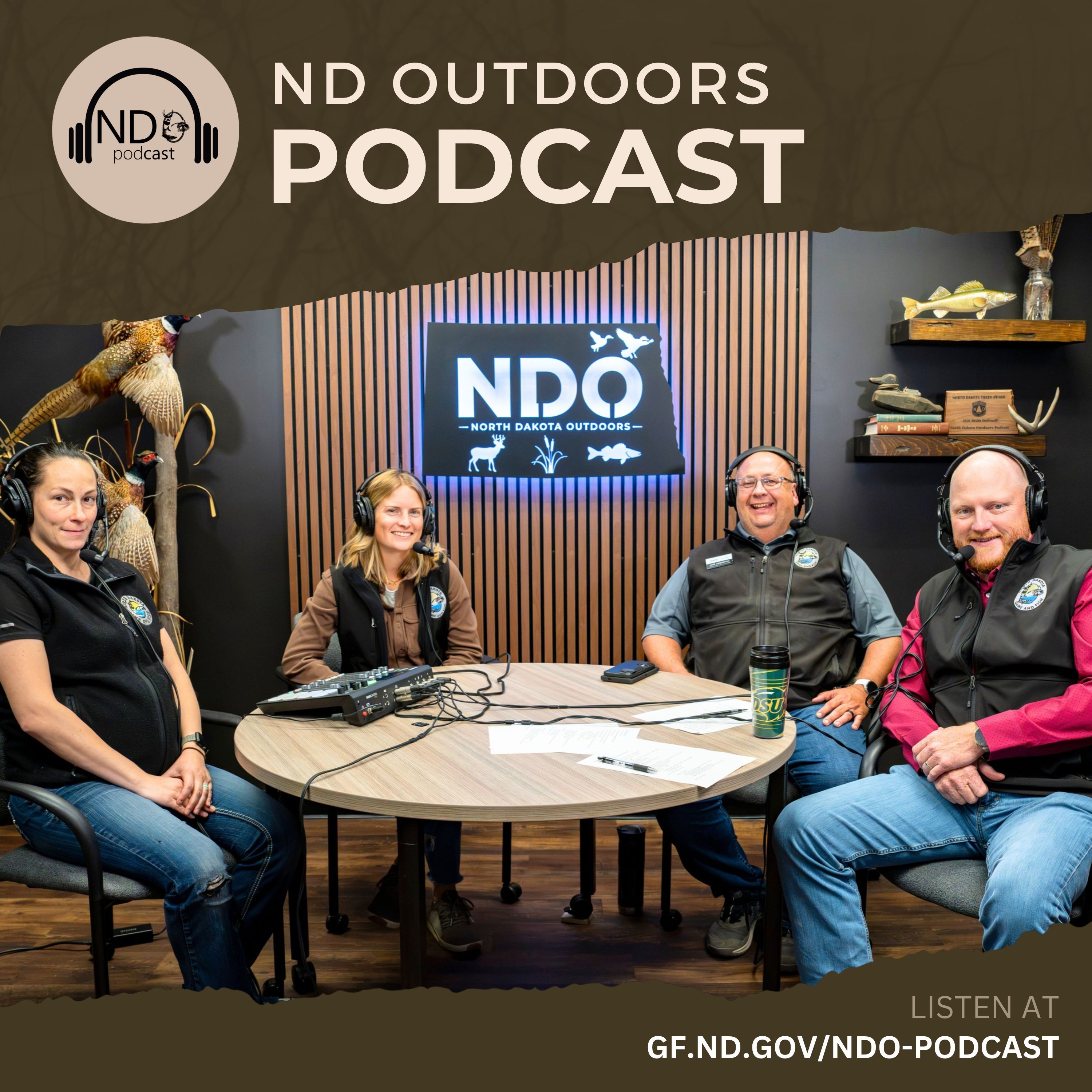
In this episode of NDO Podcast we visit with Mike Anderson, Department communications supervisor, and Ashley Peterson, department photographer and videographer about the history of the video programs, changes in equipment, today’s constant need for photos and videos, and what a privilege it is to tell the Department’s stories. Hosted by Simplecast, an AdsWizz company. See https://pcm.adswizz.com for information about our collection and use of personal data for advertising.
Think of Stephen Miller's elevation to be Chief of Staff as a subtraction -- one less person, Susie Wiles, in the room where she can influence the doddering old man -- rather than anything new. Indeed, Trump's authoritarianism is likely to get less competent. Watch this episode: https://youtu.be/e3eRVHSo79w?si=iOcYQlrLIf2Go-wf Produced by LOLGOP Studios. Please support these videos at https://www.patreon.com/LOLGOPStudios/
The way people consume news and information has undergone a radical shift in just the past year, with viewership rates for the Top 50 English-speaking news websites plummeting. Consolidation of news companies has eroded credibility, and changing behaviors have killed the hold television news once had on Americans. Consumer habits have shifted so drastically that it rendered print and radio media almost worthless, while new categories are emerging around aggregator sites, AI chatbots, podcasts, and news influencers. The four top aggregator sites are all heavily leaning to the Left, so is it any surprise that the majority of Americans are deeply misinformed about the world they live in? --- Charlie's Books: Activist Post: Substack: @ActivistPost (https://substack.com/@activistpost) Newsletter Sign Up (https://activistpost.kit.com/emails) Support Our Sponsors C60 Power (https://go.shopc60.com/PBGRT/KMKS9/) | Promo Code: MACRO EMP Shield (https://www.empshield.com/) | Promo Code: MACRO Aug
In the summer of 1944, small teams of American, British, and French special operations soldiers parachuted into Nazi-occupied France to organize resistance fighters, sabotage German communications, and disrupt enemy reinforcements following the Normandy invasion. Known as the Jedburgh teams, these three-man units operated deep behind enemy lines, relying on local resistance networks, clandestine radio communications, and unconventional warfare rather than conventional military firepower. This episode examines how these largely forgotten commandos helped prepare the battlefield for Allied advances and established principles that would later influence modern American Special Forces.
Jake Sherman and senior energy reporter Josh Siegel discuss what Senate Majority Leader John Thune told us. Plus, what the White House counsel sent to House Dems. Also, Senate Minority Leader Chuck Schumer's long road to December, news on permitting reform and Rep. Jim Jordan’s (R-Ohio) to-do list.
Hassan and Mike return, in-person, to discuss the recent 'blue tsunami' in the US midterm elections through the lens of 'regime change', looking at shocking political repudiations across the world over the past few years. Is it simply 'anti-corruption' that ties electoral shocks and revolutions in South Asia (Sri Lanka, Bangladesh, Nepal, India) and Eastern Europe (Bulgaria, Serbia, Hungary) to Lula's comeback victory in Brazil? Has there been a pushing back against autocracy through social media, or has digital technology actually made it easier for authoritarian regimes to crack down on citizens? And what does it all mean for Western Europe, with French elections on the horizon, deep resentment of the German government, and duopoly realignment in the UK? Are autocracies in fact more stable now than democracy? 00:00 Intro 02:06 Regime Change in the US? 05:57 Lula's Earthquake in Brazil 09:04 Student / Gen-Z Anti-Corruption Protests 11:42 Can 'Sensible Centrists' Capture the Moment? 15
What can healthcare organizations learn from veterans? In this special Veterans Day conversation, Robert Mach, CEO of Schoolcraft Memorial Hospital and a United States Marine Corps veteran, discusses how military service builds leadership skills, strengthens the healthcare workforce, and helps rural hospitals serve their communities. He also shares why healthcare can be a natural next mission for veterans seeking meaningful careers after military service.
Democracy in Question? is brought to you by: • University of Bremen research group on soft authoritarianism and on pro-democracy youth activism: www.woc.uni-bremen.de/research-centers/ • The Albert Hirschman Centre on Democracy in Geneva: AHCD (https://www.graduateinstitute.ch/democracy) • Nobel Peace Conference: Democracy on the Brink (https://www.nobelpeacecenter.org/en/events/nobel-peace-conference-and-festival) • The Podcast Company: scopeaudio (https://www.scopeaudio.com/) If you enjoyed what you listened to, you can support us by leaving a review and sharing our podcast in your networks!
The Supreme Court heard oral argument in Salazar v. Paramount Global on October 14, 2026. The question: does a 1988 privacy law written for video rental stores apply to a sports newsletter subscriber whose viewing history was shared with Facebook? This episode explains the Video Privacy Protection Act, the Robert Bork origin story, the circuit split, what Salazar and Paramount argued, what the justices said, and what happens next. No decision has been issued as of November 9, 2026. General information only, not legal advice. Based on public records and news reports. l Thanks for listening to Gavel & Gazette. Legal news, explained. General information only, not legal advice. This episode includes AI-generated content.
Lonye Ford, CEO of Arlo Solutions, examines the intersection of cybersecurity, artificial intelligence, and data-driven decision-making. Ford explains how automation can help an already stretched cyber workforce manage vulnerabilities, continuously monitor systems, and turn large volumes of information into actionable insights. She also discusses why understanding mission context is essential when deciding where to invest cybersecurity resources.
Fox News host Brian Kilmeade joins Miranda to dissect the Republicans’ midterm defeat and what comes next for President Trump and MAGA. He discusses the battle for the GOP’s future, why JD Vance may no longer be the inevitable 2028 nominee, Trump’s options in Iran, and the growing divide over Israel on both sides of the political aisle.
In part one of Red Eye Radio with Gary McNamara and Eric Harley, we begin by discussing how some retirees stay in the workforce and the younger applicant is not happy. They feel they are being left out as older workers remain on the job. Most retirees encounter boredom and would prefer to remain working if possible. Also Senate Democrats are renewing a proposal to cap interest rates on credit cards at 10% after campaigning on making life more affordable for Americans that have been struggling with inflation / AI app Claude puts estimates on credit scores based on a 10% cap on credit card interest rates / and a discussion on green energy and energy costs across the country.
In part two of Red Eye Radio with Gary McNamara and Eric Harley, we discuss prices and affordability. US consumer prices increased more than expected in October amid higher costs for food and accommodation, cementing expectations that the Federal Reserve will raise interest rates next month. Inflation is being driven by the war with Iran, which has boosted oil prices, the Trump administration's import tariffs, resilient consumer spending and aggressive business investment in artificial intelligence technology. The rising cost of living contributed to the heavy losses suffered by the GOP in the midterm elections last week. Fed Governor Christopher Waller said on Tuesday the US central bank should raise rates next month, adding that "a stronger policy move may be needed." Also an op-ed on how the war with Iran will end and was it worth the money spent / and honoring all military veterans today who have served in the United States Armed Forces. Happy Veteran's Day.
Lieutenant General Karen Gibson: (https://acnsl.net/members-bios/karengibson)37 years in service to the country. 33 in uniform. Four as the chief law enforcement officer of the U.S. Senate. In this episode, we sit down with a Montana native, Purdue-trained engineer, and combat veteran who rose to the rank of Lieutenant General in the U.S. Army. From intelligence operations in Iraq, Afghanistan, Korea, and East Africa to the innermost circles of national security decision-making, her career has spanned the full spectrum of modern defense. She served as Deputy Director of National Intelligence for National Security Partnerships, overseeing the Intelligence Community's cyberspace, space, and law enforcement portfolios. As Director of Intelligence for U.S. Central Command, she led intelligence for Operation Inherent Resolve, the multinational coalition to defeat the Islamic State. She also designed and built U.S. Cyber Command's first functional Joint Force Headquarters-Cyber, placing her
In the last two weeks, elections in the United States and Israel have drastically changed the composition of the U.S. Congress and the Knesset. Rym Momtaz, Dan Baer, and Aaron David Miller explain what this means for both countries and whether this can change their relationship with Europe. [00:00:00] Intro, [00:01:02] Unpacking the Results of the U.S. Midterms and Israeli Elections, [00:11:14] The Impact on the U.S.-Israel and U.S.-Europe Relations, [00:23:17] What Future for the U.S.-Israel and U.S.-Europe Relations? Dan Baer et al., November 5, 2026, What the New Democratic Congress Can (and Can’t) Do on Foreign Policy (https://carnegieendowment.org/emissary/2026/11/democratic-congress-midterms-foreign-policy-ai-iran-russia), Emissary, Carnegie Endowment for International Peace. Aaron David Miller, November 6, 2026, Making Sense of Israel’s Election (https://carnegieendowment.org/podcasts/carnegie-connects/making-sense-of-israels-election), Carnegie Connects, Carnegie Endowment for
In this special episode taped live at the B20 Summit, Playbook's Dasha Burns, Will Steakin and Megan Messerly unpack how Washington's power players are preparing for a new Democratic Congress. What does the shifting political landscape mean for business leaders like Palantir CEO Alex Karp? Then the other stories animating Washington: congressional leadership shake-ups are underway as lawmakers choose their party leaders and former President Joe Biden's memoir reveals an unusually cordial letter from President Donald Trump. For more news and analysis, subscribe to the Playbook newsletter: politico.com/playbook (https://www.politico.com/playbook)
Veteran sports labor attorney Jim Quinn joins the Chuck ToddCast with MLB barreling toward a December 2 lockout. The collective bargaining agreement expires December 1, owners are pushing a salary cap and floor — currently proposed to phase in by 2028 at roughly $258 million and $180 million — and the players’ association has vowed never to accept one. Quinn walks through the nuclear option nobody’s modeled out: if the union decertifies, it’s unclear who could stop a lockout, whether guaranteed contracts survive, and whether every superstar in the sport suddenly hits free agency. He explains why owners failed to win a cap in 1994, why MLB franchise values haven’t kept pace with other leagues because of media rights, and why Rob Manfred doesn’t want a lockout defining his legacy. Plus a detailed turn to college sports, where Quinn gives the Protect College Sports Act zero chance of passing. Timeline: 00:00 Jim Quinn joins the Chuck ToddCast 02:45 Decertification and who could stop a loc
(Note: Most of this episode was recorded prior the Wednesday’s vote in the house) Chuck Todd breaks down Republicans electing John Thune and Jim Jordan to leadership — arguing Jordan is who you pick when you’ve accepted being in the minority for a while, a choice that makes the base feel better without winning anything back, with the GOP now facing a two-cycle deficit. The bulk of the episode is Thomas Massie’s impeachment resolution against Pete Hegseth over unauthorized hostilities in Iran, Venezuela and Yemen. He argues Hegseth’s press conference was performed for an audience of one, that hiding behind the troops was disgusting, and that civilian military leadership should be held to the highest account — the military belongs to all of us, not to Trump. The public deserves to hear the evidence a trial would produce, particularly on war powers and the Caribbean boat strikes. He also breaks down several important ballot measure results from across the country. Then, veteran sports lab
(Note: Most of this episode was recorded prior the Wednesday’s vote in the house) Chuck Todd breaks down Republicans electing John Thune and Jim Jordan to leadership — arguing Jordan is who you pick when you’ve accepted being in the minority for a while, a choice that makes the base feel better without winning anything back, with the GOP now facing a two-cycle deficit. The bulk of the episode is Thomas Massie’s impeachment resolution against Pete Hegseth over unauthorized hostilities in Iran, Venezuela and Yemen. He argues Hegseth’s press conference was performed for an audience of one, that hiding behind the troops was disgusting, and that civilian military leadership should be held to the highest account — the military belongs to all of us, not to Trump. The public deserves to hear the evidence a trial would produce, particularly on war powers and the Caribbean boat strikes. He also breaks down several important ballot measure results from across the country. Finally, Chuck presents
From August 18, 2023: Listeners of this podcast are probably familiar with Molly Reynolds’s work on Congress. She’s a Senior Fellow at Brookings and a Senior Editor at Lawfare—and she has a new report out at Brookings, with Naomi Maehr, on “How partisan and policy dynamics shape congressional oversight in the post-Trump era (https://www.brookings.edu/articles/how-partisan-and-policy-dynamics-shape-congressional-oversight-in-the-post-trump-era/).” Molly and her team have collected an enormous amount of data over the years about how Congress conducts oversight, and the report is a thought-provoking overview of what the legislature got up to during the 117th Congress. Today on the show, Lawfare Senior Editor Quinta Jurecic talked with Molly about her report and what patterns she’s found in oversight from the 116th Congress through today. For fans of the Jan. 6 Committee’s work, they also discussed that committee’s investigation and what it does and doesn’t tell us about congressional inve