Quick question: when's the last time you lifted something heavy enough that it actually felt hard? If you can't remember, this episode is for you. This conversation originally aired on my friend Monica Packer's show as part of her More for Moms content, and I loved it so much I wanted to share it with you here too. Monica and I dig into exactly what perimenopause does to your body, and more importantly, what to actually do about it in the gym. We start with the single best thing you can be doing for your body right now, whether you're in your 20s or already deep in perimenopause: building muscle. I break down why estrogen decreasing makes muscle harder (not impossible) to build, why muscle is your best tool against the weight gain so many women experience in this stage, and why "I missed the window" is a myth. Then we get practical. I walk through exactly what effective strength training looks like during this season, how many sessions a week, why compound lifts beat isolation exercise
Ever walk into a room feeling great, only to leave irritated, stressed, or exhausted because of somebody else's attitude? You may have caught something more contagious than the common cold! In this crossover episode of Quest for Success and Off the Couch Psychology, Dr. Jerry Cunningham explores emotional contagion, the psychological process through which other people's emotions influence our own. You'll discover why one person's bad mood can spread through an entire workplace, how body language influences emotional reactions, and why some people seem to absorb everybody else's feelings. We'll explore fascinating psychological research, the importance of emotional awareness in relationships and therapy, and how understanding emotional contagion can give you an advantage in business negotiations. With everyday stories, humor, and a little help from Pixar's Inside Out, you'll discover how to recognize emotional influences and become more intentional about the energy you bring into every
Good news! My original Instagram is back! Please follow my original account at https://www.instagram.com/nathalieniddam/ and also my backup account at https://www.instagram.com/longevitywithnat/. Today, I’m joined by Christian Drapeau, a pioneering stem cell researcher and founder of StemRegen (https://stemregen.co/nat15), who is on a mission to reframe the entire longevity conversation. Christian brings decades of experience and a fresh perspective: rather than focusing solely on slowing down damage, we should be prioritizing how we protect and preserve our body’s natural repair system—our stem cells. His insights challenge some of the most common assumptions in health, aging, and even regenerative therapies. Visit https://stemregen.co/nat15 and use code NAT15 for $15 off! Episode Timestamps: Introduction and episode metaphor ... 00:00:00 Stem cells as everyday repair system ... 00:05:18 Discovery and validation of stem cell theory ... 00:06:18 Objections and complexity in stem cell n
This 2-hour deep brown noise with 40 Hz gamma binaural beats and a black screen is made for sharp, sustained focus, popular with people with ADHD for studying and deep work. Use headphones so each ear gets its own tone. Try it free for 7 days: Seamless and steady: the sound never cuts, changes or fades, so nothing pulls you out of sleep. Headphones are recommended for the full experience. If this audio helped you sleep, please follow the podcast and leave a 5-star rating! Want to request new sounds to the podcast? Click the link below ⬇ REQUEST A SOUND TO SLEEP TO (https://www.buymeacoffee.com/sleepresonance) If you'd like to support the podcast, donate at: buymeacoffee.com/sleepresonance (https://www.buymeacoffee.com/sleepresonance) DID YOU KNOW: By using a PODCAST instead of a white noise SONG on Spotify to go to sleep, it will not affect your listening history meaning your Spotify Wrapped won't be full with white noise and instead contain the songs you actually listen to? ----- 40 H
As we get older, so many of us notice little changes in our memory: forgetting a name, losing a word mid-sentence, rereading the same paragraph three times. It’s easy to write that off as a normal part of aging. After this conversation, I’m not so sure we should. In this episode of The Art of Aging, Dr. Rhonda Voskuhl, professor of neurology at UCLA and founding neurologist of UCLA’s Comprehensive Menopause Program, explains how women’s brains change after menopause, and why losing estrogen affects so much more than hot flashes. She makes a distinction I’d never heard before: what we call “brain fog” is really two different things, and only one of them goes away on its own. And with two-thirds of Alzheimer’s patients being women, she believes understanding why could change how we protect our brains. We also got practical: what kind of exercise actually helps your brain, which brain games are worth your time, how much alcohol is too much, and what genetic and blood tests can (and can’t)
Hey Friend, What if meal prep is not failing you? What if you are simply prepping for a week you do not actually live? You plan for five perfect days. Then appointments run late, plans change, you are gone longer than expected, and suddenly half the food you prepared is still sitting in the refrigerator. In this episode, we are talking about how to make meal prep fit your real life instead of forcing your life to fit somebody else's plan. You will learn why your calendar matters before you ever start cooking, how to prepare for the parts of your week that are actually difficult, and why simpler meal prep can help you stay consistent without turning food into another full-time job. Your meal prep should solve a problem. It should not become another one. If you are ready to simplify carnivore and learn how to make it work in your real life, the Carnivore Reset Masterclass is available now at mycarnivore.lifestyle. Xo, Cristina Your Carnivore Lifestyle Coach Connect with Cristina Website:
This week on In Bed with the Right, we're 19th-Centurymaxxing again! Moira takes Adrian on a wild ride through the origins and strange early history of bodybuilding. This one has everything: Eugenics! Swolitude! Prussians! World Fairs! Gymnastics!
Genitourinary syndrome of menopause (GSM) is the most undertreated condition of midlife — and one of the easiest to treat. In this solo episode, Dr. Mary Claire Haver breaks down the symptoms most women never connect to their hormones: vaginal dryness, painful sex, urinary urgency, getting up at night to pee, delayed orgasm, and recurrent UTIs — infections that, in older women, can lead to sepsis, falls, and hospitalization. Affecting 50–80% of postmenopausal women (and effectively all of us if we live long enough), GSM can also strike at any low-estrogen stage of life, from postpartum to breastfeeding. Dr. Haver shares her own story of missing the diagnosis in herself, then walks through exactly how to treat it: why vaginal estrogen — not lubricants — is now the frontline treatment, how the FDA’s November 2025 removal of the black box warning changes the conversation, how to apply it (“treat the whole neighborhood, not just the block”), and the options beyond estrogen, from vaginal DH
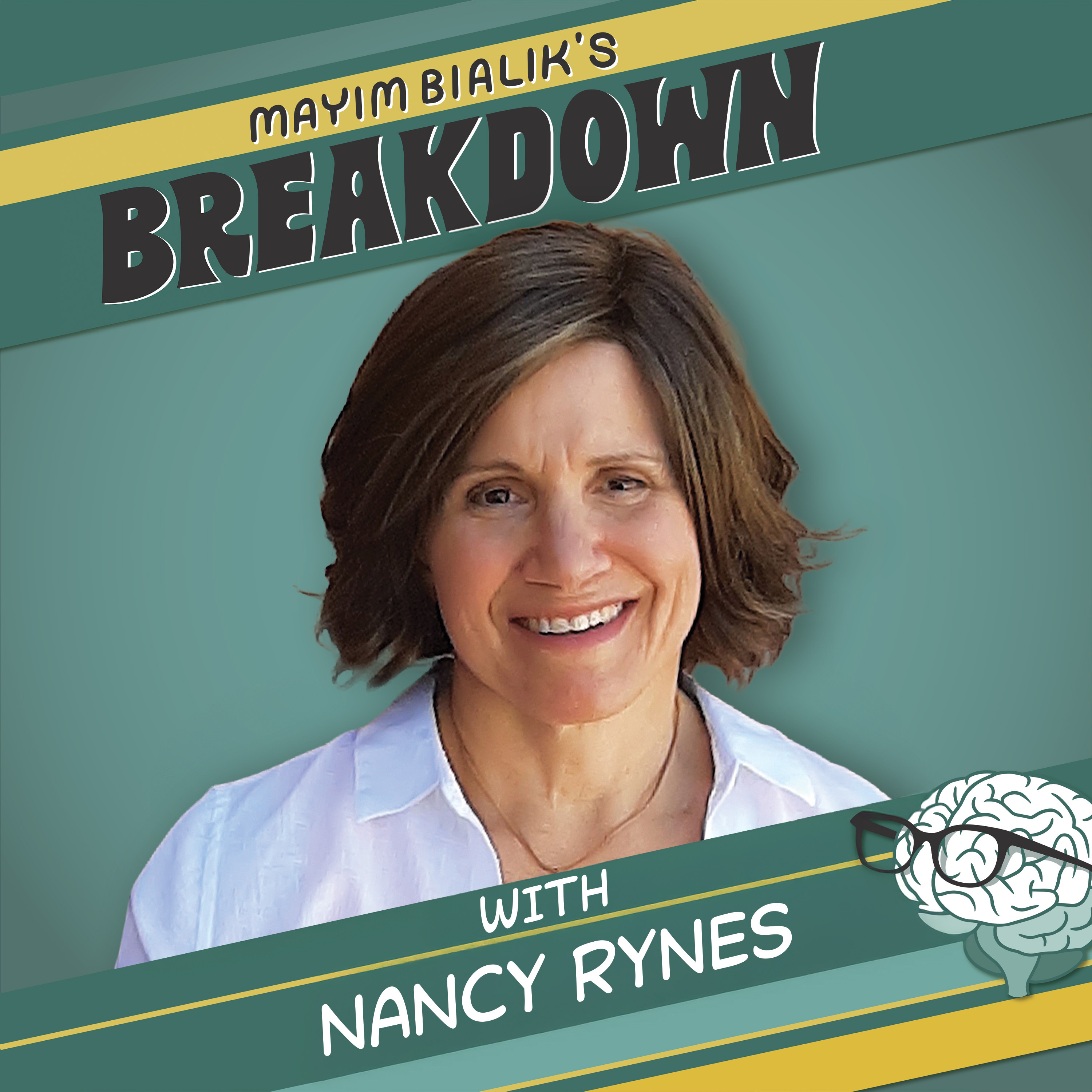
What if time isn’t real, multiple timelines exist simultaneously, and your consciousness can leave your body? In this episode of Mayim Bialik's Breakdown, Nancy Rynes (scientist, geologist, archaeologist, artist, inspirational speaker, and author of Awakenings from the Light: 12 Life Lessons from a Near Death Experience) reveals the unbelievable story of her near death experience (NDE) and the profound revelations that changed everything she believed about life, death, consciousness, and what happens after we die. After being hit by a car while riding her bike, Nancy describes watching the accident from outside her body, experiencing a split in consciousness between her ordinary “ego” awareness and what she calls her higher self, and encountering a mysterious woman who helped her at the scene, yet has never been identified to this day. During surgery, Nancy says she awakened somewhere completely unlike the physical world: a beautiful, ethereal hillside filled with tendrils of pulsating
Dr Allison Siebecker is an expert on small intestine bacterial overgrowth SIBO and joins today to talk about hydrogen sulphide (H2S) SIBO. We cover: The correct terminology for hydrogen sulphide SIBO or intestinal sulphide overproduction (ISO) Signs of hydrogen sulphide overproduction and how to spot H2S How to test for H2S overproduction - the flatline method vs new methods to understand gas levels The cut off levels used to diagnose hydrogen sulphide SIBO Treatments used in H2S SIBO Vitamins and minerals that may reduce hydrogen sulphide, and prebiotic supplement How GLP-1 medication may affect the result of a SIBO breath test About Dr Siebecker Dr. Siebecker has been specializing in SIBO since 2010. She is the 2021 Lifetime Achievement award recipient from the Gastro ANP, has been teaching Advanced Gastroenterology at NUNM since 2013, and is an award-winning author. She was the co-Founder and former Medical Director of the SIBO Center for Digestive Health at NUNM. Her integrative SI
Gary Brecka sits down with Jennifer Mohler to talk through the decision he faced with his own parents, and his view that memory loss is really lost access to memory. They cover how to evaluate independent living, assisted living, and memory care, why isolation matters, the daily living skills that signal it’s time, and the brain mapping Gary is using to track his mother. Gary also shares the fall that changed his timeline. Don’t guess, test. Connect with Regentra Care Website: https://bit.ly/4ivQMZs Instagram: https://bit.ly/4zkJCyv Facebook: https://bit.ly/4Ac5Jr9 LinkedIn: https://bit.ly/3UxsKFK Thank you to our partners BREW: THE ULTIMATE COFFEE: https://bit.ly/4elHM82 COLD LIFE: THE ULTIMATE HUMAN PLUNGE: https://bit.ly/4eULUKp GENETIC METHYLATION TEST (UK ONLY): https://bit.ly/48QJJrk GENETIC TEST (USA ONLY): https://bit.ly/3Yg1Uk9 GOPUFF: GET YOUR FAVORITE SNACK!: https://bit.ly/4obIFDC SNOOZE: LET’S GET TO SLEEP!: https://bit.ly/4pt1T6V WHOOP: JOIN & GET 1 FREE MONTH!: https://b
Chris and Xand van Tulleken continue their conversation about fevers with Dr Catherine Houlihan, consultant in clinical virology and infectious diseases at University College London Hospitals. They find out about her work as a consultant in infection at the Rare and Imported Pathogens Laboratory, UK Health Security Agency and what to do if you develop a fever after travelling abroad. If you'd like to share your thoughts on this or any other topic covered on the podcast, you can email us at [email protected]. Presenters: Drs Chris and Xand van Tulleken Guest: Dr Catherine Houlihan Producer and researcher: Dr Samara Linton Executive Producer: Rami Tzabar Visual Producer: Leon Gower Technical Lead: Reuben Huxtable Digital Lead: Richard Berry Composer: Phoebe McFarlane Sound Design: Melvin Rickarby At the BBC: Assistant Commissioner: Greg Smith Commissioning Editor: Rhian Roberts A Loftus Media production for BBC Radio 4.
Almost everyone carries a list of things they want to do in life, and almost nobody gets to it. Michael speaks with Ravi Gupta, author of The Invisible List, who went all in on one passion a year: powerlifting, screenwriting, surfing, tennis, the MCAT, and Italian cooking. He explains the four steps to develop your "invisible list," how to find the time to tackle it, why your passions make you a better human, why passions protect your health and brain, and why sucking at something has benefits. They cover: (00:00) Cold open (00:56) The wedding that started a quest (03:06) What is the invisible list? (04:49) Why we never tackle our life list (06:32) Hobbies aren't selfish (10:48) What he learned about learning (14:18) Four steps of the invisible list (18:39) Why he started with powerlifting (21:51) All gear, no idea (24:47) Tracking and sticking with it (30:36) Staying focused as a beginner (35:16) Why you have to suck at first (39:55) The friends you make (44:10) The MCAT as a brain ma
Welcome to What's Up Docs?, the podcast where doctors and identical twins Chris and Xand van Tulleken explore the ideas shaping our health and wellbeing. In this episode, they examine fevers. They ask how and why our body sometimes turns up the dial on its internal thermostat, and what, if anything, we should do about it. To help them answer these questions, they are joined by Dr Catherine Houlihan, a consultant in clinical virology and infectious diseases at University College London Hospitals. She is also a consultant in infection at the Rare and Imported Pathogens Laboratory, UK Health Security Agency. If you want to get in touch, you can email us at [email protected] Presenters: Drs Chris and Xand van Tulleken Guest: Dr Catherine Houlihan Producer and researcher: Dr Samara Linton Executive Producer: Rami Tzabar Visual Producer: Leon Gower Technical Lead: Reuben Huxtable Digital Lead: Richard Berry Composer: Phoebe McFarlane Sound Design: Melvin Rickarby At the BBC: Assistant Co
Is social media truly driving the teen mental health crisis? Because if it is, we should be taking one set of steps to protect kids. But if it’s not, we’re spending a ton of energy barking up the wrong tree. Dr. Candice Odgers has been researching teen mental health and tech use for decades. Her data strongly suggests that social media is only one culprit – the other major drivers include family mental health, economic pressures, teen lifestyle, and achievement culture. On the TED stage and elsewhere she’s argued that this is why banning social media is not the answer. Join us for an eye-opening conversation that separates fear from facts. Show Notes: To submit listener questions email [email protected] Produced by Peoples Media (https://www.peoplesmedianetwork.com/)
Raquel Rodriguez (@raquelwwe (https://www.instagram.com/raquelwwe)) is a professional wrestler and the reigning WWE Women's Intercontinental Champion. She sits down with Chris Van Vliet at Insight LIVE in New Orleans to discuss winning the Intercontinental Championship and her custom barbed wire title, giving John Cena the Tejana Bomb at Survivor Series, wanting to win a World Championship, the longevity of The Judgment Day, comparisons to "Big Sexy" Kevin Nash, dressing up as Nacho Libre one Halloween, and more! Please support our sponsors: Max $20 discount HELIX SLEEP: Flash sale! PURE PLANK: The future of core fitness! Follow CVV on social media:
Lauren's aunt wants her to rebuild a relationship with her mother, whom she cut off seven years ago. Got a dilemma? Follow on social media: Facebook.com/DrLaura (http://facebook.com/DrLaura) YouTube.com/DrLaura (http://youtube.com/DrLaura) Join the Dr. Laura Family!! >> Receive my weekly newsletter, perks, and more! Sign up now, it's FREE > DrLaura.com (https://www.drlaura.com/) Hosted by Simplecast, an AdsWizz company.
Being a perfectionist sounds like a good thing. You have high standards, pay attention to details, and want to do things right. What's wrong with that? As it turns out, quite a lot. Perfectionism can actually work against you, causing you to procrastinate, obsess over mistakes, avoid taking risks, and feel dissatisfied even when you've accomplished something worthwhile. And ironically, the harder you try to make everything perfect, the less you may actually accomplish. So why are some people perfectionists? Where does that need to get everything just right come from? And how do you know when having high standards has crossed the line into something that's holding you back? Clinical psychologist Dr. Elizabeth Lombardo, author ofBetter Than Perfect: 7 Strategies to Crush Your Inner Critic and Create a Life You Love (https://amzn.to/32tNfDb) (https://amzn.to/32tNfDb), joins me to explain the psychology of perfectionism, why "good enough" is often more than enough, and how to let go of imp
Dave Ramsey (https://www.ramseysolutions.com/) shares a no-nonsense lesson on decisive leadership. In this fiery talk, he explains why a passive leader is an oxymoron, what a squirrel in the road teaches about indecision, and why you can't wait for everyone's approval before you act. This episode will challenge you to draw a line in the sand and make the call. Source: Dave Ramsey at The EntreLeadership 2018 Summit (https://www.youtube.com/live/E-5FwiYL1mg?si=hDW3qs7JCyhKOCND) Hosted by Sean Croxton (https://seancroxton.com/) Follow me on Instagram (https://www.instagram.com/seancroxton/)
In 2002, when Elizabeth Smart was taken from her bed by a stranger, the media covered it day and night. When Elizabeth returned home nine months later, she slowly began to learn to tell her own story, in her own words. This week on the show, she explains what it’s been like to revisit those traumatic details in her 2013 memoir (https://books.apple.com/us/audiobook/my-story/id1440650531?at=1000l38Mz&ct=death_sex_money&itscg=30200), in a Netflix documentary (https://www.netflix.com/title/81744530), and in her new podcast The Survivor Files (https://podcasts.apple.com/us/podcast/the-survivor-files-with-elizabeth-smart/id6799944065?at=1000l38Mz&ct=death_sex_money&itscg=30200), where she and other victims walk through their experiences slowly and carefully. She also talks about her new bodybuilding hobby and how she talks to her kids about safety and risk-taking. Podcast production by Cameron Drews. Get more with Death, Sex & Money Plus! Or, visit slate.com/dsmplus (https://slate.com/death-
Get the 200+ Page Optimal Living Daily Workbook (PDF) - Free. Want to turn today's episode into an actionable plan? Episode 3593: Corinne O'Keefe Osborn explains the most common reasons people feel dizzy after exercise, including restricted breathing, overexertion, dehydration, low blood sugar, low blood pressure and medication side effects. She describes simple ways to find relief for each, from slowing down to breathe to rehydrating, and explains when regular dizziness after a workout is a reason to see a doctor. Read along with the original article(s) here: https://www.healthline.com/health/dizzy-after-workout Quotes to ponder: "Trying to do too much too fast can do more harm than good, so listen to your body." "Engaging the core is important, but maintaining a steady breathing rhythm is equally crucial." "You should push yourself, but do so slowly over time."
Girls are starting puberty earlier than they did a generation ago. Some pediatricians are now seeing breast buds in girls as young as 6 and 7. And it is not just genetics. Everyday factors like stress, diet, and chemical exposure can push a girl's body into puberty years before it is ready. In this solo episode of The Ovary Club, I am breaking down why the timing of puberty matters so much more than most people realize, the four main factors research has linked to early puberty, and the simple, consistent things you can do to set your daughter's hormones up for success. Whether you are a mom or not, this is information every woman should have. I am also sharing exactly what I do for my own daughters, from screens off after 7 p.m. and fragrance-free products, to how we talk about bodies and periods at home. Because none of us had this information handed to us. You have it now, and that is what matters. What's Discussed: (1:07) How the timeline of puberty is shifting for girls. (2:24) Wh
Meatball and Big Dipper talk about bald spots, Halloween weekend, plans for Palm Springs pride, and frottage. Plus they listen to your voicemails about Monday nights at the bar and selling DNA online. Call us with your sex stories at 213-536-9180! Or e-mail us at [email protected] FOLLOW SLOPPY SECONDS (https://www.instagram.com/sloppypod) FOLLOW BIG DIPPER (https://www.instagram.com/bigdipperjelly) FOLLOW MEATBALL (https://www.instagram.com/spiciestmeatball)
If you’ve ever quit something and felt unbelievable guilt (and maybe unbelievable relief), today’s episode is for you. Here at Feelings & Co., we are firm believers that quitting is a form of self-care, and Nora is quitting’s biggest advocate. Simply put, your life is not a runaway train. If your choices start to feel wrong, you do not have to see them all the way through. You can get off, start over, and try again. Today’s guest is Geoff, one of our five male listeners, who sent Nora a zine six years ago titled, “QUIT IT.” Geoff is on the pod to chat with Nora about the importance of quitting, how to carve a more meaningful life for yourself, and more. If you have something to share, give us a call or a text: ☎️(612) 568-4441. Get this episode ad-free here (https://noraborealis.substack.com/p/the-quitters-manifesto?r=2urkqn&showWelcomeOnShare=true)! Check out Nora’s Instagram here (https://www.instagram.com/noraborealis/)! Check out Nora’s TikTok here (https://www.tiktok.com/@norabo