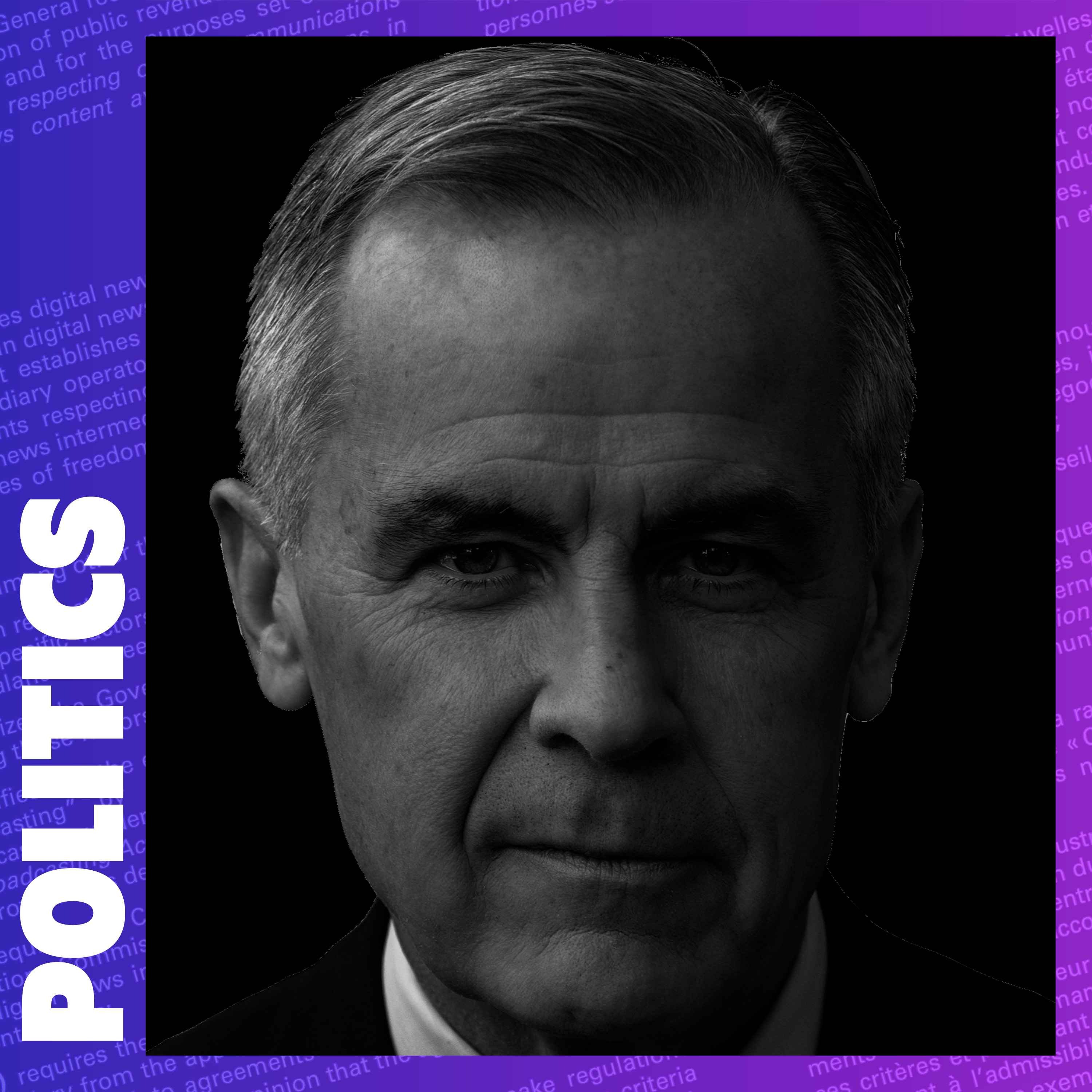
Nineteen billion dollars. That's the number the Carney government just released. The money funds what is effectively a shadow civil service. It's the price we pay for private consulting services for the government. Money to firms like KPMG, Deloitte, McKinsey, PricewaterhouseCooper, Accenture, and Ernst & Young. There have been promises, pledges, for years, to cut back that cost. Including from the Prime Minister himself. But those promises seem empty. Carney just can't seem to shake the consultants. Why not? And, by the way, what do consultants actually do? Host: Sam Konnert Credits: Bruce Thorson (Senior Producer), Caleb Thompson (Audio Editing & Production), Jesse Brown (Editor and Publisher), Harrison Lowman (Managing Editor), Sam Konnert (Fact Checking) Additional music by Audio Network More information: Federal government spent $19 billion on external consultants last year (https://www.ctvnews.ca/politics/article/federal-government-spent-19-billion-on-external-consultants-last-ye
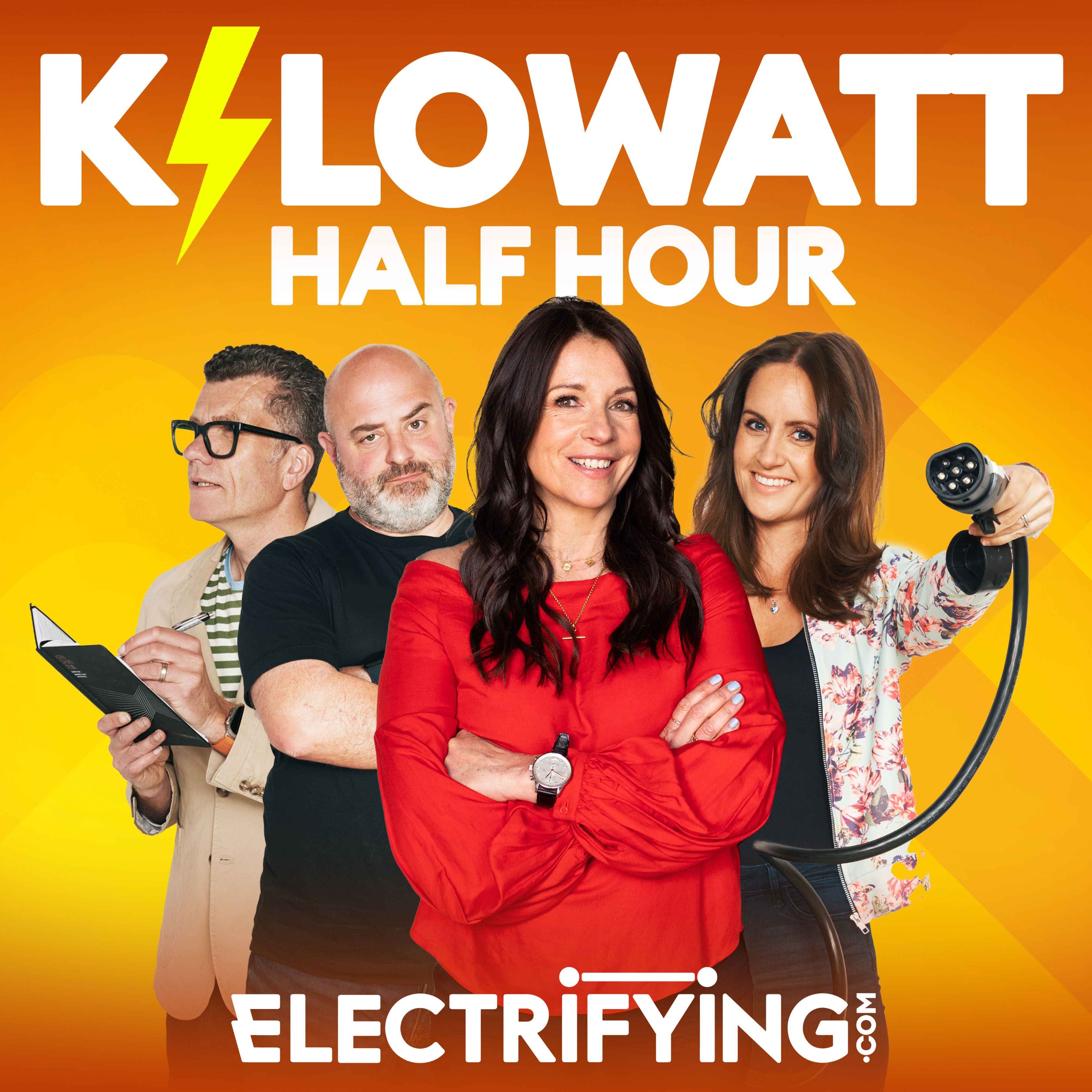
Police raids, the (sort of) return of Saab and why Nicola is apparently more popular than Craig David. It’s been quite a week in the world of electric cars – and are we witnessing the death of a Tesla? Nicola, Vicky and Tom get stuck into the latest news, including Polestar’s Formula 2030 plans, the new Renault Trafic electric van with its 800V architecture, and whether the ZEV mandate could be cut. There’s also the small matter of raids involving BYD, a rather familiar-looking new luxury car and a debate about whether copying another manufacturer’s design really matters. In this week’s advice section, we tackle a dilemma familiar to anyone choosing an EV: BMW i5 or iX3? Is 500 miles of range really worth having, or is it more important to think about charging stops, battery longevity and, yes, your bladder range? Plus, your thoughts on Halloween car gimmicks, the return of the foot spa, whether the ID.3 should become the ID.Golf, and which Stellantis brands deserve to survive. As ever
Jake Sherman and Anna Palmer discuss the dilemma Senate Minority Leader Chuck Schumer is facing regarding a 2028 reelection bid. Plus, how a lame duck could impact a bill pushing for film tax breaks and how Congress could be poised to dramatically constrain the chip industry’s commerce with China. Want more in-depth daily coverage from Congress?Subscribe (https://punchbowl.news/newsletter-sign-up/) to our free Punchbowl News AM newsletter atpunchbowl.news. (https://punchbowl.news/)
A.M. Edition for Nov. 17. President Trump arrives in the Philippines to meet with Southeast Asian leaders, just as the Commerce Department cracks down on chip exports (https://www.wsj.com/politics/national-security/commerce-department-moves-to-crack-down-on-chip-exports-65b8f3c2?mod=WSJ_WNPOD) to a host of countries that have benefited from the data-center buildout. WSJ’s Gabriele Steinhauser (https://www.wsj.com/news/author/gabriele-steinhauser?mod=WSJ_WNPOD) previews what to watch for as Trump’s visit gets underway. Plus, Tesla plans to invest more than $3 billion to expand Cybercab production in Germany (https://www.wsj.com/business/autos/tesla-to-invest-over-3-billion-to-expand-german-factory-in-cybercab-bet-6355017a?mod=WSJ_WNPOD). And the European Central Bank tries to balance the AI boom’s threat to the financial sector (https://www.wsj.com/pro/central-banking/ecb-urges-overhauls-to-protect-financial-system-from-ai-government-debt-94eaac4e?mod=WSJ_WNPOD) with a desire to drive i
Nvidia is forecasting better than expected Q4 revenue, offering investors relief after recent turmoil. The US tightens the screws on Beijing's AI chip access ahead of President Donald Trump's meeting with China's Xi Jinping. Investigators suspect that hoax bomb threats in Europe could be the work of the same group. Regulators warn Russian attacks on Ukraine's power grid could result in a Chernobyl-level nuclear accident, while Ukraine strikes a key Russian bridge to Crimea. Podcasts, breaking news, and video analysis from the source.https://reuters.sng.link/Eng86/ulfm?_dl=https%3A%2F%2Fwww.reuters.com_smtype%3D3 Download the Reuters app here. (https://reuters.sng.link/Eng86/ulfm?_dl=https%3A%2F%2Fwww.reuters.com_smtype%3D3)
In this episode of The President’s Daily Brief: - Iran's economy faces mounting pressure from the ongoing war, with soaring inflation, collapsing oil revenues, and looming winter energy shortages. New reporting suggests Tehran's leaders are increasingly concerned that worsening economic conditions could trigger public unrest. - One of Iran's most powerful proxy militias in Iraq is accused of stealing hundreds of millions of dollars in state oil. Now, Baghdad is preparing for a possible armed confrontation with Kataib Hezbollah as authorities move to challenge the militia's control over its stronghold. - Estonia announces plans to close its border crossings with Russia following an alleged sabotage operation targeting a drone manufacturer. Estonian authorities accuse Russian military intelligence of orchestrating the attack, raising new concerns about Moscow's covert operations inside NATO countries. - In today's Back of the Brief, the United States and Russia face growing international
When Sara Niethe’s youngest daughter, Simone, is asked what comes to mind when she thinks of her mum, that’s her first answer. In this episode, Sara’s daughters Simone and Danielle speak publicly for the first time about the days after their mum disappeared in March 2003: the afternoon their nan went looking for her, the Monday Simone was home alone, and the years of waiting for her mum to walk back through the door. Ryan also drives the route police believed Sara took home that night, from Kaihere to Kerepehi, along the canals and the muddy Piako River. Drawing on police search documents from April and May 2003 and the press coverage of the time, he retraces where officers, divers and the Eagle helicopter looked, why they looked there, and what the search found. We also hear again from Sara’s best friend Rachel, and from Danielle’s partner Con on the ripple effects of a loss that has reached a whole new generation. If you have any information about the disappearance of Sara Niethe, ho
John Middlekauff is back with another episode of 3 & Out, reacting to all the biggest NFL headlines and storylines, including a dramatic Monday Night Football matchup and several major injury concerns. John kicks things off with the Los Angeles Chargers defeating Derrick Henry and the Baltimore Ravens on Monday Night Football. Justin Herbert leads the way as the Chargers pick up a big win, and John breaks down what went right for Los Angeles, what went wrong for Baltimore, and what the result means for both teams moving forward. Plus, the NFL injury news takes center stage. Drake Maye's season could be in jeopardy after suffering an ankle injury, raising major questions about the New England Patriots' outlook. Meanwhile, Detroit Lions star Aidan Hutchinson reportedly suffers a torn ACL, a potentially devastating blow to one of the league's top defenses. John dives into the biggest takeaways from the Chargers-Ravens showdown, the impact of these injuries, and what they could mean for th
DOCKET ALERTS: Justice Thomas isn't mad that Maryland's ban on guns in hospitals, schools, and bars was allowed to stand … or not exactly (https://www.supremecourt.gov/orders/courtorders/111626zor_cb7d.pdf). He's looking forward to knocking down each provision of the law, one by one. White House econ crank Peter Navarro hopes (https://www.supremecourt.gov/search.aspx?filename=%2Fdocket%2Fdocketfiles%2Fhtml%2Fpublic%2F26-474.html) that the Supreme Court will vacate his conviction for contempt of Congress and pave the way for the entire Trump administration to ignore congressional subpoenas once Dems take back the gavel. The Federalist Society is throwing themselves a party (https://www.cnn.com/2026/11/14/politics/federalist-society-trump-2028), and Marco Rubio was there! The Trump administration loses a battle (https://storage.courtlistener.com/recap/gov.uscourts.dcd.281674/gov.uscourts.dcd.281674.101.0.pdf) with the American Bar Association to hide all the dirty backroom deals that led
The Republican Party is distancing itself from Donald Trump’s war in Iran—including Trump himself, who keeps attempting to declare it finished. The New Yorker staff writer Ishaan Tharoor (https://www.newyorker.com/contributors/ishaan-tharoor), who writes the weekly Global Notes (https://www.newyorker.com/news/global-notes) column, talks with David Remnick about the state of negotiations around control of the Strait of Hormuz, and the quagmire of Trump’s war of choice. Further reading: “‘Regime Change Came in Texas Before Tehran’,” by (https://www.newyorker.com/news/global-notes/regime-change-came-in-texas-before-tehran)Ishaan Tharoor “After Six Months of War, Trump Is Still Losing to Iran (https://www.newyorker.com/news/global-notes/after-six-months-of-war-trump-is-still-losing-to-iran),” by (https://www.newyorker.com/news/global-notes/regime-change-came-in-texas-before-tehran)Ishaan Tharoor “Why Any Plausible Iran Deal Is a Humiliation for Trump (https://www.newyorker.com/news/q-and-a
Lenny Bruce revolutionized the world of stand-up comedy in the 1960s, with unfiltered language and a fearless relish for taboo subjects like religion. But his pathbreaking act made him a target of the LA vice squad. His legal troubles obsessed him until his premature death. Hear vintage audio from Bruce's routines and how he has been reborn as a free-speech martyr.
For roughly 25 years, the economics of the web were pretty straightforward. Publishers created information, Google indexed it, users searched Google, Google sent those users to those publishers’ websites, and the publishers monetized those visits with advertising. But last month, the stock of Alphabet, the parent company of Google, plunged nearly $500 billion when the company flagged to investors that the firm would use more AI in its search. The rise of AI doesn’t just threaten to disrupt Google; it threatens to destroy the economics of web publishing. With AI, Google doesn’t just direct our attention to the answer; it now answers the question entirely. For many publishers that live and die on search traffic and clicks, this shift is existential. News websites are shuttering, journalism layoffs are rising, and even Wikipedia reported that human page views have fallen by almost 10 percent in the last year. Artificial intelligence is very much threatening to change the business model of
In this episode of On The Line, host Matt Gurney is joined by two guests to discuss hockey, inflation, politics, and whether Canada can finally get serious about building major infrastructure. This episode is brought to you by BioCanRx. This month we’re addressing common questions, like: do these therapies have export potential? The farthest advanced BioCanRx-supported therapies are still in clinical trials here in Canada, but other countries are already expressing interest based on their efficacy and lower cost. Canadian-developed CAR-T technology from the CLIC group is already being used to treat clinical trial patients in Denmark, and other countries with high numbers of leukemia cases have expressed interest. A successful clinical trial in another country can be an important first step toward bringing that therapy to market there. If BioCanRx-supported therapies continue to be trialed outside Canada, it sends a strong signal that made-in-Canada immunotherapies will find a receptive
After a busy Monday in the NBA, Dave DuFour and Es Baraheni discuss: Miami Heat’s resurgent five-game win streak, Terrence Shannon Jr.’s big night in a Wolves win over the Blazers and amidst Wizards downturn, how Trae Young can best serve AJ Dybantsa. Then, Eric Nehm, Senior NBA Writer for The Athletic & Miami Heat beat reporter, joins the show to discuss: the best sandwiches in Miami, why Miami hasn’t become an elite defensive team, how Giannis has begun to trust his teammates offensively, Andrew Wiggins’ early season struggles, Erik Spoelstra’s evolving rotations, Klay Thompson rediscovering his Hall of Fame form and how Bam/Giannis is more nuanced than LeBron/Wade. And before we go, a special shout out to Franz Wagner’s Orlando Magic. Host: Dave DuFour With: Esfandiar Baraheni Guest: Eric Nehm Producer: Zuri Irvin Audio/Video: Alex Oliver Hosted on Acast.
All links and images can be found on CISO Series (https://cisoseries.com/our-ai-strategy-is-mostly-based-on-saying-its-not-fair/) This week's episode is hosted by David Spark (https://www.linkedin.com/in/davidspark/), producer of CISO Series and Andy Ellis (https://www.linkedin.com/in/csoandy/), principal of Duha (https://www.linkedin.com/newsletters/7038614510944833536/). Joining us is Blair Wright (https://www.linkedin.com/in/blairwright/), CISO, dentsu (https://www.dentsu.com/). In this episode: Everyone is holding a different part of the elephant Nobody is checking agent IDs Fear sells, evaluation lags Stolen today, readable tomorrow A huge thanks to our sponsor, Exaforce At Exaforce, we are on a mission to 10x improve the productivity and efficacy of security and operations teams using our transformative multi-model AI engine. Together, our Exabots and data exploration fabric deliver real-time insights, proactive detection and response, in-depth investigations, and automated workf
It's been quite a week for seemingly everything collapsing around us! It's understandable to be concerned, but Christians are told not to panic. Proverbs tell us to be prudent and plan ahead. But more than concern for societal collapse, we should be concerned for what's next for our souls, as Jonathan Edwards reminded us.
Kara and Scott unpack the push to bring Jensen Huang back to Nvidia, Scott Bessent and Howard Lutnick’s clash over chip exports, and what Nvidia pulling back on AI investments could mean for the economy. Then, the FAA meltdown exposes America’s crumbling infrastructure, and Joe Rogan weighs in on Trump losing the podcast bros. Plus, SNL takes aim at tech billionaires, its “Sister” sketch sparks a conversation about America’s caregiving crisis, and Kara has thoughts about the next James Bond.
Bruce Shapiro surveys a changed US political landscape, as the dust settles on the US midterm results. Chinese President Xi Jinping has just conducted an internal purge of historic proportions - but is this a show of strength, or weakness? Plus, new documents paint a vivid picture of life inside Adolf Hitler's wartime bunker in Poland, the 'Wolf's Lair'. Guests: Bruce Shapiro, contributing editor with The Nation, executive director of the Global Center for Journalism and Trauma Neil Thomas, Senior Geoeconomics Analyst for China at Bloomberg Felix Bohr, journalist and author of 'Before the Downfall: Hitler's years in the Wolf's Lair' Get in touch: Email us at [email protected]
Grain Markets and Other Stuff Links — TikTok (https://www.tiktok.com/@grainmarketsandotherstuf) NOPA October crush: NOPA members crushed a record 234.19 million bushels of soybeans in October, up 19% from September and 3% from a year ago, and above trade estimates. ️ Soybean oil stocks rose 11% to 1.17 billion pounds, which was above expectations but still 10% below last year. Commitment of Traders: Funds sold 31k corn contracts, pushing their net short to 23k, the largest since late June. They also sold 25k soybean contracts, leaving the smallest net long since mid-August (118k), while buying 6k SRW wheat contracts. Crop progress: Corn harvest reached 88% complete, behind the 92% average and trade expectations, with South Dakota and Iowa lagging the most. Soybean harvest is 96% done, slightly ahead of average, and winter wheat is 92% planted with a 53% good-to-excellent rating. Futures markets: Dec26 corn gained about 3 cents to $4.49 on bargain buying, while Jan27 soybeans slipped ne
This week on RHOP, day 2 of Bethany Beach ends in Courtney having multiple crash outs over drinking on camera, Robyn wants to make sure Karen is awake for as long as possible, Gizelle convinces Tia to be upset with Stacey again and more! Hosted on Acast.
The Everything Political panel, with former MPs Martha Hall Findlay and Tony Clement, discusses the federal government’s oil and gas windfall, Canada’s debt-to-GDP ratio, recent budget decisions, the aftermath of the U.S. midterms, whether the Democrats will “blow it,” the Democratic Socialists versus the older, moderate establishment Democrats, investigating corruption and Trump, and how to get more educated voters engaged in the political system. Support us: patreon.com/thepaikinpodcast Follow The Paikin Podcast: YOUTUBE: http://www.youtube.com/@ThePaikinPodcast X: x.com/ThePaikinPod INSTAGRAM: instagram.com/thepaikinpodcast BLUESKY: bsky.app/profile/thepaikinpodcast.bsky.social Email us at: [email protected] Hosted by Simplecast, an AdsWizz company.
Newsround Part 2. Dave Davis returns with another edition of Newsround on Anfield Index, examining Liverpool's major transfer decisions, growing injury concerns and the final preparations for Manchester United's visit to Anfield. Liverpool's defensive plans take centre stage as Dave discusses Ronald Araújo's future and the possibility of making his move permanent. With reports suggesting the Reds are considering a £47million purchase option, Dave explains why he would like to keep the defender but questions whether Liverpool will pay the current fee. There's also a detailed look at Brighton's Maxime De Cuyper and why his attacking qualities could address Liverpool's lack of creativity from full-back. Dominik Szoboszlai's fitness becomes another major concern after the Hungarian midfielder admitted experiencing discomfort before representing his country. Dave reacts to comments from Hungary manager Marco Rossi and David Lynch, questioning whether Liverpool are facing an unnecessary inju
Communities living in voluntary isolation have long faced threats of violence, disease, and resource extraction. Now advocates are sounding the alarmabout an emerging threat from influencers (https://www.pueblosaislados.org/post/declaracion-yakarta-proteccion-pueblos-indigenas-aislamiento-piaci) — even if confirmed cases are rare. Sarah Edwards is an assistant professor of media studies at North Central College. She sees parallels to other recent influencer trends. More on this ‘This is colonialism for clicks’: the influencers attempting to meet and film the world’s most isolated tribes (https://www.theguardian.com/world/2026/sep/05/colonialism-for-clicks-influencers-attempting-meet-film-worlds-most-isolated-tribes) — from The Guardian Uncontacted Indigenous Peoples: At the Edge of Survival (https://assets.survivalinternational.org/documents/2788/original-b24f435d70d2e27876b53452d615b1a4.pdf) — from Survival International, a global Indigenous rights nonprofit Peru’s move to reconsider
Communities living in voluntary isolation have long faced threats of violence, disease, and resource extraction. Now advocates are sounding the alarmabout an emerging threat from influencers (https://www.pueblosaislados.org/post/declaracion-yakarta-proteccion-pueblos-indigenas-aislamiento-piaci) — even if confirmed cases are rare. Sarah Edwards is an assistant professor of media studies at North Central College. She sees parallels to other recent influencer trends. More on this ‘This is colonialism for clicks’: the influencers attempting to meet and film the world’s most isolated tribes (https://www.theguardian.com/world/2026/sep/05/colonialism-for-clicks-influencers-attempting-meet-film-worlds-most-isolated-tribes) — from The Guardian Uncontacted Indigenous Peoples: At the Edge of Survival (https://assets.survivalinternational.org/documents/2788/original-b24f435d70d2e27876b53452d615b1a4.pdf) — from Survival International, a global Indigenous rights nonprofit Peru’s move to reconsider