10: Leviticus: 25-26: The choice that changes everything
22 min
Listen through the publisher, then discuss the episode here or arrange an in-person Roundtable. Your city determines where to meet.
Roundtables are designed for groups of four, with a shared subject and room for everyone to speak. Come for discussion, with no dating expectation.
Two paths, two futures: blessing or exile. Explore Leviticus' dramatic covenant challenge—and the astonishing hope that remains even when God's people fail. Thank you for being part of this journey with us! You can find the questions to dig a little deeper into this passage here (https://www.twosistersandacupoftea.com/episodes/leviticus/ep10-choice-changes-everything). How have you been enjoying this series? Please pop us an email at [email protected] or send us a DM on Instagram or Facebook. It's always a joy to hear from you and to hear how a book like this is landing with those who are listening. Join us next week as we look at chapter 27.
Episode information is provided by the publisher. Listening takes place on the publisher’s service.
What if God's love for you isn't merely an abstract theology, but the relentless, heartbreaking devotion of a faithful spouse refusing to walk away from an unfaithful partner? In Hosea and Joel, we meet two prophets whose words cut through the noise of superficial religion. Through an astonishing marriage that mirrors the covenant and apocalyptic visions of swarming locusts, the Lord reveals how He transforms our "No Mercy" into everlasting lovingkindness. Summary: In this poignant study of Hosea and Joel, we launch into the Minor Prophets, discovering why the Lord raises up prophetic witnesses during seasons of acute political, social, and spiritual collapse. While Isaiah spoke in majestic poetry and Jeremiah endured public stocks, Hosea's very home became the message. Paired with Joel's piercing trumpet blasts toward the Day of the Lord, these books offer a roadmap back to intimate covenant connection. An Emodied Parable of Mercy: In Hosea 1–3, Hosea is commanded to marry Gomer and t
We're back in the Solarium for Part Two of our great witchy book pile adventure! Laylla and Chelle are continuing their mission to catch up on the mountain of books, magical goodies, and unexpected treasures that have been finding their way into our mailbox. This time, we're wandering down The Crooked Path with Kelden, exploring the fascinating folk traditions in Heathen Traditions of the Pennsylvania Dutch, and getting into a little botanical magic and self-discovery with Blackthorn's Botanical Shadow Work. We're also opening up more magical goodness from The Witches Moon, sharing some lovely snail mail surprises from listeners, and talking about the little things that make being part of this witchy community so special. As always, expect honest reviews, plenty of laughter, unexpected tangents, and the kind of witchy conversation that happens when two friends get together with far too many books and absolutely no intention of staying on topic. Pour yourself something warm, pull up a c
(Job 42:11-15) In this final special-edition video lesson of Enjoying the Journey, Scott Pauley examines Job chapter 42 and draws practical principles for making the end better than the beginning. After the repentance, the humility, and the hard choice to forgive, learn how God always saves the best for last! If you are nearing the end of a hard season and wondering whether anything better still lies ahead, this message will remind you why the God of Job is still the God who turns captivity, multiplies grace, and finishes what He starts. The best is yet to come. Finish strong! Continue your study of Job with ourStudy Job (https://enjoyingthejourney.org/study-job/) at https://enjoyingthejourney.org/study-job/ (10278261120) FOLLOW, COMMENT, SHARE Would you take a moment to share this podcast with others? Explore now at ETJ.Bible (https://enjoyingthejourney.org/). Extend the Work
The first sentence you think in the morning becomes the instructions for your day. Before your feet touch the floor, before you check your phone, before the world gets a single word in, your mind is wide open. Soft, receptive, half in the dream state, ready to accept whatever you tell it. And whatever you say in those first few moments, the subconscious takes as the plan for the day. ⠀ So today the plan is the most powerful one there is. Everything is working out for me. ⠀ Play this the moment you wake up, every morning. Listen in bed, in the shower, with your first cup of coffee. Speak the declarations out loud with me if you can, softly or silently if you need to. A week in you will start to see it. A month in you will start to expect it. Small things line up first. Parking spots. Perfectly timed payments. Kind messages. Then bigger things. One morning you will wake up and realize everything really is working out for you, and it has been all along. ⠀ Free 21-Day Large Sums of Money C
Enjoy the extended members’ edition of my conversation with historian of religions and author Dr Jeffrey Kripal, including the additional listener Q&A. Nearly three years after our last discussion, Jeff returns to explore UFOs, consciousness and what extraordinary experiences might tell us about being human. We discuss how his thinking about abduction experiences has changed, how culture shapes our interpretations, and whether the UFO “threat” narrative limits the questions we ask. We also get into Archive X: Unexplained Phenomena and his work completing John Mack’s unfinished book, When Worldviews Collide. This premium edition includes the extended listener question section, with questions and discussion beyond the free-feed release. Thank you for supporting That UFO Podcast. Spotify: https://open.spotify.com/show/7wnXUAQ3vwdsX1BoyaEvjZ Buy Me a Coffee: https://www.buymeacoffee.com/ThatUFOPodcast Connect with the show: Twitter: @UFOUAPAM Facebook, Instagram & YouTube: That UFO Podcast
Jacob had spent much of his life running, deceiving and trying to secure his future through his own strategies. He had deceived his father, taken his brother Esau's blessing and eventually fled from the consequences of his actions. Years later, he was returning home, but the thought of facing Esau terrified him. Jacob's story reminds us that transformation is not always comfortable. Sometimes God confronts the very things we have spent years hiding behind: deception, fear, pride and the need to control everything. His past was real, and its consequences did not disappear overnight, but his encounter marked the beginning of a different chapter Every contribution counts. Thank you for being part of our journey!
How do you keep God's presence at the centre of life? From worship to work, from the tabernacle to the home, these chapters reveal a life shaped by God's continual provision and presence. Thank you for being part of this journey with us! You can find the questions to dig a little deeper into this passage here (https://www.twosistersandacupoftea.com/episodes/leviticus/ep9-god-at-centre). Join us next week as we look at chapters 25-26.
What does it really mean to be holy? Leviticus takes holiness out of the temple and into every corner of life, challenging God's people to stand apart from the culture around them. Thank you for being part of this journey with us! You can find the questions to dig a little deeper into this passage here (https://www.twosistersandacupoftea.com/episodes/leviticus/ep8-different-by-design). If you've been enjoying walking through Leviticus with us, please could you leave us a review, it really does help others to find us and it encourages our hearts. Join us next week as we look at chapters 21-24.
Essential services should offer a workable alternative to smartphone-only access.
Share your view, then see how readers voted. No sign-in required. This poll is shared across stories.
Do you agree or disagree?
Common Quandary
A Common Quandary to discuss
Another conversation to explore, separate from this news story.
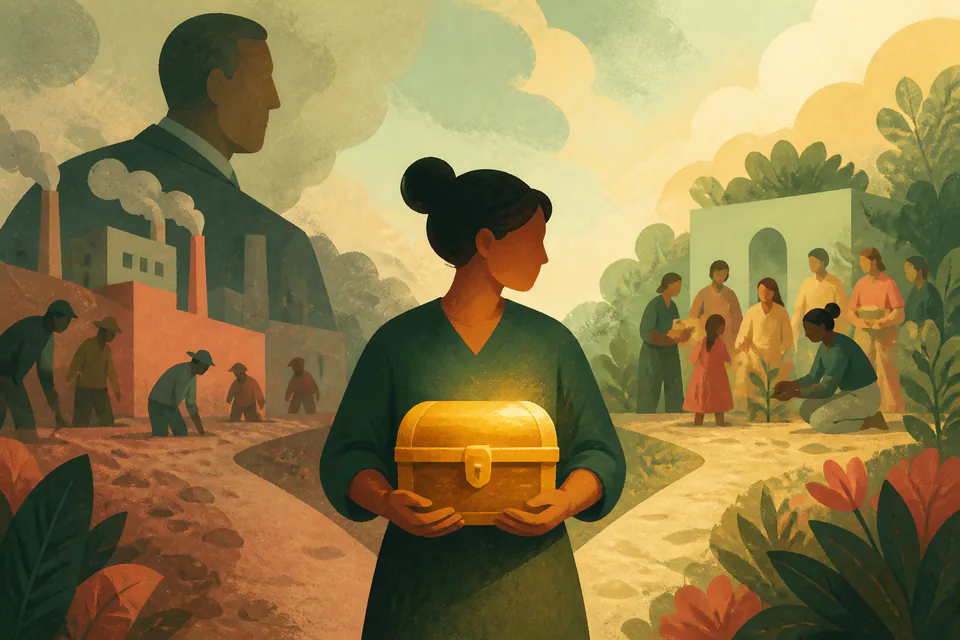
You inherit a fortune made in ways you despise. Can you keep it?
You inherit a substantial sum from a relative who accumulated it through practices you consider exploitative. Keeping it would improve your family's security; donating it could support people harmed by similar practices.
Can ownership be morally clean when its history is not?