Listen through the publisher, then discuss the episode here or arrange an in-person Roundtable. Your city determines where to meet.
Roundtables are designed for groups of four, with a shared subject and room for everyone to speak. Come for discussion, with no dating expectation.
Allegations of a media conspiracy against Alan Jones have been put to the journalist who broke the assault allegations story. Reporter Isobel Roe returns to the pod to explain the evidence of investigative reporter Kate McClymont, including her denials she put words in the mouths of complainants. Also, why Complainant A's mother supported his decision to go to police while still receiving financial assistance from Alan Jones. If you have any questions you'd like Isobel and Stocky to answer in future episodes, please email [email protected]. Sexual assault support services: MARS Australia (for men affected by rape and sexual abuse) (https://marsaustralia.com.au/) on (07) 3857 1222, National Survivors Foundation (https://igff.org.au/) on 1300 124 43 You can find all episodes of The Case of Alan Jones here. (https://www.abc.net.au/listen/programs/the-case-of/the-case-of-alan-jones/106995118)
Episode information is provided by the publisher. Listening takes place on the publisher’s service.
In June 1984, Judy Weaver walked home from the Everett bar she managed on the last night of Salty Sea Days. Her case went cold for forty years, until a DNA hit and a fake gum survey put Everett detectives on a stranger's doorstep in Olympia. Then a phone call about a different case changed everything. If you have information about Mitchell Gaff (also known as Sam Wise Price), contact the Everett Police Department tip line at 425-257-8450. Resources: RAINN National Sexual Assault Hotline, 1-800-656-4673 or rainn.org. Suicide and Crisis Lifeline: call or text 988. Sources: Everett Police Department, March 13, 2026 release on the Susan Vesey charge The Everett Herald (Daily Herald): July 14 and 15, 1980; June 1984 obituary for Judy L. Weaver; Aug. 18, 2000 and Dec. 2000; June 3, 2009 (Jackson Holtz); May 1, 5 and 11, 2024; Feb. 5, March 14, April 17 and May 14, 2026 (Jenna Millikan, Ian Davis-Leonard and others) USA TODAY, May 13, 2026, Amanda Lee Myers ABC News, coverage of the Vesey cha
"I can say with 100% confidence I was raped." Those were Jane Doe's words to Cornell University Police. But when the district attorney explained why no criminal charges had been filed, he characterized her signed statement as describing sexual activity that was voluntary, conscious, and consensual. Then a much longer police interview became public. The prosecutor said he'd never seen it. In Part 2, Tyrella and Nikita examine the six-page statement at the center of the controversy, the evidence behind the decision not to prosecute, and why Cornell's own investigation reached very different disciplinary outcomes. What does New York law actually require to establish a sexual offense? How does that differ from a university's consent policy? And what happens when two institutions examine the same night but answer fundamentally different questions? With the case reopened and institutional decisions under renewed scrutiny, the Cornell 7 story raises a question much bigger than one fraternity
A woman in her early twenties bravely walks into Detective Aaron’s agency and shares a harrowing admission: for years, she says she suffered abuse at the hands of her father. Aaron begins an investigation, working closely with her to document what happened, follow the evidence, and understand the full scope of the abuse. As the case develops, the stakes become even higher with the possibility that others could be at risk. This is the story of one remarkable woman’s determination to confront her past, seek justice and closure, and help protect potential future victims. Detective Aaron (Retired) started his law enforcement career as an Explorer in Alaska at 13 years old. He then spent 21 years as a sworn police officer in Alaska and Oregon. During his career he was assigned to patrol, Field Training, was a police instructor, spent time assigned to a drug enforcement team and spent his final 11 years assigned to his agency’s Major Crimes Team as a homicide and child abuse detective. Detec
In this remastered Crime Analyst series, Laura Richards puts the women back at the centre of the story. For decades, the women murdered and attacked by Peter Sutcliffe (known as PS in this series) were overshadowed by the man who targeted them. In this episode, Laura interviews author, journalist, campaigner and survivor Julie Bindel, who was living in Leeds during PS's reign of terror. The day before Jacqueline Hill was murdered, and close to where Jacqueline was killed, Julie was followed home from the pub by a man fitting PS's description. Julie shares what happened that night, what it was like living under the threat of male violence in West Yorkshire, and the police response. Laura and Julie also explore the terminology surrounding prostitution versus sex work, societal attitudes towards women, and what needs to change to prevent male violence. Julie has written extensively on rape, domestic violence, sexually motivated murder, prostitution and trafficking, child sexual exploitati
This episode, Kaelyn welcomes her new co-host, Sylas Dean, as they cover the disappearance of Cari Farver. The single mom was last seen in Omaha, Nebraska, on November 13th, 2012. Days later, the man she’d been dating started getting messages from her. Then threats. Tens of thousands of them, for three years. Cari seemed to be everywhere and nowhere at the same time. Kaelyn and Sylas follow the clues: dozens of fake email accounts, a house fire, a shooting, and a hidden photo that broke the case wide open. Need More to Binge? TikTok: @Crimehouse (https://www.tiktok.com/@crimehouse) X: @crimehousemedia (https://x.com/crimehousemedia) Clues is hosted by Kaelyn Moore and Sylas Dean Instagram: @itskaelynmoore (https://www.instagram.com/itskaelynmoore/) | @sylasdean (https://www.instagram.com/sylasdean/?hl=en) TikTok: @heartstartspounding (https://www.tiktok.com/@heartstartspounding) | @creeptime (https://www.tiktok.com/@creeptime) Episode Sponsor: Let Rocket Money help you reach your finan
Start your free trial of Perplexity Computer today at http://PPLX.ai/hiddenthird (http://pplx.ai/hiddenthird) and experience the next phase of AI. #ad Go tohttp://Quince.com/hiddenthird (http://quince.com/hiddenthird) for free shipping on your order and 365-day returns. Allison Mack played Chloe Sullivan on "Smallville," a show millions of people grew up watching. But that's not why most people know her name today. Allison was one of the most prominent members of NXIVM, a self-help group led by Keith Raniere with a secret society called DOS, where women were recruited as "slaves," branded with Raniere's initials, and pressured to hand over "collateral," like nude photos and damaging confessions. Allison helped run it. Raniere controlled almost every part of Allison's life. She had to ask permission every time she wanted to eat and was only allowed 500 calories a day. She slept two to four hours a night because he'd wake her up at any hour, started every morning with a cold shower, and
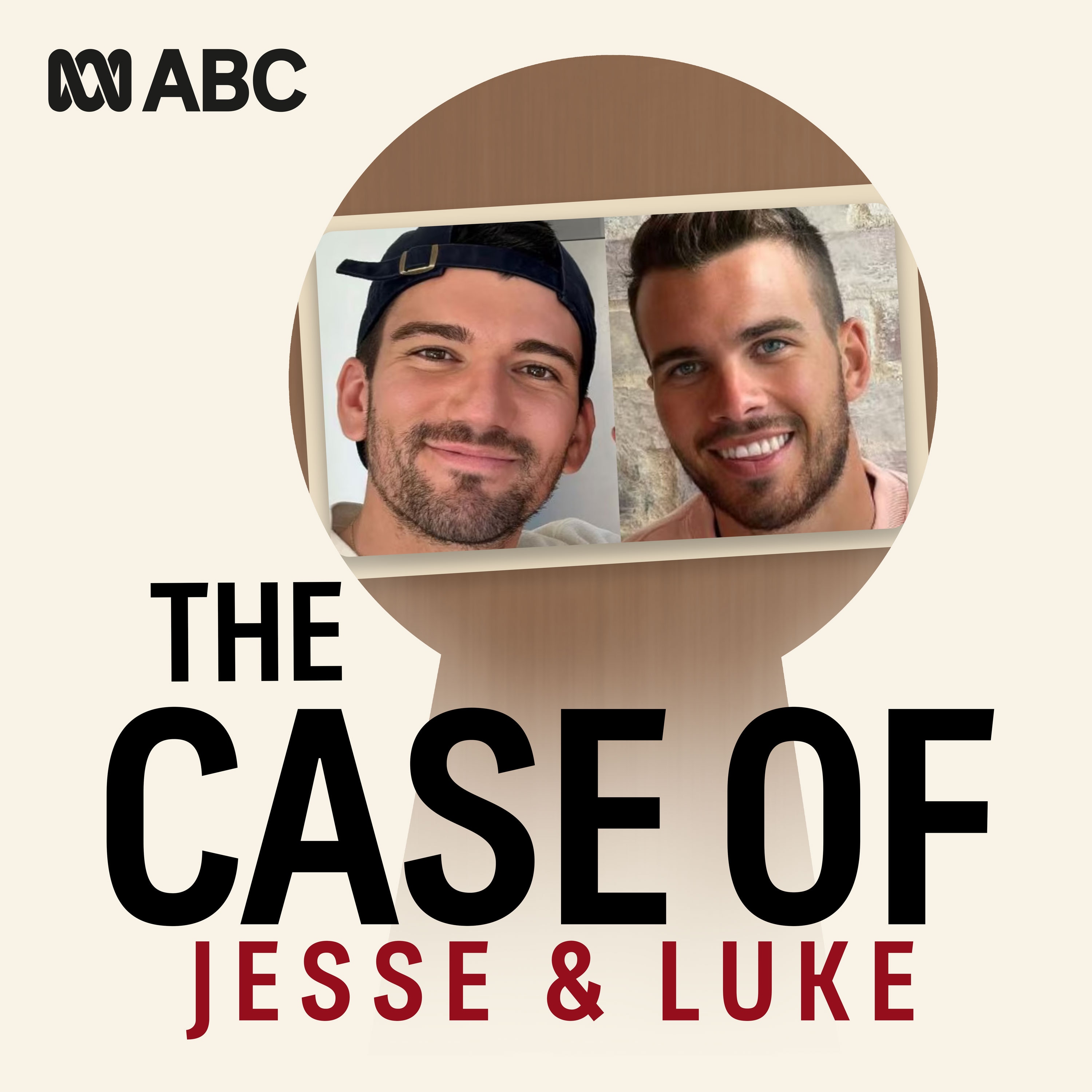
When challenged in the witness box Beau Lamarre-Condon accepted he had lied to and gaslit Jesse Baird but denied he was stalking the man he is on trial for murdering. In this episode Jamie McKinnell explains the new evidence about Jesse's ute that has been presented, the barbs the accused double murderer exchanged with the prosecutor and how his cross examination concluded.
The accused has taken to the witness box, giving his detailed version of how he says Jesse Baird and Luke Davies died, and facing an extensive cross-examination. Beau Lamarre-Condon told the court he went to Jesse Baird's home with the intention of retrieving his belongings, including an expensive Cartier ring, clothing and a surfboard. Sydney reporter Jamie McKinnell recaps his evidence, including that he fired his gun at Jesse Baird's shoulder, claiming he "110 per cent" stands by the first shot he took and was intending to disarm him, not kill him.
The court heard the accused murderer told police he "did not want to be judged" after revealing where he'd hid Jesse Baird and Luke Davies's bodies. Court reporter Jamie McKinnell also tells Stocky prosecutors revealed internet searches relating to gun silencers and a screenshot of a YouTube video on mixing concrete.
Communities should usually repair existing infrastructure before building replacements.
Share your view, then see how readers voted. No sign-in required. This poll is shared across stories.
Do you agree or disagree?
Common Quandary
A Common Quandary to discuss
Another conversation to explore, separate from this news story.
You know the relationship is over, but the vacation is nonrefundable. Do you wait to break up?
You have decided to end a year-long relationship. In five days, you are both leaving on an expensive vacation that cannot be refunded or transferred. Your partner is excited and believes the relationship is thriving.
Can avoiding financial waste justify delaying a painful truth?