Listen through the publisher, then discuss the episode here or arrange an in-person Roundtable. Your city determines where to meet.
Roundtables are designed for groups of four, with a shared subject and room for everyone to speak. Come for discussion, with no dating expectation.
Today’s poem is The Nature of Things by Jill Bialosky. The Slowdown is your daily poetry ritual. In this episode, Maggie writes… “Artist retreats exist all over the country, and all over the world, where writers and artists can work on books, musical compositions, paintings, and performances. Today’s poem takes us to such a place, where not only space and time are provided — but also, community, an invaluable resource. This show is supported by gifts from listeners.
Episode information is provided by the publisher. Listening takes place on the publisher’s service.
This week, producer Tim joins Nancy and Nick Clark for Eurotrash at the Young Vic, with Ben Whishaw and Kathryn Hunter as a son and mother on a deeply peculiar road trip through Switzerland, essentially two brilliant actors being very weird indeed. Then Nancy holds the fort for Eugene O’Neill’s Desire Under the Elms at the Almeida, after illness, flights and scheduling mishaps keep everyone else away. A farmer brings home a much younger wife, she falls for his son, and things go about as well as you’d expect in an O’Neill play. Plus, Nick Curtis talks to playwright extraordinaire Natasha Gordon as her superb debut play Nine Night returns at the Kiln. They discuss the Jamaican mourning tradition behind its story of family, grief and celebration, and Gordon sets the record straight about being called the first Black woman to have a play in the West End. And the ridiculously delightful Francesca Mills answers our five questions as she stars alongside Jill Halfpenny and Paul Chuckle in The
It’s episode 400 of @TalkArt podcast! To celebrate Robert meets PETER GABRIEL, singer, songwriter, producer, musician… ICON! We discuss his inspiring new album o\i and his lifelong passion for art and collaborating with visual artists across six decades including Helen Chadwick, Cathy de Monchaux, Nadav Kander, Ai Weiwei, Cornelia Parker and more. Following a year in which Peter Gabriel has released a new song on every full moon, the 27 November sees the release of his new studio album, o\i, the follow up to his critically acclaimed album of 2023, i/o, a number 1 in the UK album chart. Peter Gabriel returns with a brand-new collection of songs after a mere three years – his shortest gap between studio albums since the early 1980s. o\i is a companion piece to its reflected name-sake i/o expanding on many of the same themes: our relationship with nature, the passing of time, the increasing influence of technology in our lives and our place in the world; “Trying to get a handle on where y
The Gilded Age is back! I’m not just talking about the billionaires of today, or the hit HBO series (https://news.artnet.com/art-world/john-singer-sargent-the-gilded-age-hbo-2660432), but a new exhibition (https://www.metmuseum.org/exhibitions/designing-the-gilded-age-drawings-from-the-studios-of-louis-c-tiffany) at the Metropolitan Museum of Art dedicated to the spectacular designs of Louis Comfort Tiffany (https://news.artnet.com/art-world/louis-comfort-tiffany-met-nassau-market-2799918). That name will ring a bell for anyone with a passion for decorative arts. Around the turn of the 20th century, Tiffany and his studio revolutionized the field, creating dazzling stained-glass windows, lamps, and other decorative objects. These works were marvels of their time, transforming private homes and public buildings. Today, they’re touchstones of American decorative arts and remain highly sought-after by collectors. The Met's exhibition takes us behind the scenes of these enduring designs. I
Summer break can disappear into mindless scrolling, but what if three days could spark real confidence, creative skill, and even a future career? We sit down with Amy Kummer, a Houston-based interior designer and founder of Interior Design Camp, to talk about how she built a thriving business and then used that momentum to create an immersive design camp for students entering 6th through 12th grade. We get into the practical side of entrepreneurship and the interior design business: how Amy teaches herself the trade without a traditional design degree, why she believes in investing in education and vendor relationships, and how she thinks about pricing, consultations, and choosing a flat-fee structure that supports a sustainable workflow. Amy also shares how taking on high-pressure projects like show houses can accelerate growth by forcing you to do hard things and trust your own taste. Then we dig into the camp itself, including what students actually do: measuring a real room, taking
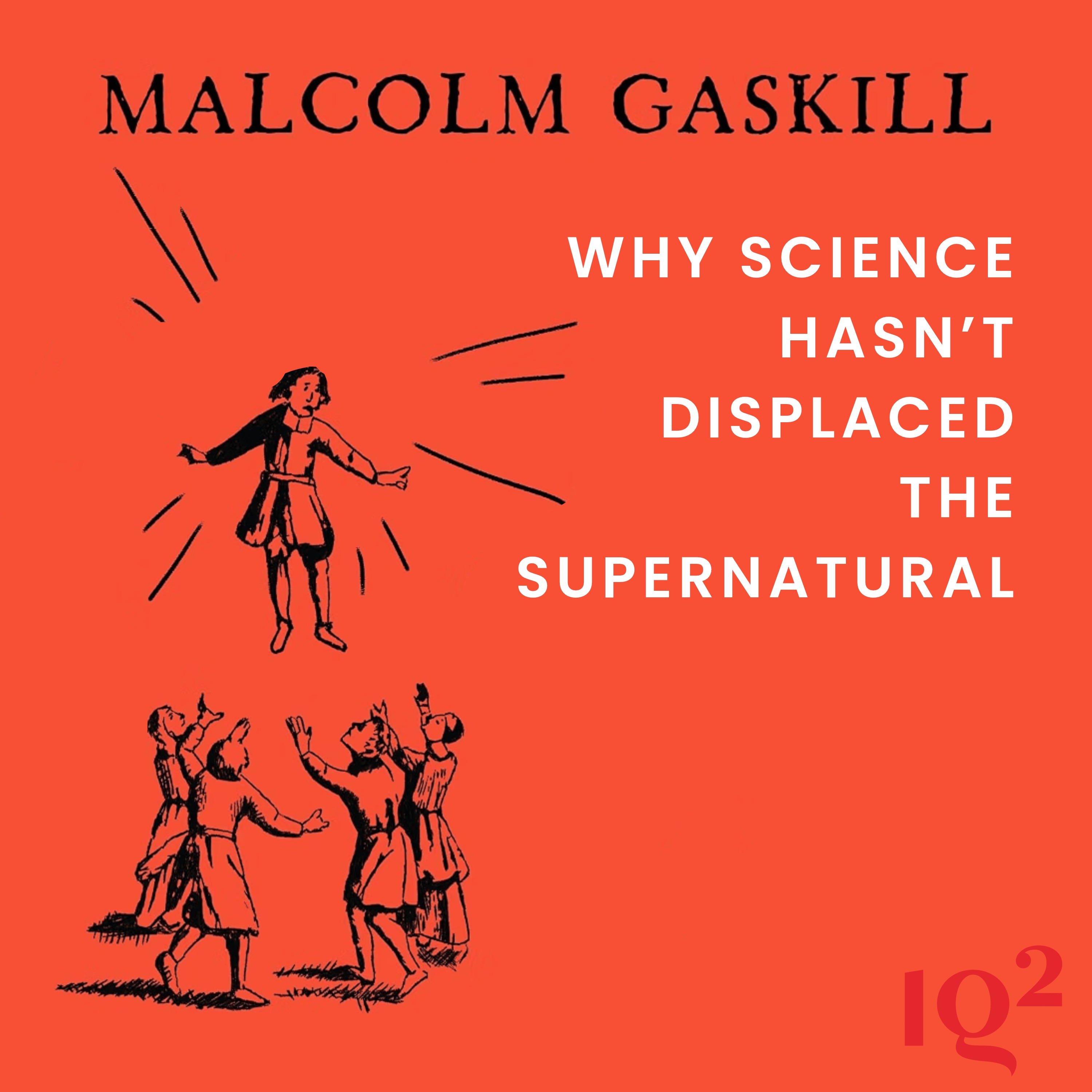
How do we make sense of the unseen? For centuries, the supernatural has offered ways to understand misfortune, find comfort and live with uncertainty. But its history is not simply a story of superstition giving way to reason. Why did people seek evidence in witchcraft trials? Can science and supernatural belief exist alongside one another? And what might today’s encounters with frontier technologies reveal to us about the persistence of the uncanny? In this episode, Margherita Volpato speaks with Malcolm Gaskill about his new book, Worlds of Fear and Wonder: Living with the Supernatural, Past and Present. Together, they explore the emotions behind supernatural beliefs that have shaped culture. They discuss Puritans searching for signs from God, the persistence of enchantment in the modern world and the uneasy relationship between technology and the uncanny. Malcolm Gaskill is Emeritus Professor of Early Modern History at the University of East Anglia and the author of seven books, inc
The Second String by Eider_Down — Chapter 27: Cock, Bird, and Snake Harry wakes in Gideon's bed after the Battle of Gringotts, and the morning brings nervous laughter, a breakfast full of teasing from the regulars at the Head, and a newspaper that calls the fight a victory. Harry must decide how much of his secret to share with the Order, and whether the careful, growing bond with Gideon can survive the questions that follow. Harry has a plan for the one threat Tom Riddle has left behind, and it involves a borrowed pair of roosters and a school he no longer attends. The chapter follows his bold, dangerous trip into the Chamber of Secrets, where things go wrong fast, and ends in a conversation with Albus Dumbledore that Harry never expected to have. About This Production This episode is part of a faithful reading of The Second String by Eider_Down. Pertinent Links Read the original work (https://archiveofourown.org/works/15465966/navigate) Join the community on Discord (https://discord.
Today’s poem is Stop the Cocoon by Elizabeth Metzger. The Slowdown is your daily poetry ritual. In this episode, Maggie writes… “Nothing’s wrong with wanting to do and be better — I’d argue that’s part of what it is to be human — but also, what’s wrong with being satisfied with who you are, how you look, and what you have? Today’s poem meditates on just that: the idea that we’re all on our own trajectories.” This show is supported by gifts from listeners.
Today’s poem is How to Be a Girl by Didi Jackson. The Slowdown is your daily poetry ritual. In this episode, Maggie writes… “Today’s poem acknowledges these cultural pressures on girls. I think I’ll share it with my daughter.” This show is supported by gifts from listeners.
Today’s poem is Prompt by Trey Moody. The Slowdown is your daily poetry ritual. In this episode, Maggie writes… “Today’s poem riffs on the idea of writing prompts, and if you listen carefully, you might find some inspiration of your own here.” This show is supported by gifts from listeners.
Automated tools should be tested with the people expected to use them.
Share your view, then see how readers voted. No sign-in required. This poll is shared across stories.
Do you agree or disagree?
Common Quandary
A Common Quandary to discuss
Another conversation to explore, separate from this news story.
A pricey AI tutor can turn B students into A students. Should schools let them use it?
An effective AI tutor adapts to each student and dramatically improves performance, but its subscription is expensive. A public school cannot provide it to everyone and worries that allowing its use will deepen existing inequality.
Should access be limited when a beneficial tool cannot yet be shared fairly?