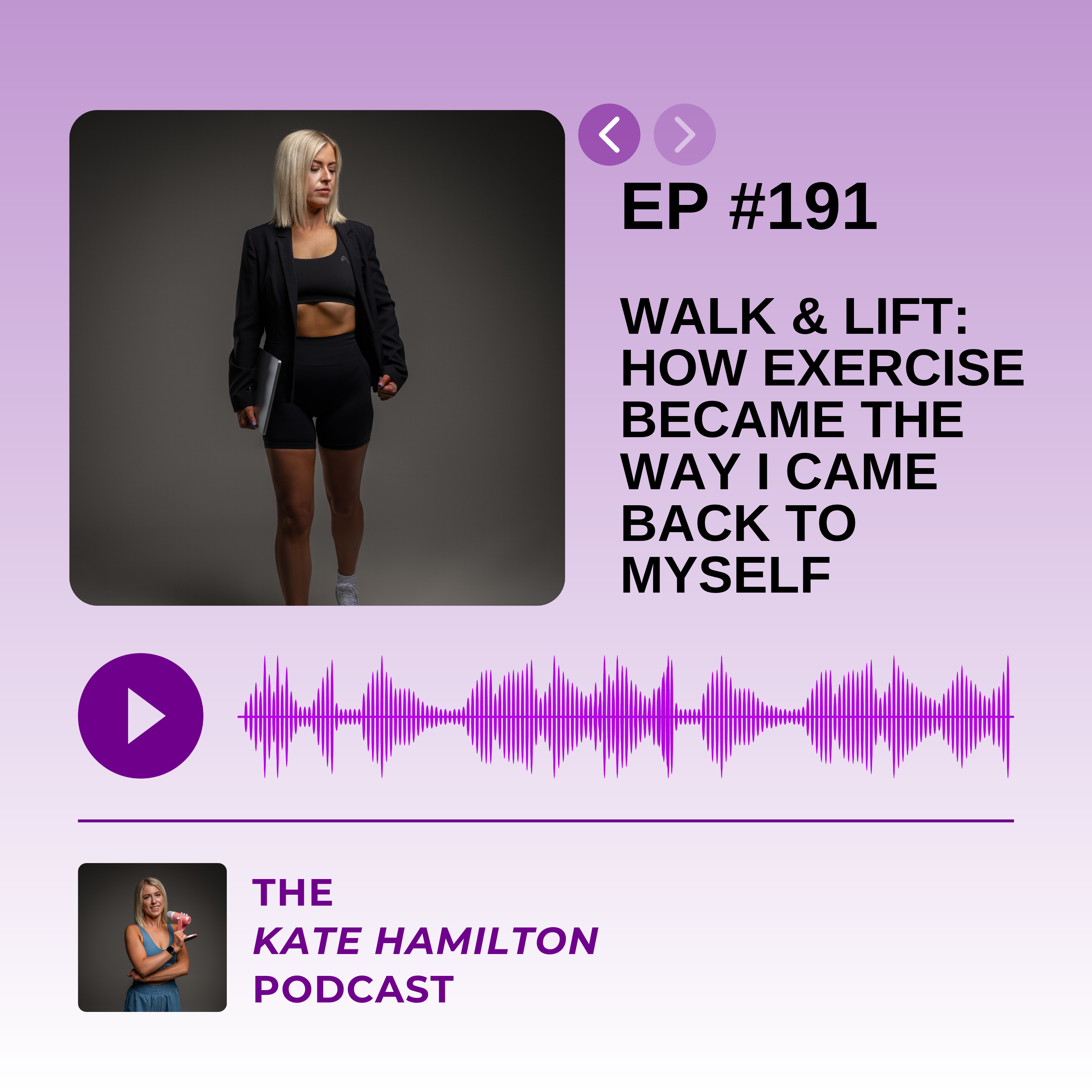
#191 - Walk & Lift: How Exercise Became the Way I Came Back to Myself
46 min
Listen through the publisher, then discuss the episode here or arrange an in-person Roundtable. Your city determines where to meet.
Roundtables are designed for groups of four, with a shared subject and room for everyone to speak. Come for discussion, with no dating expectation.
When I started working out in 2015, I’ll be honest, it was all about looking good. I was doing home workouts squeezed in around three small kids. I had no idea where it would take me. In this episode I’m sharing how exercise became the thing that brought me back to myself. That includes the tough 2017 pregnancy, the injury, my 52-pound weight loss, and the anxiety I had to walk my way through. I talk about: How trying and failing in a supportive gym built my confidence more than anything else The moment I stopped caring how my body looked and started caring what it could do Why lifting heavy on my own became my meditation, and a way of showing my body love, gratitude and respect How my daily walk turned into a celebration of freedom and headspace My “walk and lift” philosophy, and why I believe mindfulness starts in the body I’m finishing with a 7-day challenge for you: walk every day, lift heavy twice, and journal how you feel. Grab my free Body First Reset to keep you on track, and let me know how you get on! Grab my free Body First Reset here: here (https://katehamiltonhealth.com/body-first-reset) Timestamps 00:00 Deep Truth of Exercise 02:31 How It All Started 04:55 Rock Bottom to Comeback 07:18 Personal Growth Meets Fitness 13:01 Inside Changes Through Training 14:44 CrossFit Confidence Shift 20:14 Training Alone as Meditation 23:39 Honor Your Body 27:15 Walk and Lift Philosophy 29:12 Walking Through Anxiety 33:39 Body First for Clarity 40:59 Seven Day Reset Challenge 43:28 Free Download and Wrap Up Links & Resources: Apply for LeadHer business mentorship here (https://www.katehamiltonhealth.com/business)
Episode information is provided by the publisher. Listening takes place on the publisher’s service.
For written details on this paper, see the StayCurious Metabolism Newsletter: https://staycuriousmetabolism.substack.com/p/the-art-of-a-heartbeat-one-of-the?r=40ekz2 Snyder Interview 1: https://youtu.be/mCrc4gfbK2o Snyder Interview 2: https://youtu.be/kMpGkg4zMOU Snyder Interview 3: This one! Snyder Interview 4: Coming Soon… Leptin Resistance Letter: https://staycuriousmetabolism.substack.com/p/obesitys-secret-letters-the-hidden?r=40ekz2 Gift Guide: https://staycuriousmetabolism.substack.com/p/saint-dr-nicks-holiday-gift-guide?r=40ekz2 This conversation with Stanford’s Professor Michael Snyder breaks down one of the most important exercise studies ever published — a deep, molecular look at what really happens inside your body when you work out. We explore how thousands of molecules shift in real time, why inflammation during exercise is actually a good thing, how omega-3 signaling, mitochondrial remodeling, nitric oxide pathways, and metabolic flexibility all come together in a coordin
You've gotten very good at pretending you don't feel it. Uploaded 21-08-26 Maybe it's a conversation with someone you love. Someone you work for. A partner, a parent, a friend who's been quietly taking more than they give. Or the hardest one of all — a conversation with yourself, the one where you finally admit something you've refused to say out loud for years. You know exactly which one I'm talking about. You felt it the moment I said the word. A name came up, or a face, and your stomach did something small and unpleasant, and you pushed it back down where it's been living. That flinch is the most honest thing that's happened to you all day. Here is the truth: the life you say you want — the freedom, the peace, the relationship, the income, the respect — there's a very good chance it's on the other side of one conversation you keep refusing to have. Not ten. One. This seminar unpacks the single mechanic behind a stuck life: the necessary conversation you keep treating like a locked d
Let go of negative thoughts, release limiting beliefs, and drift into peaceful sleep with this gentle guided sleep hypnosis for positive thinking, self confidence, and inner peace. If you've been struggling with self doubt, harsh self criticism, or the feeling that you're never good enough, this soothing bedtime journey invites you to replace those familiar thoughts with kinder, more supportive beliefs. As you settle into deep relaxation, a slow and peaceful induction helps your body soften and your mind become quiet. You'll imagine stepping into an old wood-panelled lift that gently carries you down ten floors, allowing you to relax more deeply with every level. At the bottom, you'll discover a beautiful inner library filled with the stories you've told yourself throughout your life. Here, old beliefs such as "I am not enough" and "I always fail" can be gently put away, making room for new, encouraging thoughts: • I am learning and growing every day. • I can handle things one step at
Imagine if every big change in our lives came with a whole community stepping up beside us… In this episode, I sit down with Dr Arne Rubinstein, former GP and emergency doctor, founder of the Rites of Passage Institute, and a man who's spent more than 30 years walking young people across the threshold into adulthood. Arne's work began around a fire at his very first men's gathering, listening to a hundred men wrestle with the same handful of wounds. Then in the Emergency Dpt, he kept meeting teenagers who'd pushed it one step too far... kids trying to become adults with nobody there to hold them. He came to believe every young person will go through a rite of passage either way. The question is whether we leave them to create their own, or gather around and help. We talk about why our culture is so good at turning away from the big moments - from first periods to menopause to death - and what opens up when we turn towards them. We explore: Separation, transformation and integration, an
A.I. for Starting to Exercise: Building a Routine That Actually Sticks, a practical, beginner-friendly look at how artificial intelligence can help you build a routine that actually sticks this time. Starting to Exercise? Press play on Episode 429 of A.I. for Beginners and learn exactly how artificial intelligence, especially ChatGPT, alongside Nike Training Club, can help you build a routine that actually sticks this time. WHAT YOU WILL LEARN IN THIS EPISODE - Why starting to exercise is so hard to handle alone, and what is actually going on underneath it - A specific way to use Nike Training Club to work through it, step by step - An example prompt you can copy word for word: "Here is my current fitness level and schedule, help me build a realistic beginner routine" - A second practical technique, with another ready-to-use prompt: "Give me a simple way to track my progress that doesn't rely on willpower alone" WHO THIS EPISODE IS FOR - Anyone currently working on starting to exercise
Text me what you thought of the show (https://www.buzzsprout.com/1959372/fan_mail/new) Can working night shifts affect your fertility, ovulation or IVF success? After speaking with numerous women trying to fall pregnant while working shifts, including those undergoing expensive IVF treatment, I wanted to explore what the research actually tells us. In this episode of A Healthy Shift, we discuss how night shifts, disrupted sleep and circadian misalignment may affect reproductive health. We cover: Why the fertile window is so short. Shift work, reproductive hormones and menstrual irregularities. What research says about night shifts, fertility and IVF outcomes. The roles of sleep, stress, nutrition, weight and exercise. Practical steps for women trying to conceive while working shifts. Research links shift work with menstrual irregularities, but evidence that night shifts directly cause infertility or reduce IVF success remains uncertain. If you're trying to get pregnant while working ni
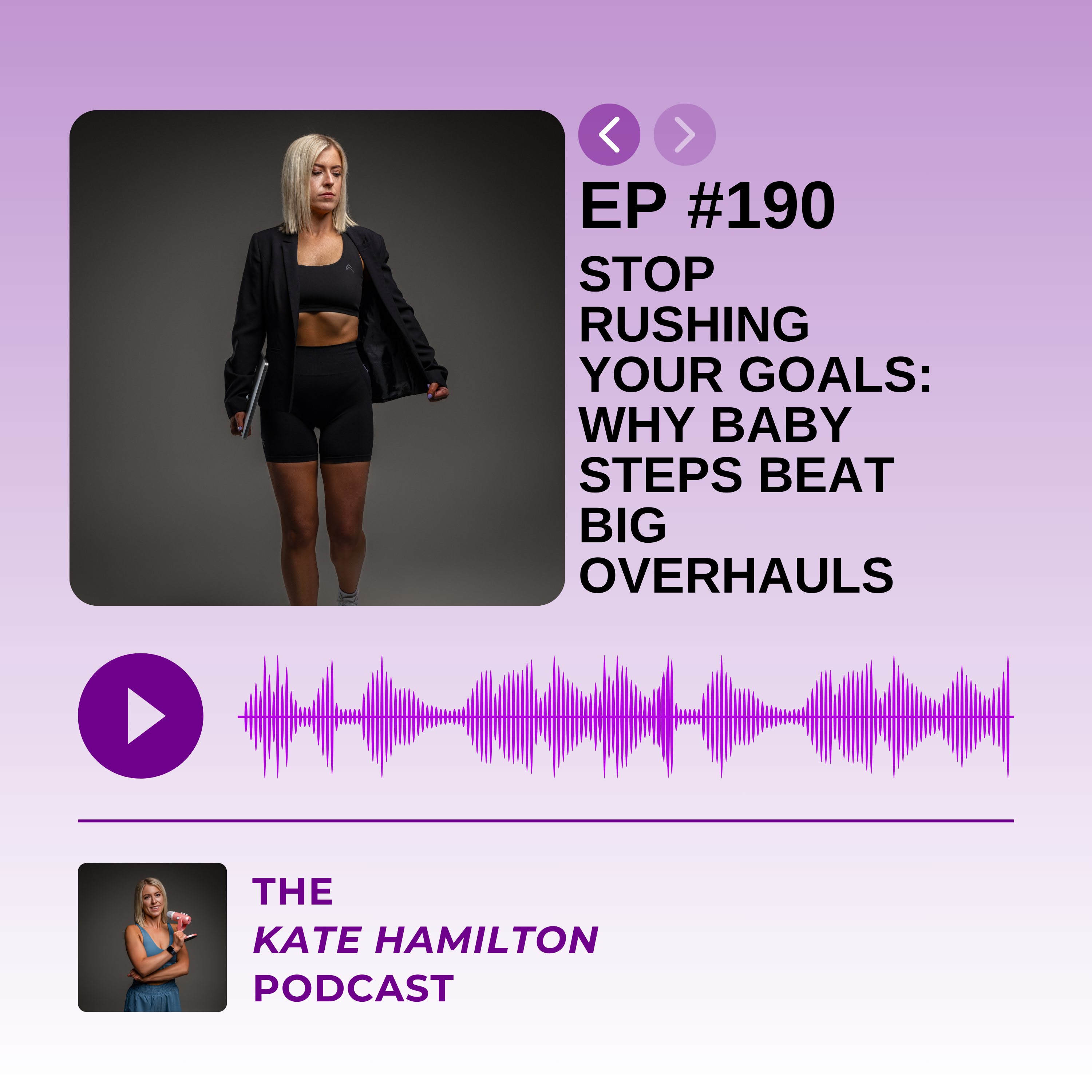
Ever gone all in on a goal, changed everything overnight, then crashed and burned a few weeks later? You’re not lazy and you’re not broken. You just went too fast. In this episode, I’m talking about why we rush our goals. It’s often to escape something that feels uncomfortable, like shame, financial stress or loneliness. That urgency leads straight to overwhelm, quitting and a fast trip back to the comfort zone. We cover the comfort zone, the growth zone and the cliff of overwhelm, and why real growth needs time, repetition and space to step into a new identity. I share my own gradual shift from teacher to health, fitness and business coach, and why your past experience is never wasted. We also talk about why a failed attempt means tweak the approach, not abandon the goal, and how to shrink your actions into baby steps and stack them onto routines you already have. Plus, the lily pad riddle and why compounding progress is so powerful. Your dream is valid. It just needs time, consistenc
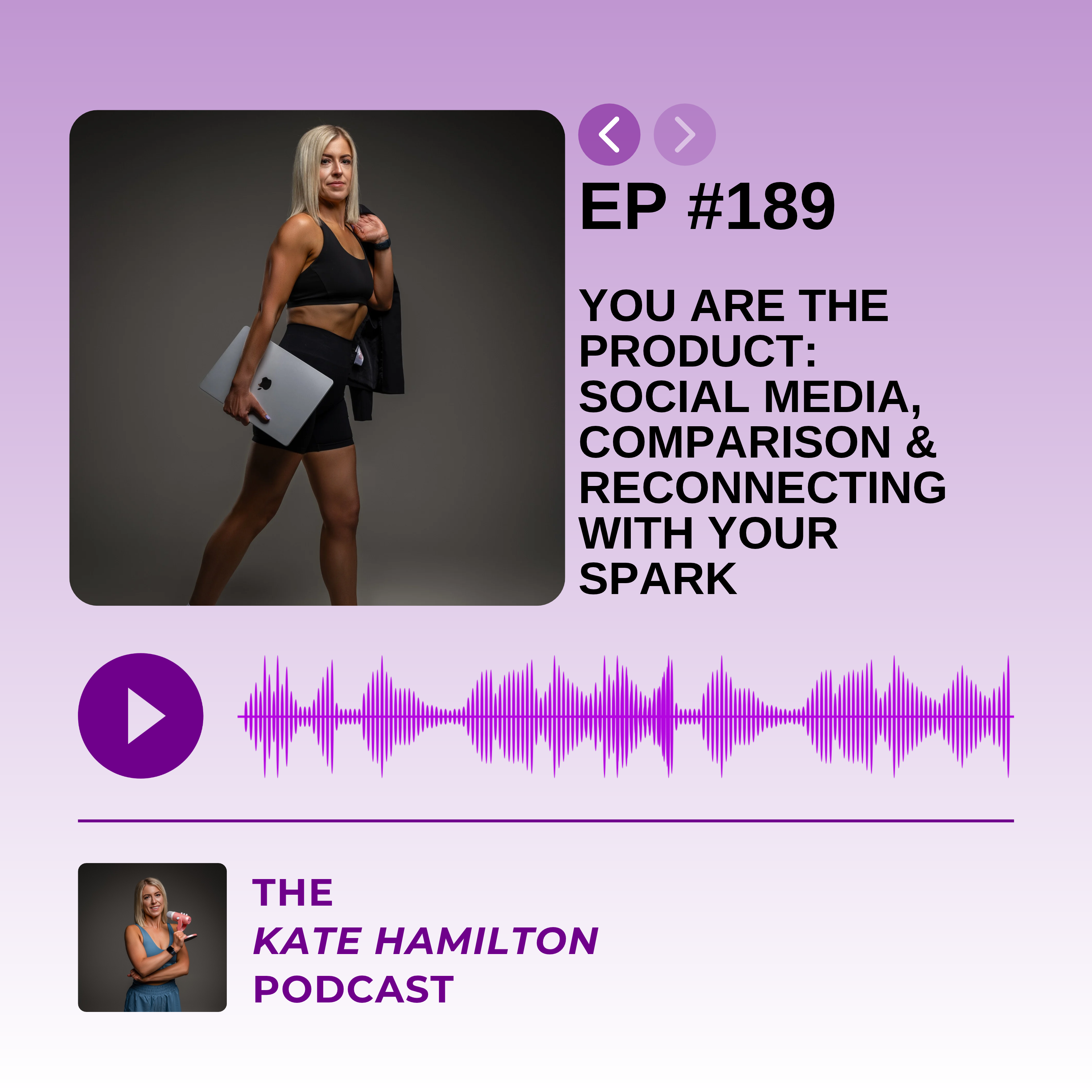
Comparison steals your joy. It chips away at your self-belief, your gratitude and how satisfied you feel with your own life. In this solo episode, I’m talking about where comparison actually starts. I share how my own body image was shaped growing up by the media’s obsession with looks, money and popularity. We also look at how diet culture, capitalism and the influencer industry keep you comparing, and why social media is “free”: you’re the product, and your attention is what’s being sold. I also share how to scroll with intention, skip what makes you feel rubbish and unfollow what triggers comparison. Healthy, beautiful and successful don’t have one look. They have an energy, and it comes from being authentic. So reconnect with your spark, follow your joy, take the baby steps even when you’re scared, and stop being so hard on yourself. If this one resonated, share it with a friend who needs to hear it. You can also download my free mental block workbook and find out more about my coa
People should receive clear risk information before buying property in hard-to-insure areas.
Share your view, then see how readers voted. No sign-in required. This poll is shared across stories.
Do you agree or disagree?
Common Quandary
A Common Quandary to discuss
Another conversation to explore, separate from this news story.
A pricey AI tutor can turn B students into A students. Should schools let them use it?
An effective AI tutor adapts to each student and dramatically improves performance, but its subscription is expensive. A public school cannot provide it to everyone and worries that allowing its use will deepen existing inequality.
Should access be limited when a beneficial tool cannot yet be shared fairly?