192. What Is the Best Macro Breakdown for Period Recovery?
28 min
Listen through the publisher, then discuss the episode here or arrange an in-person Roundtable. Your city determines where to meet.
Roundtables are designed for groups of four, with a shared subject and room for everyone to speak. Come for discussion, with no dating expectation.
When you are trying to recover from Hypothalamic Amenorrhea (HA), it is completely natural to want a concrete formula, an exact percentage of carbs, fats, and protein that will finally bring your cycle back. But when it comes to restoring reproductive hormones, does a "magic" macro split actually exist? In this episode, the team unpack the science behind macronutrients and hormonal restoration, breaking down the specific roles that carbohydrates, fats, and protein play in signaling safety to your brain and ovaries. They explore why so many active women accidentally stall their progress by clinging to outdated fitness industry macro ratios, and how over prioritizing certain nutrients at the expense of others can keep your nervous system stuck in survival mode. The team also reveals what your plate actually needs to prioritize to support ovulation, why overall energy availability matters far more than hitting exact gram targets, and how to build balanced meals without obsessing over numbers. Tune in to find out how to structure your fueling in recovery.
Episode information is provided by the publisher. Listening takes place on the publisher’s service.
Is your body weight stable, but you're still not eating enough to properly fuel your training, recovery, and overall health? Introducing Why Stable Weight Doesn't Always Mean You're Eating Enough from Jeff Hoehn of the Mind Muscle Connection Podcast (https://www.buzzsprout.com/1508401). Just because your weight isn't changing doesn't necessarily mean you're adequately fueled. In this episode, Jeff breaks down why maintaining a stable body weight doesn't always mean you're meeting your body's energy needs, especially if you're training hard, staying lean, or spending long periods dieting. You'll learn: Why stable body weight doesn't automatically mean adequate energy availability Who is most at risk of underfueling, even when their weight isn't changing How high training output, staying too lean, and chronic dieting can contribute to low energy availability The potential signs of underfueling, including changes in performance, recovery, hormones, and menstrual health Why spending too lo
For written details on this paper, see the StayCurious Metabolism Newsletter: https://staycuriousmetabolism.substack.com/p/the-art-of-a-heartbeat-one-of-the?r=40ekz2 Snyder Interview 1: https://youtu.be/mCrc4gfbK2o Snyder Interview 2: https://youtu.be/kMpGkg4zMOU Snyder Interview 3: This one! Snyder Interview 4: Coming Soon… Leptin Resistance Letter: https://staycuriousmetabolism.substack.com/p/obesitys-secret-letters-the-hidden?r=40ekz2 Gift Guide: https://staycuriousmetabolism.substack.com/p/saint-dr-nicks-holiday-gift-guide?r=40ekz2 This conversation with Stanford’s Professor Michael Snyder breaks down one of the most important exercise studies ever published — a deep, molecular look at what really happens inside your body when you work out. We explore how thousands of molecules shift in real time, why inflammation during exercise is actually a good thing, how omega-3 signaling, mitochondrial remodeling, nitric oxide pathways, and metabolic flexibility all come together in a coordin
If you're training hard but feeling wiped, eating a restricted diet for your gut, or just never hungry after a tough workout, you might not be getting the protein you need. This episode breaks down how much you really need and how to get it without upsetting your gut. YOU'LL TAKEAWAY: Macronutrients and calories 101, and how restrictive diets throw off your balance How your body digests protein, and why it matters before workouts The many roles of protein, from enzymes and iron storage to post-workout appetite How much protein you need, plus 3 easy low FODMAP ways to boost it — RESOURCES & LINKS MENTIONED: ⤵️ Want high touch coaching support for IBS & fuelling performance? Apply for coaching. (http://gutfitnutrition.com/apply) Free Training: How to Control IBS So You Can Fuel Your Training Without a Lifelong Low FODMAP Diet (https://gutfitnutrition.com/heal-ibs-training-live) Supporting your immune system when you're sick (Ep. 70) (https://open.spotify.com/episode/5bCto0jWLcbC5hQW4hrH6
Does your relationship feel like home, or does it feel like standing on the edge of something you might lose? In Part 3 of our Relationship Anxiety series, clinical hypnotherapist and former paramedic Martin Hewlett guides you through the process of teaching your nervous system that love doesn't have to hurt to be real. We explore the physical manifestations of anxiety—the tight chest, the 2:00 AM racing mind, and the "stomach drop" when a text takes too long—and provide the tools to "turn down the alarm" of your internal survival response. If you are ready to stop "cherry-picking" evidence of disaster and start building a foundation of trust, this session is for you. In This Episode, We Cover: The Science of Safety: Understanding how your nervous system confuses love with danger. Guided Visualization: A journey into your own "safe room" where you are already enough. Rewiring the Brain: Moving from worst-case disaster reels to the reality of small, daily kindnesses. Breaking the Cycle:
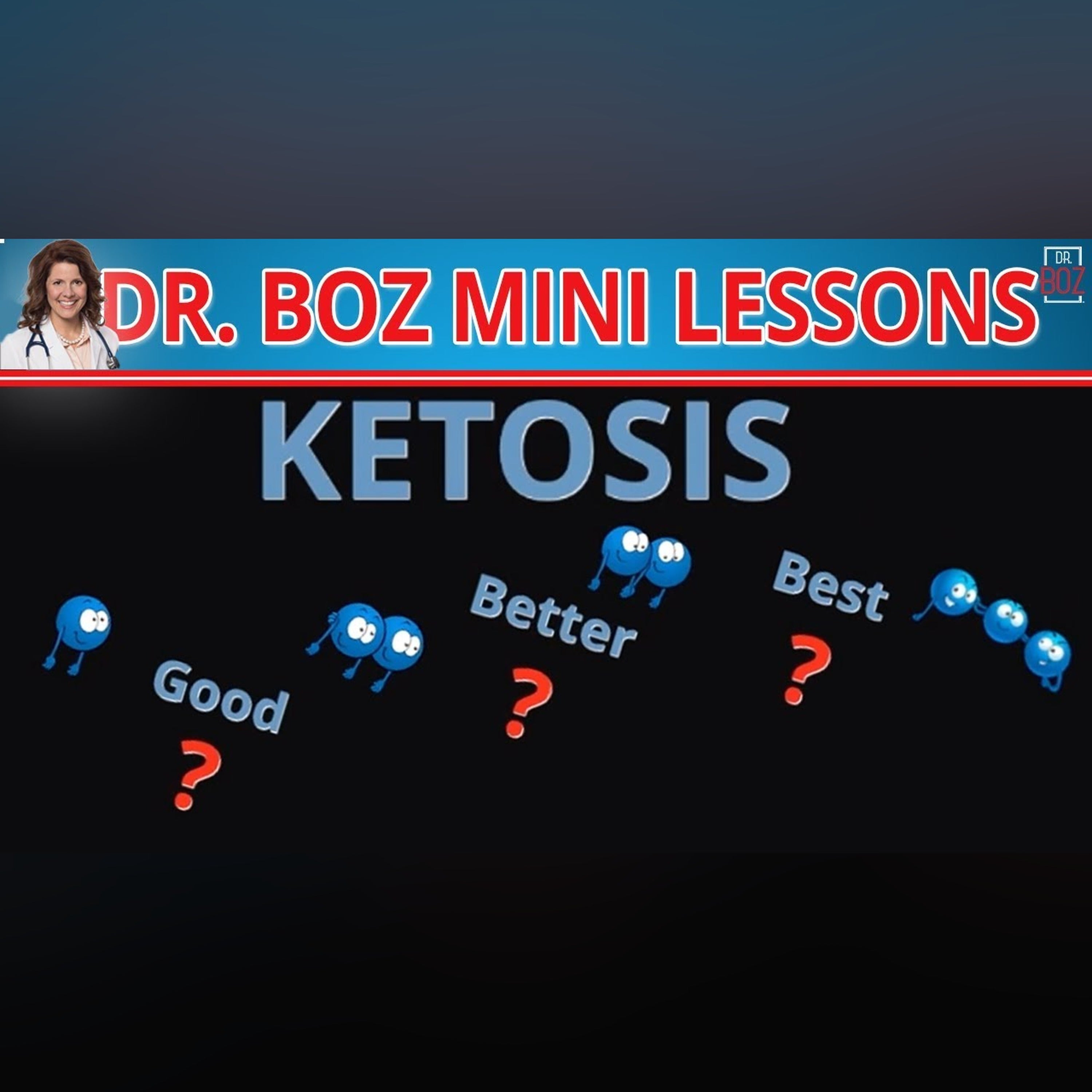
In this video I breakdown 3 ways to Get In Ketosis. Good, Better, Best! There are multiple ways to Get in Ketosis. Some good, some better, but The Best Way to Get in Ketosis may be a lot more simple than you would think! Please Like and Share if you enjoyed this MINI Lesson on how to Get in Ketosis! Like and Share if you enjoyed! Learn more about Ketones on my blog: https://bozmd.com/what-is-a-ketone/ Thanks for tuning into my channel. BOOK-LINK - ANYWAY YOU CAN. AUDIBLE: https://adbl.co/2SLLfS1 PAPERBACK= (Affilate link) https://amzn.to/2rf1fPP The most common questions I get ... 1) "Doc, what BLOOD METER do you recommend?" ANSWER: FORACARE: http://bit.ly/2QKGmKG For years my diabetics told me this system was great. I tried several others before I bought this one. I can't count the number of times I have tested my blood only to get an ERROR message from the strip. Grrr. I hate that. FORACARE gets my vote because it is accurate and takes only ONE test strip to get the results. YES!! Fo
Narcissistic abuse rewires your hormones. Cortisol, oxytocin, dopamine, thyroid, reproductive hormones and blood sugar all get thrown off, which is why so many survivors have symptoms doctors cannot explain. Chapters 00:00 Introduction 01:13 Dysregulated Cortisol Production 03:14 Disrupted Oxytocin and Dopamine Systems 05:26 Thyroid Dysfunction and Metabolic Disruption 07:23 Reproductive Hormone Chaos 09:22 Insulin Resistance and Blood Sugar Dysregulation 11:08 Why Doctors Miss These Patterns 12:03 Steps Towards Healing and Recovery 12:50 Join the Thrive After Narcissistic Abuse Program 13:17 Conclusion and Final Thoughts Is this narcissistic abuse? Watch this episode on YouTube: youtu.be/bwfVmEIk6rw (https://youtu.be/bwfVmEIk6rw)
"How much weight do I actually have to gain to get my period back?" is easily one of the most common, anxiety inducing questions anyone asks when navigating Hypothalamic Amenorrhea (HA) recovery. When you are putting in the work to restore your cycle, having a clear finish line or a target number on the scale feels like the only way to find control in an unpredictable process. In this episode, Jenna and Lilly unpack the biological reality behind recovery weights, addressing why fixing your sights on a predetermined number or an arbitrary BMI chart often does more harm than good. They explain why two athletes in the same sport might require completely different needs to restore ovulation, digging into the critical role that nervous system safety, energy availability, and the set point weight play in the recovery timeline. Tune in for an honest conversation on how to navigate body changes, let go of rigid scale expectations, and build the physical baseline your hormones actually need.
The wellness internet moves fast, but questionable nutrition trends and sales pitches manage to move even faster. In this November edition of What Drives Us Bananas, Jenna, Lilly, and Reilly team up to call out the wildest, most misleading things they spotted across social feeds, message boards, and health marketing this month. They dive into the murky waters of multi level marketing, examining why supplement heavy companies continue to thrive. Lilly is unpacking the wild west of Reddit forums, exploring why so many active individuals trade qualified clinical guidance for unvetted internet threads, and how questionable advice gains traction. Reilly then takes on the massive online obsession with daily electrolyte packets, with everyone convinced they are chronically dehydrated. Do you really need this electrolyte brand? The team discusses the science of real hydration, who actually needs sodium supplementation. Tune in for an unfiltered, and reality checking conversation on how to spot
Preventive services deserve protected funding even when immediate needs are pressing.
Share your view, then see how readers voted. No sign-in required. This poll is shared across stories.
Do you agree or disagree?
Common Quandary
A Common Quandary to discuss
Another conversation to explore, separate from this news story.
Rich parents want to buy their public-school class an art teacher. Should the school say no?
Parents at a well-resourced public school raise enough money for art teachers and smaller classes. Nearby schools cannot raise comparable amounts, widening differences within the same district.
Can helping your own community become unfair to the larger one?