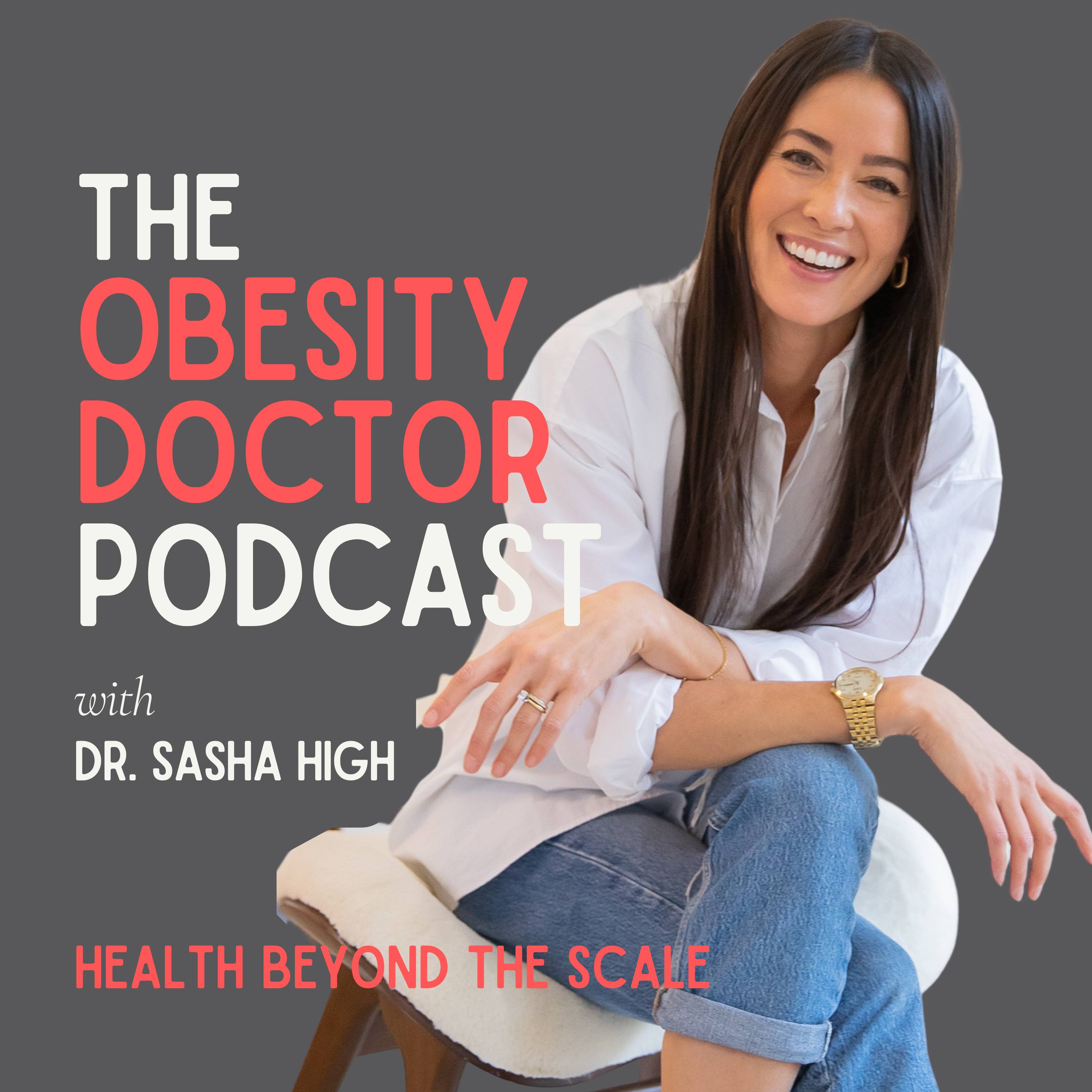
200.Understanding Your Nutrient Needs: Why Ignoring the Numbers Can Backfire
34 min
Listen through the publisher, then discuss the episode here or arrange an in-person Roundtable. Your city determines where to meet.
Roundtables are designed for groups of four, with a shared subject and room for everyone to speak. Come for discussion, with no dating expectation.
In this episode of The Obesity Doctor Podcast, Tedi Glik, Registered Dietitian, breaks down why understanding your nutritional needs can be a powerful tool for supporting your health and weight goals. We'll talk about calories, protein, carbohydrates, and fats, how to estimate your daily energy needs, and why eating too little can sometimes work against you. We'll also explore how to build balanced meals, structure your day, and use food tracking as a tool for awareness rather than restriction. In this episode, we cover: - Understanding your calorie needs (BMR vs. TDEE). - Why eating 1,200 calories isn't necessarily the answer. - How to determine your protein and macronutrient targets. - Building balanced, satisfying meals. - Simple ways to start tracking your food. - Why progress goes beyond the number on the scale. - How to move away from restrictive dieting and build sustainable habits. The takeaway? It's not about eating less or being perfect. It's about understanding what your body needs, nourishing it properly, and finding an approach you can maintain long term. Because knowledge gives you options, and the goal is to build a way of eating that supports your health, muscle mass, energy, and quality of life. RESOURCES: BMR Calculator:https://www.calculator.net/bmr-calculator.html WORK WITH US: Dietitian Services: Ontario-Wide Virtual Obesity Management Clinic https://www.highmetabolicclinic.com (https://www.highmetabolicclinic.com/) Join our Weight Loss Coaching Program for women, Best Weight https://www.sashahighmd.com/bestweight Recover Strong for Binge Eating Taking the first step toward weight loss can feel overwhelming — but you don’t have to do it alone. I’ve created a curated list of my podcast episodes to gently guide you as you begin your journey. https://www.sashahighmd.com/podcast-guide FOLLOW SASHA Instagram
Episode information is provided by the publisher. Listening takes place on the publisher’s service.
Is your body weight stable, but you're still not eating enough to properly fuel your training, recovery, and overall health? Introducing Why Stable Weight Doesn't Always Mean You're Eating Enough from Jeff Hoehn of the Mind Muscle Connection Podcast (https://www.buzzsprout.com/1508401). Just because your weight isn't changing doesn't necessarily mean you're adequately fueled. In this episode, Jeff breaks down why maintaining a stable body weight doesn't always mean you're meeting your body's energy needs, especially if you're training hard, staying lean, or spending long periods dieting. You'll learn: Why stable body weight doesn't automatically mean adequate energy availability Who is most at risk of underfueling, even when their weight isn't changing How high training output, staying too lean, and chronic dieting can contribute to low energy availability The potential signs of underfueling, including changes in performance, recovery, hormones, and menstrual health Why spending too lo
So many of us have learned to be strong by pushing through difficult things, ignoring our needs, and holding everything together, even when we're struggling inside. And while these strategies may have helped us through difficult times, they can also leave us feeling disconnected from ourselves. But our authentic inner strength feels very different. It's rooted in our ability to stay connected to ourselves, trust our inner knowing, and make choices that reflect our deepest values and needs. And it can help us feel more empowered to shape our lives in ways that feel meaningful and aligned. The beautiful thing is that this strength is already within us, even if we learned to disconnect from it somewhere along the way. In this episode of Somatic Healing Meditations (https://helloinnerlight.com/podcast), I'll guide you on a soothing journey inward to reconnect with the depth and breadth of the true strength you carry within. Together, we'll explore some of the beautiful and powerful qualiti
If you're training hard but feeling wiped, eating a restricted diet for your gut, or just never hungry after a tough workout, you might not be getting the protein you need. This episode breaks down how much you really need and how to get it without upsetting your gut. YOU'LL TAKEAWAY: Macronutrients and calories 101, and how restrictive diets throw off your balance How your body digests protein, and why it matters before workouts The many roles of protein, from enzymes and iron storage to post-workout appetite How much protein you need, plus 3 easy low FODMAP ways to boost it — RESOURCES & LINKS MENTIONED: ⤵️ Want high touch coaching support for IBS & fuelling performance? Apply for coaching. (http://gutfitnutrition.com/apply) Free Training: How to Control IBS So You Can Fuel Your Training Without a Lifelong Low FODMAP Diet (https://gutfitnutrition.com/heal-ibs-training-live) Supporting your immune system when you're sick (Ep. 70) (https://open.spotify.com/episode/5bCto0jWLcbC5hQW4hrH6
What if the scale isn't telling you the whole story? Have you ever been consistent with your workouts, making better food choices, and really trying to take care of yourself, only to step on the scale and see absolutely no change? And just like that, your motivation takes a hit. You start questioning whether your workouts are working, whether you're doing enough, or whether you need to change something. But here's what I want you to understand: The scale is only measuring one small piece of your health and fitness journey. It doesn't measure how much stronger you've become, how much better your endurance is, how much energy you have, or how much easier it is to do things that used to feel difficult. And if you're only using the scale to determine whether you're making progress, you could be missing some pretty amazing changes happening in your body. Today, we're talking about five ways to measure your fitness progress beyond the scale so you can start recognizing the changes that actua
For a written digest on the guidelines, see the StayCurious Metabolism Letter: https://staycuriousmetabolism.substack.com/p/the-new-dietary-guidelines-actually?r=40ekz2 The 2025–2030 Dietary Guidelines are being marketed as a major reset with a simple message: put “real food” back at the center of the American diet. And in a lot of ways, they do represent progress. But when you actually read what’s written, some of the most important details raise real questions. For example, the document still states that saturated fat should not exceed 10% of total daily calories. To separate signal from spin, I’m joined by Dr. Ty Beal PhD, who worked on the evidence review side of the Guidelines process, to explain what the scientific background documents actually say, what happens after scientists submit reviews, and why the final public-facing document can end up with compromises, inconsistencies, or imprecise terminology. If you want a clear, good-faith breakdown—what’s genuinely better, what sti
This one is not a new concept, we actually talked about it years ago, but it showed up in such a stark contrast across the roster recently that it was worth coming back to. The short version is that the more you move, the more you can eat, and the less miserable a fat loss phase tends to be. What brought it back up was seeing it at both ends with different clients. The first was the client Aaron flew to Italy to peak. She eats more food relative to her size than anyone he has coached, and after being in the same house with her for a couple of hours, the reason was pretty obvious. The other client is one Aaron has worked with for years and had a lot of success with, and this summer the diet went poorly. The thing that changed was movement. Even with food lower than past diets, it was slower and more of a grind than anything we had done together. That contrast is really the whole episode. When movement is low, calories may have to go so low to keep losing fat that it gets significantly h
Two hundred episodes. I almost didn't start this podcast because I was afraid - afraid of what others would think, afraid that I didn’t have a “right” to put myself out there as an expert. , And when I hit this milestone, I almost didn't notice it. In this episode, I celebrate 200 episodes and reflect on overcoming fear, letting go of perfection, and pausing to celebrate progress. Then we turn to what this means for your health. If outcome measures like weight and lab results are your only scoreboard, you can feel like you're failing at exactly the moments you're doing the most important work. I explain why progress milestones matter just as much, and walk you through the 25 Wins exercise we use with my coaching clients. In this episode: - Why I was scared to start the podcast, and why courage means acting while the fear is still in the room - Leaving internal medicine to carve my own path, and what that taught me about taking risks - 200 episodes, more than 355,000 downloads, and a po
Preventive services deserve protected funding even when immediate needs are pressing.
Share your view, then see how readers voted. No sign-in required. This poll is shared across stories.
Do you agree or disagree?
Common Quandary
A Common Quandary to discuss
Another conversation to explore, separate from this news story.
Rich parents want to buy their public-school class an art teacher. Should the school say no?
Parents at a well-resourced public school raise enough money for art teachers and smaller classes. Nearby schools cannot raise comparable amounts, widening differences within the same district.
Can helping your own community become unfair to the larger one?