202: Why maintaining your weight can feel harder than losing it
46 min
Listen through the publisher, then discuss the episode here or arrange an in-person Roundtable. Your city determines where to meet.
Roundtables are designed for groups of four, with a shared subject and room for everyone to speak. Come for discussion, with no dating expectation.
For a lot of you.. 'tis the season of trying to be at maintenance. Or this could be a time of the year where practicing eating more + not being in a deficit can be really productive. On paper it sounds easy, but let's chat about why this can be so challenging for some. And this applies to all seasons not just the holidays. Maintenance should be your best life but I get why it can feel so hard. Let's chat about it! Where to find me: IG: @lukesmithrd (https://www.instagram.com/lukesmithrd/) Check out my website HERE (https://lukesmithnutrition.com/) Fill out a 1:1 Coaching Application HERE (https://docs.google.com/forms/d/e/1FAIpQLSe8gpa6SwsAOCiLwnr7fSquimKQgIyLPbL1SEvDV64q72qFkQ/viewform) TIA for listening! Always here if you need anything.
Episode information is provided by the publisher. Listening takes place on the publisher’s service.
Is your body weight stable, but you're still not eating enough to properly fuel your training, recovery, and overall health? Introducing Why Stable Weight Doesn't Always Mean You're Eating Enough from Jeff Hoehn of the Mind Muscle Connection Podcast (https://www.buzzsprout.com/1508401). Just because your weight isn't changing doesn't necessarily mean you're adequately fueled. In this episode, Jeff breaks down why maintaining a stable body weight doesn't always mean you're meeting your body's energy needs, especially if you're training hard, staying lean, or spending long periods dieting. You'll learn: Why stable body weight doesn't automatically mean adequate energy availability Who is most at risk of underfueling, even when their weight isn't changing How high training output, staying too lean, and chronic dieting can contribute to low energy availability The potential signs of underfueling, including changes in performance, recovery, hormones, and menstrual health Why spending too lo
In this meditation, I invite you to reflect on the changing light of autumn as we move towards the darker days of winter. As the daylight hours grow shorter, we can sometimes feel that we are losing something. Yet the contemplative life invites us to receive each season as it is, discovering beauty and sacredness in the present moment. Beginning with the breath, we explore the difference between the changing light around us and the unchanging light of divine presence within. From the gentle light of morning to the lamps that illuminate our evenings, every expression of light becomes an invitation to awareness. As we breathe, we allow ourselves to be filled with divine light, offering compassion, peace and prayer to those in need. Chapters: 00:00 – Introduction: Autumn light 01:10 – Entering meditation with intention 01:58 – Relaxing the body and following the breath 02:48 – Returning to the present moment 03:12 – Becoming aware of the light within 03:40 – The gift of divine light 04:10
This one is not a new concept, we actually talked about it years ago, but it showed up in such a stark contrast across the roster recently that it was worth coming back to. The short version is that the more you move, the more you can eat, and the less miserable a fat loss phase tends to be. What brought it back up was seeing it at both ends with different clients. The first was the client Aaron flew to Italy to peak. She eats more food relative to her size than anyone he has coached, and after being in the same house with her for a couple of hours, the reason was pretty obvious. The other client is one Aaron has worked with for years and had a lot of success with, and this summer the diet went poorly. The thing that changed was movement. Even with food lower than past diets, it was slower and more of a grind than anything we had done together. That contrast is really the whole episode. When movement is low, calories may have to go so low to keep losing fat that it gets significantly h
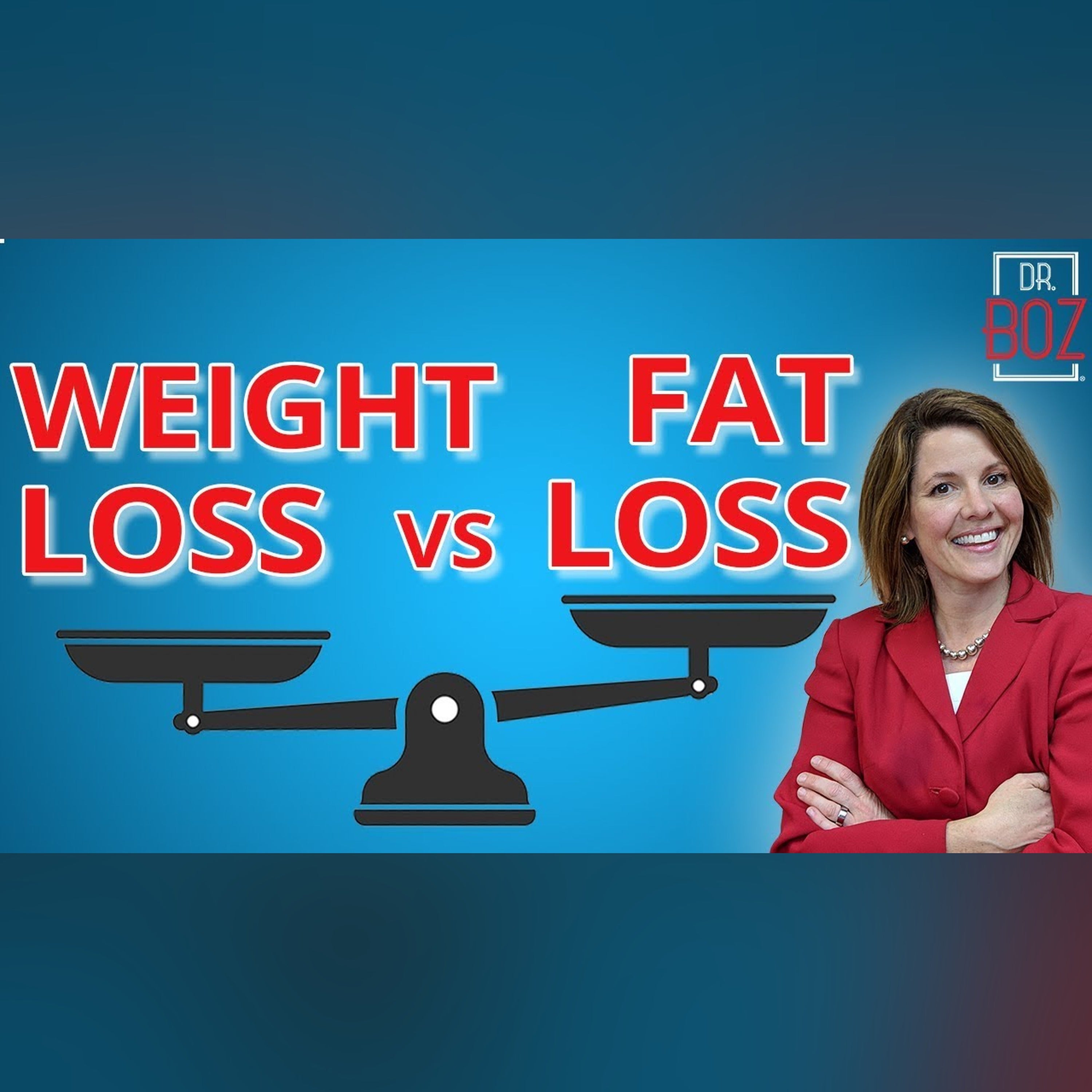
There’s a major difference between Weight Loss vs Fat Loss. In this video I’ll explain how to Not Lose Weight on Keto. Understanding Weight Loss vs Fat Loss can make all the difference in your Keto Journey. If you want to Lose Weight, you want to Lose Fat, but understand that Weight Loss vs Fat Loss is significantly different. It’s important to understand how Weight Loss vs Fat Loss differ, especially for those Not Losing Weight on Keto. This is a clip from Keto Consult 25, watch here: https://bit.ly/2XpfQXi Thanks for checking out the Dr Boz Channel. Tune in Sunday nights, 6PM Central Time to watch me Live! We are KETONES FOR LIFE. Improving your health - One ketone at a time. Dr Boz’s First ONLINE Course Consistently Keto: https://bozmd.com/shop WAYS TO SUPPORT THIS CHANNEL: Buy Dr Boz Products. Dr Boz K2+D3: https://amzn.to/31lIlqL (affiliate link) Dr Boz Ketones-In-A-Can: Raspberry Lemon: https://amzn.to/2GXLlSw Dutch Chocolate Sachets: https://amzn.to/30GfnmP (affiliate link) Cucu
Robert “Bob” Sutton (https://engineering.stanford.edu/people/robert-sutton) is an expert on organizational behavior. He studies a key workplace dynamic he calls friction – moments where reaching goals is more difficult than it should be. In any organization, whether a company, government, university, or nonprofit, there are good kinds of friction and bad, Sutton says. And good friction can undo the bad, but it’s not easy. He champions what he calls a “subtraction mindset,” removing what doesn’t work to focus on what does: virtues like competence, hard work, and compassion. He likens the approach to film editing. The best editors “cut out the bad stuff and keep the good,” Sutton tells host Russ Altman (https://bioengineering.stanford.edu/people/russ-altman) on this episode of Stanford Engineering’s The Future of Everything podcast. Have a question for Russ? Episode Reference Links: TheAI and Organizations Lab at HAI (https://hai.stanford.edu/centers-labs/ai-organizations-lab) Connect wi
If you're training hard but feeling wiped, eating a restricted diet for your gut, or just never hungry after a tough workout, you might not be getting the protein you need. This episode breaks down how much you really need and how to get it without upsetting your gut. YOU'LL TAKEAWAY: Macronutrients and calories 101, and how restrictive diets throw off your balance How your body digests protein, and why it matters before workouts The many roles of protein, from enzymes and iron storage to post-workout appetite How much protein you need, plus 3 easy low FODMAP ways to boost it — RESOURCES & LINKS MENTIONED: ⤵️ Want high touch coaching support for IBS & fuelling performance? Apply for coaching. (http://gutfitnutrition.com/apply) Free Training: How to Control IBS So You Can Fuel Your Training Without a Lifelong Low FODMAP Diet (https://gutfitnutrition.com/heal-ibs-training-live) Supporting your immune system when you're sick (Ep. 70) (https://open.spotify.com/episode/5bCto0jWLcbC5hQW4hrH6
I haven't weighed myself in a few months and surprisingly.. it's been pretty refreshing. Let's talk about why, what I've noticed/learned + how it's changed the way I think about the scale and measuring progress. Where to find me: IG: @lukesmithrd (https://www.instagram.com/lukesmithrd/) Check out my website HERE (https://lukesmithnutrition.com/) Fill out a 1:1 Coaching Application HERE (https://docs.google.com/forms/d/e/1FAIpQLSe8gpa6SwsAOCiLwnr7fSquimKQgIyLPbL1SEvDV64q72qFkQ/viewform) TIA for listening!
Companies should explain underlying business problems when reporting financial results.
Share your view, then see how readers voted. No sign-in required. This poll is shared across stories.
Do you agree or disagree?
Common Quandary
A Common Quandary to discuss
Another conversation to explore, separate from this news story.
If a good deed is filmed for likes, is it still a good deed?
A local creator films themselves buying groceries for strangers. The videos generate substantial income, but they also inspire donations and allow the creator to help more people.
Do mixed motives diminish a genuinely helpful act?