Listen through the publisher, then discuss the episode here or arrange an in-person Roundtable. Your city determines where to meet.
Roundtables are designed for groups of four, with a shared subject and room for everyone to speak. Come for discussion, with no dating expectation.
This final episode of the Rome series traces the dramatic passage from Renaissance promise to persecution and Ghetto life. Jewish life experienced a period of relative protection as popes rebuilt the city and focussed on art. But this fragile security collapsed in the sack of Rome in 1527, when imperial troops devastated the city and its Jewish community. At its heart is Rav Ovadiah Sforno: physician, dayan, philosopher and commentator, whose years in Rome included teaching the Christian Hebraist Johannes Reuchlin. The episode also explores his defence of Torah and the discovery of his teachings through a student's manuscript. His recently published Final Will, witnessed by a baker, knight, church deacon & builder, adds a personal glimpse of his property, business interests and charity. Sforno's anguish over exile and his warnings against communal division lead into the darker Rome that followed: the burning of the Talmud in 1553 and the establishment of the ghetto in 1555. The episode then returns to its larger question: what does Edom mean in Jewish writings and thought, through history? And how far does Rome's spiritual and cultural influence exist in the modern West, including the USA? 00:00 Introduction: Rome During the Renaissance 02:10 Renaissance Popes and Jewish Life 05:30 The Sack of Rome in 1527 08:15 Jewish Communities in Renaissance Italy 10:40 Introducing Rabbi Ovadia Sforno 11:50 Johannes Reuchlin and the Defense of the Talmud 17:05 Sforno's Medical Career and Family 20:10 David Reuveni and Sforno's Imprisonment 25:00 Sforno's Years in Bologna 26:05 Sforno's Writings and Philosophy 32:40 Manuscripts and Religious Teachings 40:20 Sforno's Will and Family Fortune 44:50 Jewish Unity, Faith, and Scholarship 48:45 Burning of the Talmud and the Roman Ghetto 53:40 Edom, Rome, and Western Civilization 1:01:15 Visiting Rome and Its Jewish History 1:04:00 Closing Reflections
Episode information is provided by the publisher. Listening takes place on the publisher’s service.
The debate over Christian nationalism raises some uncomfortable questions about faith, politics, and the role of government. Al, Zach, John Luke, and Christian examine how Christianity transformed the Roman Empire and why the early church flourished despite intense persecution. The guys also revisit the Garden of Eden, questioning whether Adam's failure to protect Eve was the first sin and what his actions reveal about responsibility and obedience. They consider what history teaches us about the dangers of unchecked power and why Christians must put their allegiance to God's kingdom above any earthly government. In this episode: Genesis 2, verses 15–17; Genesis 3, verses 1–7; Daniel 2; John 1, verses 4–5; Matthew 5, verses 27–30; Matthew 28, verses 18–20; John 11, verses 49–52; Luke 23, verses 6–12; Galatians 3, verse 28; 1 Timothy 2, verses 11–14; Romans 13, verses 1–7 Today’s conversation is about Lesson 6 of Western Heritage: From the Book of Genesis to John Locke taught by various
What does progress mean in Islam? Dr Ahmed Paul Keeler joins Muhammad Jalal on The Thinking Muslim to discuss Mizan, the Qur’anic principle of balance and justice, and what it might mean to restore it today. What did Moorish Spain and Mughal India share? How did European colonialism shape the way Muslims understand their own history? Keeler argues that Mizan helped give Islamic civilisation its coherence across different cultures. He traces how the Western idea of progress took hold and asks what happens when technological advancement becomes the measure of a good society. What would it look like for Muslims to put Mizan into practice in their own communities? Find Ahmed Paul Keeler here: IG: https://www.instagram.com/ahmedpaulkeeler Become a member here: Or give your one-off donation here: Listen to the audio version of the podcast: Spotify: https://open.spotify.com/show/7vXiAjVFnhNI3T9Gkw636a Find us on: X: https://x.com/thinking_muslim LinkedIn: https://www.linkedin.com/company/the-
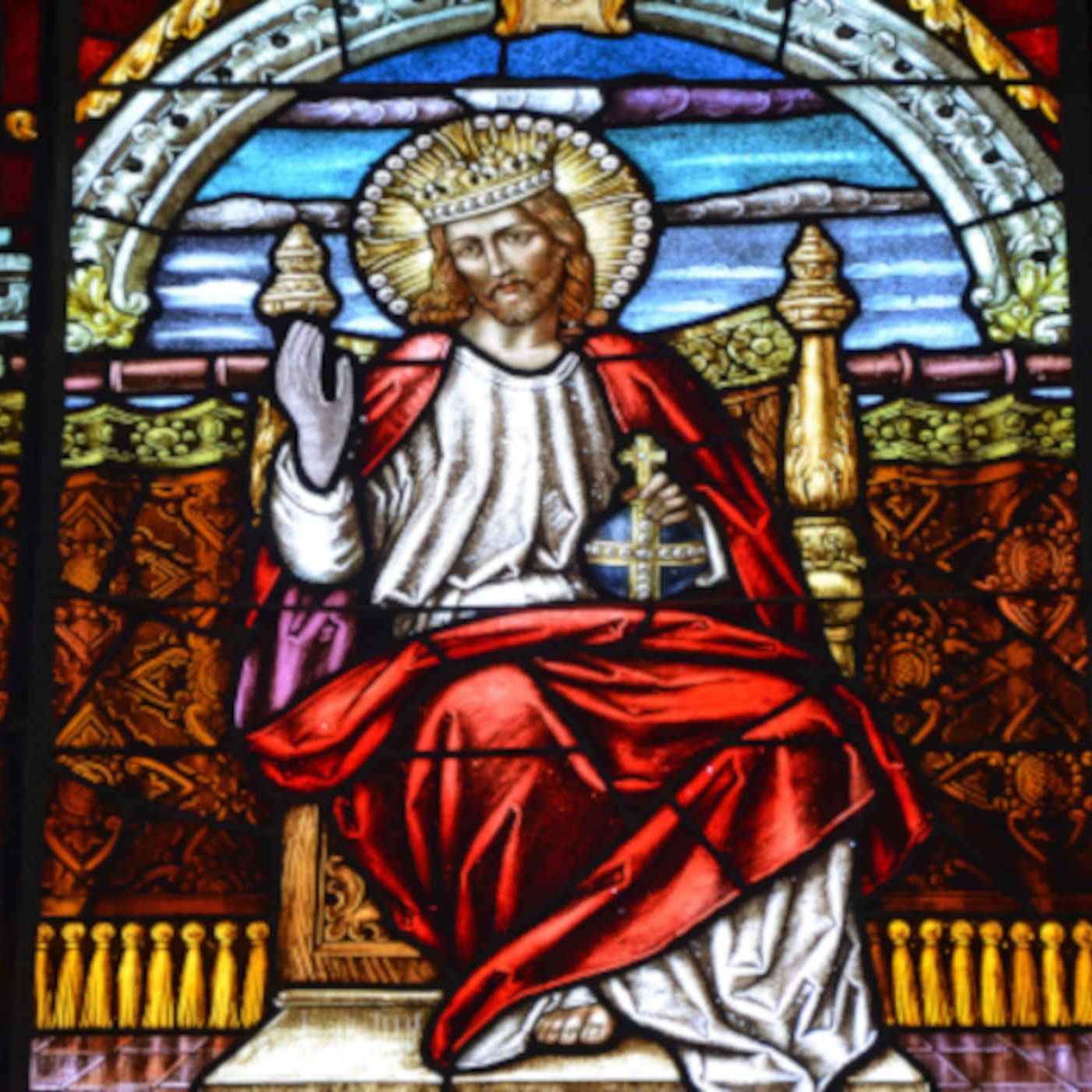
Read Online (https://catholic-daily-reflections.com/2026/11/21/christ-the-universal-king/) Christ the Universal King “Then he will say to those on his left, ‘Depart from me, you accursed, into the eternal fire prepared for the devil and his angels. For I was hungry and you gave me no food, I was thirsty and you gave me no drink, a stranger and you gave me no welcome, naked and you gave me no clothing, ill and in prison, and you did not care for me.’” Matthew 25:41–43 On June 11, 1899, Pope Leo XIII solemnly consecrated the entire human race to the Sacred Heart of Jesus, a moment he regarded as the “great act” of his pontificate. This consecration was rooted in the sacred truth that, “[Christ’s] empire includes not only Catholic nations, not only baptized persons… but also all those who are outside the Christian faith; so that truly the whole of mankind is subject to the power of Jesus Christ” (Annum Sacrum, 3). This prophetic act of entrustment was followed by decades of growing unrest
🇺🇸 TWO NAVY SEALS. TWO INCREDIBLE JOURNEYS. ONE POWERFUL MISSION TO TRANSFORM YOUR FINANCIAL FUTURE! Michael Jaco welcomes fellow former Navy SEAL Larry Yatch, founder of TruPath Mastery, for an eye-opening conversation about success, leadership, financial trauma, and the hidden subconscious patterns that can keep even the most accomplished people from reaching their full potential. With 24 years as a Navy SEAL and 11 years as a CIA security operative, Michael shares the powerful lessons of mental discipline, intuition, and personal transformation that shaped his extraordinary journey. Larry brings 10 years of Navy SEAL service and an impressive career advising Fortune 50 executives. But despite achieving tremendous professional success, he discovered that the survival patterns that once made him successful were also keeping him trapped in his own business. THE BIG REVELATION: YOUR MONEY HABITS MAY HAVE VERY LITTLE TO DO WITH MONEY! From childhood programming and fear of scarcity to
Why does Allah allow good people to suffer? When hardship enters your life, does it mean Allah is displeased with you, or could your struggles be bringing you closer to Him? Every believer experiences moments of pain, loss, uncertainty, and heartbreak. But in Islam, suffering is not necessarily a sign of Allah's anger, and experiencing sadness does not mean your faith is weak. In this powerful and comforting Islamic lecture, Ustadh Reece explores the deeper wisdom behind life's difficulties, the true meaning of Sabr, and how Muslims can remain connected to Allah ﷻ during their hardest moments. Through lessons from the Qur'an, authentic Hadith, and the lives of the Prophets, this reminder explores: - Why Allah tests those who believe in Him - How hardship can become a means of spiritual growth - What Prophet Muhammad ﷺ taught us about grief and sadness - The patience and beautiful du'a of Prophet Ayyub (AS) - How the story of Prophet Yusuf (AS) reveals Allah's wisdom - Why both blessing
Nine- and ten-year-old students in China surrounded their teacher and spat on her over a "bourgeois" hairstyle—and Xi Van Fleet says that teacher was the lucky one. Parents who escaped Communist China are now watching their own children become Marxists in America. And growing up under Mao's Little Red Book, she says you didn't even know you were controlled, because you could not think. Xi Van Fleet on what living through Mao's Cultural Revolution taught her about America today.Xi talks about surviving the 1959–1961 Great Leap Forward era and Mao Zedong's 1966 Cultural Revolution, watching the "Four Olds" campaign tear down statues and rename streets, spending three years in countryside field labor after high school before coming to the United States in 1986 with the help of an American teacher, how U.S. political and business leaders helped build Communist China over the past century, why China still restricts passports today, and why she believes biblical liberty is the antidote to st
Keeping a league competitive is more important than maximizing rewards for its strongest teams.
Share your view, then see how readers voted. No sign-in required. This poll is shared across stories.
Do you agree or disagree?
Common Quandary
A Common Quandary to discuss
Another conversation to explore, separate from this news story.
The company printer sits idle all day. Can you print two hundred wedding invitations?
Your office has a fast color printer that is rarely used, and supplies are ordered automatically. Printing your wedding invitations after hours would save substantial money. Personal use is technically prohibited but routinely ignored for small jobs.
When does an insignificant workplace perk become taking?