Listen through the publisher, then discuss the episode here or arrange an in-person Roundtable. Your city determines where to meet.
Roundtables are designed for groups of four, with a shared subject and room for everyone to speak. Come for discussion, with no dating expectation.
People respond really well to symmetry in stories. This can range from having an object from the beginning reappear at the end to having the entire plot mirrored. But why does symmetry work so well, and how can writers use it intentionally? This week, we’re trying to answer that question. We dissect callbacks, repeated images, mirrored scenes, and the satisfaction readers get from recognizing patterns. We also discuss how you can find symmetry during your revision (even if you didn't plan for it!) and why sometimes breaking a pattern is exactly what your story needs. Homework: Return to the beginning of a story or a scene just before a climax and look at what's already on the page: images, dialogue, settings, and other details. Then look at the corresponding scene near the end or after the climax and see what you might bring back or mirror. You can also work backward, planting something earlier that you've already written into a later scene. Registration is OPEN for our 2027 Retreat! Join us June 10–16, 2027, in Indianapolis for a week of small-group workshops and writing classes taught by WX hosts and guest instructors! This retreat is all about rediscovering the joy in your writing, connecting with fellow writers, and making progress on your projects—learn more and register at writingexcuses.com/retreats (http://writingexcuses.com/retreats) Credits: Your hosts for this episode were Mary Robinette Kowal, DongWon Song, Erin Roberts, and Howard Tayler. It was produced by Emma Reynolds, recorded by Marshall Carr, Jr., and mastered by Alex Jackson. Join Our Writing Community! Writing Retreats (https://writingexcuses.com/retreats/) Newsletter (https://writingexcuses.com/) Patreon (https://www.patreon.com/WritingExcuses) Instagram (https://www.instagram.com/writing_excuses/) Threads (https://www.threads.net/@writing_excuses) Bluesky (https://bsky.app/profile/writingexcuses.bsky.social) TikTok (https://www.tiktok.com/@writingexcuses) YouTube (https://www.youtube.com/@WritingExcusesPodcast) Facebook (https://www.facebook.com/WritingExcuses) Our Sponsors: * Check out MasterClass and use my code masterclass.com/excuses for a great deal: https://MasterClass.com * Check out Talkiatry and use my code talkiatry.com/WX for a great deal: https://www.talkiatry.com * Check out Tin Can and use my code tincan.com/WX for a great deal: https://tincan.kids Privacy & Opt-Out: https://redcircle.com/privacy
Episode information is provided by the publisher. Listening takes place on the publisher’s service.
What if everything you've been chasing was already inside you? It took me 40 years to understand that happiness isn't somewhere in the future, it's here, in this moment. As a younger woman, I avoided pain, resisted it, distracted myself from it. What I know now is that pain doesn't break us. It rearranges us. And on the other side of it is something I wouldn't trade for anything, lived wisdom, inner comfort, and a clarity that simply cannot be rushed. Uploaded 04-03-26 In this conversation with @lewishowes, I share what I wish I had known decades sooner: about fulfillment, presence, the gift hidden inside our most difficult moments, and why it might just be the simplest things that wake us up the most. Watch more videos like this How To End Self Sabotage with 1 Simple Choice: https://youtu.be/-0Ln4-h4LQQ Do This When You Feel Triggered and Your Life Will Transform: https://youtu.be/h7YylJ3nuok Creating Moments of Stillness in the Chaos: https://youtu.be/eR6e50AmeRY Turning Towards Fear
The gate doesn't have a lock. It doesn't have a key. There's nobody standing on the other side waiting to wave you through. Uploaded 09-09-26 The gate was open the whole time. You just couldn't see it, because you were staring at the ground, waiting for your feet to feel light. You've been standing there for years, warming up for a race you never run. Here is the truth: readiness is not a feeling you receive. It is a decision you make. The people who built the things you wish you'd built didn't feel more ready than you do — they just stopped waiting to feel it. This seminar unpacks the single mechanic behind why you never feel ready — and why willingness, not readiness, is what actually builds a life. CHAPTERS 0:00 Intro — The gate was open the whole time 2:04 The classroom lie: prepare, then perform 4:24 Fear wearing the mask of wisdom 6:36 Readiness is a quality you bring, not a state you arrive at 8:24 The glass never fills — skill comes from use 11:36 The cruel arithmetic of the wa
7 True Airport Horror Stories takes you inside the unsettling side of terminals, red-eye flights, empty gates, and the moments when passengers seem to disappear before boarding. From eerie airport encounters and strange behavior near security checkpoints to late-night travel situations that feel completely wrong, these stories explore the fear that can hide behind bright lights, crowded concourses, delayed flights, and silent boarding areas. In this collection of true scary airport stories, you’ll hear chilling accounts connected to airports, flights, baggage claim, runways, layovers, and the uneasy feeling of being trapped between destinations. Whether you’re a frequent flyer, a fan of horror narration, or someone who already gets nervous in airports, these creepy travel stories are designed to pull you into that uncomfortable space where something ordinary turns terrifying. Watch with the lights low, but maybe not right before your next flight. #AirportHorrorStories #TrueHorrorStorie
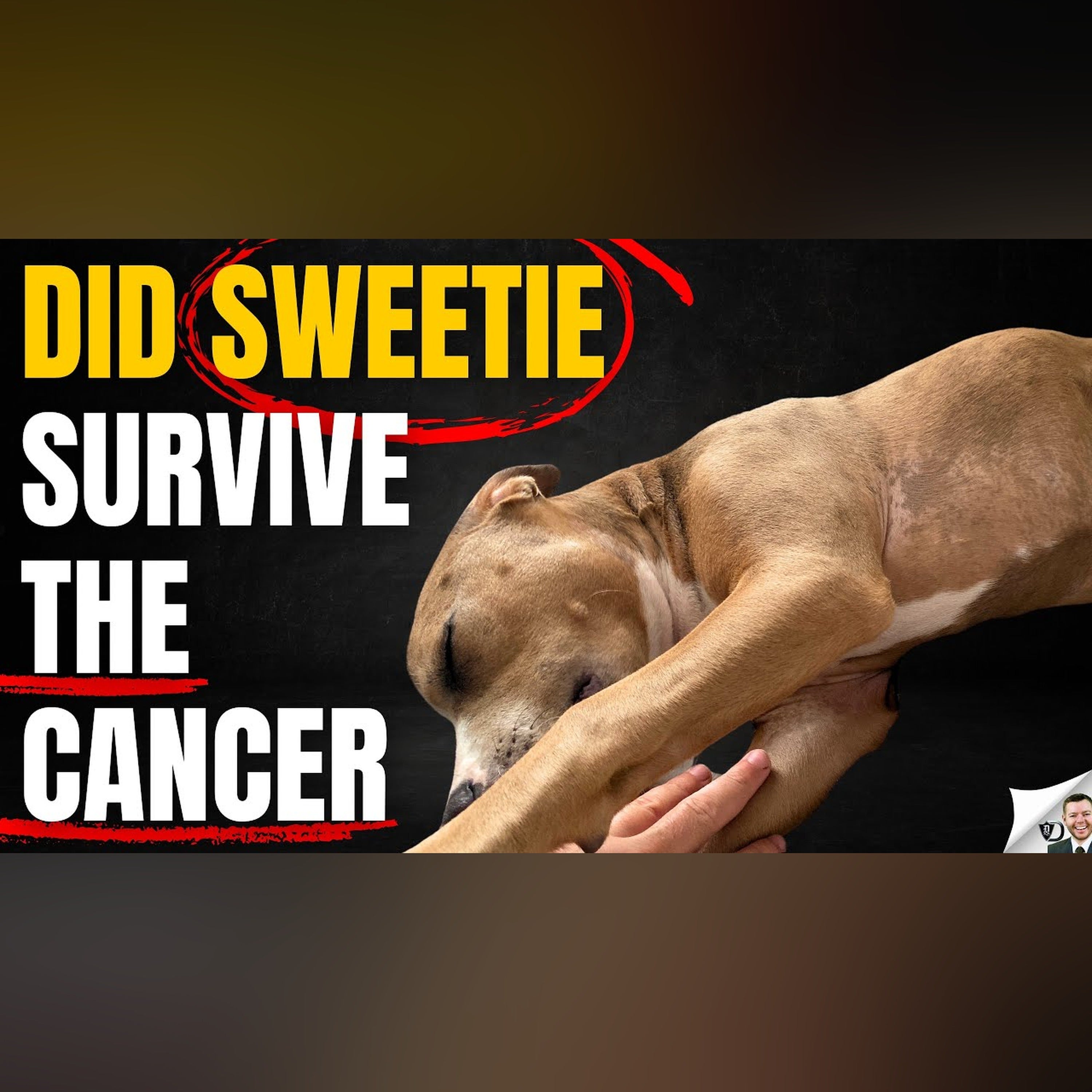
In this video, Disability Attorney Walter Hnot of the Disability Resolution Law Firm goes over Sweetie's uplifting story, and the three surgeries that she underwent. Sweetie is the fluffy monkey monster snuggle cuddle puff dog of Disability Lawyer Walter Hnot. Please watch the journey of Sweetie, as it may one day save your dog's life. America’s Most Viewed Social Security Disability Attorney Like the content? Review us here: https://g.page/r/CcwyektC7nCPEAg/review . If the link does not work, Google: Disability Resolution, P.A. Welcome to the largest Social Security Disability Tutorial Video Library On Earth. PRIVATE ONE HOUR SESSION PHONE CALL THIS IS HOW YOU CAN GIVE BACK TO HELP GROW THE CAUSE: Option 1: Leave 5 |==================5 STAR REVIEWS==================| Google (Search Disability Resolution Orlando, FL)- https://www.google.com/search?authuse... (https://www.google.com/search?authuse...=) AVVO (Search Walter Hnot) - https://www.avvo.com/attorneys/32817-... BBB (Search Disa
The Video: He Kicked Her Into The Circle In this episode, we delve into a chilling account that began when a man was eleven years old, in a house that held generations of secrets and a clearing in the woods with an ancient, unnatural presence. This is a story with no police reports or forensic evidence, only one man's terrifying memory. Case: The Video Duration: 47 seconds Location: Clearing in the woods Object: Ring of igneous stones and crystallized salt Witness: Tommy - A 47-second video shows a man kicking a woman into a circle on a concrete floor. - The house had 200 acres of land and a dense tree line where afternoon light died. - A clearing in the woods contained a ring of two-foot-tall igneous stones, not native to the area. - Between the stones were nine alternating layers of crystallized salt, compressed into the soil. - An invisible presence in the circle returned a thrown branch and later caught a ball, varying the angle of return. Tired of ads? Listen to this podcast and 2
Economists use “core” inflation to describe price changes minus food and energy (which can be up one week and down the next). But for the past six months, energy prices have been stubbornly high, as the White House drags out its war in Iran. That sustained inflation is having a trickle-down impact. In this episode, why core inflation can’t escape fuel costs. Plus: Retailers cater to picky consumers, and the stock market tumbles after a historic IPO. Every story has an economic angle. Want some in your inbox? Marketplace is more than a radio show. Read the stories in today’s episode: Who wants more oil? (https://www.marketplace.org/story/2026/11/20/trump-xi-and-putin-meet-in-china-plus-anthropics-ipo) Core inflation measures can't escape high energy prices (https://www.marketplace.org/story/2026/11/20/core-inflation-measures-cant-escape-high-energy-prices) Salmon may soon be off the menu as fisheries struggle to meet demand (https://www.marketplace.org/story/2026/11/20/salmon-supply-flo
How do you show your reader that a character has succeeded (or failed) without simply telling them? MacGuffins and avatars can be used to make conflict concrete—that is, they create a physical symbol of a character's goal. A MacGuffin is an object that drives the plot forward, but isn't necessarily important in itself and generally has no agency. An avatar, on the other hand, embodies a character's internal change and often has agency. Think of Dirty Dancing: when Baby nails the lift, it represents her coming into her own as a dancer. This week, our hosts explore how both of these tools can create satisfying character arcs and reveal that getting the thing you want isn't always the same as succeeding. Homework: Figure out what your character wants or needs (whether or not they're right about it). Make a list of possible avatars—objects, actions, or moments that would communicate to the reader that they've achieved their goal. Include some things your character thinks will represent suc
Conservation policies should include practical support for affected local livelihoods.
Share your view, then see how readers voted. No sign-in required. This poll is shared across stories.
Do you agree or disagree?
Common Quandary
A Common Quandary to discuss
Another conversation to explore, separate from this news story.
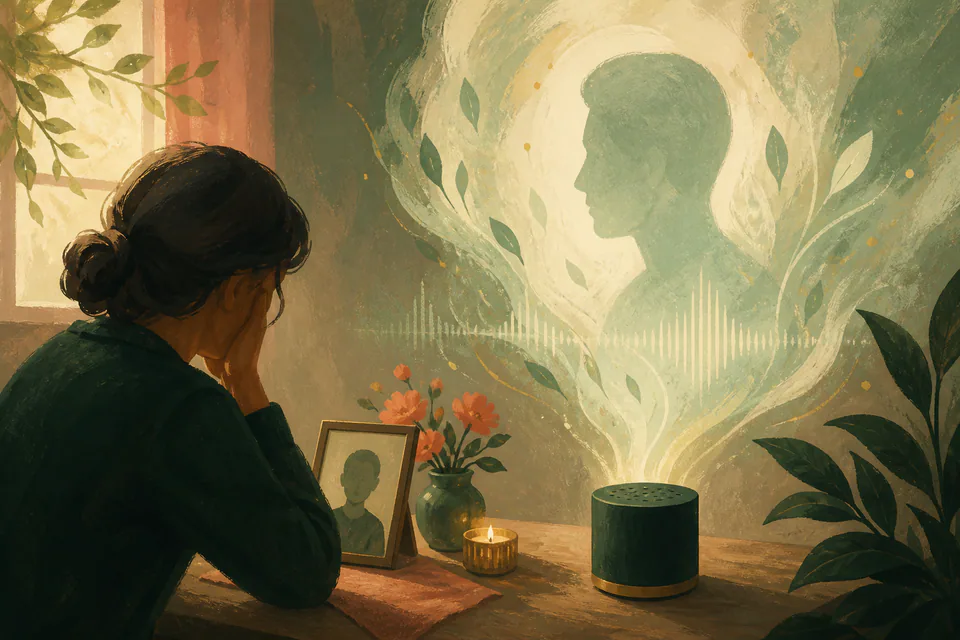
An app can text exactly like someone you lost. Would you keep talking to it?
A service can create a conversational likeness from a deceased person's messages and recordings. A grieving family member finds it comforting, although the deceased never consented to this use of their data.
Can comfort justify creating a voice the dead never authorized?