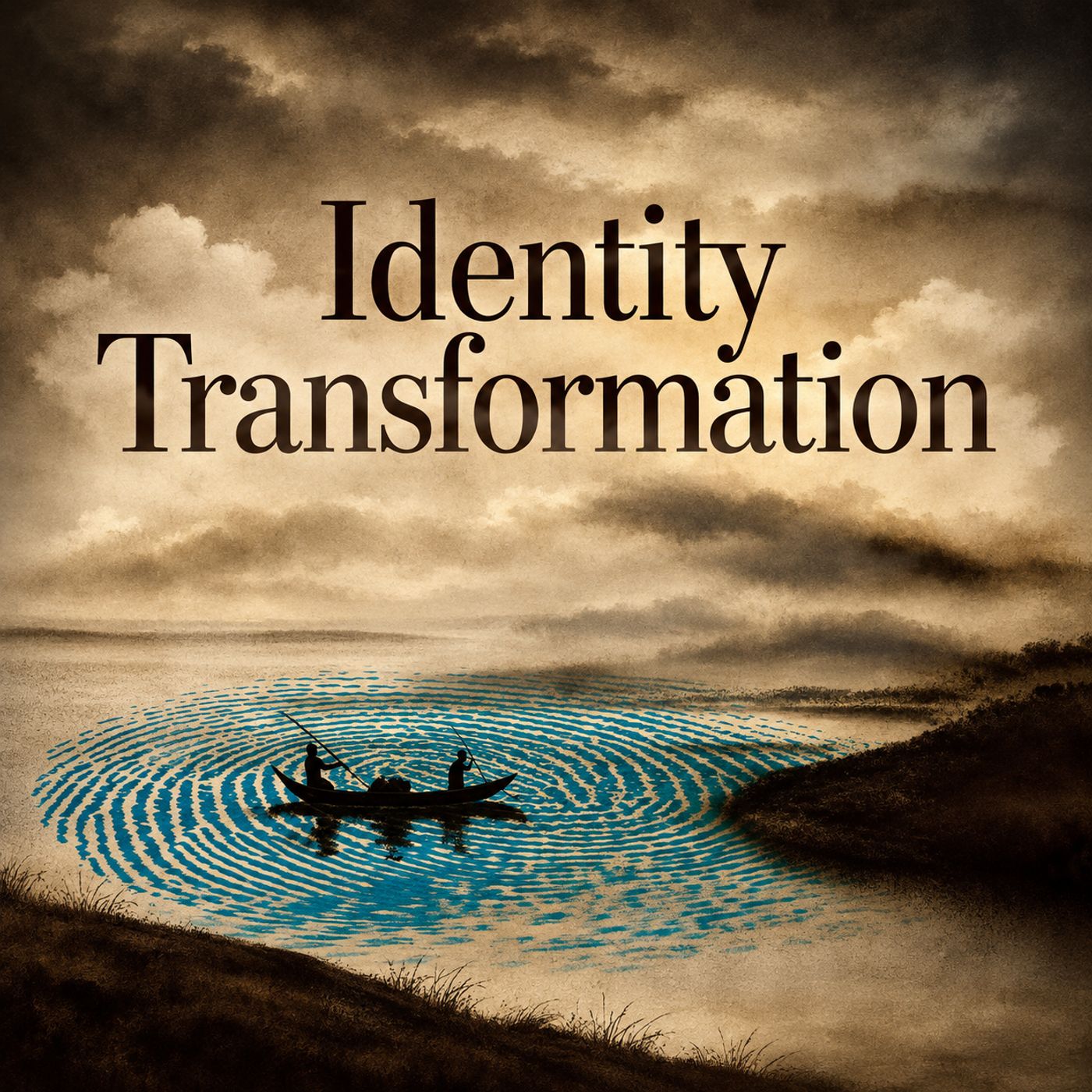
23. Two Biblical Characters. Two Ways to Handle Anger.
14 min
Listen through the publisher, then discuss the episode here or arrange an in-person Roundtable. Your city determines where to meet.
Roundtables are designed for groups of four, with a shared subject and room for everyone to speak. Come for discussion, with no dating expectation.
Who are we becoming while we’re busy getting things done? John Ortberg explores why overcoming anger involves actively seeking the good of others. Contrasting Herod the Great with Dorcas in Acts 9, John asks a question that brings our priorities into focus: “Whom have I loved?” Today, make time for someone who matters and use something you have to meet another person’s need. #BecomeNew #JohnOrtberg #Anger #Love #SpiritualGrowth New episodes every weekday. One day at a time. TEXT us at 51504 EMAIL US at [email protected] GET A TEXT REMINDER FOR NEW VIDEOS: text NEW to 51504 DOWNLOAD FREE STUDY GUIDES: BecomeNew.com/study-guides Music Credits: Welcome to the World by Sarah Watson License# MB01XUUTGU633PL 00:00 The person we take into eternity 00:23 Moving toward goodness with God 00:43 George MacDonald on life with Christ 01:11 From frustration toward seeking another’s good 01:31 Are we measuring the right things? 01:52 Patrick Morley: Arriving at the wrong place 02:20 A question about the end of life 02:46 Loving people as a response to anger 03:11 Herod the Great and the pursuit of power 04:19 Herod’s plan to manufacture mourning 04:49 Whose approval gets our attention? 05:48 The people closest to us 06:23 The deeper question: Whom have I loved? 06:54 Dorcas: Doing good and helping the poor 07:26 Care for the dead in the ancient world 08:24 The widows show Peter what Dorcas made 08:59 Using our resources to care for others 09:36 A community shaped by generosity 10:20 Love, community, and the gifts we receive 10:48 Peter prays and Dorcas rises 11:12 Our hope of resurrection 11:40 Choosing goodness over resentment 12:05 Herod the Great or Dorcas the greater?
Episode information is provided by the publisher. Listening takes place on the publisher’s service.
Life is too short to waste on things that don't last. In this powerful message, Dr. Michael Youssef challenges believers to stop living without purpose and start living fully for Jesus Christ. Drawing from 1 Peter 4, Dr. Youssef points to Jesus, who remained focused on the Father's will even as He faced the Cross. His example shows us what it means to live with spiritual purpose, resist temptation, and remain faithful when life gets difficult. A transformed identity in Christ changes your priorities. Instead of chasing comfort, approval, or worldly success, God calls you to live for what matters eternally. This episode challenges you to: Discover your purpose through Jesus Christ, Stop wasting time on temporary pursuits, Resist sin and pursue Biblical holiness, Follow Christ's example of unwavering obedience, Repent of distractions and misplaced priorities, Pray for the Church and those who don't know Christ. You were created for more than just getting through life. When Christ becomes
Why does Allah allow good people to suffer? When hardship enters your life, does it mean Allah is displeased with you, or could your struggles be bringing you closer to Him? Every believer experiences moments of pain, loss, uncertainty, and heartbreak. But in Islam, suffering is not necessarily a sign of Allah's anger, and experiencing sadness does not mean your faith is weak. In this powerful and comforting Islamic lecture, Ustadh Reece explores the deeper wisdom behind life's difficulties, the true meaning of Sabr, and how Muslims can remain connected to Allah ﷻ during their hardest moments. Through lessons from the Qur'an, authentic Hadith, and the lives of the Prophets, this reminder explores: - Why Allah tests those who believe in Him - How hardship can become a means of spiritual growth - What Prophet Muhammad ﷺ taught us about grief and sadness - The patience and beautiful du'a of Prophet Ayyub (AS) - How the story of Prophet Yusuf (AS) reveals Allah's wisdom - Why both blessing
This week, Laylla and Chelle have a lovely conversation with Fiona Heckels and Kazz Goodweather, better known as the Seed Sistas, about their book Witches’ Forbidden Herbs and the plants with the most wonderfully wicked reputations. Clinical herbalists, eco-activists, and self-described herbal drama queens, Fi and Kaz have spent more than twenty years bringing plant science, folklore, and magick together. They join us to explore the witching world of belladonna, henbane, and datura, and to ask who decided these herbs were forbidden. Was it the plants, their potency, or the people who knew how to work with them that made everyone so nervous? Naturally, we get into flying ointments, the stories behind a witch’s flight, and the ways plants become part of ritual. Laylla brings her Beyond Flying Ointment workshop into the conversation with talk of cannabis as an entheogen and smokable spells. We also make room for the overlooked, unloved, and decidedly ugly herbs, because apparently every p
What if the scale isn't telling you the whole story? Have you ever been consistent with your workouts, making better food choices, and really trying to take care of yourself, only to step on the scale and see absolutely no change? And just like that, your motivation takes a hit. You start questioning whether your workouts are working, whether you're doing enough, or whether you need to change something. But here's what I want you to understand: The scale is only measuring one small piece of your health and fitness journey. It doesn't measure how much stronger you've become, how much better your endurance is, how much energy you have, or how much easier it is to do things that used to feel difficult. And if you're only using the scale to determine whether you're making progress, you could be missing some pretty amazing changes happening in your body. Today, we're talking about five ways to measure your fitness progress beyond the scale so you can start recognizing the changes that actua
I'm Too Hard on Myself — Guided Meditation for Self-Compassion, Negative Self-Talk & Anxiety | 10 Minutes Are you too hard on yourself? A small mistake, something forgotten, a day you simply ran out of energy, and that familiar voice arrives: "I should have done better. Why am I like this? Why can't I just get things right?" This guided meditation for self-kindness and anxiety helps you step back from negative self-talk, soften the pressure you've been carrying and practise speaking to yourself with a little more care. For gentle support every day, download Anchored, my app for panic and anxiety. Guided sessions, breathing tools and fresh caring tips daily, and it plays with the screen off. iPhone: https://apps.apple.com/us/app/anchored-panic-anxiety/id6785035669 | Android: https://play.google.com/store/apps/details?id=com.martinhewlett.anchored We begin with easy breathing and a slightly longer out breath, then learn to notice the inner critic without arguing with it. Through a short
In this Lonesome Conversation, Jonathan and I explore his reframe that recovery is really the recovery of agency — and that chasing “false freedom” can leave us more alone, not less. He makes the case that binding yourself into a marriage, a family, something with real constraints is where a surprising depth opens up, and I share my own years of love avoidance that I mistook for freedom until I realized I’d built a prison. A conversation that turns our ideas about freedom and connection upside down. About Jonathan Jonathan Dickinson is the chief executive officer and co-founder of Ambio Life Sciences. One of the world’s leading experts on ibogaine, Jonathan brings over 15 years of experience in clinical care, traditional practice, and psychedelic research to his leadership at Ambio. A Mexico-licensed psychologist and former executive director of the Global Ibogaine Therapy Alliance, he authored the field’s foundational safety guidelines and has published widely on ibogaine’s therapeuti
Why doesn’t knowing what Jesus taught always change how we live? In Episode 32 of Become New, John Ortberg talks with theologian and pastor Keith Matthews, who worked with Dallas Willard as his teaching assistant for 19 years, about what it means to learn as an apprentice of Jesus. Keith explains his Transformational Learning Cycle: hear the teaching, put it into practice, and talk with someone about what happened. From learning plumbing in high school to watching how Jesus talked with his disciples after they tried something, Keith shows why that last step matters and how to ask a trusted friend for feedback today. New episodes every weekday. One day at a time. TEXT us at 51504 EMAIL US at [email protected] GET A TEXT REMINDER FOR NEW VIDEOS: text NEW to 51504 DOWNLOAD FREE STUDY GUIDES: BecomeNew.com/study-guides Music Credits: Welcome to the World by Sarah Watson License# MB01XUUTGU633PL 0:00 Keith Matthews and why teaching should change us 1:14 What we learn by watching Jesus 2
Why do we keep replaying the things that make us angry? In Episode 27 of Become New, John Ortberg looks at how a grievance can turn into an ongoing trial in our minds, whether it starts with a real injustice or an empty toilet paper roll at 3 a.m. Drawing on James Kimmel Jr.’s The Science of Revenge and Colossians 3:13, John offers a simple practice for the next time you catch yourself replaying an offense. He also explores how you can forgive someone while still telling the truth about what happened and keeping a boundary where you need one. Today’s Scripture: Colossians 3:13 New episodes every weekday. One day at a time. TEXT us at 51504 EMAIL US at [email protected] GET A TEXT REMINDER FOR NEW VIDEOS: text NEW to 51504 DOWNLOAD FREE STUDY GUIDES: BecomeNew.com/study-guides Music Credits: Welcome to the World by Sarah Watson License# MB01XUUTGU633PL 0:00 What’s at the root of anger? 1:01 The Science of Revenge 2:23 The courtroom in your mind 4:21 What Jesus says about anger 5:08
Why does grace sometimes make us angry? John Ortberg explores the resentment that can grow while we’re trying hard to do good. Through Jonah, the older brother in the prodigal son, and the workers in the vineyard, he asks what happens when someone we’ve judged receives mercy. Today, let God’s question to Jonah become your own: “Is it right for you to be angry?” #BecomeNew #JohnOrtberg #Anger #Grace #SpiritualFormation New episodes every weekday. One day at a time. TEXT us at 51504 EMAIL US at [email protected] GET A TEXT REMINDER FOR NEW VIDEOS: text NEW to 51504 DOWNLOAD FREE STUDY GUIDES: BecomeNew.com/study-guides Music Credits: Welcome to the World by Sarah Watson License# MB01XUUTGU633PL 00:00 The triangle of dysfunctional religion 01:14 Henri Nouwen on hidden anger in ministry 02:28 When anger feels like proof that we care 03:22 Jonah and the people he wants God to judge 04:43 Why Nineveh’s repentance makes Jonah angry 05:06 “Is it right for you to be angry?” 05:32 Jonah, the
Officials should explain how public consultation changed their final decision.
Share your view, then see how readers voted. No sign-in required. This poll is shared across stories.
Do you agree or disagree?
Common Quandary
A Common Quandary to discuss
Another conversation to explore, separate from this news story.
You both hate the invitation. Which partner has to become the excuse?
A couple receives an invitation neither wants to accept. One suggests claiming the other is ill, reasoning that friends will question a vague excuse but respect sickness. The proposed patient dislikes lying but also wants to stay home.
Is a shared lie fair when only one person's reputation carries it?