Listen through the publisher, then discuss the episode here or arrange an in-person Roundtable. Your city determines where to meet.
Roundtables are designed for groups of four, with a shared subject and room for everyone to speak. Come for discussion, with no dating expectation.
“It takes time and effort and intentionality to build new roads in your brain, essentially, for these new thought patterns to pass through.” Have you ever found yourself eating until you're painfully full, wondering why you can't seem to recognize when you've had enough? You're not broken, and there are reasons this might be happening. In today's episode, I'm breaking down three factors that can make it difficult to recognize comfortable fullness cues, including self-fulfilling thought patterns, sneaky food rules, and a lack of connection to the eating experience. I'll share practical ways to challenge those patterns, practice true unconditional permission to eat, and tune into your body's hunger and fullness cues. My hope is that you'll walk away with more compassion for yourself and a better understanding of how to build a more trusting relationship with food. What You'll Learn: How thoughts can create self-fulfilling prophecies, and how to start creating new thought patterns Why true unconditional permission to eat matters, and the subtle food rules that might be keeping your permission to eat conditional Why food rules can contribute to feeling out of control around food How to reduce the urgency and pressure that often lead to eating past comfortable fullness How small check-ins with your hunger, fullness, and satisfaction can build awareness over time Resources: Episode 277. She Ate Sweets Every Day. So Why Did She Still Feel Out of Control? Kelsey’s Story (https://dietculturerebel.com/podcast/episode-277-sweets-every-day/) Grab the Hunger & Fullness Scale Guide at DietCultureRebel.com/hungerfullnessscale (http://dietculturerebel.com/hungerfullnessscale) and take your next step toward building trust with your body and food Struggling with food, but not sure where to start? You don’t have to feel 100% ready to get support.
Episode information is provided by the publisher. Listening takes place on the publisher’s service.
Is your body weight stable, but you're still not eating enough to properly fuel your training, recovery, and overall health? Introducing Why Stable Weight Doesn't Always Mean You're Eating Enough from Jeff Hoehn of the Mind Muscle Connection Podcast (https://www.buzzsprout.com/1508401). Just because your weight isn't changing doesn't necessarily mean you're adequately fueled. In this episode, Jeff breaks down why maintaining a stable body weight doesn't always mean you're meeting your body's energy needs, especially if you're training hard, staying lean, or spending long periods dieting. You'll learn: Why stable body weight doesn't automatically mean adequate energy availability Who is most at risk of underfueling, even when their weight isn't changing How high training output, staying too lean, and chronic dieting can contribute to low energy availability The potential signs of underfueling, including changes in performance, recovery, hormones, and menstrual health Why spending too lo
Does your relationship feel like home, or does it feel like standing on the edge of something you might lose? In Part 3 of our Relationship Anxiety series, clinical hypnotherapist and former paramedic Martin Hewlett guides you through the process of teaching your nervous system that love doesn't have to hurt to be real. We explore the physical manifestations of anxiety—the tight chest, the 2:00 AM racing mind, and the "stomach drop" when a text takes too long—and provide the tools to "turn down the alarm" of your internal survival response. If you are ready to stop "cherry-picking" evidence of disaster and start building a foundation of trust, this session is for you. In This Episode, We Cover: The Science of Safety: Understanding how your nervous system confuses love with danger. Guided Visualization: A journey into your own "safe room" where you are already enough. Rewiring the Brain: Moving from worst-case disaster reels to the reality of small, daily kindnesses. Breaking the Cycle:
Get the 200+ Page Optimal Living Daily Workbook (PDF) - Free. Want to turn today's episode into an actionable plan? Episode 4233: Kate Galliett explains three reasons we make health, fitness and life harder than they need to be: ignoring how the body works as a connected system, trusting only extreme intensity, and leaking the energy that fuels motivation and discipline. She makes the case that appropriate effort, not maximum effort, is the only sustainable path to lasting results. Read along with the original article(s) here: https://fitforreallife.substack.com/p/why-you-make-everything-harder-than Quotes to ponder: "The better way is to give appropriate effort and get appropriate results. This is the only sustainable way." "If you try and live at the extremes, you will constantly ping-pong back and forth from one extreme to the other." "Just imagine - you might not actually lack discipline after all, you just might be leaking energy that feeds your ability to be disciplined." We spen
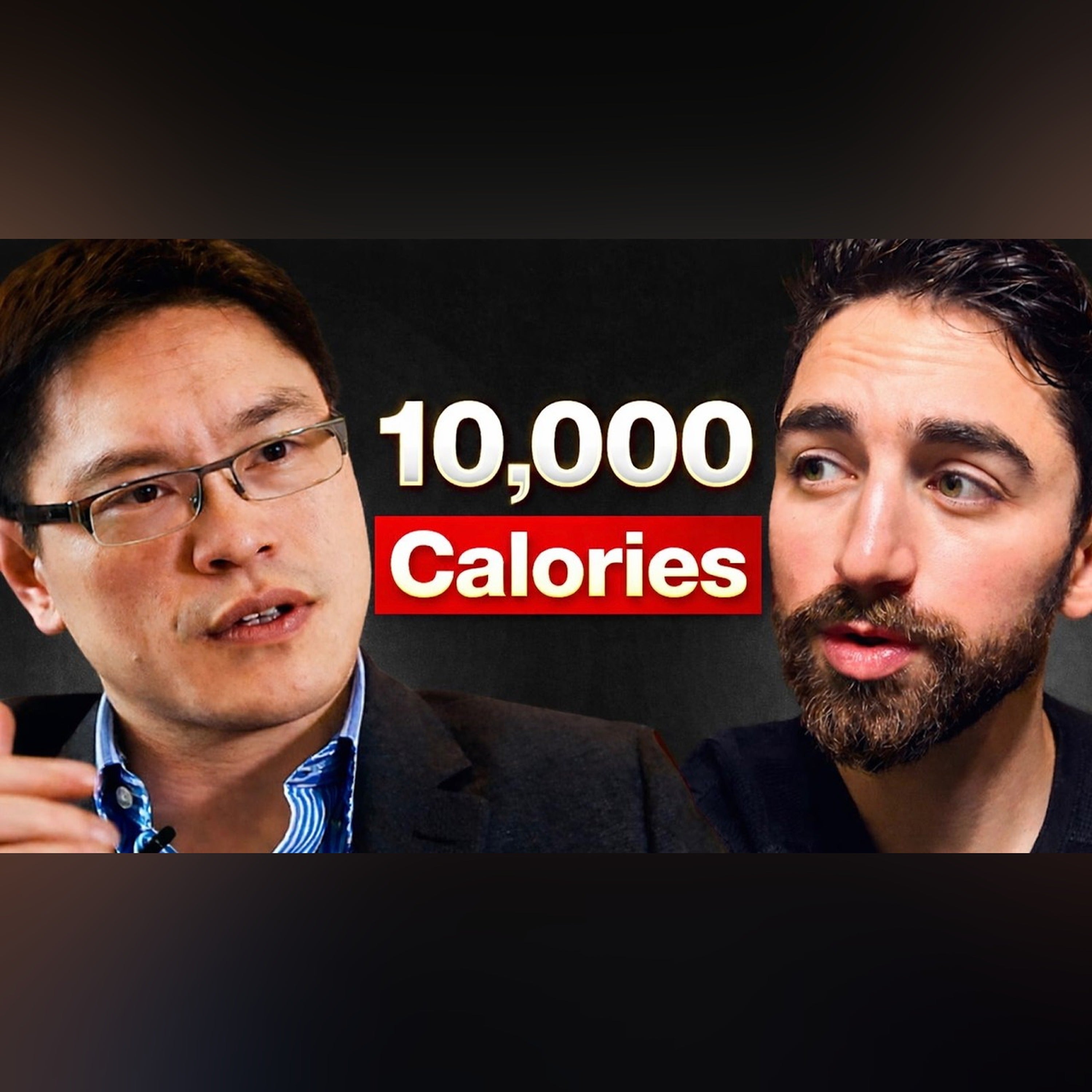
The Hunger Code Book: https://www.amazon.com/Hunger-Code-Resetting-Thermostat-Ultra-Processed/dp/1778401562 Weighted Vest Letter: https://staycuriousmetabolism.substack.com/p/how-weighted-vests-trick-your-body?r=40ekz2 Brain Insulin Resistance Letter: https://staycuriousmetabolism.substack.com/p/this-study-changed-how-i-see-junk?r=40ekz2 “Calories don’t cause obesity” is a provocative phrase—but it’s biologically accurate. It challenges a deeply entrenched misconception: that overeating causes obesity, rather than obesity driving overeating. If that sounds confusing, you’re not alone. Most people have been taught to think about it the other way around. In this discussion, Dr. Jason Fung and I work to untangle that misunderstanding. We explore how energy imbalance—so-called “overeating” and "excess calories"—is more often a consequence of obesity, not its root cause. What truly drives obesity is a complex interplay of social and hormonal factors that increase hunger and/or reduce energy
A kiss can be wonderful. It can create an instant connection, spark romance, or make you feel closer to someone. But a kiss can also have the opposite effect — and sometimes ruin everything. So what makes kissing so powerful, and why can one kiss make such a difference? There's some fascinating science behind it. https://www.scientificamerican.com/article/why-we-kiss/ We spend an enormous amount of time worrying about what's going to change. What's next? What's coming? How do we prepare? But what if we're paying attention to the wrong things? Some of the most important forces shaping our lives never change, and understanding them may be far more valuable than trying to predict the future — something humans are notoriously bad at. Morgan Housel, partner at The Collaborative Fund and author of Same as Ever: A Guide to What Never Changes (https://amzn.to/3SwWn6u) (https://amzn.to/3SwWn6u)), joins me to explain why the things that stay the same may be the most important things to understan
If you're training hard but feeling wiped, eating a restricted diet for your gut, or just never hungry after a tough workout, you might not be getting the protein you need. This episode breaks down how much you really need and how to get it without upsetting your gut. YOU'LL TAKEAWAY: Macronutrients and calories 101, and how restrictive diets throw off your balance How your body digests protein, and why it matters before workouts The many roles of protein, from enzymes and iron storage to post-workout appetite How much protein you need, plus 3 easy low FODMAP ways to boost it — RESOURCES & LINKS MENTIONED: ⤵️ Want high touch coaching support for IBS & fuelling performance? Apply for coaching. (http://gutfitnutrition.com/apply) Free Training: How to Control IBS So You Can Fuel Your Training Without a Lifelong Low FODMAP Diet (https://gutfitnutrition.com/heal-ibs-training-live) Supporting your immune system when you're sick (Ep. 70) (https://open.spotify.com/episode/5bCto0jWLcbC5hQW4hrH6
“When you can make those small changes day after day, and then look back months and years down the line, that’s when you really can see growth.” Ten years ago, I never would have imagined I'd be openly sharing the food struggles I once kept hidden from almost everyone in my life. So much has changed since 2015! In this episode, I'm taking you on a walk down memory lane as I reflect on my journey from encouraging low carb diets to discovering intuitive eating and finding peace with food. I'll share the struggles, turning points, and lessons that shaped my relationship with food over the last decade, including how pregnancy, motherhood, and navigating health concerns challenged me in new ways. My hope is that you'll recognize pieces of your own story, feel a little less alone, and see that healing is possible. The small changes you make today might not feel like much, but just imagine what they can add up to over the next 10 years! What You'll Learn: How my relationship with food evolved
“An unhealthy relationship with food, it’s a mask. It’s covering everything. And we remove that, it’s going to show all of the cracked foundations, and then that’s when the real work begins.” What if your struggles with food are connected to your relationships and experiences, not a lack of willpower? In this episode, I’m joined by Dr. Katia Arroyo-Carrion, a licensed clinical psychologist and trauma specialist, to talk about relational trauma and how it can shape your relationship with food and your body. We explore how early relationships, “almond moms,” and diet culture can contribute to food struggles like restriction, emotional eating, and binge eating. Dr. Katia also shares how to reframe these behaviors as coping tools rather than personal failures, approach shame with more compassion, and find the right support to begin healing your relationship with food. What You'll Learn: The difference between small “t” and big “T” trauma, and how any relational trauma can show up in other
Public projects should publish comparisons of promised and actual outcomes.
Share your view, then see how readers voted. No sign-in required. This poll is shared across stories.
Do you agree or disagree?
Common Quandary
A Common Quandary to discuss
Another conversation to explore, separate from this news story.
You match with a friend's ex from ten years ago. Do you need permission to go out?
A dating app matches you with someone your close friend dated seriously a decade ago. Both are now single and rarely speak, but the breakup was painful at the time. The match asks you to keep the first date private.
Do old relationships create lasting claims over a friend's future choices?