Kevin Reddington spent the first Lindsay Clancy trial arguing she wasn't responsible, never that she didn't do it. After the mistrial, he went to Judge William Sullivan with a different argument. Criminal defense attorney Bob Motta joins me to talk about what the defense does with the Lindsay Clancy retrial. The insanity defense came close. Eleven jurors reportedly agreed postpartum psychosis left Lindsay not criminally responsible for the deaths of Cora, Dawson and Callan. Reddington told jurors she heard a voice telling her to kill the children and then herself. Since the mistrial, the defense has argued that the state never proved she was the one who did it, and that the judge should have replaced the holdout juror, so a retrial is double jeopardy. Sullivan rejected both. Appellate lawyer Martin Weinberg expects to take the double jeopardy question to the state's highest court. Bob talks through the risk of running the same case twice, whether Lindsay should testify, and what really
I start with my take on the run of cyberattacks and outages that keep hitting, and with how to get ready without panicking. Then I read Shari Franke's heartbreaking statement to the Utah parole board, and I go through the Gilmore Girls documentary drama, Nick Cannon's new reality show and a few other headlines. To finish, Zack Peter joins me to talk about the fallout from the *It Ends With Justice* premiere. That includes The Toast calling us "TikTok losers" and the viral speech from Jamey Heath. Timestamps - 0:00:00 – Intro and what's on today's show - 0:03:45 – Banks, the FAA, Apple, Microsoft: why the cyberattacks feel coordinated, plus The Unexpected Spy's take - 0:15:01 – Ruby Franke and Jodi Hildebrandt's parole hearing, and I read Shari Franke's statement to the parole board - 0:22:30 – Kid influencers and why some "mom's Instagram" content gives me a bad vibe - 0:27:46 – *Drink Coffee, Talk Fast*: the Gilmore Girls documentary and the tension between Scott Patterson and Lauren
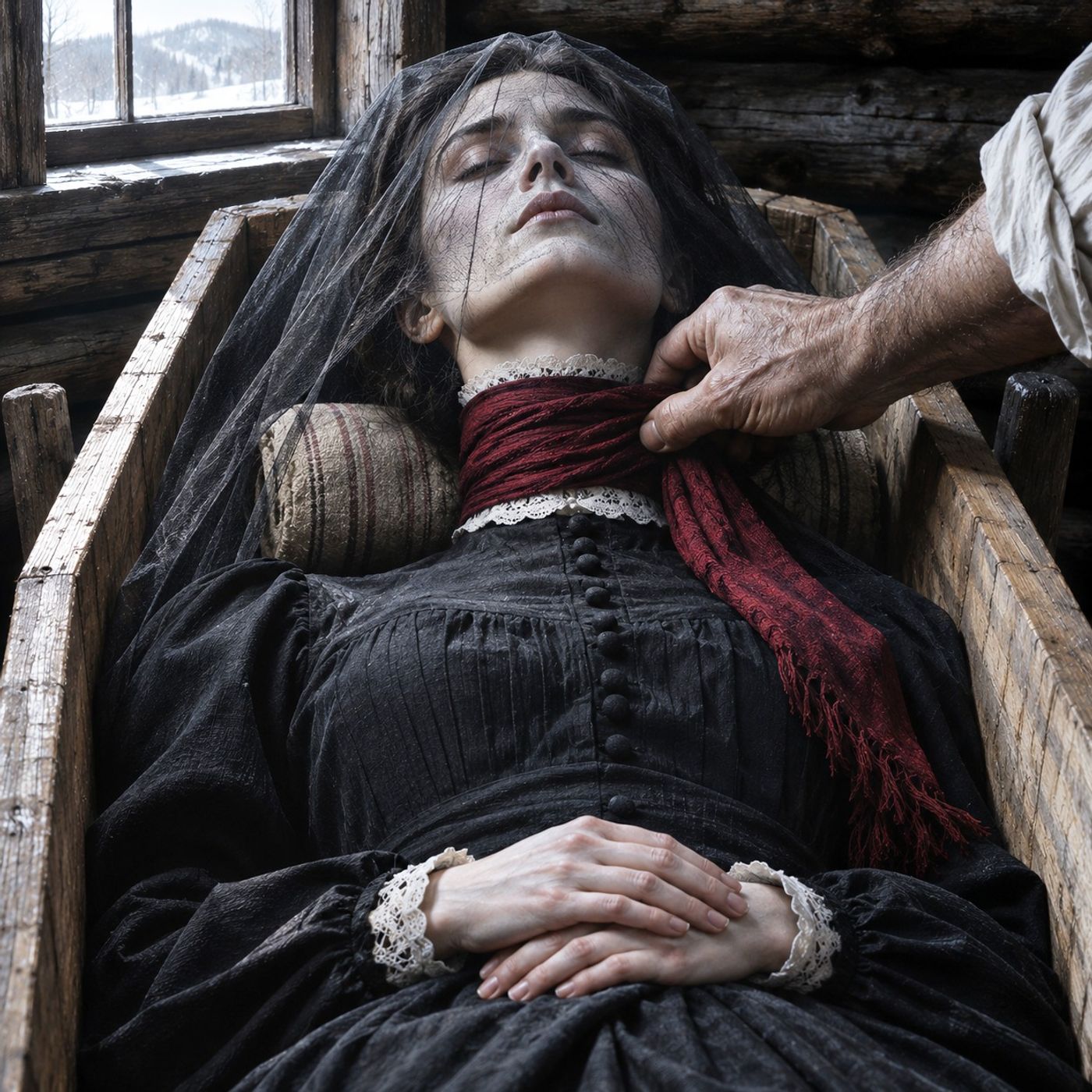
In January 1897, blacksmith Edward Shue washed and dressed his bride of three months for burial before the coroner ever reached their log house in Greenbrier County, West Virginia, and at her funeral he kept fussing with her head and neck, propping it on a pillow and wrapping a scarf around her high collar. Her mother, Mary Jane Heaster, had never liked him, and for weeks afterward she prayed every evening for her daughter to come back and tell her what had really happened. FEATURED STORIES IN THIS EPISODE: This Weird Darkness episode runs from the Greenbrier Ghost, the 1897 West Virginia murder victim whose mother said she came back to name her killer, to a bottomless pit in Washington, a wave of Mothman sightings over Chicago, and a London tomb rumored to be a time machine. Elva Heaster was dead – but that didn’t stop her ghost from solving the murder. *** In Stephen King’s “Pet Semetery”, beloved family pets could come back from the dead. *** In Washington there is a hole that some
A woman told ITV News that a letter from David Walliams’ lawyers left her shaking. What did that letter demand, and what happens when speaking out brings the threat of legal action? Max Palasi is joined by Melanie Bridgen, Partner and family law solicitor at Nelsons, to examine the reported correspondence, Walliams’ unsuccessful attempt to prevent publication, and the wider pressures facing people making allegations against powerful public figures. We discuss the reported request for a written undertaking within 24 hours, the difference between a solicitor’s demand and a court order, and how confidentiality agreements, legal costs and fear of proceedings can affect someone’s decision to speak. Melanie’s professional experience includes domestic abuse, coercive control and complex family proceedings. She represented former MP Kate Kniveton in proceedings involving abuse findings and their publication, giving her direct experience of the tensions between privacy, public interest and the
In 1959, hundreds of people packed up their lives and moved to a compound outside Waco, Texas, to wait for the end of the world. It never came. In the first part of our 3-part series on the Waco siege, Katie Ring goes back to the beginning: the failed prophecy that shattered a religious movement, the bitter fight over who would lead what was left of it, and the young man from East Texas who showed up at exactly the right moment. Follow America's Most Infamous Crimes to hear the rest of the story: https://pod.link/1882861002 To hear episodes ad-free, subscribe to Crime House+. Need More to Binge? Follow me on Social Instagram: @Crimehouse (https://www.instagram.com/crimehouse/) TikTok: @Crimehouse (https://www.tiktok.com/@crimehouse) X: @crimehousemedia (https://x.com/crimehousemedia)
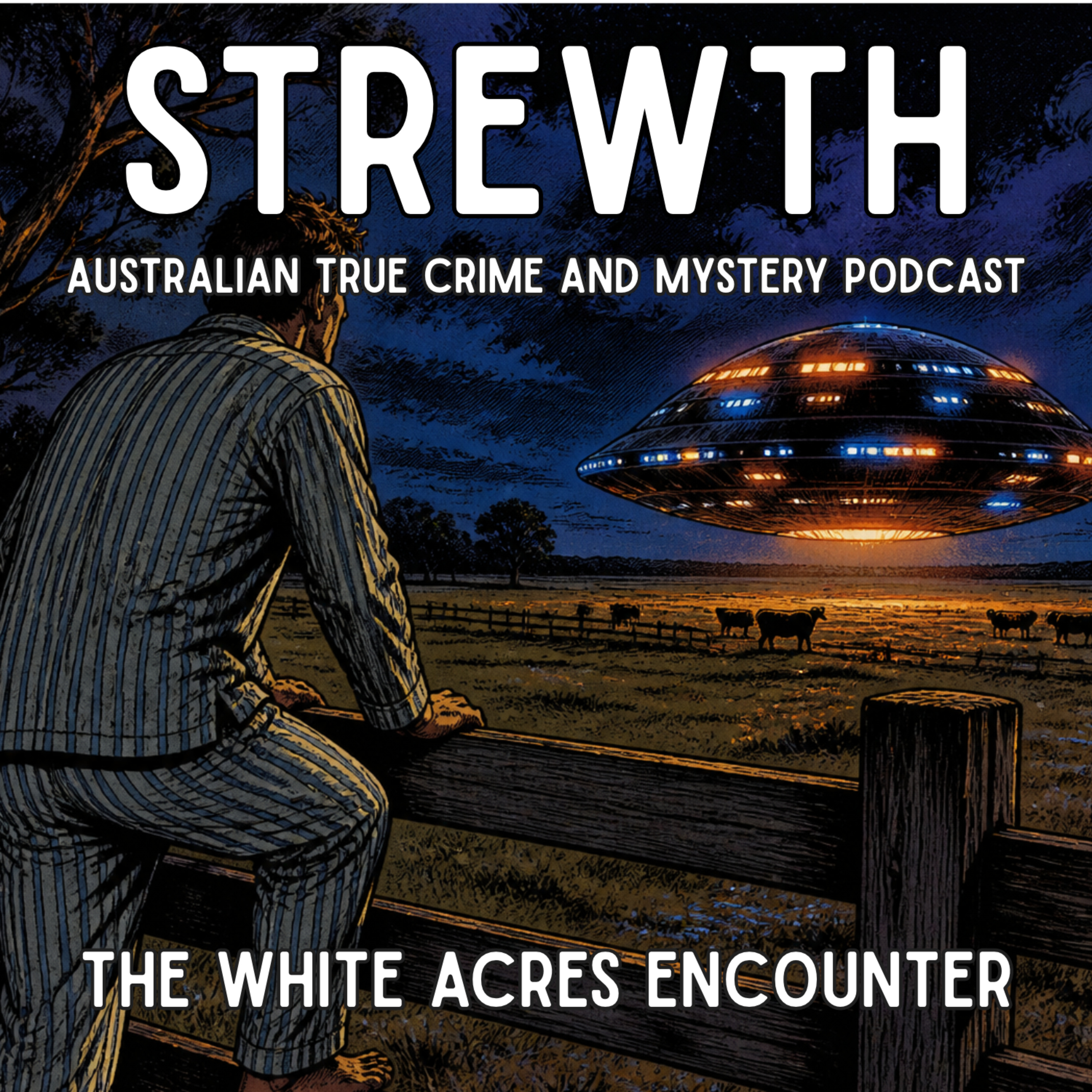
The Rosedale UFO Incident At one o'clock on a spring morning in 1980, on a cattle property outside Rosedale in Gippsland, a farm caretaker named George Blackwell woke to a whistle he couldn't place. The cattle were bellowing, the horse was tearing up and down its fence, and something with lights on it was coming down low over the paddocks. He got on his motorbike and rode out to find it. By sunrise there was a perfect black ring burnt into his paddock, his watch had stopped, and the concrete water tank beside the landing site, full the day before, held nothing but a cone of mud. Ten thousand gallons of water had gone, with not a drop spilled and not a footprint around it. More than forty years later, nobody has been able to explain what happened there, or why, from Canada to Japan to rural Victoria, the strangest visitors keep coming back for water. Strewth social media links - https://linktr.ee/strewthpodcast Contact me - [email protected] Theme Music - Jesse Frank on Pixabay S
On March 1, 2021, police arrived at the home of Brian Cohee Jr. Just a few nights earlier, he had murdered a homeless man named Warren Barnes, and it was Brian’s mother who discovered the truth. Grieving the child they thought they knew, his parents faced one of the most painful experiences imaginable: realizing that their son was a lost cause. SUPPORT OUR SPONSORS Uncommon Goods - https://www.uncommongoods.com/lightsout Kēpos - https://www.trykepos.com/lightsout Kikoff - https://www.getkikoff.com/lightsout LISTEN & FOLLOW Spotify: https://open.spotify.com/show/3SfSNbkVrfz3ceXmNr0lZ4 FOLLOW LIGHTS OUT TikTok: https://www.tiktok.com/@lightsoutcast X / Twitter: http://twitter.com/lightsoutcast Instagram: http://instagram.com/lightsoutcast MERCH & TOPIC REQUESTS Merch: http://milehighermerch.com/ Request a topic: https://zfrmz.com/Sp6vsxGQrNoHUfDzvGnN Suggestions/comments: [email protected] Podcast sponsor inquiries: [email protected] HOST: JOSH X / Twitter: http://twitter.com/milehigh
Sydney Loofe was reported missing on November 16th, 2017, after a Tinder date with a woman named “Audrey”. Her family helped launch a police investigation and conducted their own. After finding Sydney’s remains, the police officially pinned down two suspects: self-proclaimed vampire Aubrey Trail and the real person behind “Audrey,” Bailey Boswell, a wannabe witch. The investigation into the murder uncovered the wicked motive behind it: dark magic. SUPPORT OUR SPONSORS Quince: https://www.quince.com/lightsout Hungry Root: https://www.hungryroot.com/lightsout Rocket Money: https://www.rocketmoney.com/lightsout LISTEN & FOLLOW Spotify: https://open.spotify.com/show/3SfSNbkVrfz3ceXmNr0lZ4 FOLLOW LIGHTS OUT TikTok: https://www.tiktok.com/@lightsoutcast X / Twitter: http://twitter.com/lightsoutcast Instagram: http://instagram.com/lightsoutcast MERCH & TOPIC REQUESTS Merch: http://milehighermerch.com/ Request a topic: https://zfrmz.com/Sp6vsxGQrNoHUfDzvGnN Suggestions/comments: lop@milehigher
A workable temporary compromise is often better than delaying all action.
Share your view, then see how readers voted. No sign-in required. This poll is shared across stories.
Do you agree or disagree?
Common Quandary
A Common Quandary to discuss
Another conversation to explore, separate from this news story.
Would you want a doctor to give you a fake pill if the lie might make you feel better?
A patient has persistent symptoms that have not responded to standard treatments. A harmless placebo may help, but its effect could weaken if the clinician fully explains that it contains no active medicine.
Can a beneficial deception respect the person it helps?