English-language podcasts

Get Rich Slow Club

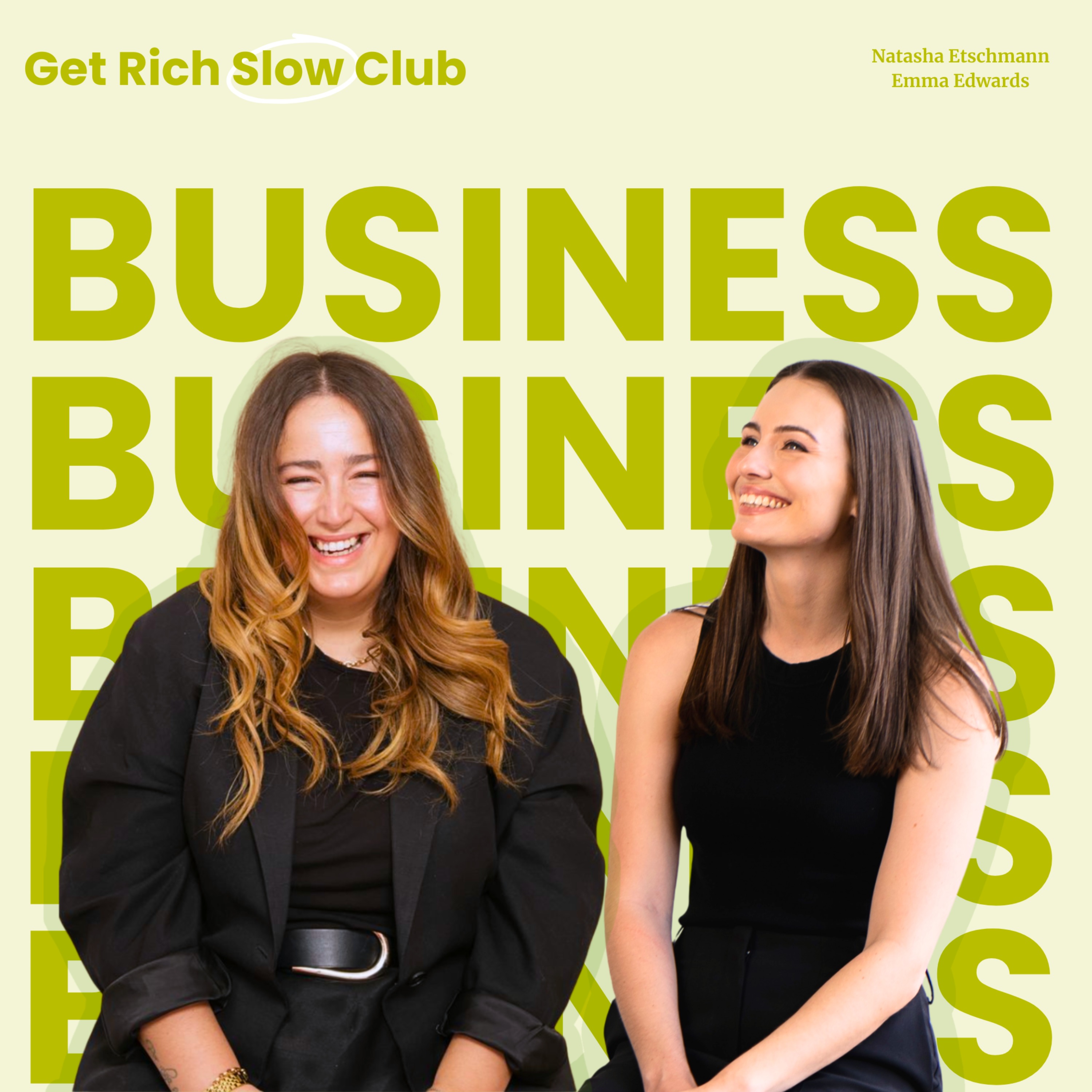
329. Can you build a business without quitting your job?
38 min

Listen through the publisher, then discuss the episode here or arrange an in-person Roundtable. Your city determines where to meet.

Roundtables are designed for groups of four, with a shared subject and room for everyone to speak. Come for discussion, with no dating expectation.

Starting a business alongside your full-time job sounds like a sensible way to test an idea without risking your regular income. But what happens when that side business starts making money and growing it means giving up your salary? Emma was earning nearly $100,000 between her job and business, yet going full-time meant potentially dropping back to just $30,000. So how do you give a side business a real chance without sacrificing your financial security or every spare hour you have? In this episode, Emma and Tash share how they built businesses around their existing jobs, studies and personal lives. From squeezing client work into evenings and weekends to navigating tax, burnout and the decision to become fully self-employed, they explore what it actually takes to turn an idea into a business, and whether going full-time should even be the goal. In this episode we'll discuss: Why starting a business doesn't have to mean quitting your job, and why some people are perfectly happy keeping their side hustle as an extra income stream. How Emma went from earning nearly $100,000 across her job and side business to facing the prospect of living on just $30,000 when she decided to go full-time. The financial support that can make starting a business possible, from having a partner cover household expenses to moving back home with your parents. ⏰ How Emma fitted client work around her 9-to-5, train commutes and Saturday mornings, but struggled to find time to actually grow the business. The frustration of having a brand cancel a paid campaign after Emma had already squeezed the work into her baby's nap times and planned her childcare around the expected income. Why extra business income can mean a bigger tax bill and higher HECS/HELP repayments, and why some of that money needs to stay in the business. The golden handcuffs of a well-paid job, and why starting something that initially earns very little can become harder as your career and financial responsibilities grow. ⚖️ How operating as a sole trader can expose personal assets to business liabilities, and why insurance and legal responsibilities become increasingly important. Why spending months perfecting your logo, website and branding can become a distraction from actually finding customers and doing the work. Why quitting your 9-to-5 for freedom can leave you working 9-to-9 instead, with 50 clients replacing the boss you wanted to escape. The big takeaway? Starting a business on the side can provide an opportunity to experiment, earn extra income and build something before giving up the security of a regular salary. But growing a business involves trade-offs between money, time and risk, and going full-time isn't necessarily everyone's goal. The important thing is making sure the business you're building actually supports the life you wanted when you started it. @tashinvests (https://www.instagram.com/tashinvests/) @anakresina (https://www.instagram.com/anakresina/) @getrichslowclub (https://www.instagram.com/getrichslowclub/) @pearlerhq (https://www.instagram.com/pearlerhq/) Get Rich Slow Club (https://pearler.com/getrichslowclub) Pearler (https://pearler.com/) YouTube (https://www.youtube.com/@getrichslowclub) Disclaimer: Hosted on Acast.

Episode information is provided by the publisher. Listening takes place on the publisher’s service.

Listen at the source ↗

Featured places to meet in Palo Alto, CA

Explore these places and arrange a conversation through ThinkMatch.

City guide for Palo Alto, CA

More from Get Rich Slow Club

Get Rich Slow Club

331. Can you justify the car you really want?

29 min

Tash's 2014 Mazda 2 still works, so why is she seriously considering a new Polestar? She's spent months weighing up the extra space, safety features and driving experience against the cost. It's a much bigger version of the same dilemma we face with everyday spending: knowing when to save, when to wait and when spending more might actually make sense. So how do you know when a purchase is worth the money? In this episode, Ana and Tash explore the everyday money moves that shape our financial decisions, from automated investing and forgotten subscriptions to planning major purchases. They also unpack Tash's ongoing Polestar dilemma, comparing different approaches to buying a car, the true cost of ownership and the difference between what we need and what we really want. This episode is sponsored by Polestar. In this episode we'll discuss: ️ How leaving flights until the last minute left Ana facing fares above $600, and why a $25 flight change overseas was such a pleasant surprise. How T

Discuss this episode

Get Rich Slow Club

330. Should you use super to save for your first home?

45 min

⚠️ Important note: This episode discusses the First Home Super Saver (FHSS) scheme. Some information shared may be outdated or subject to change. Please refer to the Australian Taxation Office (ATO) for the most up-to-date and accurate information on eligibility, contribution limits, tax treatment and withdrawal rules before making any financial decisions. ATO: First Home Super Saver scheme (https://www.ato.gov.au/individuals-and-families/super-for-individuals-and-families/super/withdrawing-and-using-your-super/early-access-to-super/first-home-super-saver-scheme) Saving for a first home is complicated enough without putting part of your deposit into super. But could the potential tax benefits make it worthwhile? Elliott is using the First Home Super Saver scheme to prepare for a home purchase in three to five years. Ana has used it too, even salary sacrificing 100% of her pay for a short period. Together, they explore the benefits, limits and mistakes to watch for when saving through s

Discuss this episode

Get Rich Slow Club

328. Unhinged money hacks

37 min

There's saving money, and then there's planning your week around a discounted chia pudding, eating year-old yoghurt or hiding a MacBook down your shorts to avoid airline baggage fees. Some money hacks are genuinely clever. Others are completely unhinged. But how far is too far when it comes to saving money? In this episode, Ana and Elliott share their most unusual money-saving hacks, from supermarket bargains and free entertainment to travel tricks and frequent flyer points. Along the way, they discover that some of the strangest ideas can actually save you money, while others might be taking frugality a little too far. In this episode we'll discuss: How Elliott discovered the exact day his favourite $9 chia pudding gets marked down to $3. Taking leftover food home from work events, eating year-old yoghurt and the great debate over food expiry dates. How Too Good To Go offers discounted food, including around 12 bakery items for as little as $10. Why Ana makes herself drive to collect

Discuss this episode

Community Poll

Classroom technology should prove educational value before becoming standard.

Share your view, then see how readers voted. No sign-in required. This poll is shared across stories.

Do you agree or disagree?

Choose one answer

Common Quandary

A Common Quandary to discuss

Another conversation to explore, separate from this news story.

You both hate the invitation. Which partner has to become the excuse?

A couple receives an invitation neither wants to accept. One suggests claiming the other is ill, reasoning that friends will question a vague excuse but respect sickness. The proposed patient dislikes lying but also wants to stay home.

Is a shared lie fair when only one person's reputation carries it?

Explore this quandary