3610: Should You Avoid Artificial Sweeteners for Gut Health? by Aidan Muir of Ideal Nutrition on Sugar Substitutes
13 min
Listen through the publisher, then discuss the episode here or arrange an in-person Roundtable. Your city determines where to meet.
Roundtables are designed for groups of four, with a shared subject and room for everyone to speak. Come for discussion, with no dating expectation.
Get the 200+ Page Optimal Living Daily Workbook (PDF) - Free. Want to turn today's episode into an actionable plan? Episode 3610: Aidan Muir explains what the research actually shows about four common artificial sweeteners and gut health, looking at both changes to the gut microbiome and digestive symptoms like bloating. Animal studies suggest a link, but human studies have found milder or no meaningful changes, and symptoms are uncommon at typical intakes. Aidan concludes that normal amounts are likely fine for most people, while limiting them remains a reasonable personal nutrition choice. Read along with the original article(s) here: https://www.idealnutrition.com.au/artificial-sweeteners-and-gut-health/ Quotes to ponder: "At this stage, I think artificial sweeteners, in normal amounts, are likely fine." "When looking more broadly at artificial sweeteners and the microbiome, findings are largely inconsistent." "If avoiding or limiting artificial sweeteners is your preference, that makes sense too."
Episode information is provided by the publisher. Listening takes place on the publisher’s service.
Get the 200+ Page Optimal Living Daily Workbook (PDF) - Free. Want to turn today's episode into an actionable plan? Episode 4232: Chris Guillebeau shares a candid, funny account of his lack of qualifications, from a short-lived dishwashing job to failing his way through statistics and shrink-wrapping pallets. He argues that formal credentials matter far less than people think, and that anyone who builds a good life without them should treat that work with gratitude and diligence. It is an encouraging take on personal development for anyone who has ever felt like an imposter. Read along with the original article(s) here: https://chrisguillebeau.com/qualifications/ Quotes to ponder: "First, forget about what you're actually qualified to do. It's irrelevant and no one cares." "Fourth, when you do find something that works for you, you should be very grateful, every day." "Regardless of your actual qualifications, there's one thing that no one can give you and no one can take away: the wil
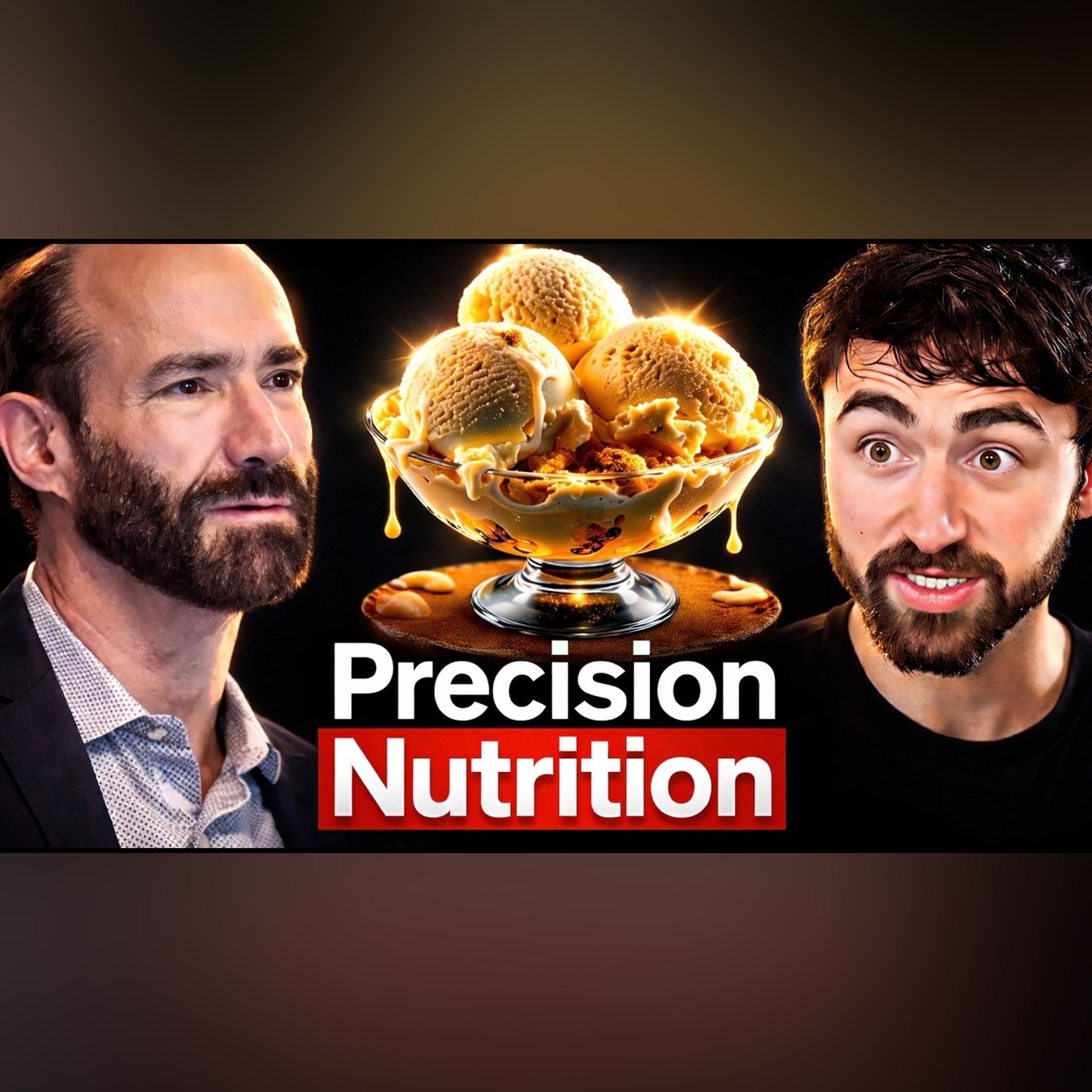
StayCurious Newsletter on Snyder’s Fiber Randomized Controlled Trial: https://staycuriousmetabolism.substack.com/p/fiber-is-good-for-you-is-lazy-science?r=40ekz2 StayCurious Newsletter on Inulin and Fructose Resistance: https://staycuriousmetabolism.substack.com/p/the-fiber-that-fights-fat-how-inulin?r=40ekz2 Snyder Interview 1, Four Types of Diabetes: https://youtu.be/mCrc4gfbK2o Snyder Interview 2, Most Viral Aging Study: https://youtu.be/kMpGkg4zMOU Snyder Interview 3, Most Beautiful Exercise Study: https://youtu.be/_9ywulQF2Ho Why does the same food spike one person’s blood sugar while barely affecting another? In this fourth conversation with Stanford’s Professor Michael Snyder, we explore new research on individualized glycemic responses, insulin resistance subtypes, and why one-size-fits-all nutrition advice keeps failing. From rice spiking glucose more than ice cream, to the power of the grape-to-potato ratio, and beyond, this discussion reveals how metabolism, microbiome, immu
Keto Sweeteners are growing increasingly more popular. Watch this video and learn the truth about Keto Sweeteners and understand the risks and benefits of our favorite Keto Sweeteners as we list some of the Keto Sweeteners we use ourselves. Keto Sweeteners can be a great way to have a fun treat but be aware of what’s in your Keto Sweetener as it may not be all you think! This is a clip from Keto Consult 24. Watch here: https://bit.ly/2W57Le9 Thanks for checking out the Dr Boz Channel. Tune in Sunday nights, 6PM Central Time to watch me Live! We are KETONES FOR LIFE. Improving your health - One ketone at a time. Dr Boz’s First ONLINE Course Consistently Keto: https://bozmd.com/shop WAYS TO SUPPORT THIS CHANNEL: Buy Dr Boz Products. Dr Boz K2+D3: https://amzn.to/31lIlqL (affiliate link) Dr Boz Ketones-In-A-Can: Raspberry Lemon: https://amzn.to/2GXLlSw Dutch Chocolate Sachets: https://amzn.to/30GfnmP (affiliate link) Cucumber Lemon Sachets: https://amzn.to/3lzgVZj (affiliate link) Mexican
What actually works when it comes to detecting lies, and why are so many popular ideas about reading people and nonverbal behavior at odds with the scientific research? I talk with Aldert Vrij, one of the world's leading deception-detection researchers, who has spent almost four decades studying these topics. We discuss why what people say is far more revealing than their body language; why the perceived “sexiness” of reading nonverbal behavior has contributed to widespread myths and misconceptions; whether vocal behaviors like pitch, volume, and hesitation contain meaningful clues; and whether there's value in analyzing minor word choices and turns of phrase, as is done in so-called “statement analysis.” We discuss Paul Ekman's legacy as a source of faulty ideas about deception, micro-expression-based deception detection training, and the strategies that popular “body language experts” use to appear scientifically credible while simultaneously promoting ideas that conflict with the sc
If you're training hard but feeling wiped, eating a restricted diet for your gut, or just never hungry after a tough workout, you might not be getting the protein you need. This episode breaks down how much you really need and how to get it without upsetting your gut. YOU'LL TAKEAWAY: Macronutrients and calories 101, and how restrictive diets throw off your balance How your body digests protein, and why it matters before workouts The many roles of protein, from enzymes and iron storage to post-workout appetite How much protein you need, plus 3 easy low FODMAP ways to boost it — RESOURCES & LINKS MENTIONED: ⤵️ Want high touch coaching support for IBS & fuelling performance? Apply for coaching. (http://gutfitnutrition.com/apply) Free Training: How to Control IBS So You Can Fuel Your Training Without a Lifelong Low FODMAP Diet (https://gutfitnutrition.com/heal-ibs-training-live) Supporting your immune system when you're sick (Ep. 70) (https://open.spotify.com/episode/5bCto0jWLcbC5hQW4hrH6
Health is rarely lost in one decision, and it is not regained in one either. Through the night, this track lays down the small, repeated care that vitality is actually built from. Unwind now with our positive sleep affirmations podcast. Hit play, and drift into Good Sleep... Spotify: https://open.spotify.com/show/3OuJvYoprqh7nPK44ZsdKE And start your morning with Optimal Living Daily!
Get the 200+ Page Optimal Living Daily Workbook (PDF) - Free. Want to turn today's episode into an actionable plan? Episode 3615: Becca Shern explains why the common nutrition advice of everything in moderation may not be serving people well. She looks at how heavy marketing and social norms around sugar and alcohol make it easy to overconsume while still feeling moderate, and what the actual recommended limits are. The takeaway is that taking a critical look at what moderation really means, and setting a higher standard, can build healthier habits for ourselves and the people around us. Read along with the original article(s) here: http://minimalwellness.com/reconsideringmoderation/ Quotes to ponder: "Moderation is a squishy term." "Our consumption patterns are dramatically influenced by marketing, but they're also molded by social norms." "Setting a higher standard for ourselves helps others do the same."
Get the 200+ Page Optimal Living Daily Workbook (PDF) - Free. Want to turn today's episode into an actionable plan? Episode 3614: Kym Wilson shares how she left a corporate finance career to pursue scuba diving and a 2,000-kilometer pilgrimage, and the panic she felt when her savings fell behind her peers. She explains why she came to see that net worth and life's worth are different measures, and why the experiences that change us also ripple out to others. The takeaway is that the cost of neglecting a dream can be greater than the money it takes to follow one. Read along with the original article(s) here: https://tinybuddha.com/blog/value-following-dreams-dont-make-money/ Quotes to ponder: "When you answer the call to adventure, you never know where you will end up." "Your net worth is not your life's worth." "I know that one day, when I am old and dying, I won't regret the things I never had, but I will regret the moments I didn't seize and the adventures and growth I never experien
Get the 200+ Page Optimal Living Daily Workbook (PDF) - Free. Want to turn today's episode into an actionable plan? Episode 3613: Jessi Kneeland explains why what most people need during the holidays is better support rather than more things to buy. She describes three places worth investing instead: regulating your nervous system through rest and gentle movement, setting and holding boundaries with family and obligations, and affirming your own sense of self when old roles pull you back. The takeaway is that keeping your own wellbeing at the top of the list is one of the healthiest habits to protect this time of year. Read along with the original article(s) here: https://www.jessikneeland.com/post/3-investments-to-make-this-holiday-season Quotes to ponder: "But the thing that most of us actually need isn't more stuff." "No matter what comes your way, as long as you're willing to choose yourself, you'll be ok." "So be on your own side and treat yourself like someone you love."
Organizations should collect less personal information rather than simply promise stronger security.
Share your view, then see how readers voted. No sign-in required. This poll is shared across stories.
Do you agree or disagree?
Common Quandary
A Common Quandary to discuss
Another conversation to explore, separate from this news story.
One friend is rich, one is broke, and everyone ordered differently. How do you split dinner?
A group of longtime friends traditionally divides restaurant bills equally. Their incomes have grown increasingly unequal, and one friend now declines gatherings because even their share is difficult to afford while others order without thinking about price.
When should friendship adjust for differences in wealth?