Listen through the publisher, then discuss the episode here or arrange an in-person Roundtable. Your city determines where to meet.
Roundtables are designed for groups of four, with a shared subject and room for everyone to speak. Come for discussion, with no dating expectation.
In Episode 392 of the Counselling Tutor Podcast, your hosts Rory Lees-Oakes and Ken Kelly take us through this week's three topics: Firstly, in 'Ethical, Sustainable Practice', they explore supervisor competence and qualification - whether holding a supervision qualification automatically makes someone competent to supervise every type of counselling work, and why the two are not the same thing. Then in 'Practice Matters', Rory speaks with Josephine Hughes about life after qualifying and building a sustainable private practice - from self-doubt and imposter syndrome to the uncomfortable business of charging a fee. And finally, in 'Student Services', Rory and Ken discuss counselling placement anxiety - what students fear, how to reframe it, and when a placement simply is not right for you.
Episode information is provided by the publisher. Listening takes place on the publisher’s service.
What happens when two booking sites sell the same hotel room? In this solo episode of the Australian Investors Podcast, Owen Rask uses SiteMinder (ASX: SDR) to explore the unglamorous software that keeps hotel availability and prices in sync. It is the finale of the Business Stack of the Future series brought to you by Stripe. The series closes with a practical challenge for builders and investors: follow a customer request from discovery to a completed transaction, then ask who supplies the essential data, who gets paid and who bears the risk when something goes wrong. This is a business case study, not a recommendation to buy SiteMinder shares. Episode resources – Speak with the Rask Advice team (https://rask.com.au/advice) Show partner resources – ETF investor? Rask resources – All services (https://bit.ly/R-services) – Financial Planning (https://bit.ly/R-plan) – Invest with us (https://bit.ly/R-invest) – Access Show Notes (https://bit.ly/R-notes) – Ask a question (https://bit.ly/R
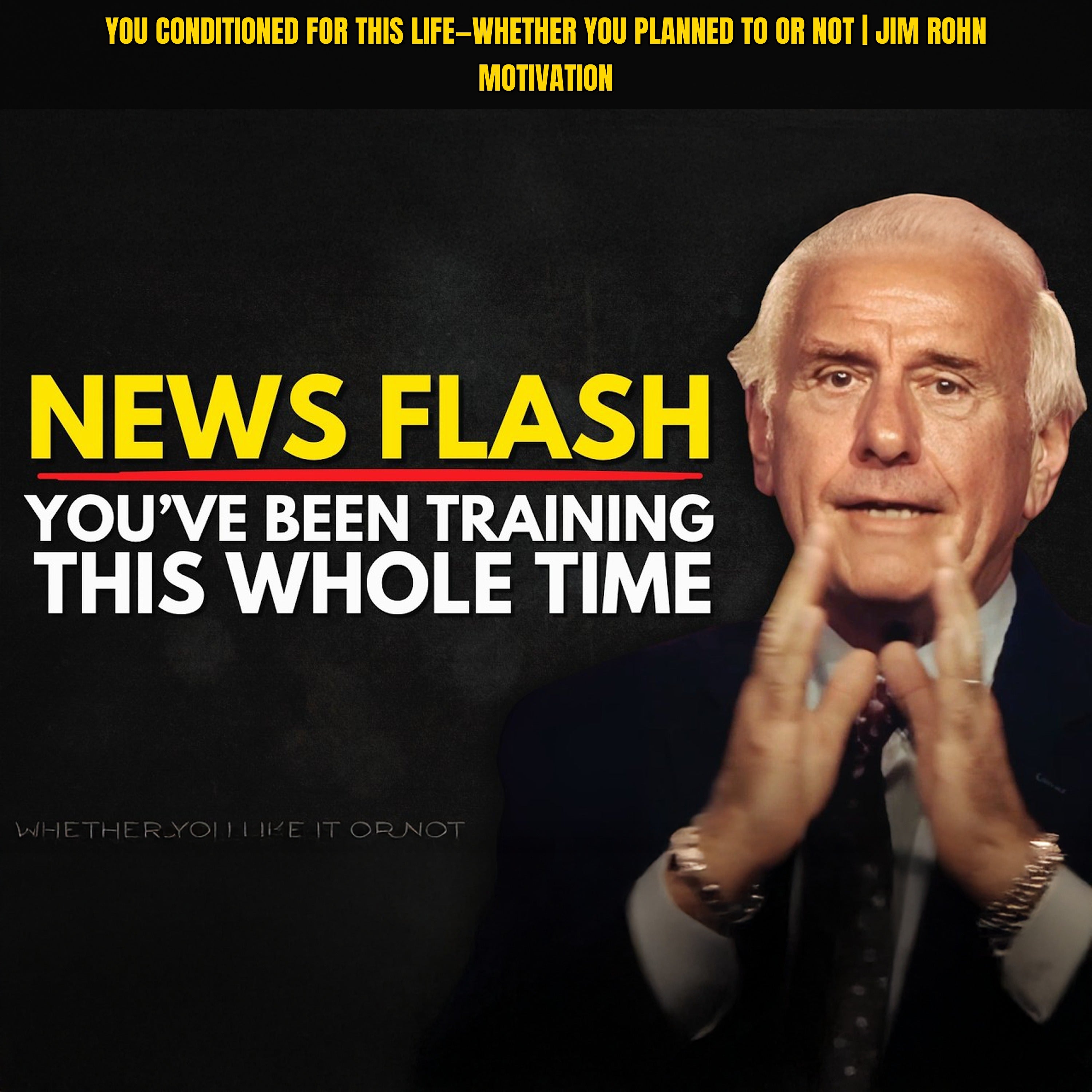
In this Jim Rohn Motivation speech, discover the powerful truth that your current life isn’t random—it’s the result of your training. Every habit, decision, and repeated action has been preparing you for the life you're now living. The question is: are you training for what you want or what you’re trying to avoid? Key Topics From This Motivational speech: Why your habits are training you every single day How unconscious repetition creates unwanted results The difference between practice and preparation Why neglect is also a form of training How to retrain your mind and life through small, consistent action This motivational speech is a wake-up call for anyone coasting through life unaware of how much their routines are shaping them. From discipline to distraction, every action casts a vote for your future. Whether you’re building strength or rehearsing weakness, the process is the same: repetition. If your results don’t match your desires, it’s time to change the training. Start small,
Wake up, there's more to you than this. In this Afternoon Vibe from The Positive Mindset Podcast, Henry Lawrence speaks to anyone who feels behind, like they're starting over, or like they're at the lowest point they've ever been. It doesn't matter where you are right now. Sometimes things fall apart because we wouldn't have turned to God when life was good. Henry compares this season to an alarm clock: it isn't punishing you for being asleep, it's telling you it's time to get up. He shares why a candle matters most in the dark, why nobody takes a photo of a foundation, and why the beautiful thing is already inside you, like a statue waiting in the stone. Let God remove what He didn't create for you, because the work isn't just to become someone else. The work is to become you. In this episode: • "It doesn't matter where you are right now." • "It's telling you it's time to get up." • "Maybe the dark you're in is exactly the place your light was meant to go." • "The statue was already i
To influence others, you must first understand what already influences them. In this powerful talk, Tony Robbins breaks down the five personality types you need to know to connect with and lead people effectively. Uploaded 23-02-25 Watch more videos like this Use 4 "Alter Egos" to BREAK FREE from Limitations: https://youtu.be/zxtFZc8qeug #1 Best SIMPLE Technique to Overcome Fear and Anxiety Quickly: https://youtu.be/Q2sixA1vPKk STOP Letting These Beliefs CONTROL Your Life: https://youtu.be/G0psZhmKGgE Use This Easy Formula to Improve Your Life INSTANTLY: https://youtu.be/w3nRX2qP0Wc Follow Tony Robbins: Facebook: https://www.facebook.com/TonyRobbins Instagram: https://instagram.com/tonyrobbins/ TikTok: https://www.tiktok.com/@UC-12kRMQjK1LiQKRrT2zXcQ Twitter: https://twitter.com/tonyrobbins LinkedIn: https://www.linkedin.com/in/officialtonyrobbins Website: https://www.tonyrobbins.com/ Tony Robbins is a #1 New York Times best-selling author, entrepreneur, philanthropist, and the nation'
Six decisions in the Federal Courts edition for Tuesday 24 November 2026, all from the Federal Court of Australia. A quiet day with one decision that matters: the prudential regulator's civil penalty case against Bendigo and Adelaide Bank over a cyber attack on customer accounts, after penetration test findings of weak passwords were logged but never escalated or fixed. How the reasonable steps duty of due skill, care and diligence is measured, why an unallocated part of the business breaches the accountability regime, how to run a regulator's penalty case on agreed facts, three safeguards for compliance teams, and the registry. Commercial Desk (opening story) and Practice and Procedure Desk. Australian Prudential Regulation Authority v Bendigo and Adelaide Bank Limited [2026] FCA 1790 (O'Bryan J, 24 November 2026) - Signal: Doctrine; Practice and Procedure. Section 37C(a) of the Banking Act 1959 (Cth) (the Banking Executive Accountability Regime, Part IIAA, repealed from 15 March 2024
Have you ever heard your parents say something that made absolutely no sense when you were a kid—but years later, you finally understood what they meant? In this special episode from the Real English Conversations Podcast archives, Curtis and former co-host Amy take a nostalgic trip back to childhood and share some of the funniest, most memorable things their parents used to say. From "Money doesn't grow on trees!" to "Don't make me turn this car around!" and "Because I said so!", we explore the everyday English expressions that parents have been using for generations. But there's more to this conversation than just funny memories! Curtis and Amy explain what these expressions actually mean, when native English speakers use them, and how you can use them naturally in your own conversations. Whether you're an English learner who wants to understand everyday spoken English, an international professional looking to sound more natural, or simply someone who enjoys funny childhood memories,
In Episode 391 of the Counselling Tutor Podcast, your hosts Rory Lees-Oakes and Ken Kelly take us through this week's three topics: Firstly, in 'Ethical, Sustainable Practice', they explore choosing your clinical will executor - who is suitable for the role and where a clinical will can fail. Then in 'Practice Matters', Rory speaks with Dee Phillips-Duncan about online and telephone placement requirements - and whether they reflect what the public and students actually need. And finally, in 'Student Services', Rory and Ken discuss the self-doubt that surfaces when a client does not return - the familiar question of 'is it something I did?'
In Episode 390 of the Counselling Tutor Podcast, your hosts Rory Lees-Oakes and Ken Kelly take us through this week's three topics: Firstly, in 'Ethical, Sustainable Practice', they explore counselling CPD - why current ethical standards matter, and why training and professional standards can no longer be separated. Then in 'Practice Matters', Rory speaks with Meg Moss about the accredited register - what it is, who oversees it, and why it matters to the public. And finally, in 'Student Services', Rory and Ken discuss what to do when client attendance doesn't go to plan - managing no-shows and the feelings they bring up.
Companies should be responsible for serious harm caused by suppliers they choose.
Share your view, then see how readers voted. No sign-in required. This poll is shared across stories.
Do you agree or disagree?
Common Quandary
A Common Quandary to discuss
Another conversation to explore, separate from this news story.
Your teenager locks you out of their phone. When is it okay to look?
Your usually outgoing sixteen-year-old has withdrawn and stopped seeing friends. They insist they are fine and refuse to talk. You know their phone passcode and could read their messages without being discovered.
How serious must a fear be before protection outranks privacy?