445 Cash vs super at 63, private credit risk & exiting a property portfolio
57 min
Listen through the publisher, then discuss the episode here or arrange an in-person Roundtable. Your city determines where to meet.
Roundtables are designed for groups of four, with a shared subject and room for everyone to speak. Come for discussion, with no dating expectation.
Retire Right is brought to you by Tallowwood Wealth Advice. Specialist retirement financial advisers. In this Q&A Glen and financial adviser Nathan Fradley discuss: retiring at 63 with a younger spouse still working: should we live off our cash or top up super? valuation risk in super: what to know about private credit, private equity and unlisted assets why would a private credit fund get frozen? would you keep a small home loan as protection against scammers? exiting a large property portfolio at retirement can a market crash help you get more into pension phase under the transfer balance cap? We may also change the names of questioners for privacy. Hosted on Acast.
Episode information is provided by the publisher. Listening takes place on the publisher’s service.
Car loans, ATO debt, and rising mortgage costs are eating into investors' cash flow, with one couple saving $30,000 a year in repayments by restructuring their loans. Brokers explain when consolidating loans can work and when it can backfire. On Which Mortgage, Alex Whitlock speaks with Finni brokers Eva Loisance and Costa Arvanitopoulos about how debt consolidation can help property investors manage rising repayments, reduce interest costs, and regain control of their cash flow. The brokers share the case of a business-owning couple paying more than $13,000 a month across their home loan, car and truck finance, personal loan, and ATO debt. By refinancing against the equity in their investment property, they reduced monthly repayments by up to $3,000 and freed up cash flow without rushing into another purchase. The discussion explores when consolidation makes financial sense, the danger of rolling unsecured debts into a mortgage and why borrowers need to maintain their old repayment ha
Is the property downturn shifting from city to city, or are national headlines hiding what is happening on the ground? On this week's Australian Property Podcast, Pete Wargent and Chris Bates look at changing listings, buyer demand and price movements across Australia's housing markets. If you're considering a first home, an upgrade or an investment property, this episode offers questions to ask before acting. Check current lending and tax rules, and seek qualified personal advice rather than treating a podcast discussion as a recommendation. Episode resources Show partner resources Rask resources – Pete's Buyers Agency (https://www.allenwargent.com.au/) – All services (https://bit.ly/R-services) – Financial Planning (https://bit.ly/R-plan) – Invest with us (https://bit.ly/R-invest) – Access Show Notes (https://bit.ly/R-notes) – Ask a question (https://bit.ly/R-quest) – We love feedback! (https://raskau.typeform.com/to/ZbfHy6IP) – Instagram: @rask.invest (https://www.instagram.com/rask
Bitcoin doesn't excite Ran Neuner anymore, and the Crypto Banter founder explains where he sees the real opportunity in crypto now. Ran tells me why he took profits at $84K, how he's deploying that cash now that sentiment has hit extreme fear, and the two tests he's watching to tell whether the bull market is still on. He explains why he thinks tokenized stocks and AI agents will run on blockchain rails, how he values tokens on "pressure" instead of FDV, why he thinks the old Bitcoin crowd is moving to Zcash, and how worried he really is about quantum. We also get into the midterms, World Liberty Financial, Solana Breakpoint and STRC. Recorded Thursday, November 19. In this episode: 00:00 Intro 01:10 Is the bull market still on? 02:17 What a correction is supposed to do 03:28 Two tests for the bull market 04:12 Why Bitcoin excites Ran less now 05:11 Trading tokenized Anthropic before the IPO 07:24 How AI agents will move your money 09:31 Why agents will settle on blockchain rails 13:25
Now Mark wants to help you become financially free as well. Follow the podcast and turn on notifications! This Podcast is fan-made. No copyright infringement intended. ----------------------- ---------- Keywords: credit cards, entrepreneurship, passive income, side hustles, get rich, money management, real estate, business success
This episode is brought to you by Sarmaya Partners. Learn more about Sarmaya’s LENS ETF, their full data and comparison, including performance here: https://sarmayaetf.com/ In this episode of Other People's Money, Max Wiethe sits down with Muddy Waters Capital founder Carson Block to discuss his firm's explosive new short thesis on Nvidia. Block breaks down the alarming connections between a former Nvidia executive and a former SMCI executive recently implicated in a major chip smuggling scandal. The conversation dives deep into the national security implications of dual-use technology and how the ongoing geopolitical tug-of-war between the US and China is reshaping the semiconductor sector. Tune in to hear why Block believes this scandal goes far beyond CEO indiscretions and could trigger a massive regulatory reckoning for Silicon Valley's biggest players. Follow Muddy Waters on X: https://x.com/muddywatersre Follow Max on X: https://x.com/maxwiethe Follow Other People’s Money on: App
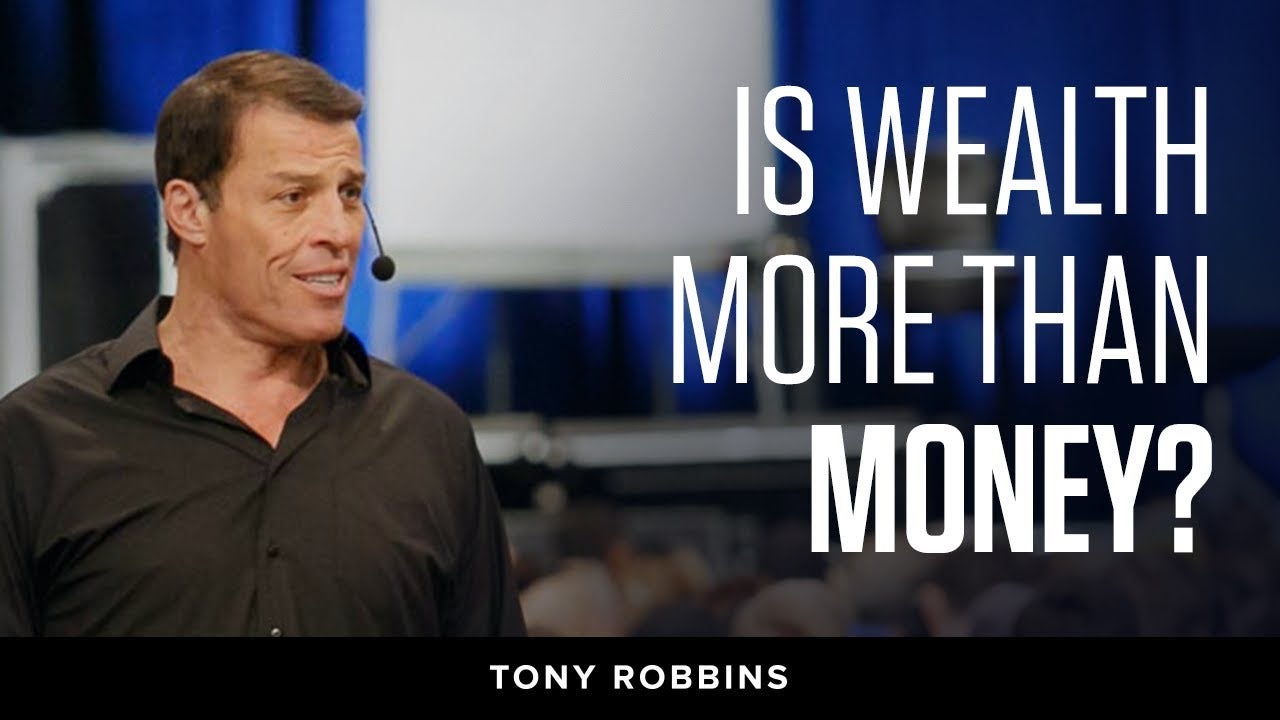
How will you know when you’ve reached true wealth? Is it when you have your dream home? Once you own an expensive car? Perhaps the signifier is when you’re wealthy enough to have your own private airplane? In Tony’s opinion, these are the wrong things to use when measuring your wealth. Uploaded 12-09-19 The people with mansion-sized homes, with three sports cars sitting in the garage, with a private plane that takes them to and from their vacation home – these people may not necessarily have access to true wealth. None of these are indicators of true wealth; they’re indicators of monetary wealth. True wealth is the ability to live life on your own terms. It’s freedom. Tony explains that money itself isn’t wealth, it’s a vehicle – a tool you can use to achieve financial freedom, to go after the dreams you didn’t think were possible, to design your life in a way that makes you feel alive and fulfilled. While Unshakeable is a financial freedom playbook, the process of becoming unshakeable
Retire Right is brought to you by Tallowwood Wealth Advice. Specialist retirement financial advisers. In this episode of What Would Glen Do, Glen chats with Mel, a 50-year-old consultant in Victoria who owns her home and an investment property. Mel wants to know whether to sell the investment property, sell both and upgrade or keep things as they are. She's already made her decision, but Glen goes through her financial situation anyway and shares what he would do. Apply to be a WWGD or MMS guest! https://apply.moneypodcast.com.au/ We may also change the names of questioners for privacy. Hosted on Acast.
Retire Right is brought to you by Tallowwood Wealth Advice. Specialist retirement financial advisers. In this episode financial adviser Nathan Fradley takes over with a client case study. Rupert (75) and Anne-Marie (72) have been retired for about 15 years. They came to Nathan worried about receiving a big capital gains tax bill when selling $900k in shares that Anne-Marie inherited from one of her parents. As they talked, a bigger priority came up: with an SMSF and $2.5m family home, they wanted to simplify their affairs so it would be easier to manage as they got older, and easier for their daughter if she ever had to step in. We may also change the names of questioners for privacy. Hosted on Acast.
Keeping personal information private is worth giving up some digital convenience.
Share your view, then see how readers voted. No sign-in required. This poll is shared across stories.
Do you agree or disagree?
Common Quandary
A Common Quandary to discuss
Another conversation to explore, separate from this news story.
The stadium can ban violent fans by scanning every face at the gate. Would you walk in?
A stadium can use facial recognition to identify people banned for violence and shorten security lines. Every visitor would be scanned, error rates are not zero, and the resulting biometric data could become useful to police or advertisers.
How much privacy may a crowd be asked to trade for collective safety?