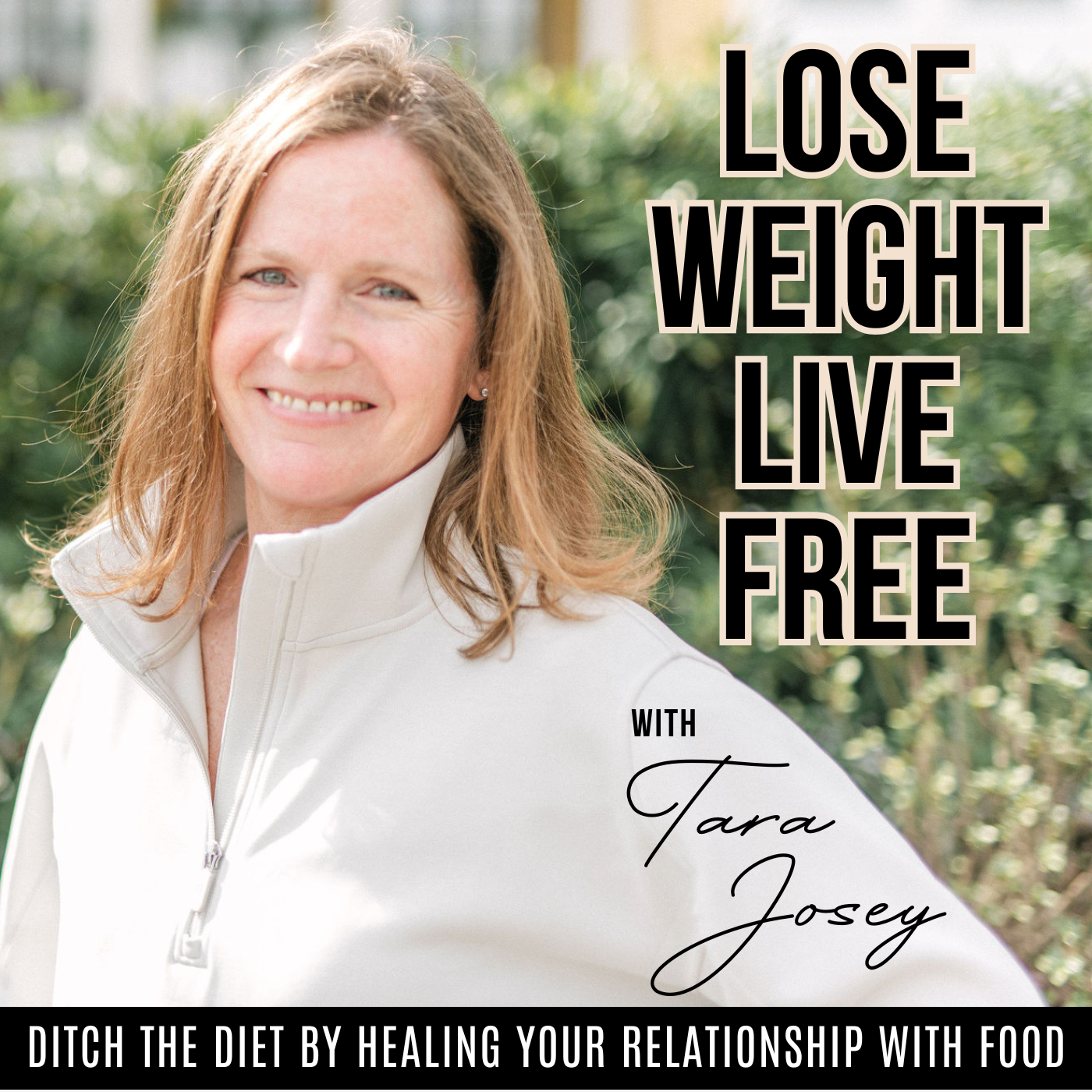
467. Stop Comparing Yourself to Others: Keep Your Eyes Fixed on Jesus in Your Health Journey
13 min
Listen through the publisher, then discuss the episode here or arrange an in-person Roundtable. Your city determines where to meet.
Roundtables are designed for groups of four, with a shared subject and room for everyone to speak. Come for discussion, with no dating expectation.
Have you ever started your health journey feeling motivated and confident, only to look at someone else and suddenly feel like you're falling behind? Maybe you see someone losing weight faster, staying consistent with workouts, or seemingly having it all together, and you start questioning your own progress. It's so easy to get caught up in what everyone else is doing that we lose sight of what God is doing in our lives. And this doesn't just happen with our health. It happens in our faith, our relationships, and the everyday choices we make. But what if the key to moving forward isn't trying harder to keep up with everyone else? What if it's learning to keep your eyes on Jesus? Today, we're looking at three powerful scriptures that remind us to stop chasing approval, stop comparing our journeys, and focus on the One who has called us to run our own race. If you need prayer or to connect, email me at [email protected].
Episode information is provided by the publisher. Listening takes place on the publisher’s service.
Being considerate is a good thing. It means recognising that your words, choices and actions affect other people. But sometimes, the desire to keep everyone happy slowly becomes a habit of abandoning yourself. You agree when you want to say no, apologise when you have done nothing wrong, hide your opinions to avoid disagreement and make decisions based on how people might react. The difference is whether your consideration comes from genuine love or from the fear of being rejected. Every contribution counts. Thank you for being part of our journey!
Happy Sunday! Welcome to Heal Squad’s The Sunday Set Up. Life lessons to help you start the week. How much of success comes down to simply showing up? This week, we talk keeping an open mind, taking chances, and recognizing the doors that open along the way. From Olympic athletes appearing on national television alongside Mercedes Moné to performers who keep showing up week after week hoping for their big break, we explore why success isn't always about talent or luck. Sometimes it's about making connections, putting in the effort, and being willing to try without knowing what we'll get in return. We talk knowing when to stop investing time in people who aren't willing to help themselves, and why even experiences that don't work out can teach us something valuable. The takeaway: don't wait for the perfect moment or expect someone else to make things happen. Be willing to take a chance, walk through the doors that open, and remember that half of life is just showing up. Plus, a little b
For the days you got through and nobody saw what it took. A quiet place this evening where it counts. About 12 minutes with Steven Webb's calm voice and music underneath. Perfect for the evening. We let the body soften, from the jaw and the eyes down to the belly, because it's been on alert all day. Then we look at what today really cost. Getting up when your body said no. Being kind to someone while you were falling apart inside. Saying "yeah, fine" because where would you even start? There's an old Zen idea I keep coming back to: a thing doesn't need to be seen to be real. The rain falls on an empty field, nobody watches, and it still soaks in. We put the day down for a minute, not away, just down, and finish with three gentle wishes. May the hard days I got through be counted. I've been paralysed a long time, and I know what it can take just to get through the day. You're not doing this on your own. Treat me to a coffee, keep the podcast free, and get my Weekly Calm every Sunday. It
For the written breakdown, references and more nuances, see the StayCurious Letter: https://staycuriousmetabolism.substack.com/p/the-aging-muscle-paradox-how-to-keep?r=40ekz2 Additional referenced letters, including those on creatine and sarcosine can be found at our Muscle Health Archives, here: https://staycuriousmetabolism.substack.com/p/musclehealth Sarcosine Video: https://youtu.be/0thK-Flb1KQ Oleuropein Video: https://youtu.be/ljuimrT2a1s Adapt (Inter-organ Communication) Video: https://youtu.be/R9x5Y57HuoA Creatine Video: https://youtu.be/qdt6xwzeAx0 *When it comes to reputation, quality, and rigorous third-party testing, you really can’t go wrong with Momentous Creatine Monohydrate. It’s extensively tested for heavy metals and banned substances. My personal preference is their pure, unflavored, no dyes or sweeteners, micronized creatine monohydrate * Creatine Ice Cream Recipe Warm 1 pint (473 ml) of Heavy Cream in a pan. While the cream is warm, but not hot, add in 5 egg yolks
Get the 200+ Page Optimal Living Daily Workbook (PDF) - Free. Want to turn today's episode into an actionable plan? Episode 4233: Kate Galliett explains three reasons we make health, fitness and life harder than they need to be: ignoring how the body works as a connected system, trusting only extreme intensity, and leaking the energy that fuels motivation and discipline. She makes the case that appropriate effort, not maximum effort, is the only sustainable path to lasting results. Read along with the original article(s) here: https://fitforreallife.substack.com/p/why-you-make-everything-harder-than Quotes to ponder: "The better way is to give appropriate effort and get appropriate results. This is the only sustainable way." "If you try and live at the extremes, you will constantly ping-pong back and forth from one extreme to the other." "Just imagine - you might not actually lack discipline after all, you just might be leaking energy that feeds your ability to be disciplined." We spen
Does your relationship feel like home, or does it feel like standing on the edge of something you might lose? In Part 3 of our Relationship Anxiety series, clinical hypnotherapist and former paramedic Martin Hewlett guides you through the process of teaching your nervous system that love doesn't have to hurt to be real. We explore the physical manifestations of anxiety—the tight chest, the 2:00 AM racing mind, and the "stomach drop" when a text takes too long—and provide the tools to "turn down the alarm" of your internal survival response. If you are ready to stop "cherry-picking" evidence of disaster and start building a foundation of trust, this session is for you. In This Episode, We Cover: The Science of Safety: Understanding how your nervous system confuses love with danger. Guided Visualization: A journey into your own "safe room" where you are already enough. Rewiring the Brain: Moving from worst-case disaster reels to the reality of small, daily kindnesses. Breaking the Cycle:
What if the scale isn't telling you the whole story? Have you ever been consistent with your workouts, making better food choices, and really trying to take care of yourself, only to step on the scale and see absolutely no change? And just like that, your motivation takes a hit. You start questioning whether your workouts are working, whether you're doing enough, or whether you need to change something. But here's what I want you to understand: The scale is only measuring one small piece of your health and fitness journey. It doesn't measure how much stronger you've become, how much better your endurance is, how much energy you have, or how much easier it is to do things that used to feel difficult. And if you're only using the scale to determine whether you're making progress, you could be missing some pretty amazing changes happening in your body. Today, we're talking about five ways to measure your fitness progress beyond the scale so you can start recognizing the changes that actua
What if slower weight loss is actually a good thing? Have you ever lost 10 or 15 pounds, felt amazing, and thought, "Finally! I've figured it out!" Only to find yourself a few months later right back where you started? Maybe you've done this more times than you can count. You lose the same 5–15 pounds, gain them back, and then decide it's time to buckle down and start all over again. And here's what I want you to consider: What if the problem isn't that you haven't found the right diet yet? What if the problem is that you've been so focused on getting to the finish line that you've missed the most important part of the journey? We live in a culture that wants everything FAST. Fast weight loss, quick results, before-and-after pictures, and a new plan that promises to get us where we want to be in 30 days. But here's the truth: Losing weight quickly doesn't necessarily mean you've learned how to maintain that weight loss. Because when you focus on the process instead of just the outcome,
Is Comparison Stealing Your Progress? Have you ever been feeling pretty good about your health journey until you scroll through social media, see someone else's transformation, or hear about a friend losing weight—and suddenly, what you're doing doesn't feel like enough? Maybe you start questioning your workouts, comparing your body to someone else's, or wondering why your progress isn't happening as quickly as theirs. You were feeling encouraged, but now you're frustrated, discouraged, and tempted to throw in the towel. Here's the thing: comparison can steal your joy, distract you from your progress, and convince you that you're failing when you're actually growing. Your health journey was never meant to look exactly like someone else's. You have a different body, different circumstances, different responsibilities, and a different starting point. Today, we're talking about three ways comparison can sabotage your health journey and, more importantly, how to stop measuring your progres
Disease statistics should include context about who is affected and how counts are collected.
Share your view, then see how readers voted. No sign-in required. This poll is shared across stories.
Do you agree or disagree?
Common Quandary
A Common Quandary to discuss
Another conversation to explore, separate from this news story.
Your anonymous review could cost a coworker a promotion. Do you sign your name?
A company requests anonymous feedback about a colleague being considered for promotion. You have serious concerns based on direct experience, but anonymity prevents them from asking questions or understanding the context of your criticism.
Does honest criticism require accepting personal accountability for it?