#495 - Kyle Thompson // Holy Land Dispatches: Tetelestai
6 min
Listen through the publisher, then discuss the episode here or arrange an in-person Roundtable. Your city determines where to meet.
Roundtables are designed for groups of four, with a shared subject and room for everyone to speak. Come for discussion, with no dating expectation.
We stand at Golgotha through John 19 and face the greatest injustice in human history, where the innocent Jesus is condemned and crucified. We slow down on his final words, “It is finished,” and why Tetelestai means the debt is paid in full for rebels like us. • the brutality of the cross and the innocence of Jesus • a pilgrimage view of Israel as real gospel history • the likely location of Golgotha near the Garden Tomb • John 19:28–30 and the moment Jesus declares “It is finished” • Tetelestai as completion, goal achieved, paid-in-full receipt language • how the finished work of Jesus counts for us personally • the disciples’ despair and the unseen plan of God to save the world Want to connect? Email [email protected]
Episode information is provided by the publisher. Listening takes place on the publisher’s service.
Get my 2027 Manifesting Playbook Have you ever wondered what to actually say when you want your angels to show up? In this episode of Dear Guides, Gabrielle Bernstein sits down with angel expert Kyle Gray to share the exact prayers that invite your angels in for relief, guidance, wisdom, and support. Together they explore why prayer is the quickest way to give your angels the green light, why you should stop asking for things and start asking for feelings, and more. Kyle also introduces his simple “Thank You Angels” method, then shares the prayers for forgiveness, uncovering the root of anxiety, and meeting a big dream with surrender instead of force. Plus, he opens up about the moving moment with his mother that led to the prayer that changed his life: “Guardian angel, guide and friend, I take refuge in you.” Whatever you’ve been trying to control… let this be the episode where you let your angels help you. Learn more about Kyle’s work at https://www.kylegray.co.uk/ — More Gabby: Get
Read Online (https://catholic-daily-reflections.com/2026/11/23/our-final-destination/) Our Final Destination While some people were speaking about how the temple was adorned with costly stones and votive offerings, Jesus said, “All that you see here—the days will come when there will not be left a stone upon another stone that will not be thrown down.” Luke 21:5–6 Everyone loves a vacation. Imagine you received an all-expenses-paid trip to a destination you’d always dreamed of visiting. The only challenge is that the trip is scheduled for a year from now. In the months that follow, you study your destination in detail. You review every activity, plan out each day, and your excitement grows continually. Finally, the day arrives, and when you reach your destination, it surpasses every expectation. It is a true paradise. This simple earthly image reveals the disposition our hearts must have concerning Heaven and the promise of the New Heavens and New Earth. It’s easy to become consumed by
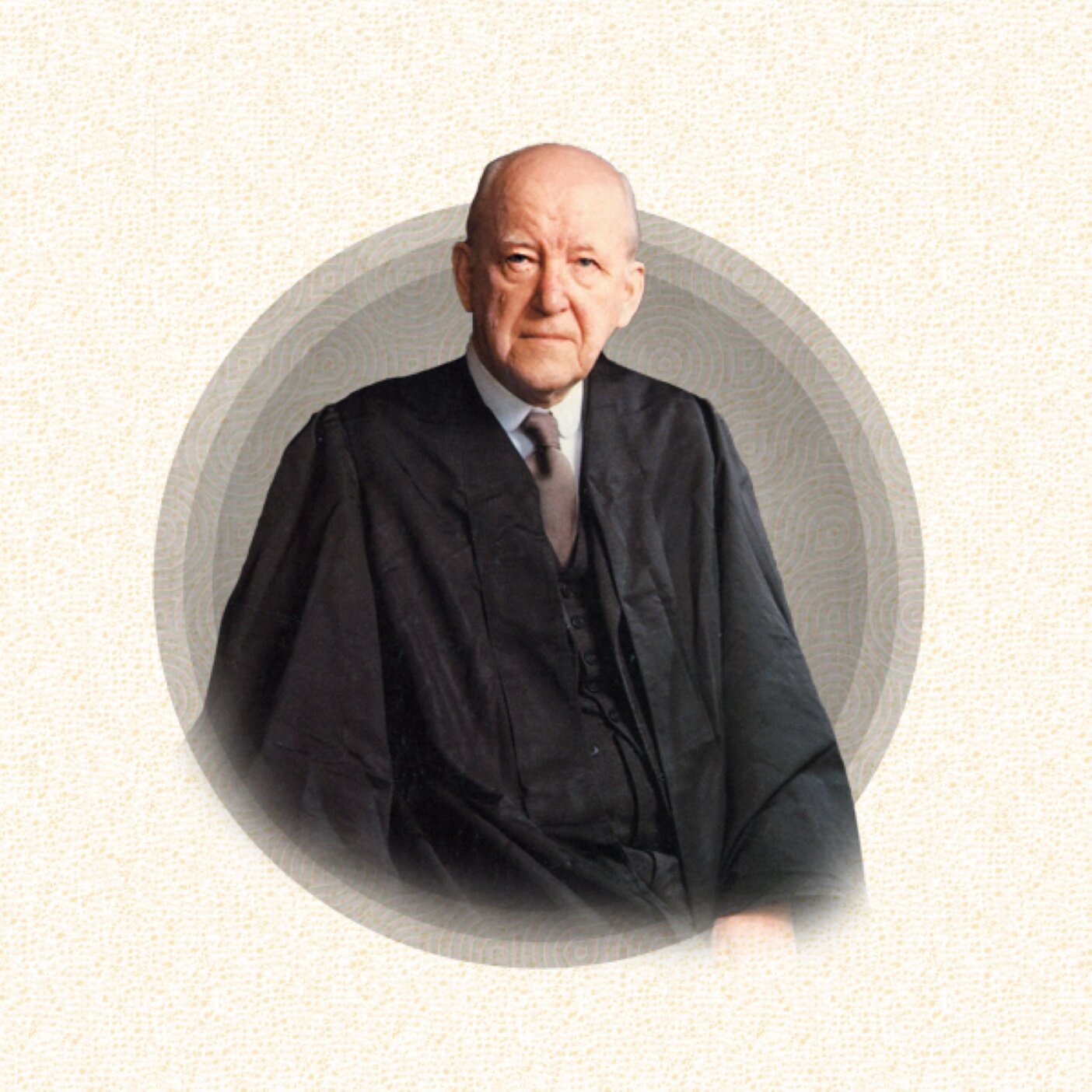
“All believers are called to be saints,” states Dr. Martyn Lloyd-Jones. This principle is well-supported from Scripture, yet there are some who teach that only a select few Christians should be recognized as saints. This is a key point because it recognizes the work of God in the lives of all who believe in Him, not just a select few. In this sermon on Ephesians 5:5 titled “The Kingdom of Christ and God,” Dr. Lloyd-Jones demonstrates that the goal of salvation is to make one holy, not happy. Though happiness is a byproduct, it is not the main goal. This, says Dr. Lloyd-Jones, differentiates Christianity from cults. Many people today profess to be believers but are selling a Christianity that makes people wealthy and happy, the complete opposite of Jesus’s promise that His followers are called to obedience and would sometimes even suffer for His sake. The kingdom of Christ and of God are the same, which means that true believers will follow the commands of Christ. Yet, some take this to
Sunday 22 November 2026 Today is Sunday the 22nd of November, the solemnity of Our Lord Jesus Christ, King of the Universe, beginning the 34th week of Ordinary Time. In the scripture we will pray with today, we hear of Jesus’ deep desire for us to love and serve those in need. As you hear Madison Cunningham with The Porter’s Gate singing, ‘Little Things with Great Love’, how does this song speak to you? In the garden of our Savior, no flower grows unseen; His kindness rains like water on every humble seed. No simple act of mercy escapes His watchful eye — for there is One who loves me: His hand is over mine. In the kingdom of the heavens, no suffering is unknown; each tear that falls is holy, each breaking heart a throne. There is a song of beauty on every weeping eye — for there is One who loves me: His heart, it breaks with mine. Oh, the deeds forgotten; oh, the works unseen, every drink of water flowing graciously, every tender mercy, You’re making glorious. This You have asked us:
What happens when the water stops flowing from our taps? Working through Revelation 8:6–12, Dr. John Neufeld shows how the first four trumpets echo the plagues of Egypt, striking the land, the sea, fresh water, and light, and warns against reading modern theories into the text instead of letting John speak for himself. Behind these judgments lies a world that refused to give God thanks. The Triumph of the Lamb, Vol.2: In The Triumph of the Lamb, Vol. 2, Dr. John Neufeld works through Revelation 6–11. The study covers the breaking of the seven seals, the sounding of the seven trumpets, the sealing of the 144,000, and the two witnesses. These chapters show that God’s final judgment and the coming of His Kingdom are certain, and that He protects His own through it all. They also remind us that the wars, hardship, and persecution of our own day are no surprise to God, and that history remains in the hands of the Lamb.
How do you commit your plans to God when you’re terrified of losing control? In Proverbs 16:3, the Hebrew word for “commit” literally means “to roll.” We can shift the full weight of our plans off our shoulders and onto God’s. Think of it like an apprentice architect rolling up his blueprints and handing them over to the Master Architect. Then Proverbs 17 shows why a dry crust with peace beats a feast full of tension. Proverbs 18 gives the tongue hands. The original Hebrew reads, “Death and life are in the hand of the tongue.” And Solomon teaches us that our plans and our words have something in common: neither can be mastered by willpower. Both have to be placed in God’s hands. In our Proverbs 16-18 Bible study, we cover: [7:36] The Pride Problem: Why pride keeps us from releasing our plans, and how Herod and Peter both stumble over pride, but only one stands back up. [15:34] Dam Control: A three-step strategy (Remove, Reflect, Revisit) to stop a heated quarrel before the emotional le
We walk through the Garden of Gethsemane and the olive press to see how a real place of crushing explains Jesus’ agony and obedience. We also face the hard mirror of sleeping disciples and ask where our own weakness opens the door to temptation. • our Israel pilgrimage as a way to read Scripture as real history • Gethsemane as an oil press and a place of crushing • Luke 22 and Jesus praying under agony and sweating blood • the weight of sin and substitutionary atonement as the reason for the crushing • Matthew 26 and the warning to watch and pray • the modern pattern of falling asleep on duty and sliding into temptation • olive trees surviving after the trunk dies through healthy roots and new shoots • the image of a crushed olive “sweating oil” pointing back to Jesus before the cross Stay sharp. Want to connect? Email [email protected]
We take a pilgrimage walk into Jerusalem that ends with a centuries-old tattoo stamp and a sudden realization on the Mount of Olives. From Mark 13, we focus on Jesus’ clear warnings about deception and persecution and ask whether we’re ready to endure when faith in Christ costs us something. • Pilgrimage through Israel and arrival in the Old City of Jerusalem • Visit to Razouk, the oldest tattoo parlor in the world, and why Christians mark pilgrimage • Meaning of the Jerusalem cross, Trinity crowns, branch, and the Sword of the Spirit • Setting and purpose of the Olivet Discourse as a private warning to the apostles • Reading Mark 13 on false messiahs, wars, earthquakes, famine, and betrayal • Two urgent themes to prepare for: deception that undermines faith and persecution that tests it • A direct challenge to men to prepare their families and churches for rising pressure Want to connect? Email [email protected]
We walk through the Pool of Siloam in Jerusalem and trace why this “lost” site matters for both biblical history and present-day faith. We end at John 9, where a man’s simple testimony cuts through the noise and pulls us back to the center of the gospel. • why the Word of God functions as a spiritual weapon • a vivid picture of darkness and what blindness would feel like • why we approach Israel as pilgrims rather than tourists • the Pool of Siloam’s role under Hezekiah and later restoration under Nehemiah • how modern archaeology rediscovered the pool and why that matters • John 9’s healing account and the meaning of “sent” • the blind man’s testimony as a model for clear faith • keeping doctrine in its place while guarding gospel centrality share this podcast around and leave us a five star rating and review. Want to connect? Email [email protected]
Companies should be responsible for serious harm caused by suppliers they choose.
Share your view, then see how readers voted. No sign-in required. This poll is shared across stories.
Do you agree or disagree?
Common Quandary
A Common Quandary to discuss
Another conversation to explore, separate from this news story.
An old friend refuses to use someone's new name. Do you correct them at the reunion?
At a reunion, an old friend repeatedly uses the name a former classmate had years ago. They say shared history gives the old name affectionate meaning; the classmate has clearly introduced themselves with a different name.
When does preserving your shared past deny who someone is now?