Listen through the publisher, then discuss the episode here or arrange an in-person Roundtable. Your city determines where to meet.
Roundtables are designed for groups of four, with a shared subject and room for everyone to speak. Come for discussion, with no dating expectation.
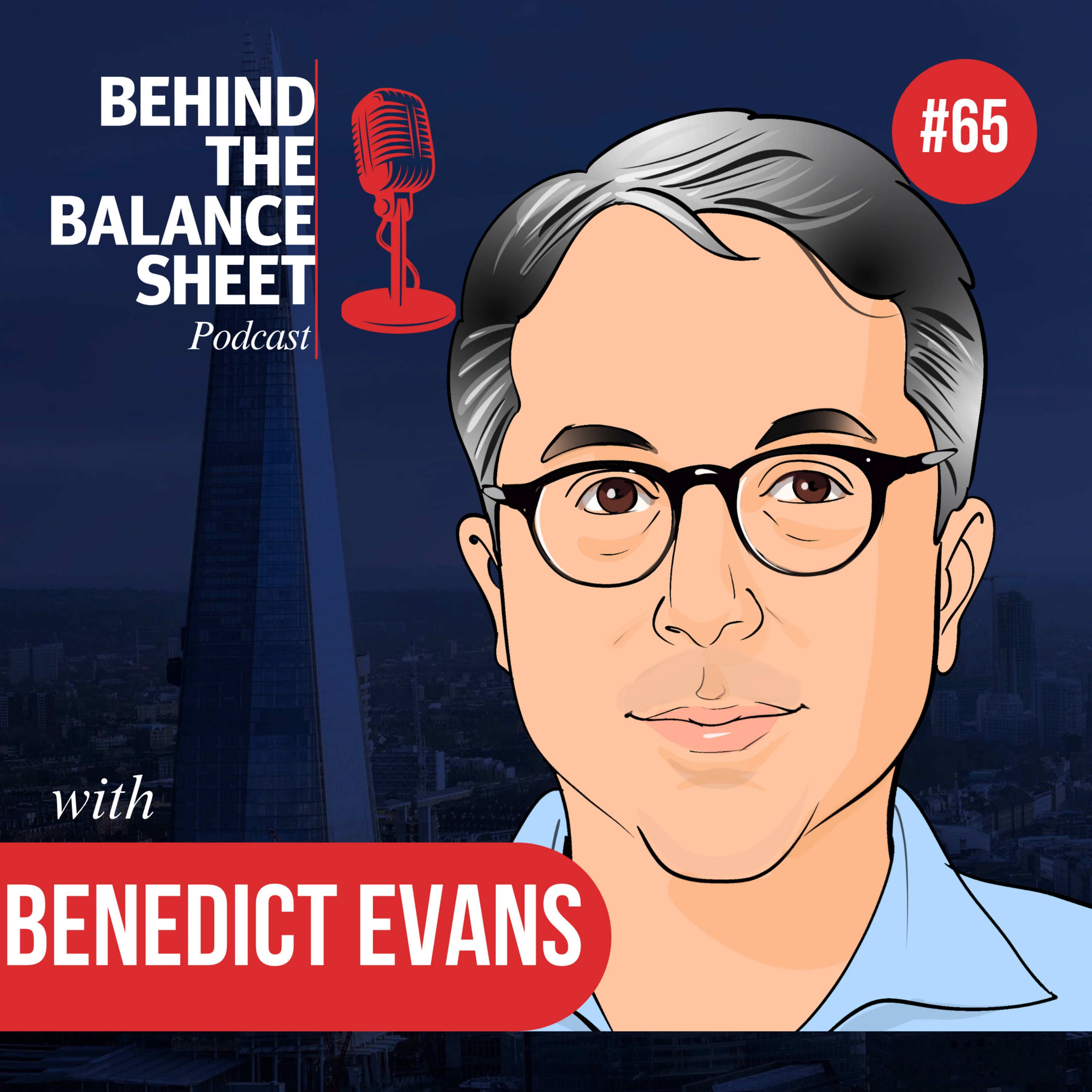
In a special edition of the podcast, Benedict Evans, technology analyst and writer, joins me to discuss investing in Artificial Intelligence and in particular, the Anthropic IPO. Benedict compares this cycle to past tech cycles, identifies where the risks and opportunities in the technology may lie, and we debate the quality and sustainability of Anthropic’s business. We explore its finances and discuss what the prospectus tells us about its prospects and valuation. Please give our sponsors some love – check themout: AlphaSense (https://www.alpha-sense.com/btbs/), the AI-powered expert network platform Oxford Data Plan (https://bit.ly/btbsodp1), the home of alternative data Baseline, (https://baseline.a5labs.com/?r=btbs)qualitative research on 3700 companies. Behind the Balance Sheet is a forensic accounting and fundamental investing podcast for serious investors.Each episode dives into how real‑world investors source ideas, build conviction and manage their portfolios. You’ll hear frameworks for analysing industries, understanding business models, and thinking about risk,behaviour and incentives, so you can refine your own process rather than copy stock tips. For show notes, transcripts and additional resources, visit our website. If you value thoughtful, process-driven investing discussions, follow the show and consider leaving a short review, or just a 5* rating on Spotify or Apple Podcasts. Please help spread the word.
Episode information is provided by the publisher. Listening takes place on the publisher’s service.
The Nasdaq 100 surged 6.9% and the S&P 500 gained 4.7% on Monday after Nvidia reinstated Jensen Huang as its CEO. Nvidia shares surged 31.5% after the company's board reinstated its ousted chief, stating that authorities in the US government confirmed that Huang did not impose threats to national security, signaling that the company would not be liable to threats. Concerns of sanctions against the company were rising amid reports that Worldspeed, whose executive Alice Huang was allegedly a Chinese intelligence agent, brokered deals of embargoed Nvidia chips to Chinese clients. Micron surged 19% and Marvell soared 18.4%, while Applied Materials climbed 14.6% and Lam Research jumped 14.4%. This triggered a rebound in the tech stocks amid Nvidia's risks, higher interest rates by the Fed, lower data center development due to a Democratic-run Congress, and a record IPO from Anthropic drying liquidity for tech investors. CrowdStrike sank 8.9% after agreeing to acquire Zscaler. SPI up 115 - G
Last week's nearly 9% decline was among the worst of the decade as buying interest dried up in chips and AI. Earnings from several tech firms and PCE data arrive in coming days. Important Disclosures Each investor needs to review an investment strategy for his or her own particular situation before making any investment decisions. For illustrative purpose(s) only. Investing involves risk, including loss of principal, and for some products and strategies, loss of more than your initial investment. Past performance is no guarantee of future results. For more information on indexes, please see schwab.com/indexdefinitions (https://www.schwab.com/resource/index-and-investment-term-definitions). All expressions of opinion are subject to change without notice in reaction to shifting market, economic or political conditions. (0130-1126) Hosted by Simplecast, an AdsWizz company.
This episode is brought to you by Sarmaya Partners. Learn more about Sarmaya’s LENS ETF, their full data and comparison, including performance here: Recorded on November 18 at the TomorrowX Summit, after Nvidia's earnings but before Nvidia's board reinstated Jensen Huang as CEO, Gavin Baker of Atreides Management joins Jack Farley to discuss Jensen, Nvidia, and the state of the AI trade. Gavin explains why semiconductor stocks sold off, and why he believes the market's AI return-on-investment math misses both fast-growing private companies and the open-weight models enterprises are running on-premise. He makes the case that the AI build-out may look more like the railroads than a typical semiconductor cycle, and discusses valuations at a moment when, as Jack puts it, even the bulls are bearish. Jack and Gavin also cover what Jensen's departure meant for Nvidia's competitors and suppliers, the AI bear case Gavin takes most seriously, and why GPU rental prices are a key signal to watch.
I sit down with Adrien Gaidon, Co-founder and Chief Strategy Officer of Walden Robotics, to map out where the openings sit in robotics and physical AI. Adrien explains how teams now teach robots with data, why deployment data carries the most value, and why Walden picked wheels and two-finger grippers for factory work. We dig into the opportunities around the big labs: data with scarce access, supply chain, teleoperation, insurance, software tools, and niche robots. If robotics feels like a game for companies with $300 million seed rounds, this episode lays out the smaller ways in too. This episode was made possible thanks to Anthropic (the team behind Claude) for hosting us at Claude Founder house and sponsoring the episode. Timestamps: 00:00 – Intro 01:48 – The current Robotics Landscape 03:01 – The Data Opportunity 11:17 – Robots on Team Human 13:24 – Inside Walden's Factory Robots 19:40 – Where to Start a Robotics Company 30:02 – How Physical AI Works 32:02 – Picking Your Level of
Don and Tom close the book on Financial Physics with a final look at goals, discipline, and the timeless rules behind sensible investing. They also discuss diversified low-cost portfolios, changes to Goldman Sachs’ GEM ETF, recovering from losses without taking reckless risk, the balance between saving and investing, and the financial threats posed by artificial intelligence. Questions? Comments? Click! (https://www.buzzsprout.com/2607021/fan_mail/new)
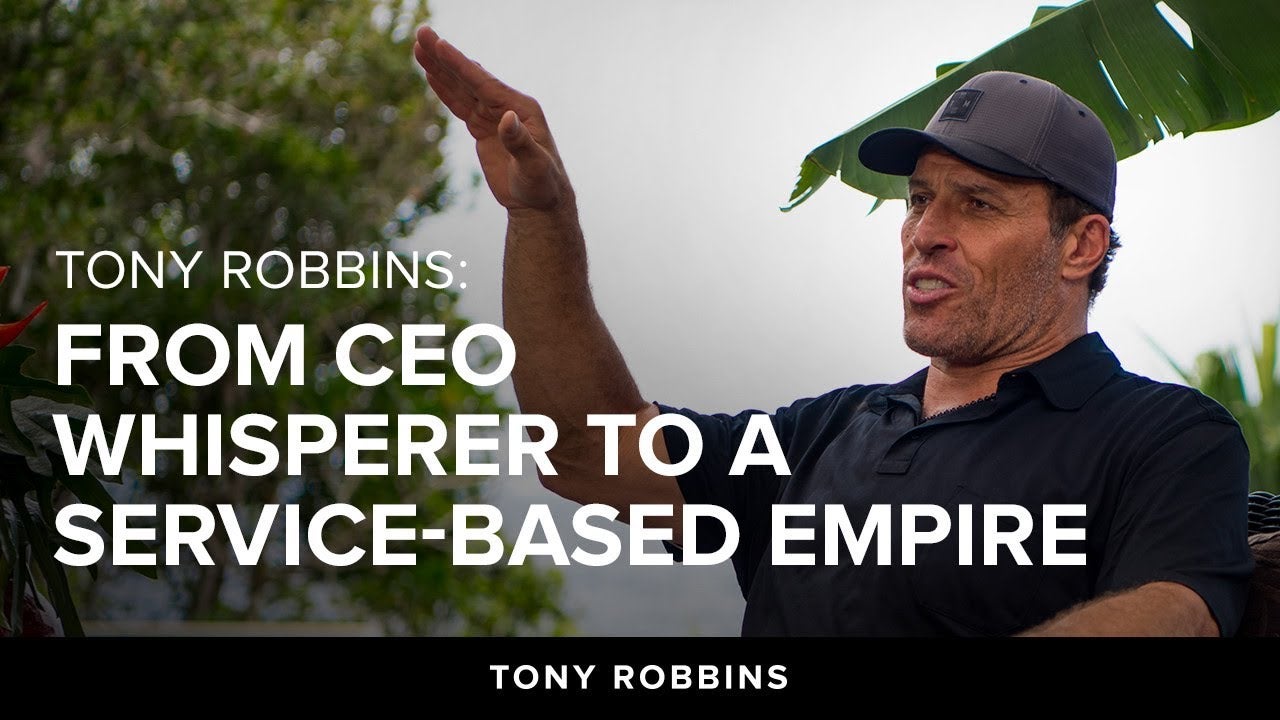
Have you ever wondered how Tony built a $6 billion business empire? Or how his biggest frustrations, and even failures, fueled his success? Uploaded 10-10-19 Business Insider’s Richard Feloni flew to Tony’s Fiji resort Namale for this far-reaching, revealing interview that originally ran on the “Success! How I Did It” podcast. And in this special episode of the Tony Robbins Podcast, you will hear Tony explain just how his tumultuous childhood led to his life’s calling, and how he developed the notion of a “performance coach.” He details what it was like going from a broke teenager to a millionaire with a bestselling book in several short years, and how he dealt with fame and increasing responsibilities. Tony offers insight into his coaching process, and what his daily correspondences with one of his oldest clients, billionaire investor Paul Tudor Jones, are like. The interview offers insight into how Robbins has quietly built a $6 billion business empire, and why he’s constantly pushin
New competition formats should improve the experience for players as well as audiences.
Share your view, then see how readers voted. No sign-in required. This poll is shared across stories.
Do you agree or disagree?
Common Quandary
A Common Quandary to discuss
Another conversation to explore, separate from this news story.
The touchscreen asks for a 25% tip while the cashier watches. What do you press?
At a counter-service shop, you place your own order, collect it, and clear the table. The payment screen suggests a twenty-five percent tip while an employee watches you choose.
When does a voluntary custom become an unfair social demand?