810: How to Build a Plan That Works, with Robert “Cujo” Teschner
39 min
Listen through the publisher, then discuss the episode here or arrange an in-person Roundtable. Your city determines where to meet.
Roundtables are designed for groups of four, with a shared subject and room for everyone to speak. Come for discussion, with no dating expectation.
Robert “Cujo” Teschner: Debrief to Win Robert “Cujo” Teschner is a retired F-15 / F-22 fighter pilot and a former Weapons School Instructor, Squadron Commander, and combat veteran. He served as the US Air Force’s expert in post-mission debriefing, the methodology used by high-performing military teams to self-correct and improve continuously. He is the author of Debrief to Win: How America’s Top Guns Practice Accountable Leadership…and How You Can, Too! (Amazon (https://link.amazon/B0cy9i6wQ), Bookshop (https://bookshop.org/a/90226/9781732929807)). Most leaders recognize the value of a good plan, but few organizations do this well, consistently. In this conversation, Cujo and I detail a five-step framework that will help your team build a plan that works. Key Points Defining the commander’s intent ensures that everyone is on the same page for the overall objective of the project, event, or mission. Expectations include key objectives that are measurable, achievable, and time-constrained. Leverage past experiences and lessons to avoid repeating mistakes and to build on prior successes. Work backward from your end goal to create a timeline with clarity on who does what by when. Use AI to assist you in seeing contingencies that might be a blind spot for your team and you. Red-team your plan by inviting fresh perspectives to find gaps and strengthen confidence in execution. EAGLE framework: E: Set EXPECTATIONS A: APPLY Lessons from the Past G: GENERATE from Target Backwards L: LAY Out Contingencies E: EVALUATE as Your Enemy Resources Mentioned Debrief to Win: How America’s Top Guns Practice Accountable Leadership…and How You Can, Too! by Robert “Cujo” Teschner (Amazon (https://link.amazon/B0cy9i6wQ), Bookshop (https://bookshop.org/a/90226/9781732929807))* Related Episodes The Way to Stop Spinning Your Wheels on Planning (https://coachingforleaders.com/podcast/319/) (episode 319) How to Prevent a Team from Repeating Mistakes, with Robert “Cujo” Teschner (https://coachingforleaders.com/podcast/prevent-team-from-repeating-mistakes-cujo-teschner/) (episode 660) Crafting the Modern Business Plan, with Seth Godin (https://coachingforleaders.com/podcast/crafting-the-modern-business-plan-seth-godin/) (episode 704) Discover More
Episode information is provided by the publisher. Listening takes place on the publisher’s service.
Register FREE for Time To Rise Summit | Jan 29-31, 2026: https://tonyr.co/4apHdct | Start 2026 with clarity, confidence, and purpose. Don’t let past limitations, other people’s expectations, or fear dictate your future. It’s time to RISE and design the year you truly want. Uploaded 14-01-26 Where: Virtual (join from anywhere in the world!) ️ When: January 29–31, 2026 ️ Save your FREE seat: https://tonyr.co/4apHdct Time to Rise is a powerful 3-day virtual experience with Tony Robbins to help you reset, refocus, and step into your next level. Over three transformational days, you’ll learn how to: - Break through mental and emotional blocks holding you back - Create a clear vision and game plan for 2026 - Build momentum in your goals, relationships, and personal growth - Reclaim your power and take aligned, massive action ⚡ This is your moment to rise. Secure your spot now: https://tonyr.co/4apHdct Join "The Edge" - Tony Robbin's FREE weekly newsletter: https://tonyr.co/3YJ0m2L Try Tony A
#JimRohnMotivation #JimRohn #JimRohnSpeech In this Jim Rohn Motivation video, discover the seven powerful habits that make you irreplaceable. Learn how exceeding expectations, mastering reliability, and cultivating a growth mindset can elevate your career, relationships, and overall life. Transform challenges into opportunities, and create a legacy of impact and significance.7 Habits That Make You Irreplaceable (BLOG POST): https://jimrohnmotivation.blog/7-habits-to-become-irreplaceable-jim-rohn-motivation/ Key Topics From This Motivational Video: - Why exceeding expectations sets you apart. - The art of reliability and trustworthiness. - How a growth-oriented mindset drives success. - The power of effective communication in building influence. - Adapting to change and embracing innovation. Success isn’t just about talent or skill—it’s about habits that set you apart. Jim Rohn teaches us that becoming indispensable starts with mastering your mindset, actions, and relationships. Those w
In this Company Update, we are joined by Colin Padget, President and CEO of Founders Metals (TSX.V: FDR – OTC: FDMIF – FSE: 9DL0), for a comprehensive exploration walkthrough of the Antino Gold Project in Suriname. Colin provides a detailed look at how the company is systematically advancing multiple high-grade and bulk-tonnage targets across its expanded 1,000-square-kilometer land package. Key discussion points include: Corporate Snapshot and Strategic Backing: Colin outlines the company's financial position, including $79 million in working capital, its monthly exploration burn rate, and the strategic validation provided by Gold Fields holding a 19.9% stake. Geologic Setting in the Guiana Shield: We discuss Suriname's position within the Guiana Shield greenstone belt, drawing parallels to prolific West African gold districts and highlighting the vast potential of this underexplored terrain. Upper Antino and Deep High-Grade Results: Colin breaks down recent drilling success at the fl
In this video, Disability Attorney Walter Hnot of the Disability Resolution Law Firm goes over Past President Bidens Bidenomics, and how they hurt social security recipients with their standard of living. America’s Most Viewed Social Security Disability Attorney Like the content? Review us here: https://g.page/r/CcwyektC7nCPEAg/review . If the link does not work, Google: Disability Resolution, P.A. Welcome to the largest Social Security Disability Tutorial Video Library On Earth. PRIVATE ONE HOUR SESSION PHONE CALL NEED MEDICARE? I don’t do it, but I trust these folks to help you. Call Chapter Medicare at 339 226 6287, or use askchapter.org/disability (* Note Below) THIS IS HOW YOU CAN GIVE BACK TO HELP GROW THE CAUSE: Option 1: Leave 5 |==================5 STAR REVIEWS==================| Google (Search Disability Resolution Orlando, FL)- https://g.page/r/CcwyektC7nCPEAg/review AVVO (Search Walter Hnot) - https://www.avvo.com/attorneys/32817-fl-walter-hnot-4523042/reviews.html BBB (Sea
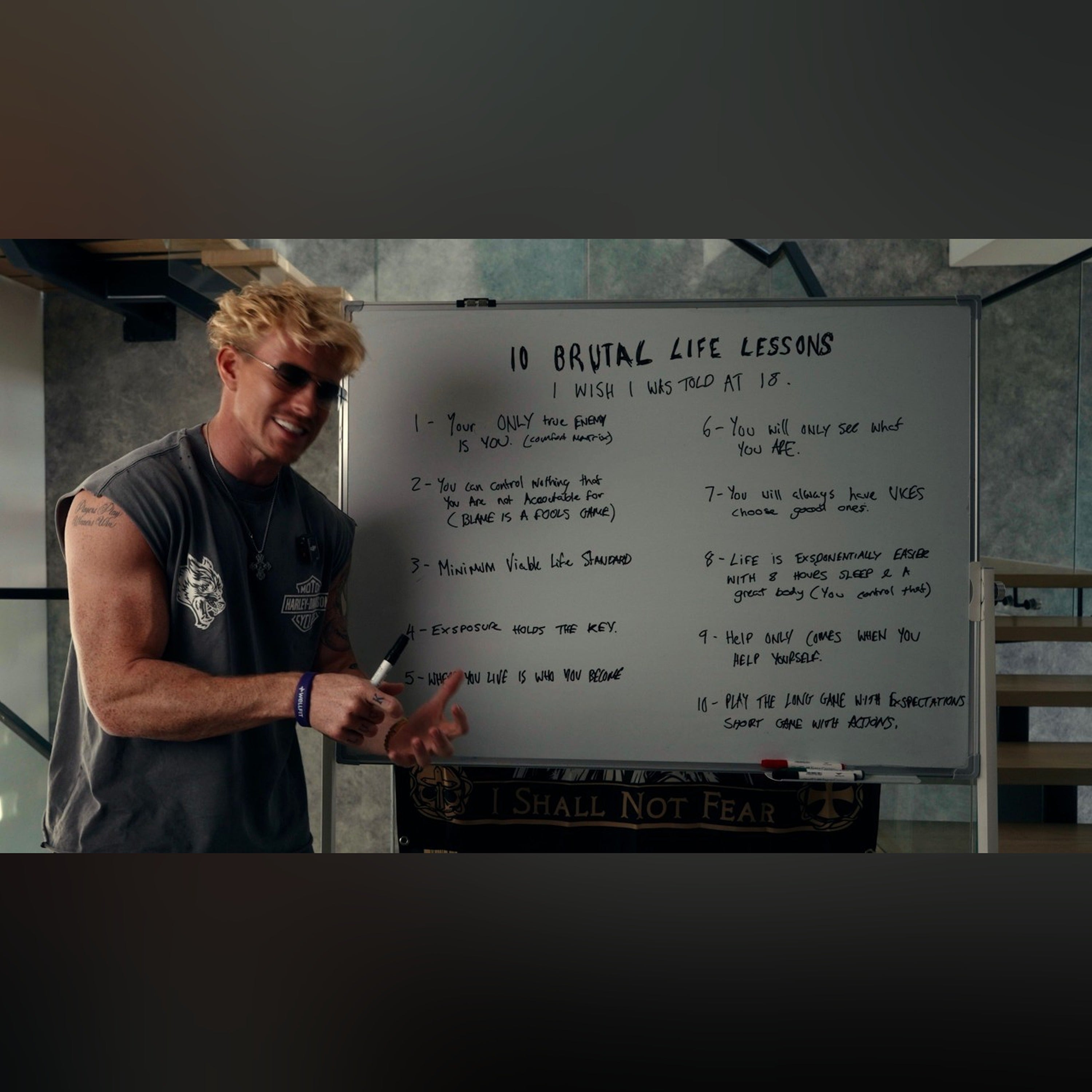
These 10 lessons will genuinely change your life, some may sound harsh, but they're all the genuine truth. My private network for entrepreneurs ⚜ - http://newelite.pro (http://newelite.pro/) The 90 day savage challenge (my training, nutrition & testosterone protocol) - https://the90daysavage.com/ The exact blueprint I used to create my brand. (apply here to work with me) -http://iconblueprint.com/m071 FREE weekly self improvement audio tapes - https://open.spotify.com/show/33lFOq1XUKLdOeIM549qQ6?si=OTmEw-iHRiusyWYM-hp71g My Instagram - https://www.instagram.com/itsjackhopkins?igsh=aGhqMm1iNHg2eXg5&utm_source=qr (https://www.instagram.com/itsjackhopkins?igsh=aGhqMm1iNHg2eXg5)
This Thanksgiving weekend, our Global Head of Fixed Income Research Andrew Sheets talks about the origins of the holiday, what investors should be grateful for and the outlook for the year ahead. ----- Transcript ----- Andrew Sheets: Welcome to Thoughts on the Market. I'm Andrew Sheets, Global Head of Fixed Income Research at Morgan Stanley. Today, giving thanks. It's Friday, November 27th at 2pm in London. Thanksgiving has always been one of my favorite holidays. A jolly mix of turkey, football, overeating, and napping. The lighthearted nature of the holiday, the fact that it's really about food and family and friends is, for me, a deep part of the appeal. But amidst the stuffing, the pie, and a Lions game, it's easy to forget that Thanksgiving was born out of much more serious stuff. The Pilgrims initially set out on two ships, the Mayflower and the Speedwell. But the Speedwell started leaking. They had to turn back not once, but twice; eventually abandoning this lesser-known ship an
Become a Coaching for Leaders Plus member (https://coachingforleaders.com/plus/) and listen to Dave’s Journal ongoing And I have a special invitation for you right now: Join Coaching for Leaders Plus by Friday, November 20th, and you’re invited to a special live event with me in early December. You’ll also have a chance to ask questions. When I was 25 years old, I had (what I thought) was a brilliant idea: Start my own business as a coach and speaker. I had three years of management experience, graduated from a coach training program, and some basic sales skills under my belt. I gave my employer lots of heads up for a smooth transition and got to work on my first business. Things started off OK. Somehow, a few client opportunities came out of my networking and sales efforts. At the height of my “success,” the grand total of monthly revenue was about $1,500 USD. Not nothing, but not anywhere close to covering my basic living expenses. I started going into debt. And then a client dropped
Join Coaching for Leaders Plus (https://coachingforleaders.com/plus/) by Friday, November 20th, and you’re invited to a special live event with me in early December. You’ll also have a chance to ask questions. A special invitation for teams Many leaders already share Coaching for Leaders episodes with their teams. Now, there’s a way to share Dave’s Journal, too. We’re introducing team memberships (https://coachingforleaders.com/team/) for Coaching for Leaders Plus. Start a team membership by November 20, and I’ll personally join one of your upcoming team meetings for 30 minutes, live online, to answer your team’s leadership questions.
Matt Abrahams: Think Faster, Talk Smarter Matt Abrahams is an educator, author, podcast host, and coach. He is a lecturer in Organizational Behavior at Stanford University’s Graduate School of Business and a keynote speaker and communication consultant for Fortune 100 companies. He is the host of the popular podcast Think Fast Talk Smart and the author of Think Faster, Talk Smarter: How to Speak Successfully When You’re Put on the Spot (Amazon (https://link.amazon/B0cHhSX2k), Bookshop (https://bookshop.org/a/90226/9781668010303)). He just released a new Masterclass certificate course on Strategic Communication. Every leader needs to pitch their ideas. In this conversation, Matt and I explore the frameworks that work and how to deliver them with effectiveness and confidence. Key Points To pitch an idea, use the framework of Problem-Solution-Benefit. It’s a thinking error to assume that everyone understands the problem. It’s your job to connect the dots. Cite evidence that will resonate
Changing a public decision in response to new evidence is a sign of responsible leadership.
Share your view, then see how readers voted. No sign-in required. This poll is shared across stories.
Do you agree or disagree?
Common Quandary
A Common Quandary to discuss
Another conversation to explore, separate from this news story.
A pill can erase your most painful memory without changing anything else. Do you take it?
A safe new treatment can remove the emotional pain attached to one chosen memory while leaving the factual memory intact. Losing the pain might bring enormous relief, but the experience shaped your relationships, choices, and sense of who you are.
Are painful memories injuries to heal or parts of ourselves to keep?