A Terminal Diagnosis Confirmed the Beauty of Life He'd Already Built | Dr. Bryant Lin
59 min
Listen through the publisher, then discuss the episode here or arrange an in-person Roundtable. Your city determines where to meet.
Roundtables are designed for groups of four, with a shared subject and room for everyone to speak. Come for discussion, with no dating expectation.
When Stanford physician Bryant Lin was diagnosed with stage four lung cancer, a friend gave him one piece of advice about his own prognosis that he still credits with how he's lived every day since. Bryant Lin is a Clinical Professor of Medicine and Director of Medical Humanities and the Arts at Stanford, a fourth-generation physician who spent two decades in primary care before his own stage four diagnosis in 2024. He built a medical school class around his experience that drew coverage from the New York Times and CBS Mornings, and he's the author of Sunshine: An Exploration of Living When You Are Dying (https://amzn.to/3SoiXkp). In this conversation, you'll explore: The advice from a fellow doctor that changed how Bryant thinks about his own prognosis, and why he stopped looking at the numbers everyone else obsesses over A simple filter he now uses to decide which commitments are worth keeping, and what needs to go Why he changed very little, even after learning how much less time he likely had Why he chose to teach a Stanford class, narrating his own cancer journey, while going through chemo in real time What a good life means, once you learn you have a lot less time to live it. It's a conversation for anyone asking themselves what's actually worth their time, whether or not a doctor has given them a reason to ask. You can find Bryant at: Website (https://www.bryantlin.com/) | LinkedIn (https://www.linkedin.com/in/bryant-lin-b7520a10/) | Episode Transcript (https://www.goodlifeproject.com/podcast/how-to-live-with-terminal-illness-bryant-lin) Hosted on Acast.
Episode information is provided by the publisher. Listening takes place on the publisher’s service.
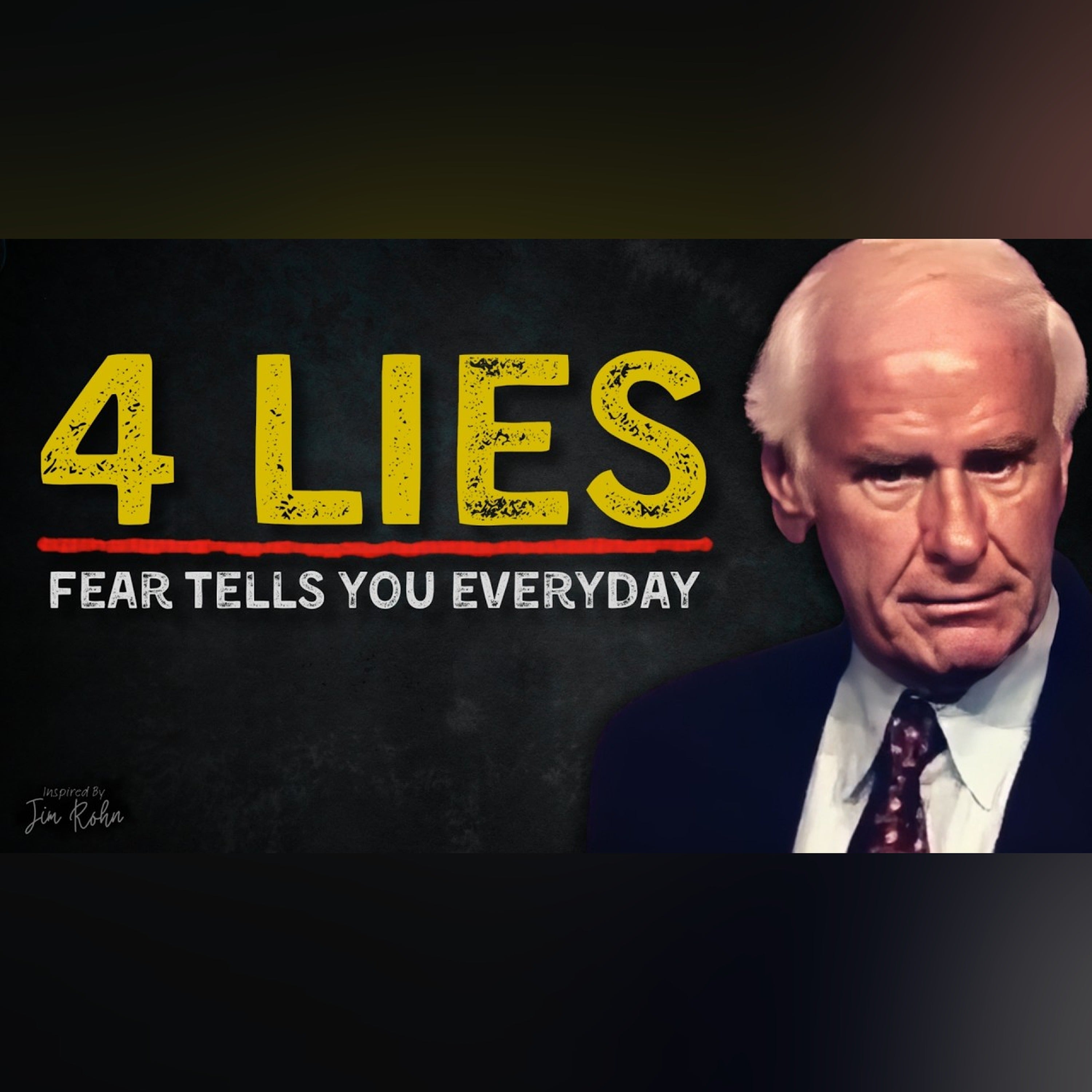
You think you're hearing wisdom. You're hearing fear that spent a lifetime learning to sound like wisdom. Uploaded 11-05-26 When you were a kid afraid of the water, fear was honest about being fear. Somewhere along the way it got promoted — started speaking in complete sentences, making cases, passing for the smart move. This seminar breaks down the 4 disguises fear puts on so it can pass for common sense — and the practice that lets you catch each one in the act. CHAPTERS: 0:33 When You Were a Kid, Fear Was Honest 5:27 Disguise #1 — The Timing Argument 6:28 Disguise #2 — The Inadequacy Argument 7:40 Disguise #3 — The Consequence Argument 8:52 Disguise #4 — The Responsibility Argument 10:20 The Invisible Cost of Listening to Fear 14:39 The Slow Drift Into Spectator Life 16:27 How to Catch Fear in the Act (4 Tests) 21:54 The Practice of Deciding on Purpose 24:09 Name the Fear Before It Names the Decision THE 4 DISGUISES ▸ TIMING — "Not the right moment. Need a little more prep first." W
Imagine if every big change in our lives came with a whole community stepping up beside us… In this episode, I sit down with Dr Arne Rubinstein, former GP and emergency doctor, founder of the Rites of Passage Institute, and a man who's spent more than 30 years walking young people across the threshold into adulthood. Arne's work began around a fire at his very first men's gathering, listening to a hundred men wrestle with the same handful of wounds. Then in the Emergency Dpt, he kept meeting teenagers who'd pushed it one step too far... kids trying to become adults with nobody there to hold them. He came to believe every young person will go through a rite of passage either way. The question is whether we leave them to create their own, or gather around and help. We talk about why our culture is so good at turning away from the big moments - from first periods to menopause to death - and what opens up when we turn towards them. We explore: Separation, transformation and integration, an
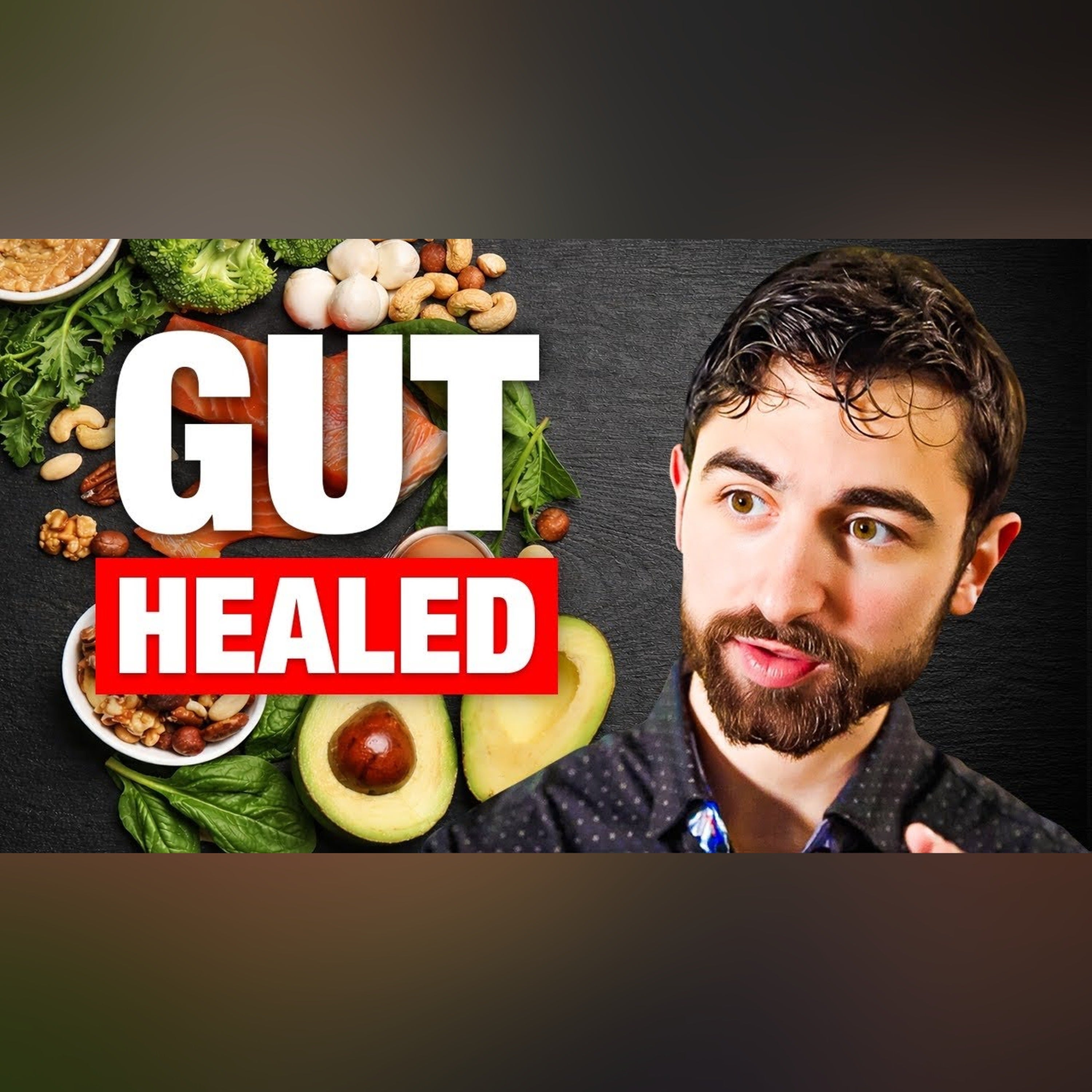
For extra details and all references, see this newsletter: https://staycuriousmetabolism.substack.com/p/a-keto-diet-cured-my-inflammatory?r=40ekz2 Description: There was a time when I was dying from inflammatory bowel disease. It was my rock bottom. Out of desperation, I tried a ketogenic diet—and within a week, everything changed. My symptoms stopped, inflammation markers dropped, and follow-up testing showed no active disease. In this video, I unpack what may have happened biologically. We walk through human and animal data showing how a ketogenic diet reshapes the gut microbiome, suppresses inflammatory TH17 immune cells, and reduces inflammation not just in the intestines, but system-wide. We even look at fecal transplant experiments demonstrating that the ketogenic microbiome itself can transfer anti-inflammatory effects. This isn’t a promise or a prescription. It’s a personal story, grounded in real data, that explores the tension between lived biology and what medicine has—or ha
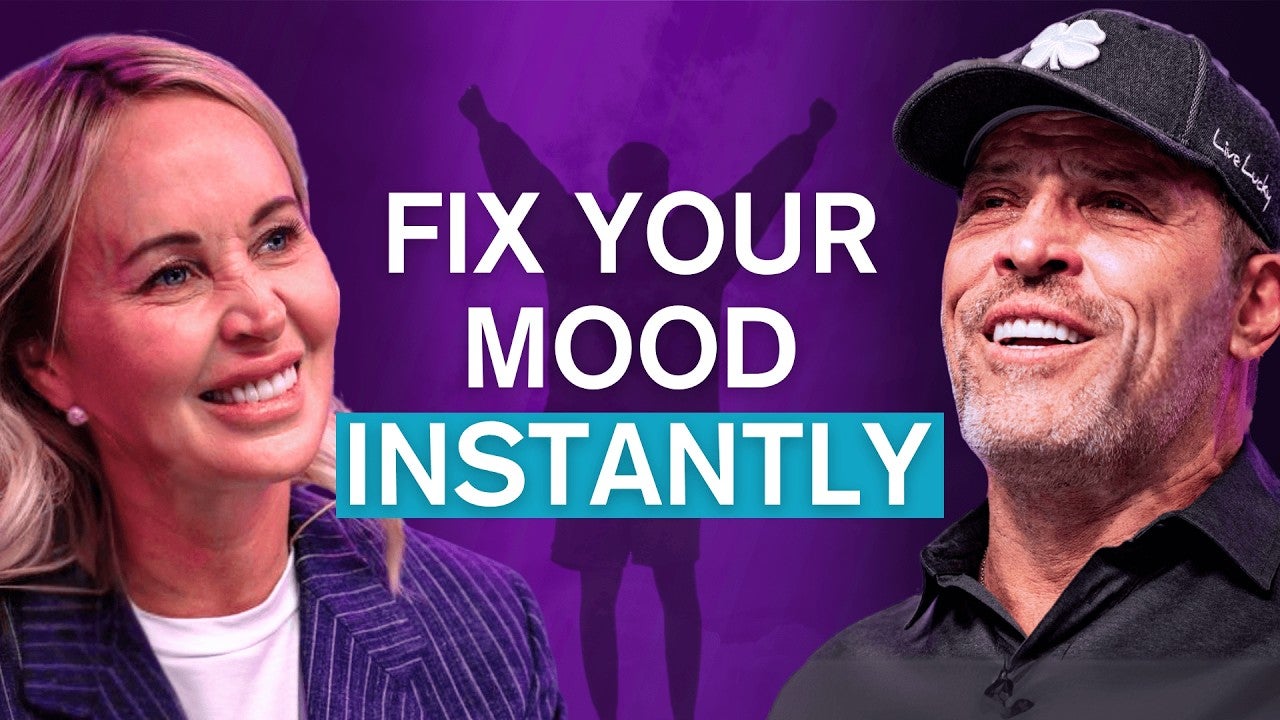
Making others happy might just be the key to finding true joy within yourself. In this message, Tony Robbins and Sage Robbins shares how focusing on connection, contribution, and meaningful relationships can lead to a deeper sense of fulfillment and purpose. Uploaded 20-07-25 Watch more videos like this Rebuild Trust and Connection in Any Relationship | Tony Robbins Intervention: https://youtu.be/oq-13UXCsOk These 6 Psychological Needs Control EVERYTHING You Do: https://youtu.be/HVwUfSiZUZM How To Influence ANYONE In Your Life (No Matter How Difficult...): https://youtu.be/nyRnnn82ATg How Your Language Shapes EVERYTHING Around You: https://youtu.be/4uqkkFiT5hk Join "The Edge" - Tony Robbin's FREE weekly newsletter: https://tonyr.co/3YJ0m2L Try Tony AI for just $1: https://tonyr.co/4cr742A Follow Tony Robbins: Facebook: https://www.facebook.com/TonyRobbins Instagram: https://instagram.com/tonyrobbins/ TikTok: https://www.tiktok.com/@tonyrobbins Twitter: https://twitter.com/tonyrobbins L
Happy Sunday! Welcome to Heal Squad’s The Sunday Set Up. Life lessons to help you start the week. How much of success comes down to simply showing up? This week, we talk keeping an open mind, taking chances, and recognizing the doors that open along the way. From Olympic athletes appearing on national television alongside Mercedes Moné to performers who keep showing up week after week hoping for their big break, we explore why success isn't always about talent or luck. Sometimes it's about making connections, putting in the effort, and being willing to try without knowing what we'll get in return. We talk knowing when to stop investing time in people who aren't willing to help themselves, and why even experiences that don't work out can teach us something valuable. The takeaway: don't wait for the perfect moment or expect someone else to make things happen. Be willing to take a chance, walk through the doors that open, and remember that half of life is just showing up. Plus, a little b
Sometimes, all it takes is one powerful Islamic reminder to bring your heart closer to Allah ﷻ and change the way you see your life. In a world filled with distractions, taking even a few moments to remember Allah can help us reconnect with our faith, reflect on our purpose, and find peace through the beautiful teachings of Islam. These short but meaningful Islamic reminders share timeless lessons inspired by the Holy Quran and the Sunnah of Prophet Muhammad ﷺ, offering spiritual motivation, wisdom, and encouragement in less than a minute. Whether you are searching for inner peace, struggling with life's challenges, or simply looking to strengthen your Iman, these reminders invite you to reflect on what truly matters. Discover the beauty of trusting Allah, practising Sabr, expressing gratitude, seeking forgiveness, and living each day with greater faith and purpose. Every reminder is an opportunity to pause, reflect, and remember that our ultimate success lies in pleasing Allah and pre
Ask someone if they feel like they matter, and the answer that comes back often no, or not anymore. Jennifer Wallace has been asking that question for eight years, and what she found is that we have the whole thing backward. The people who feel it least are often the ones everyone depends on most. So, what’s going on there? Jennifer Wallace is a journalist and researcher, and the author of two instant New York Times bestsellers, Never Enough and, most recently, Mattering: The Secret to a Life of Deep Connection and Purpose (https://link.amazon/B07nwSZgH). She founded The Mattering Institute and writes for The Wall Street Journal and The Washington Post. She has spent the better part of a decade studying a human need that researchers have tracked since the 1980s, and most of us have never heard named, which makes this conversation land hardest for anyone in the stretch of life where the roles that used to define you are quietly changing shape. The question Jennifer has put to hundreds o
Most of us have been hurt in relationship, and then we try to heal alone. Therapist and author Minaa B. thinks that is the quiet reason so much well-intentioned inner work stalls out, and she has spent years watching it happen from the other side of the room. Minaa B. is a therapist with nearly a decade of practice across private practice, community mental health, and early childhood work, and the author of Owning Our Struggles (https://amzn.to/3OFahzZ), a book about the specific struggles we carry and what it takes to actually put them down. She is the youngest of thirteen, raised first-generation in a Panamanian and Colombian household where care was a group activity, and she brings that lived experience straight into a culture built around doing it yourself. This conversation was first released in 2023 and we are bringing it back as a Best Of, because the questions inside it have only gotten louder. What you'll explore: The distinction between two kinds of support that can quietly s
Working harder had never once failed him. Then it did, on his marriage, his company, and his health, all in the same eighteen months. Steve Kamb founded Nerd Fitness in 2009 and grew it into a community of millions on the strength of a thousand essays and a very large amount of free Google traffic. His new book, How to Try Again (https://link.amazon/B04l3PWpv), was sold as a guide to what happens after you quit the resolution or abandon the training plan, and then rewrote itself in real time when the company he founded crashed hard, his marriage ended, and his body started sending the bill. He is writing from inside the change rather than from a comfortable vantage point on the far side of it, which is what makes this useful if you are currently somewhere in the middle of a chapter you did not choose. Here's what you'll explore in this conversation: The term Steve borrowed from a mental golf coach that finally unlocked him after months of paralysis, plus the Michael Scott moment that m
A useful review should explain a work rather than merely rate it.
Share your view, then see how readers voted. No sign-in required. This poll is shared across stories.
Do you agree or disagree?
Common Quandary
A Common Quandary to discuss
Another conversation to explore, separate from this news story.
You are not sick—you just cannot face work today. Do you call in sick?
Your employer offers sick leave but no personal days. You are not physically ill, yet you feel exhausted and know a day away would help. Saying you are sick is the only way to take paid time off without explanation.
Do unjust workplace rules change the duty to be truthful?