Listen through the publisher, then discuss the episode here or arrange an in-person Roundtable. Your city determines where to meet.
Roundtables are designed for groups of four, with a shared subject and room for everyone to speak. Come for discussion, with no dating expectation.
On a cold and wet night in January, 2013, two Garda detectives arrived at Lordship Credit Union in County Louth. They were there to provide an armed cash escort. As the detectives prepared to depart, a group of masked and armed men emerged from hiding. Within one minute, what should have been a routine journey became one of the most infamous crimes in Irish history, as Detective Garda Adrian Donohoe was shot and killed. Within just hours, one of the largest murder investigations in the history of the State was underway - but it would not be a quick, or straightforward task, as investigators encountered walls of silence and layers of deception. Presented John Sweetman Created by Darren Cleary Episode written by Sam Hobson Script edited by Eoin Brennan Produced by Sam Hobson Executive produced by Eoin Brennan Sound Design and Editing by Neil Kavanagh Audio Editing Support by Ed Smith Artwork and Graphics by Eric Rowntree
Episode information is provided by the publisher. Listening takes place on the publisher’s service.
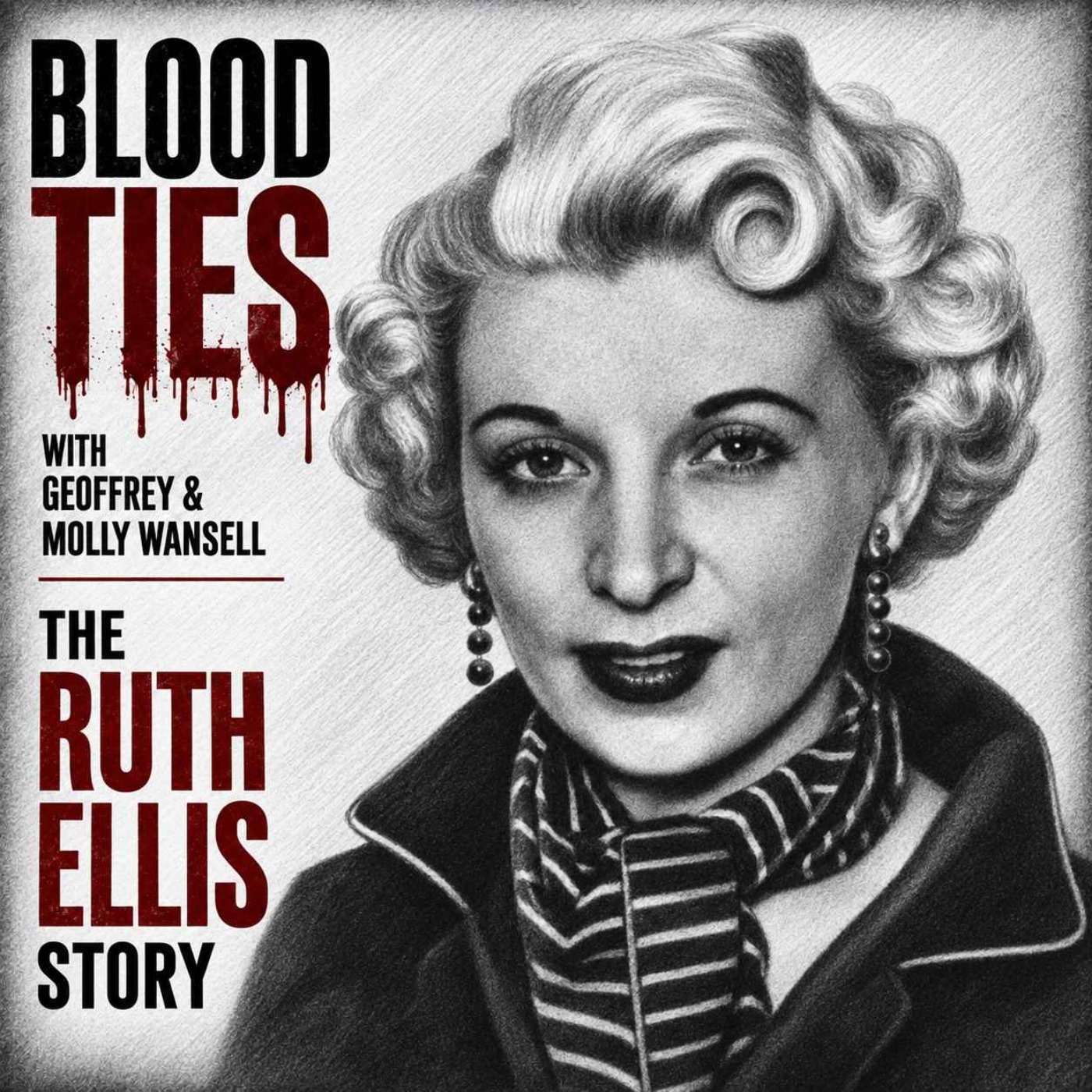
On Easter Sunday 1955, Ruth Ellis shot and killed her lover, racing driver David Blakely, outside the Magdala pub in Hampstead. Three months later, she became the last woman to be hanged in Britain. In this episode of Blood Ties, Geoffrey and Molly Wansell revisit the case of the model and nightclub hostess whose relationship with Blakely ended in murder. At her Old Bailey trial, Ellis admitted she meant to kill Blakely when she fired. Her answer was unequivocal, but the circumstances leading up to the shooting were more complicated. Blakely had been violent towards her, and the case raised questions about how much weight the courts gave to what she had endured. The episode asks how that history should shape our understanding of the killing. Ellis’s execution at Holloway Prison drew protesters and left Britain to reckon with whether justice had been served by sending her to the gallows. Don't forget to support the show by checking out our Patreon! patreon.com/bloodtiespodcast (https://
Nine days after eight-year-old Sarah Payne disappears, her face is everywhere and the incident room is drowning in calls. But unbeknown to the public, detectives have a suspect they cannot name — Roy Whiting, a convicted sex offender who lives nearby. Within twenty-four hours of Sarah vanishing, officers interview him and, unconvinced by his account of his whereabouts on the night she went missing, they arrest him. But they are unable to find any real evidence linking him to Sarah, and have to let him go. Meanwhile the hunt for the missing child continues apace, and News of the World editor Rebekah Brooks decides to go down to Sussex herself to talk to Sarah Payne’s mother, Sara, in person. While she is there she learns, but cannot print, that Whiting is a key suspect. Then, after Sarah has been missing for 17 days, a farm worker clearing a field north of Pulborough finds the partially buried body of a child. Presenter and Series Producer: Edmund Coulthard Producer: Joanna Humphreys So
Join Sarah Turney and Kourtney Nichole for today's second Unsolved Tuesdays episode. In August 2021, 25-year-old Illinois State University graduate student Jelani Day was last seen leaving a dispensary in Bloomington-Normal, far from his apartment and with no clear reason to be there. His car was found abandoned miles away. Weeks later, his unclothed body was recovered from the Illinois River. His death was presumed to be an accidental drowning, but his mother refused to accept that answer. She launched a relentless public campaign that put a spotlight on how missing Black men are treated by investigators and the media. How did a focused, driven graduate student end up in a river with no explanation? And for more cases just like this one, be sure to check out the Crime House Original, The Final Hours. Need More to Binge? Follow me on Social X: @crimehousemedia (https://x.com/crimehousemedia)
Nobody has ever been charged in the murder of JonBenét Ramsey, and the first piece of evidence anyone found is still the hardest to explain. Her mother found a ransom note on the back stairs. It was long, it demanded $118,000, and it was written on paper that came from the house itself. Producer Todd and Lisa join me for a staff discussion built on the questions people still ask. Investigators found what looked like a practice draft in the same notepad. The dollar amount nearly matched the bonus John Ramsey had just received. The note told the family not to call anyone, and Patsy called police and then friends. There's the bowl of pineapple on the table and the pineapple the autopsy found in JonBenét's stomach, which Patsy said she never gave her. There's the broken window with a suitcase under it and no sign of forced entry. And there are the first hours, when the house wasn't sealed, the kitchen got wiped down, and JonBenét's body was moved before forensics arrived. Listen Anywhere Y
In June 1984, Judy Weaver walked home from the Everett bar she managed on the last night of Salty Sea Days. Her case went cold for forty years, until a DNA hit and a fake gum survey put Everett detectives on a stranger's doorstep in Olympia. Then a phone call about a different case changed everything. If you have information about Mitchell Gaff (also known as Sam Wise Price), contact the Everett Police Department tip line at 425-257-8450. Resources: RAINN National Sexual Assault Hotline, 1-800-656-4673 or rainn.org. Suicide and Crisis Lifeline: call or text 988. Sources: Everett Police Department, March 13, 2026 release on the Susan Vesey charge The Everett Herald (Daily Herald): July 14 and 15, 1980; June 1984 obituary for Judy L. Weaver; Aug. 18, 2000 and Dec. 2000; June 3, 2009 (Jackson Holtz); May 1, 5 and 11, 2024; Feb. 5, March 14, April 17 and May 14, 2026 (Jenna Millikan, Ian Davis-Leonard and others) USA TODAY, May 13, 2026, Amanda Lee Myers ABC News, coverage of the Vesey cha
Start your free trial of Perplexity Computer today at http://PPLX.ai/hiddenthird (http://pplx.ai/hiddenthird) and experience the next phase of AI. #ad Go tohttp://Quince.com/hiddenthird (http://quince.com/hiddenthird) for free shipping on your order and 365-day returns. Allison Mack played Chloe Sullivan on "Smallville," a show millions of people grew up watching. But that's not why most people know her name today. Allison was one of the most prominent members of NXIVM, a self-help group led by Keith Raniere with a secret society called DOS, where women were recruited as "slaves," branded with Raniere's initials, and pressured to hand over "collateral," like nude photos and damaging confessions. Allison helped run it. Raniere controlled almost every part of Allison's life. She had to ask permission every time she wanted to eat and was only allowed 500 calories a day. She slept two to four hours a night because he'd wake her up at any hour, started every morning with a cold shower, and
On a summer morning in New York City, a team of US law enforcement lie in wait for an Irishman wanted for the killing of Detective Garda Adrian Donohoe. They are there to make the arrest Gardai have sought for more than four years. But the arrest does not mark the end of the story. Instead, it enters a new, unexpected and dramatic chapter. What follows is one of the longest and most complex murder trials in Irish history, marked by extraordinary witness testimony, allegations of intimidation, and a battle for investigators and prosecutors to break down the wall of silence protecting Adrian Donohoe's killer. With tensions mounting both inside and outside the courtroom, a jury must decide whether the evidence is sufficient to convict a man accused of killing a Garda in the line of duty. Presented by John Sweetman Created by Darren Cleary Episode written by Sam Hobson Script edited by Eoin Brennan Produced by Sam Hobson Executive Producer: Eoin Brennan Sound Design and Editing by Neil Kav
In this episode of Lines of Enquiry: Case Notes, John and Darren continue their conversation with Julieanne Lynch, Kelly Lynch’s mother. Following her memories of Kelly in Part One, Julieanne describes the days after her daughter’s death and the difficulty of trying to understand what had happened. She shares where she feels her family were let down, raising concerns about communication with the authorities, scene preservation and the handling of potential evidence. The conversation also explores the differing medical opinions the family have received about how Kelly died, and the questions they continue to seek answers to. Above all, Julieanne reflects on wanting Kelly to be remembered for the person she was, and her hope that seeking accountability in her name might help other families.
At breakfast, on the morning Friday the 26th of October, 2012, a family in Portlaoise County Laois, find that their live-in nanny Aoife Phelan, is missing. She is not in her room, her bed is made, and her phone is going straight to voicemail. She had been out the night before and it seems she never came home. Her family haven’t heard from her either. As a search party gets underway a young man known to Aoife quietly boards a plane at Dublin Airport bound for New York City. When a detective reaches him in New York, he says he hasn’t heard from Aoife in weeks. The detective has heard otherwise. The lies have only just begun. And so has the search for Aoife Phelan. In this episode of Lines of Enquiry, John revisits the tragic search for Aoife Phelan and the investigation that had to untangle a web of lies that grew with each step. Presented John Sweetman Created by Darren Cleary Episode written by Anna Priestland Produced by Sam Hobson Executive produced by Eoin Brennan Sound Design and E
Travel providers should disclose meaningful environmental impacts alongside prices.
Share your view, then see how readers voted. No sign-in required. This poll is shared across stories.
Do you agree or disagree?
Common Quandary
A Common Quandary to discuss
Another conversation to explore, separate from this news story.
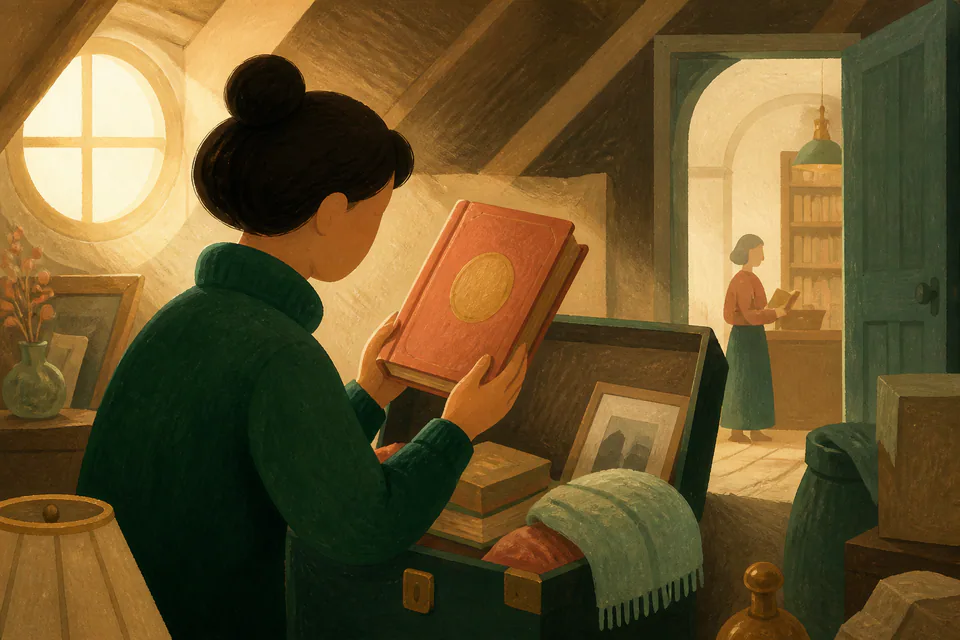
You find a rare library book your father kept for forty years. Do you return it anonymously?
While clearing your father's attic, you find a rare book stamped by the local library and due in 1986. The library would be thrilled to recover it, but returning it openly would expose a secret he apparently kept for decades—and might produce a spectacular overdue fine.
Does making an old wrong right require admitting who did it?