After the Baby Arrives, Who Takes Care of the Mother? - Leviticus 12:1–8 and 1 Kings 17:17–24
5 min
Listen through the publisher, then discuss the episode here or arrange an in-person Roundtable. Your city determines where to meet.
Roundtables are designed for groups of four, with a shared subject and room for everyone to speak. Come for discussion, with no dating expectation.
Leviticus 12:1–8 provides an interesting starting point. It describes the ceremonial purification requirements for an Israelite woman following childbirth. The passage establishes different periods for a male and female child and explains the offerings required afterward. These instructions belong to the ceremonial laws of ancient Israel. They should not be interpreted as saying that childbirth makes a woman morally sinful, inferior or spiritually unclean in the modern sense. The passage also makes provision for women who cannot afford a lamb, allowing two birds to be offered instead. We often-overlook postpartum struggles of mothers, the immense physical, emotional, and practical toll that follows childbirth. While society tends to focus its attention and celebrations entirely on the newborn, mothers frequently endure exhaustion, pain, and emotional distress without adequate support. Drawing upon various biblical passages, demonstrates that scripture acknowledges both the vulnerability of women and the importance of compassionate care during recovery. Furthermore, the material critiques the common misconceptions that financial provision equals full support or that emotional difficulties indicate a lack of faith. Ultimately urges families, partners, and communities to offer genuine, practical assistance to ensure the well-being of both the mother and the child. Every contribution counts. Thank you for being part of our journey!
Episode information is provided by the publisher. Listening takes place on the publisher’s service.
Read: Romans 5:10; 1 Corinthians 15:57-58; 16:13-14 (https://www.biblegateway.com/passage/?search=Romans+5%3A10%3B+1+Corinthians+15%3A57-58%3B+16%3A13-14) “I’m done trying to be nice to Josh!” Eli told his mom. “He’s so mean! When I asked if he wanted to be my lab partner in science today, he laughed and said he wouldn’t be caught dead with a—well, I won’t repeat what he called me.” Eli flung his backpack into the hallway closet. “I was just trying to reach out to him because he doesn’t have any friends. Now I know why—he doesn’t want any!” Mom was about to respond when a sharp yip followed by a howl of pain came from outside. “That’s Mitsy!” Eli shot out the back door. He found his puppy crouched on the ground, her paw caught underneath the fence. Every time she moved, a sharp barb of wire jabbed her flesh. Eli knelt beside her and reached for the trapped paw. “Grrrr!” Mitsy growled, baring her teeth. Eli drew back in surprise. “Mitsy! Why are you growling at me? I only want to help y
How will you know when you’ve reached true wealth? Is it when you have your dream home? Once you own an expensive car? Perhaps the signifier is when you’re wealthy enough to have your own private airplane? In Tony’s opinion, these are the wrong things to use when measuring your wealth. Uploaded 12-09-19 The people with mansion-sized homes, with three sports cars sitting in the garage, with a private plane that takes them to and from their vacation home – these people may not necessarily have access to true wealth. None of these are indicators of true wealth; they’re indicators of monetary wealth. True wealth is the ability to live life on your own terms. It’s freedom. Tony explains that money itself isn’t wealth, it’s a vehicle – a tool you can use to achieve financial freedom, to go after the dreams you didn’t think were possible, to design your life in a way that makes you feel alive and fulfilled. While Unshakeable is a financial freedom playbook, the process of becoming unshakeable
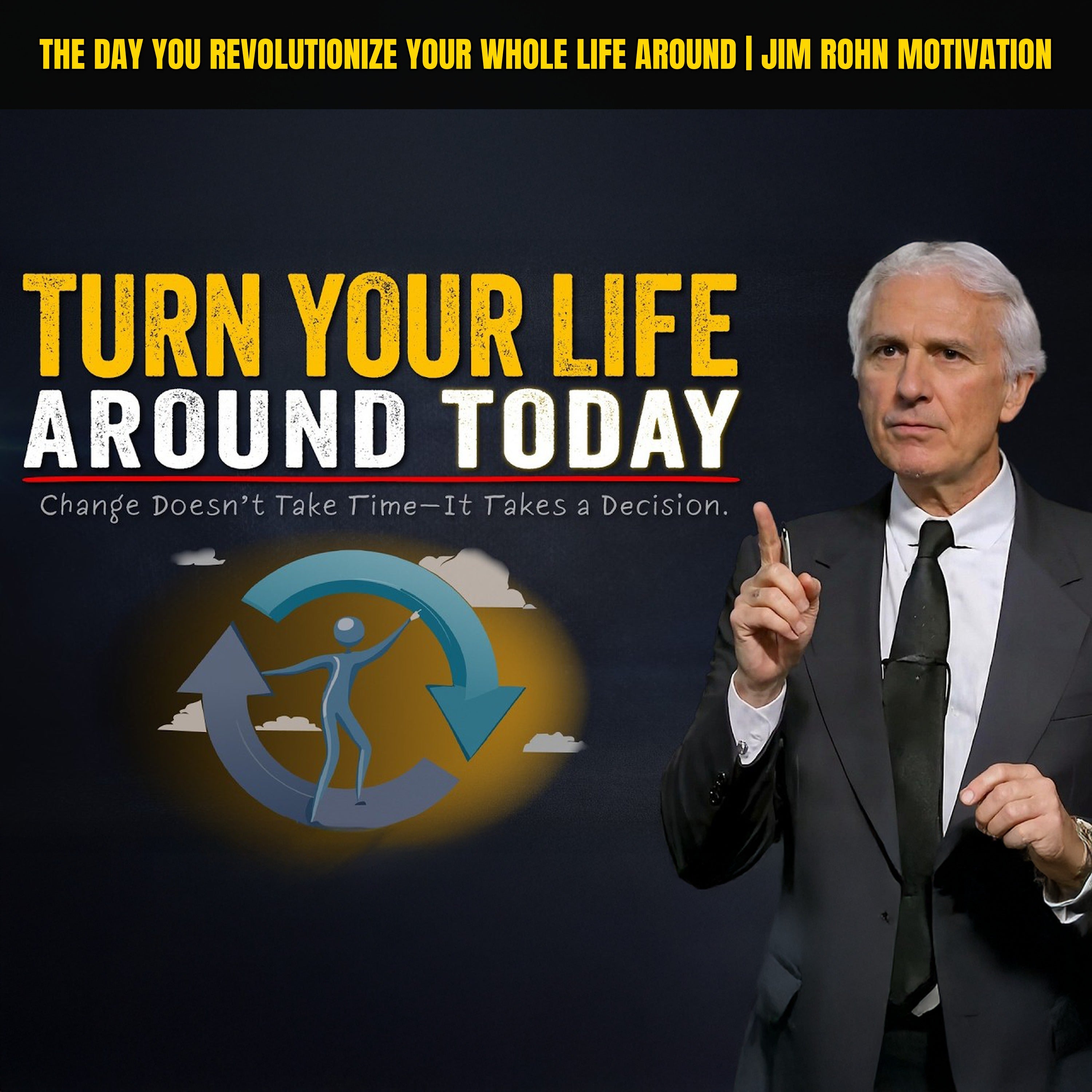
In this Jim Rohn Motivation speech, discover the power of one decision to change everything. This isn’t about inspiration—it’s about ownership, discipline, and the mindset required to reclaim your life and create lasting transformation. Key Topics From This Motivational speech: The day you decide is the day everything changes Why philosophy shapes results more than circumstances The link between pain, frustration, and personal growth Discipline, momentum, and the test of time How your environment and associations impact your future This powerful Jim Rohn motivational speech outlines the complete journey of personal transformation—starting with a single decision. You'll learn how to shift from wishing to acting, from blaming to owning, from reacting to creating. With deep insights on discipline, responsibility, and mindset, this video is a blueprint for becoming the kind of person who doesn't just start—but endures, thrives, and leads with purpose. This Jim Rohn Motivational speech Is P
Imagine if every big change in our lives came with a whole community stepping up beside us… In this episode, I sit down with Dr Arne Rubinstein, former GP and emergency doctor, founder of the Rites of Passage Institute, and a man who's spent more than 30 years walking young people across the threshold into adulthood. Arne's work began around a fire at his very first men's gathering, listening to a hundred men wrestle with the same handful of wounds. Then in the Emergency Dpt, he kept meeting teenagers who'd pushed it one step too far... kids trying to become adults with nobody there to hold them. He came to believe every young person will go through a rite of passage either way. The question is whether we leave them to create their own, or gather around and help. We talk about why our culture is so good at turning away from the big moments - from first periods to menopause to death - and what opens up when we turn towards them. We explore: Separation, transformation and integration, an
Two members of this family knelt beside wounded strangers this week. Only one was seen doing it. Mark Francis on the week India went perfectly for William and Kate — street cricket with Sachin Tendulkar, sixty rupees on the Metro, five Earthshot winners, and Kate alone at a Mumbai maternity hospital on the final day, holding the hand of a mother who had just lost one of her newborn twins. And on Harry in Lviv, meeting the newest members of Ukraine’s Invictus community, in a visit that landed on the one weekend nobody could look — followed by a Telegraph interview in which he said that if asked to sign up again, “I will 100 per cent be there to serve my country”. Plus Camilla’s private letter, Charles and the Butlin’s holiday he never got, and the royal accounts welcoming Robert Pattinson: “Welcome to His Majesty’s Secret Service, Mr Bond.” One subscription, the whole family, no ads. Try it free for 30 days: tap Try Free in Apple Podcasts. Got an App Store gift card? This is a good use
Why is the manosphere so appealing to young men? What does it actually mean to be a good man? To join our journaling club, with 10,600 + others, subscribe to my imperfect email - https://www.theimperfects.com.au/sign-up-to-our-newsletter/ Journalist Marc Fennell joins us in the studio to talk about the manosphere: what is it? what are its consequences? and how can we talk to our kids about it? Marc explores with Hugh, Ryan and Josh why the manosphere is so appealing to young men, especially those who think they have little value to offer, and Josh questions what his reaction would have been, if he had of been exposed to the manosphere at a vulnerable time. We look at ‘toxic masculinity,’ and the impact of being right versus making change, and in a moment of vulnerability, Marc discusses the importance of self reflection of your own behaviour. Chapters: Chapters 00:00:00 – Marc Fennell on the Manosphere [TRAILER] 00:01:01 – Ryan’s doppelganger (and media buff etc) 00:04:24 – The State o
Being considerate is a good thing. It means recognising that your words, choices and actions affect other people. But sometimes, the desire to keep everyone happy slowly becomes a habit of abandoning yourself. You agree when you want to say no, apologise when you have done nothing wrong, hide your opinions to avoid disagreement and make decisions based on how people might react. The difference is whether your consideration comes from genuine love or from the fear of being rejected. Every contribution counts. Thank you for being part of our journey!
Scripture: 1 John 4:1–6; Matthew 7:15–20; 1 Kings 13:1–24 Not everything that sounds spiritual comes from God. Sometimes, deception does not arrive looking dangerous; it comes through people who speak confidently, quote Scripture or claim to have received a message from God. 1 Kings 13, a man of God receives a clear instruction from the Lord, but an older prophet later approaches him and claims that an angel has given him a different instruction. Every contribution counts. Thank you for being part of our journey!
Proverbs 4 gives us an important instruction: guard your heart above everything else because everything we do flows from it. In the biblical understanding, the heart is more than a place where emotions live; it represents our thoughts, desires, decisions and inner character. What we repeatedly listen to, entertain, believe and allow into our lives can gradually shape the people we become Every contribution counts. Thank you for being part of our journey!
Urgent public needs can justify simplifying normal approval procedures.
Share your view, then see how readers voted. No sign-in required. This poll is shared across stories.
Do you agree or disagree?
Common Quandary
A Common Quandary to discuss
Another conversation to explore, separate from this news story.
If a good deed is filmed for likes, is it still a good deed?
A local creator films themselves buying groceries for strangers. The videos generate substantial income, but they also inspire donations and allow the creator to help more people.
Do mixed motives diminish a genuinely helpful act?