Listen through the publisher, then discuss the episode here or arrange an in-person Roundtable. Your city determines where to meet.
Roundtables are designed for groups of four, with a shared subject and room for everyone to speak. Come for discussion, with no dating expectation.
The FBI has issued a FLASH advisory about ARTEX, an AI-powered framework being used in real cyberattacks. What should security teams do about it? Tom and Tyler Moffitt break down how attackers are using agents, why compromised application access matters, and where existing controls are still stopping attacks. They explore how visibility, investigation, and response need to work together when there’s less time between attacker actions. Three questions to take back to your team: What can a compromised identity reach? Would you see the next step? Who can interrupt it, and how quickly? TENEX blog: https://tenex.ai/blog/defending-against-artex-ai-attacks FBI FLASH advisory: https://www.ic3.gov/CSA/2026/261113.pdf
Episode information is provided by the publisher. Listening takes place on the publisher’s service.
Hey everybody, Tom Bilyeu here. On today’s episode of Impact Theory, we’re taking on a topic that’s got the whole world holding its breath: the escalating crisis between the United States and Iran. As tensions ratchet up, we’re asking the tough questions—how did we get stuck in this “escalation trap,” and what does it mean for America’s global leverage, our economy, and our very sense of security? The conversation focused on why the traditional idea of “strategy” might be failing policymakers, using powerful analogies—like chess versus roulette—to show how doubling down in conflict can spiral out of control. We’ll break down the risks of tactical “wins” that create even bigger crises, the real leverage Iran holds with control of the Strait of Hormuz, and the mounting pressure on President Trump as political support erodes and legacy hangs in the balance. A key theme that emerged is what happens when military might runs into decentralized opposition, and why high-stakes gambles—like the
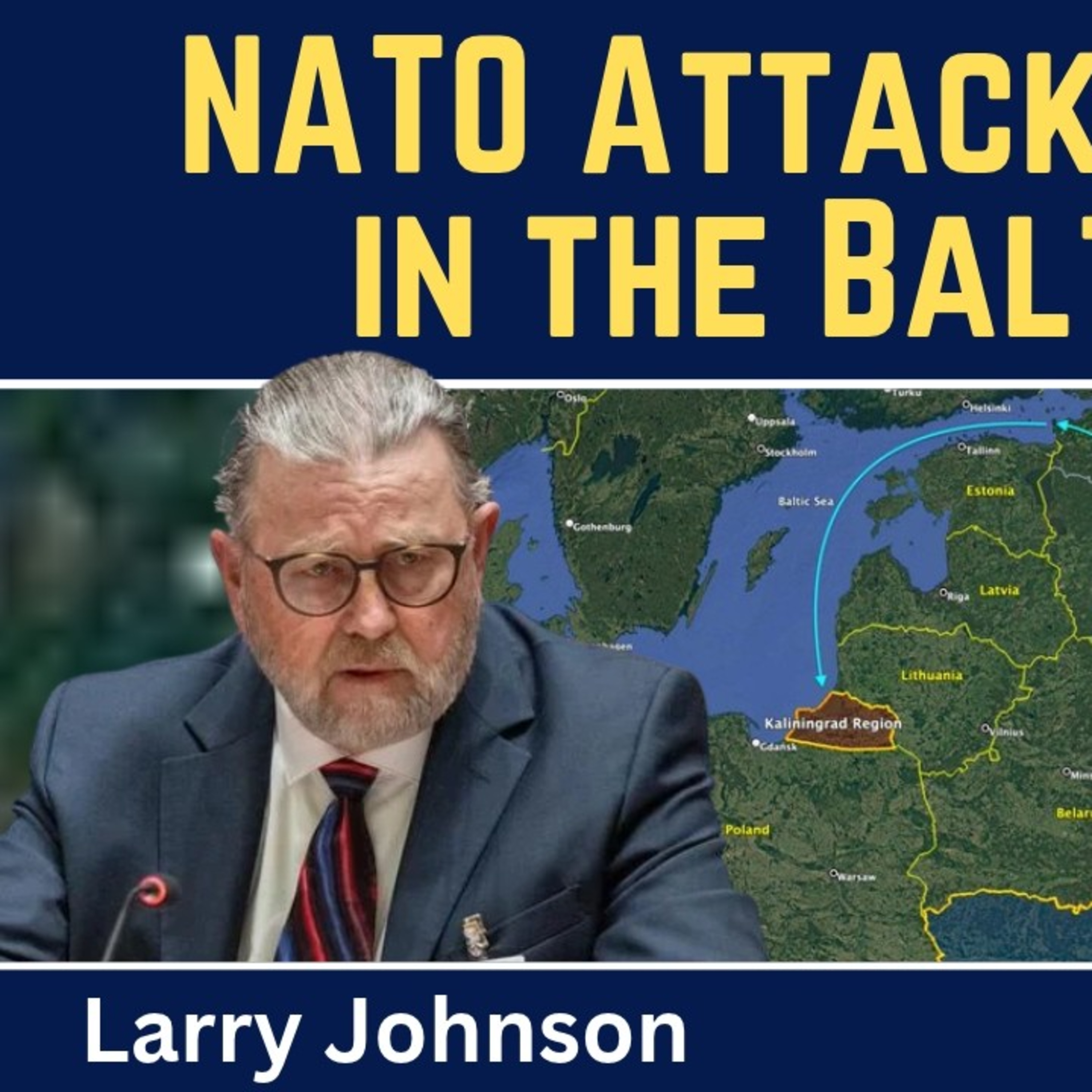
Larry Johnson is a former CIA intelligence analyst who also worked at the U.S. State Department's Office of Counterterrorism. Johnson discusses the attack on a Russian cargo ship in the Baltic Sea, and the air alarms going off in Kaliningrad. Read Larry Johnson's Sonar21: https://sonar21.com/Follow Prof. Glenn Diesen: PayPal: https://www.paypal.com/paypalme/glenndiesenBuy me a Coffee: buymeacoffee.com/gdiesengGo Fund Me: https://gofund.me/09ea012fBuy Diesen merchandise: https://diesen-shop.fourthwall.com/en-nokBooks by Prof. Glenn Diesen: https://www.amazon.com/stores/author/B09FPQ4MDL 00:00 Escalating Tensions in the Baltic Sea02:45 NATO's Role and Russia's Response05:52 The Shift in European Attitudes Towards Russia09:11 Cultural Influences on Perceptions of Russia11:44 The Consequences of Military Escalation15:06 The Irrelevance of Europe in Global Politics25:49 Reassessing Global Power Dynamics32:44 The Role of Europe in a Changing World39:19 The Impact of Economic Interests on Pol
Horizon3.ai co-founder and CTO Anthony Pillitiere discusses how AI-enabled agentic threat actors are industrializing cyberattacks using existing vulnerabilities rather than novel exploits. Drawing on 21 years in the Air Force and his role as deputy CTO for JSOC, he explains why organizations must shift to autonomous offensive security and how the collapse between emerging threats and exploitation is forcing leaders to address long-standing cyber debt. Brought to you by: Mongo DB - Anyone can prototype an agent. Lovable - Turn ideas into software people love with Lovable. Start today at https://lovable.dev/ Factory - A 24/7 system turning signals into production software. Visithttps://factory.com/ Neon (by Databricks) - Scale your startup on Neon. The Postgres backend for apps and agents. Built by Databricks.https://neon.com/mtshttps://neon.com/mts (https://neon.com/mts%E2%81%A0) Head over to http://getvcx.com (http://getvcx.com/) to learn more Kong - The AI connectivity platform. Larri
Government testers went undercover as regular users and got ChatGPT, Claude, Gemini, and Grok to help plan an attack. Plus, Anthropic says it's AI sent police a fake tip for a real unsolved murder, and researchers warn rogue agents are getting harder to control.
Matthew Farwell’s conviction settled the federal case against him. It did not settle what may have happened to evidence, what other officers knew, or how many cases depended on his work as a Stoughton police detective. Tony Brueski is joined by retired FBI agents Jennifer Coffindaffer and Robin Dreeke to connect two questions that belong together: could there be more arrests in the Sandra Birchmore case, and should prosecutors review the cases Farwell once investigated? These are not the same question, and neither has an automatic answer. William Farwell, Matthew’s twin, testified under federal immunity. Former Stoughton deputy chief Robert Devine has contested an oversight board’s findings concerning the “Marty Riggs” Facebook account, saying he was hacked. Neither has been charged in Sandra’s death. Coffindaffer lays out what investigators would need: corroborated communications, authenticated account access, consistent timelines and proof of each person’s conduct. Knowing somebody i
Newsround Part 2. Lewis Aspinall returns for the final section of Newsround on Anfield Index, focusing on Ronald Araújo's Liverpool future and why the Reds should make his move from Barcelona permanent. With Araújo enjoying his time at Anfield, the defender has spoken positively about the welcome he has received from Liverpool's players, staff and supporters. However, the Uruguay international remains cautious about his future, admitting that any permanent transfer will depend on several parties reaching an agreement. Lewis examines Barcelona's position, including comments from sporting director Deco, and explains why Liverpool could have an opportunity to secure a defender who has quickly become an important part of Andoni Iraola's system. From his physicality and aerial dominance to his ability to operate at right-back and drop into a back three, Lewis believes Araújo offers Liverpool something their defence has been missing. But what happens when Conor Bradley returns? Lewis explain
ARTEX is one tool. The bigger question is what happens as attackers get better at using AI to decide what to try next. Tyler Moffitt joins TENEX.AI (http://tenex.ai/) CISO Jan Grzymala-Busse to explore what this means for security teams. They discuss the bursts and pauses in agent-driven activity, why today’s noisy attacks may become harder to spot, and how AI could change vulnerability research and exploit development. Jan separates what he’s seeing now from what he expects next, then brings the conversation back to practical priorities: reviewing access to cloud storage and sensitive data, protecting exposed systems, and connecting behaviors across an attack. They also discuss a familiar CISO challenge: turning evidence of risk into a decision to act. A conversation for CISOs and practitioners about what still works, what needs to improve, and where to focus first. References and further reading - TENEX blog: Defending Against AI-Driven Attacks After ARTEX (https://tenex.ai/blog/defe
A fake job interview. A compromised laptop. And $6.3 billion in cryptocurrency stolen. In this episode of Tenex Signal, Tom Baker is joined by cybersecurity analyst Tyler Moffitt to investigate the Binance crypto heist, reportedly carried out by North Korean attackers. They explain how social engineering gave attackers access to critical systems, how stolen cryptocurrency was moved through decentralised finance (DeFi), and why stopping withdrawals wasn't enough to stop the theft. Plus, what can security teams learn about identity, access controls and incident response from one of the biggest crypto heists in history?
An essential service should remain open until a workable alternative is available.
Share your view, then see how readers voted. No sign-in required. This poll is shared across stories.
Do you agree or disagree?
Common Quandary
A Common Quandary to discuss
Another conversation to explore, separate from this news story.
Everyone exaggerates on dating apps. Are two imaginary inches harmless?
A friend adds two inches to their listed height because they believe filters exclude them before personality has a chance. They plan to be charming enough that a date will not care once they meet in person.
Can deception be a fair response to superficial gatekeeping?