Listen through the publisher, then discuss the episode here or arrange an in-person Roundtable. Your city determines where to meet.
Roundtables are designed for groups of four, with a shared subject and room for everyone to speak. Come for discussion, with no dating expectation.
In this episode we’re combining two sections of the new ALA-HAL Tentative Agreement (TA): Section 8 (Deadheading) and Section 9 (Passes & Jumpseat). Deadheading covers circumstances when pilots are traveling on company business, and Passes & Jumpseat addresses either leisure travel or jumpseating travel as pilots commute to or from work. To discuss these topics, including changes to our deadhead seating requirements and commuter policy, we have Joint Negotiating Committee Co-Chairs David Wilhelm and Doug Grant. Click here (https://alahal.alpa.org/Portals/89/Documents/Contracts/infographics/InfographicDeadhead.pdf) for a flow chart outlining our deadhead seat protections.
Episode information is provided by the publisher. Listening takes place on the publisher’s service.
Starting next year, roughly 20 million people will need to prove they’re working, volunteering, going to school, or have an exemption to keep their Medicaid. Republicans pushed through big changes to the program as part of President Donald Trump's tax and spending law from last year, including these so-called “work requirements.” Today, we dig into the timeline, how states are communicating changes, and more. But first: how energy prices are fueling global inflation. Every story has an economic angle. Want some in your inbox? Marketplace Morning Report is more than a radio show.
Today, I’m talking with Darryl Campbell, a freelance journalist, aviation expert, and author of the book Fatal Abstraction: Why the Managerial Class Loses Control of Software. Darryl covers aviation and the FAA, and earlier this month, when the U.S. suffered a sudden nationwide ground stop on air travel, Darryl was all over the story. So ahead of one of the country’s major holiday travel weeks, I wanted to have Darryl on the show to walk us through this incident on Friday, Nov. 13, when the FAA grounded every departing flight in the country for more than four hours, and, more importantly, what happens now. Read the full interview transcript on The Verge (https://www.theverge.com/e/1039215). Links: America’s air traffic control system couldn’t handle a single bad router | The Verge (https://www.theverge.com/transportation/1034039/faa-aviation-glitch-meltdown-ground-stop) Work to replace old copper wire led to the FAA’s ground stop | The Verge (https://www.theverge.com/transportation/103
In this Jim Rohn Motivation speech, Jim Rohn shares the truth about growth, resilience, and the mindset shift that transforms your life. Life doesn’t get easier—you get stronger. Stop waiting for circumstances to change. Start becoming the person who can lead, endure, and grow no matter what. Key Topics From This Motivational speech: Why waiting for ease keeps you stuck How mindset shapes resilience and success The role of consistency and execution in transformation Why discomfort is the training ground for greatness How to raise your standard and stop negotiating with weakness This Jim Rohn motivational speech is about reclaiming your power—not by waiting for the pressure to pass, but by rising to meet it. It’s about becoming someone who doesn’t flinch, who doesn’t fold, who doesn’t break when things get hard—but instead grows stronger. Better isn’t a moment—it’s a standard. And this is your wake-up call to raise it. This Jim Rohn Motivational speech Is Perfect For: Anyone who feels s
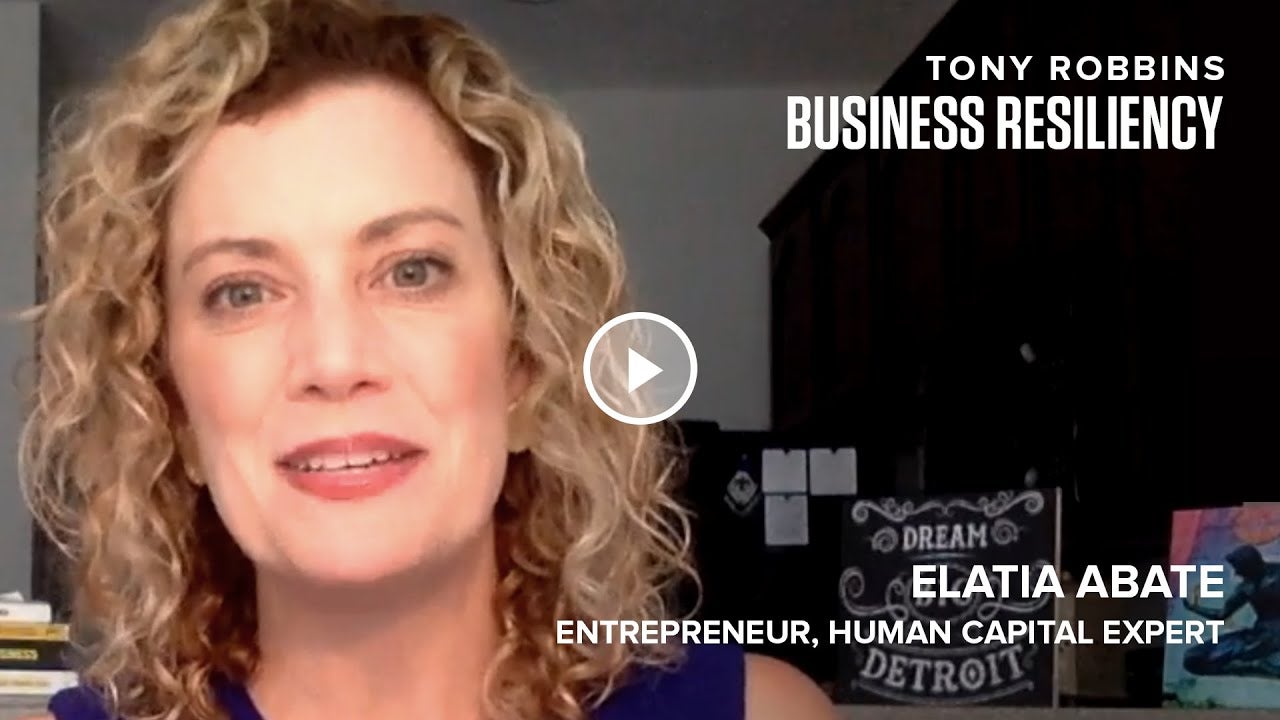
Elatia Abate is an entrepreneur, educator, speaker and expert on the future of work, and here she will share how a future-forward strategy can empower people and organizations to be successful during times of massive uncertainty and massive disruption. Uploaded 23-04-20 What do we need to do to not only shore up our businesses for survival but help them move beyond survival mode and into thriving? How might we empower people and organization’s success in the face of massive disruption? How can you rethink your mindset, commit to education and training and collaborate right now? Elatia proposes that three things will help us thrive: mindset, education and collaboration. Mindset is of course always the number-one most important piece of the puzzle. Listen to Tony’s podcast on disciplining your fears and controlling your focus at https://www.tonyrobbins.com/podcasts/stand-guard-at-the-door-of-your-mind for more on how mindset is essential during times of disruption and crisis. You must al
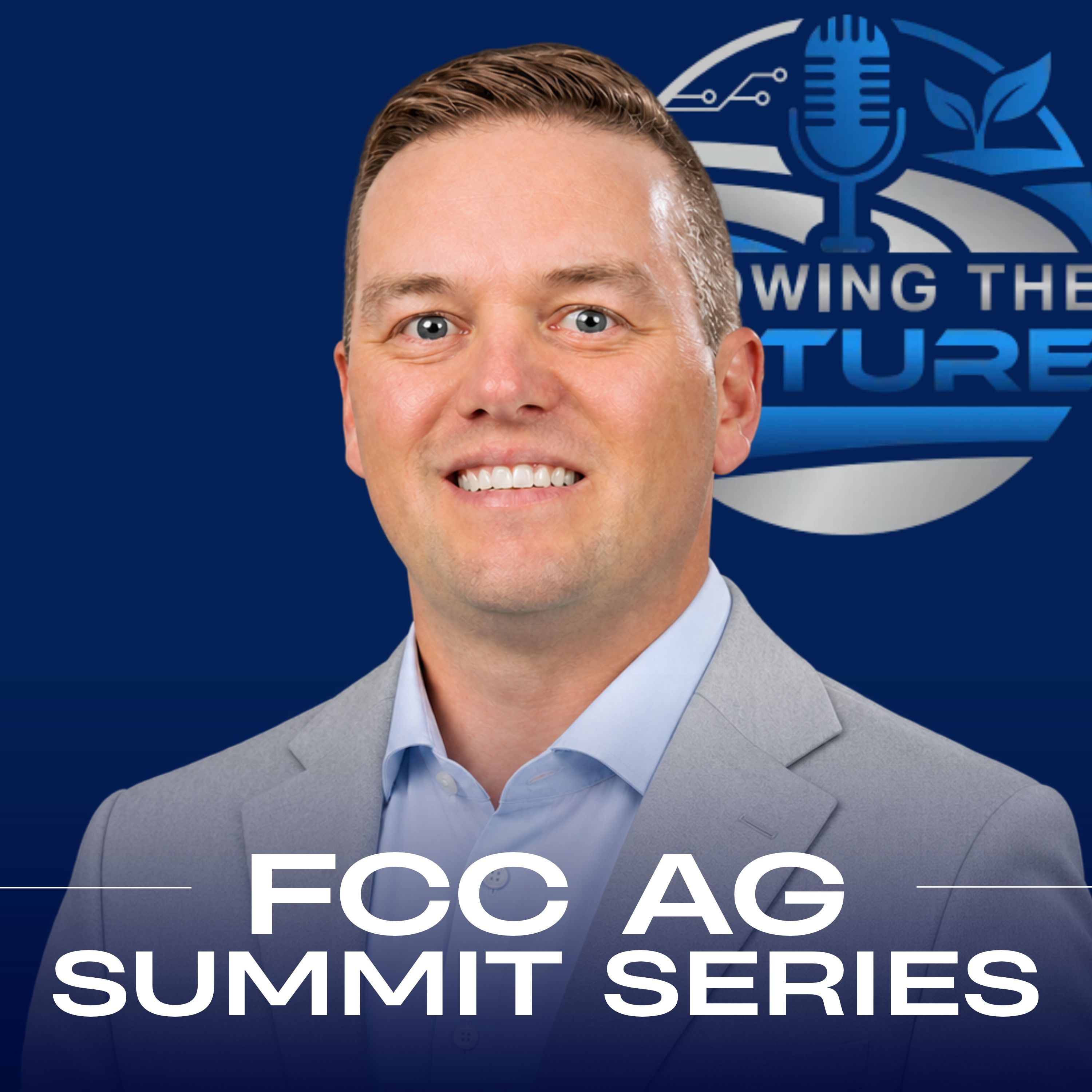
Farm Credit Canada has committed $2 billion to innovation in Canadian agriculture and food. Dan Aberhart asks Colin Brisebois what that means for a producer, and Colin starts with where the strategy came from. About three and a half years ago FCC listened to customers and the industry, and built a plan around being bold and putting more back into the people it serves. The biggest piece is transition. An estimated $50 billion of assets need to change hands over the next ten years. Colin describes how FCC's business advisors work with farm families, why the momentum from a good conversation often does not turn into a written plan, and how FCC wants to add an accountability partner so the plan gets built and executed. He also covers capital for ag tech and testing new technology on working acres, so that adoption carries less risk for a producer. The last part is secondary processing and why more of it in Canada means jobs in rural communities. The conversation also looks at FCC's Ag Summ
Season 2 of My Mom’s Murder continues Lauren Malloy’s relentless real-time investigation into the 1993 death of her mother Lori Malloy. After two years waiting for DNA results from her mother's exhumed remains, Lauren Malloy finally gets the call — but the answers raise more questions than they resolve. Old recordings, buried family history, and a renewed connection with Louise—the woman who first set her on this path—push Lauren ever closer to the truth. Along the way, suspicion begins to circle around someone she never expected: her Aunt Alyson, the woman who raised her. As Lauren confronts Aunt Alyson, she uncovers a pattern of deception, jealousy, and suspicion spanning decades. Tense street confrontations. Contradicted police statements. Family secrets buried deep. Then, an unexpected death changes everything — and what Lauren finds inside the apartment of the deceased may finally reveal what happened to her mother thirty years ago. Listen now: My Mom's Murder Season 2 (http://lin
Retirement and Insurance (R&I) are two complex topics that provide safety and stability to our pilots. In the new Alaska-Hawaiian Tentative Agreement (TA), there are some notable changes to the R&I benefits all our pilots receive, including the Company’s 401(k) contribution and our Long Term Disability program. The TA also contains changes specifically for the Hawaiian pilots, with the addition of Short Term Disability and Sick Leave cash out at retirement, and the removal of the Active Health Reimbursement Account and Stop Loss. Discussing all these changes is Joint Negotiating Committee Co-Chair Doug Grant.
While the previous episode in this two-part breakdown of Section 25 (Scheduling) addressed Bid Block Holders, this time we’re looking at reserve pilots and their options under the proposed Tentative Agreement (TA). Under the new system, all pilots begin as Long Call Reserves. The TA provides a range of options for reserve pilots to have some measure of control over their schedules, including aggressive pickup, pick up over days off, and reserve preferencing. Analyzing the changes our reserve pilots will encounter under this TA is Joint Negotiating Committee Member Travis Kilcommons.
The new ALA-HAL Tentative Agreement (TA) brings Hawaiian pilots into a new scheduling system modeled after the existing Alaska CBA. To help Hawaiian pilots understand the nuances of the proposed system and how it differs from our current system under the HAL PWA, we have Joint Negotiating Committee Member Travis Kilcommons. In this episode, we focus on Bid Block Holders – what Hawaiian pilots commonly know as lineholders. We cover when you can drop and trade, changes to the recall system, reassignments and cancellations, and much more.
Individuals should control whether organizations share their personal information.
Share your view, then see how readers voted. No sign-in required. This poll is shared across stories.
Do you agree or disagree?
Common Quandary
A Common Quandary to discuss
Another conversation to explore, separate from this news story.
Your coworker's religious holiday means you work the unpopular shift again. Is that fair?
A workplace accommodates religious observances by asking other employees to cover unpopular shifts. One coworker objects that nonreligious commitments can be equally meaningful but receive less formal protection.
Does equal respect require treating every kind of commitment identically?