Listen through the publisher, then discuss the episode here or arrange an in-person Roundtable. Your city determines where to meet.
Roundtables are designed for groups of four, with a shared subject and room for everyone to speak. Come for discussion, with no dating expectation.
So you've pressed your records, how do you plan to sell them? It turns out that a huge shift in the distribution of physical records through new resources like ADA had a lot to do with how so many people were buying indie records. From the bankruptcy that nearly took down Death Cab's label to the tricks Domino used to get Franz Ferdinand in a Best Buy endcap, these are the stories of how the records actually got to you. Hosted on Acast. See acast.com/privacy (https://acast.com/privacy) for more information.
Episode information is provided by the publisher. Listening takes place on the publisher’s service.
DESCRIPTION / SHOW NOTES: Brown Bag Mornings kicks off Friday with a reported 4.2-magnitude earthquake near Commerce that woke up parts of Southern California! Don't You Know I'm Local covers a Southern California cargo theft investigation involving 13 arrests and allegations that a group stole more than $22.5 million in Nike sneakers, Milwaukee tools, and other merchandise from freight trains. The crew can't believe suspects allegedly recorded their own crimes! Chismation gets into a viral podcast story alleging that Michael Jordan was cheap during his Chicago Bulls days. The crew debates whether someone as successful as Jordan should be expected to spend money on people he's dating or whether his money is his business. Petty Police turns to Doja Cat, who reportedly expressed frustration about her music being left out of GTA 6. The crew reacts to her social media posts and discusses whether the game's radio stations could eventually add more songs. Scrolling with the Homies features D
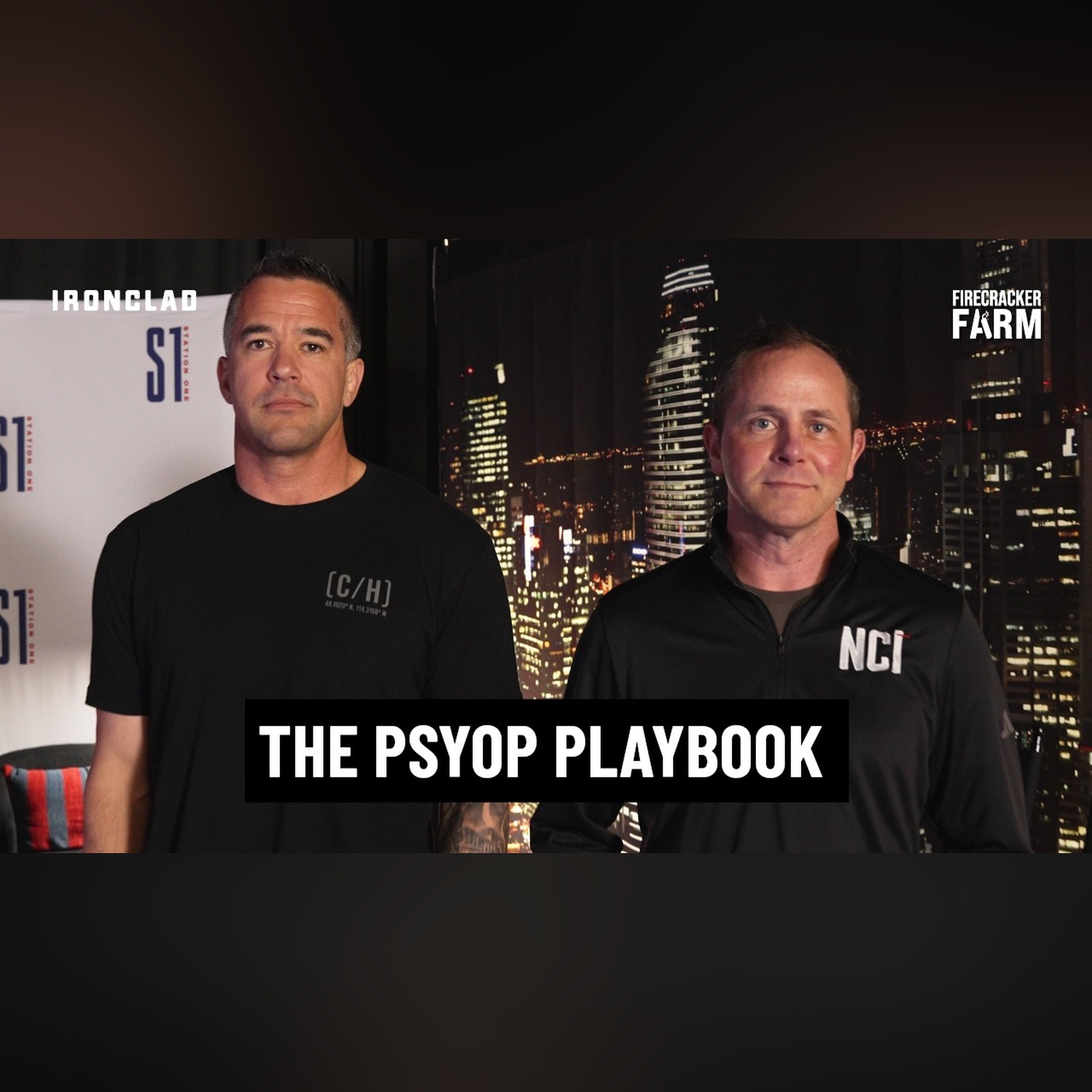
This is a PREVIEW of the upcoming episode of Change Agents. The full episode drops tomorrow at 5pm EST Uploaded 18-06-26 On this week's episode of Change Agents, Andy travels to Chase Hughes' new studio to break down how human behavior is manipulated at scale, from bot farms manufacturing fake consensus to the psychological framework Chase calls WOUND that explains why outrage, fear, and loneliness keep us glued to our phones. They dig into why Chase believes the algorithm is less a sinister mastermind and more an engine optimized purely for ad revenue, how think tanks may shape policy more than most people realize, and why Walter Cronkite and Julia Child both have far stranger backstories than anyone learned in school. Andy also gets a tour of Chase's new independent news studio, Station One, built to show audiences the psyops behind the headlines rather than just the headlines themselves. Change Agents is an IRONCLAD Original Firecracker Farm Norwood Sawmills: Learn more about Norwoo
Read: Matthew 28:19-20; Hebrews 4:12 (https://www.biblegateway.com/passage/?search=Matthew+28%3A19-20%3B+Hebrews+4%3A12) Sheri clutched her new book to her chest as she held the phone to her ear. “Yes, you totally need to read it! The last few chapters are great!” “You always find such fun books! I’ll look for it at the library the next time I go,” her friend Megan said. “Oh, my dad is calling. I’ve got to go.” Sheri hung up, then went into the family room and plopped on the couch beside Mom. “You really enjoyed that book, didn’t you?” Mom said as she folded some towels. “Yes!” Sheri flipped through it. “It’s the best I’ve read in ages! There’s romance, heroes and villains, battles of good versus evil, and so much more!” “That does sound exciting.” Mom smiled. “I know of another book like that, filled with good versus evil, heroes battling villains, and even romance. It’s my favorite.” Sheri furrowed her brow. “What book is that?” Mom held up the book beside her. “The Bible. Have you t
In this episode, Dr. K analyzes candid feedback from over a hundred software engineers facing burnout, loss of joy in coding, and existential dread in an AI-driven tech landscape. He breaks down the friction between developer reality and executive expectations, where corporate pressure to rapidly increase output with AI tools often results in code instability, production incidents, and tedious code-review assembly lines. Drawing on engineering benchmarks like the DORA report, Dr. K outlines tactical communication strategies for developers to manage upward by matching leadership enthusiasm while proactively documenting technical risks. Ultimately, he emphasizes that cultivating emotional resilience, social proficiency, and clear communication provides engineers with their strongest competitive edge during periods of industry disruption. Mental health resources designed by Dr. K and made with love: https://bit.ly/3ZOopgQ Talk to a HG Coach 1-on-1: https://bit.ly/46bIkdo Dr. Dr. K's Guide
NBC’s Business Correspondent, Brian Cheung is tracking the holiday sales, and the best tips and tricks to navigate the shopping frenzy. Also, new technology is changing the beauty industry and making some products more effective, when it comes to actually de-aging your skin. And, a pollo asada recipe ahead of Sunday’s football game in Mexico City this Sunday. Hosted by Simplecast, an AdsWizz company.
They broke up with you. They stopped reaching out. Maybe you finally started to move on. And then, just when you were beginning to feel like yourself again, their name appeared on your phone. Why do exes have a habit of coming back, often when we're finally getting over them? The temptation is to believe they've realized what they've lost. That they miss you, regret their decision, and are finally ready to give you the relationship you wanted. But missing someone and being ready to build a relationship with them are two very different things. In this episode, I break down five reasons an ex might come back after a breakup, from loneliness and the need for validation to genuine regret and a desire to try again. More importantly, I share three principles to follow before giving someone a second chance, how to tell the difference between promises and real change, and what to look for so you don't end up repeating the same heartbreak. Before you let someone back into your life, make sure y
So now what? 2004 is long past; long live 2004. Here, bands reflect on what this scene meant, what its legacy is, and how it influenced a new generation — including interviews with some members of that new generation, Michelle Zauner of Japanese Breakfast and Julien Baker. Hosted on Acast. See acast.com/privacy (https://acast.com/privacy) for more information.
Officials should explain how public consultation changed their final decision.
Share your view, then see how readers voted. No sign-in required. This poll is shared across stories.
Do you agree or disagree?
Common Quandary
A Common Quandary to discuss
Another conversation to explore, separate from this news story.
Your best friend is an AI that profits when you stay lonely. Is the friendship real?
A lonely adult considers an AI companion their closest confidant. The service is always patient and supportive, but the company profits when users spend more time engaged with it.
Does a comforting system have a duty to make itself less necessary?