Allowed to Birth: Behind the Documentary with Kristine Lauria and Jacinta Lagos | Overmedicalisation of Birth, Obstetric Violence, Informed Consent, Birth Trauma, Physiological Birth, Routine Interventions, Freebirth
56 min
Listen through the publisher, then discuss the episode here or arrange an in-person Roundtable. Your city determines where to meet.
Roundtables are designed for groups of four, with a shared subject and room for everyone to speak. Come for discussion, with no dating expectation.
In today’s episode, I’m joined again by Kristine Lauria, who this time has brought along Jacinta Lagos, the director of the documentary Allowed to Birth. After the incredible response to Kristine’s first appearance on the podcast, I wanted to bring the two of them together to talk more about the film and the conversations it’s starting in the birth world. Jacinta shares what led her to create the documentary, from her own experiences of birth to her work as a birth photographer and doula. After witnessing the differences between hospital births and births outside the medical system, she began documenting the experiences of women who had faced obstetric violence, mistreatment and a lack of informed consent. She explains why she felt so strongly that these stories needed to be shared and how that footage eventually became Allowed to Birth. We also talk about how Jacinta and Kristine first connected, the messages at the heart of the documentary, and why it’s so important to find a balance between trusting the physiological process of birth and recognising when medical intervention is needed. We finish by chatting about the response to the film so far and what’s next for the pair. In this episode we talk about: How Jacinta and Kristine first met and the connection that led to the documentary Jacinta’s journey from wedding photographer to birth photographer, doula and documentary director The experiences of obstetric violence and mistreatment that inspired Allowed to Birth Why informed consent and women’s autonomy during birth matter The overmedicalisation of birth and the routine interventions that can interfere with the birth experience Kristine’s 35-plus years of midwifery experience and her perspective on undisturbed birth Finding the balance between physiological birth and knowing when medical intervention is necessary The impact of the documentary so far and what’s next for Jacinta and Kristine Want to come on the podcast? Hosted on Acast.
Episode information is provided by the publisher. Listening takes place on the publisher’s service.
#JimRohnMotivation #JimRohn #JimRohnSpeech In this Jim Rohn Motivation video, discover the undeniable truth about growth: if you're not improving, you're falling behind. Jim breaks down why constant evolution is not optional—it's essential for anyone who wants to thrive in a fast-changing world. Key Topics From This Motivational Video: Why standing still means falling behind The power of small, consistent improvement How comfort becomes the silent enemy of growth The discipline of practice and repetition The influence of your environment and peers This powerful Jim Rohn motivational video is a wake-up call for anyone coasting through life. Through real-world wisdom, Jim shares how discipline, feedback, and learning compound over time to create unstoppable momentum. If you're serious about personal growth, this message will shift your perspective and ignite change. This Jim Rohn Motivational Video Is Perfect For: Anyone feeling stuck in their routine or career Entrepreneurs and business
The Fair Work Tribunals edition of Wednesday 25 November 2026 (39 decisions, two with headnotes), with the Fair Work Tribunals edition of Tuesday 24 November 2026 (228 decisions, three with headnotes) alongside it. A Full Bench on why the Black Coal award's redundancy relief clause runs through the dispute procedure and not compulsory arbitration; another on appealing a refusal to reinstate and counting the anticipated period; and three rulings where generative AI did some of the drafting: costs and fictitious authorities, an AI-drafted agreement that made a worker an employee, and an AI-prepared witness statement. Fair Work Desk: relief from retrenchment pay goes through the dispute procedure (opening story). R2S Medical & Emergency Response Pty Ltd v Peter Quirk and Others [2026] FWCFB 291 (https://jade.io/article/1307378) - Gibian VP, Dobson and Slevin DP, 5 November 2026. Signal Doctrine and Practice & Procedure. Black Coal Mining Industry Award 2020 cll 32, 34.4, 34.6; Fair Work A
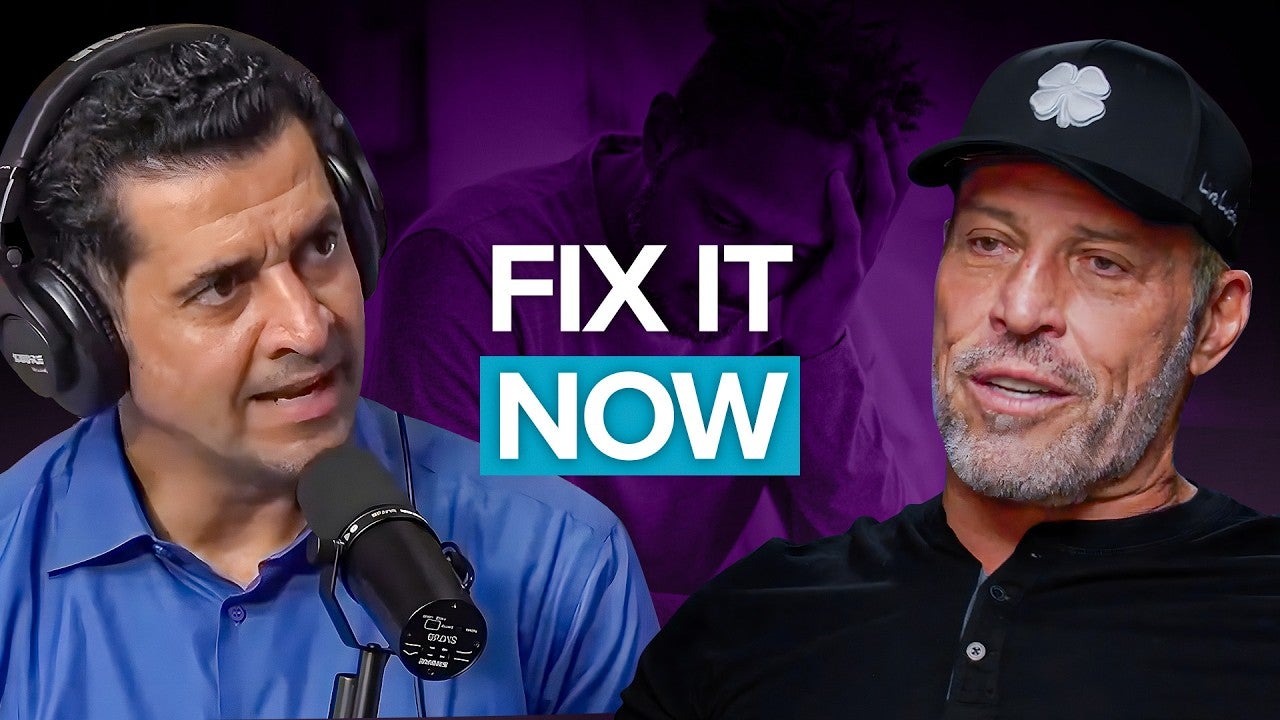
What if everything you thought took years to change… could be transformed in minutes? In this powerful episode, Tony Robbins joins The PBD Podcast with the host Patrick Bet-David—entrepreneur, author, and founder of Valuetainment, known for interviewing the world’s top thinkers and leaders. Uploaded 11-05-25 Together, they explore Tony’s early clashes with skeptics and his groundbreaking methods for helping people overcome trauma, addiction, and deep emotional blocks—fast. Tony also shares the mindset and tools behind these rapid breakthroughs, and how you can use them to transform your own life. Watch more videos like this The #1 Most Important Skill for Improving Your Life: https://youtu.be/8joX6mdOVcE How To Raise Your Standards To Get ANYTHING YOU WANT: https://youtu.be/-FEFeG1nEmc Prime Your Brain to STOP Stress, Anxiety and Fear INSTANTLY: https://youtu.be/60ROjGMqXUQ How To Be Happy and Remove Negative Thoughts in ANY Situation: https://youtu.be/r4ZdyS6v3qA Follow Tony Robbins:
Big News! Clicking Here (https://meditationsounds.supercast.com/) Email List (https://bit.ly/3T010m4) Guided Meditation for Children | Hot Air Balloon Ride AdventureLet your child’s imagination soar in this relaxing guided meditation designed just for kids. In this peaceful hot air balloon adventure, your child will float high above the clouds, exploring the sky while feeling calm, safe, and happy. Perfect for bedtime, nap time, or quiet moments during the day, this meditation helps children slow down, breathe deeply, and find their inner calm. With gentle storytelling and soothing background music, this experience promotes emotional balance, better sleep, and a peaceful heart. Ideal for ages 4–10, but magical for dreamers of all ages. #GuidedMeditationForChildren#KidsMeditation#RelaxationForKids#BedtimeMeditation#MindfulnessForKids#HotAirBalloonMeditation#CalmKids#MeditationStory#PositiveKidsContent#PeacefulParenting guidedmeditation for children, kids meditation, bedtime meditation f
Jason is a medically retired Army veteran from Southern Illinois. After years of dealing with injuries and health challenges—including TBI, PTSD, depression, and chronic knee, back, hip, and shoulder problems—he developed a severe food addiction, gained significant weight, and was taking multiple medications. In 2018, after encouragement from a close friend and psychologist, Jason began a ketogenic diet. He ultimately lost about 80 pounds and was able to discontinue his anxiety and depression medications. In 2023, still struggling with food addiction, cravings, inconsistent energy, allergies, and inflammation, Jason transitioned to a carnivore diet. Since then, he has experienced significant improvements in each of those areas. His experience sparked a deep interest in carnivore nutrition, metabolic health, strength, longevity, and understanding how diet and lifestyle influence physical and mental performance. Today, Jason focuses on continually improving his health, strength, resilien
What has your old self cost you? Your unhealthy attachment patterns, your limiting beliefs, your past relational trauma, your people pleasing. How much of yourself have you been willing to disappoint so that nobody else is disappointed in you? In this tough love episode, I’m sharing one of the biggest regrets of my life: the day I showed up to my twin sister’s wedding as her maid of honor, and I was there, but I wasn’t actually there. It was one of the defining moments of “this is not who I am.” You are the common denominator in your relationships, your career, and your health, and that is hard and so empowering. Inside the Episode: The moment I couldn’t even show up for my twin sister, and why I numbed it instead of feeling it “Just because you can does not mean that you should”: the belief hiding underneath overfunctioning The lie “I’ll be happy when...” and why joy is not a reward Ready to draw your line in the sand? We only have a few spots left inside the Empowered. Secure. Loved.
Phoebe is a mum of three and the founder of the health tech app Inherit, and she’s back on the pod to share her second and third births. Her first birth ended in an emergency C section after she developed sepsis, so second time round she really wanted a VBAC. She was so sure a planned C section would feel like failing that she spent the whole weekend before hers trying to bring labour on. Instead it became the most healing birth she’s had. After her first birth, Phoebe lost five pregnancies during the COVID lockdowns. She went into her next pregnancy expecting to lose her son too, until the sonographer at her 20 week scan told her she was allowed to feel excited. With gestational diabetes, very high fluid and no sign of labour at 37 and a half weeks, her team booked a C section. This time there was music she loved, her husband Alex was right beside her, and nobody was rushing. Her third pregnancy was much harder. She caught COVID at six months, ended up on a drip with an acute kidney i
Phoebe’s waters had been broken for over 48 hours when a midwife coming back on shift raised the alarm. Phoebe is a London mum of three and the founder and CEO of health tech app Inherit. Phoebe went into her first birth feeling prepared. She’d done her NCT classes, stayed off social media, and made it to her Christmas Day due date after a pregnancy spent being sick more than 20 times a day with hyperemesis. Two days later her baby was barely moving, so she was induced at St Thomas’ in London. Over the next few days, on a packed ward between Christmas and New Year, her contractions kept coming but she stayed at two centimetres, even after her waters broke on their own. Late on New Year’s Eve the midwife who had been there when her waters broke came back on shift and saw she was still waiting. Bloods showed a severe infection and her baby’s heart rate had dropped, so Phoebe was rushed to theatre for an emergency caesarean. Her daughter Evie was born not breathing, and the team got her b
I had Antonia on the pod today to share the story of her first pregnancy, one she describes herself as one in a million. Antonia has worked in health and fitness for almost a decade, runs her own business and is a Pilates instructor who specialises in supporting women with eating disorders and body image. She knew she wanted a planned caesarean before she was even pregnant. Then hyperemesis gravidarum started on day one and never let up, and at her 20 week scan her baby was measuring on the zero centile, which led to specialist care at St George's. At 26 weeks, after weeks of breathlessness and rib pain she'd been told was probably anxiety, a CT scan found blood clots in both of her lungs. Antonia made it to her planned caesarean at exactly 37 weeks, with a team she'd helped choose around her. Her breech daughter was born four minutes after the first incision, screaming. She also talks about her recent diagnosis of antithrombin deficiency, a rare genetic clotting condition, and why she
Interviewers should challenge powerful guests even when doing so risks losing future access.
Share your view, then see how readers voted. No sign-in required. This poll is shared across stories.
Do you agree or disagree?
Common Quandary
A Common Quandary to discuss
Another conversation to explore, separate from this news story.
Your dinner guest arrives with their dog. Do you let both of them in?
A friend appears at your carefully planned dinner with a large dog they never mentioned. They say the dog becomes anxious when left alone and will sit quietly. Another guest is uneasy around animals, and your lease forbids pets.
Whose needs should an unexpected accommodation displace?