Listen through the publisher, then discuss the episode here or arrange an in-person Roundtable. Your city determines where to meet.
Roundtables are designed for groups of four, with a shared subject and room for everyone to speak. Come for discussion, with no dating expectation.
Robert Pattinson has been named as the next James Bond, ending years of speculation over who would replace Daniel Craig. We look at the billions of dollars riding on the future of the franchise, and what Amazon hopes to gain from owning one of the world's most valuable entertainment properties. Nvidia faces fresh uncertainty as the BBC is told its board is not considering reinstating Jensen Huang as chief executive, despite a growing campaign for his return. And new US restrictions on China's access to AI chips could deal another blow to the company. Ireland is preparing to open up a collection of 12,000 books once banned by the state, making them available to the public through the National Archives. But preserving the fragile collection comes at a cost. (Photo: Robert Pattinson pointing a gun straight on, wearing a black suit with white shirt. Credit: Jaap Buitendijk/Amazon MGM Studios)
Episode information is provided by the publisher. Listening takes place on the publisher’s service.
In this week's episode of The Wrap with Chris Whalen, Chris says Fed Chair Kevin Warsh has lost credibility with the markets. He compares Warsh to G. William Miller, Carter’s Fed chair, and argues that quarter-point hikes all year would have kept long-term yields in check. He also lays out what real leadership would look like: successive quarter-point hikes and a gap between the fed funds rate and the interest paid on reserves. Chris warns that rates are already at their upper bound. Long-term yields are up four and a half points since 2021, the bottom ten of the 38 mortgage companies he tracks are basically insolvent, and firms like Brookfield are walking away from commercial properties they can’t refinance. He explains why the Fed needs to think in spreads, not just rates, and why the push for centralized Treasury clearing could hurt demand right as Treasury needs to raise $800 billion in January, setting up a possible bond market breakdown. Plus: why central banks can’t fix war-driv
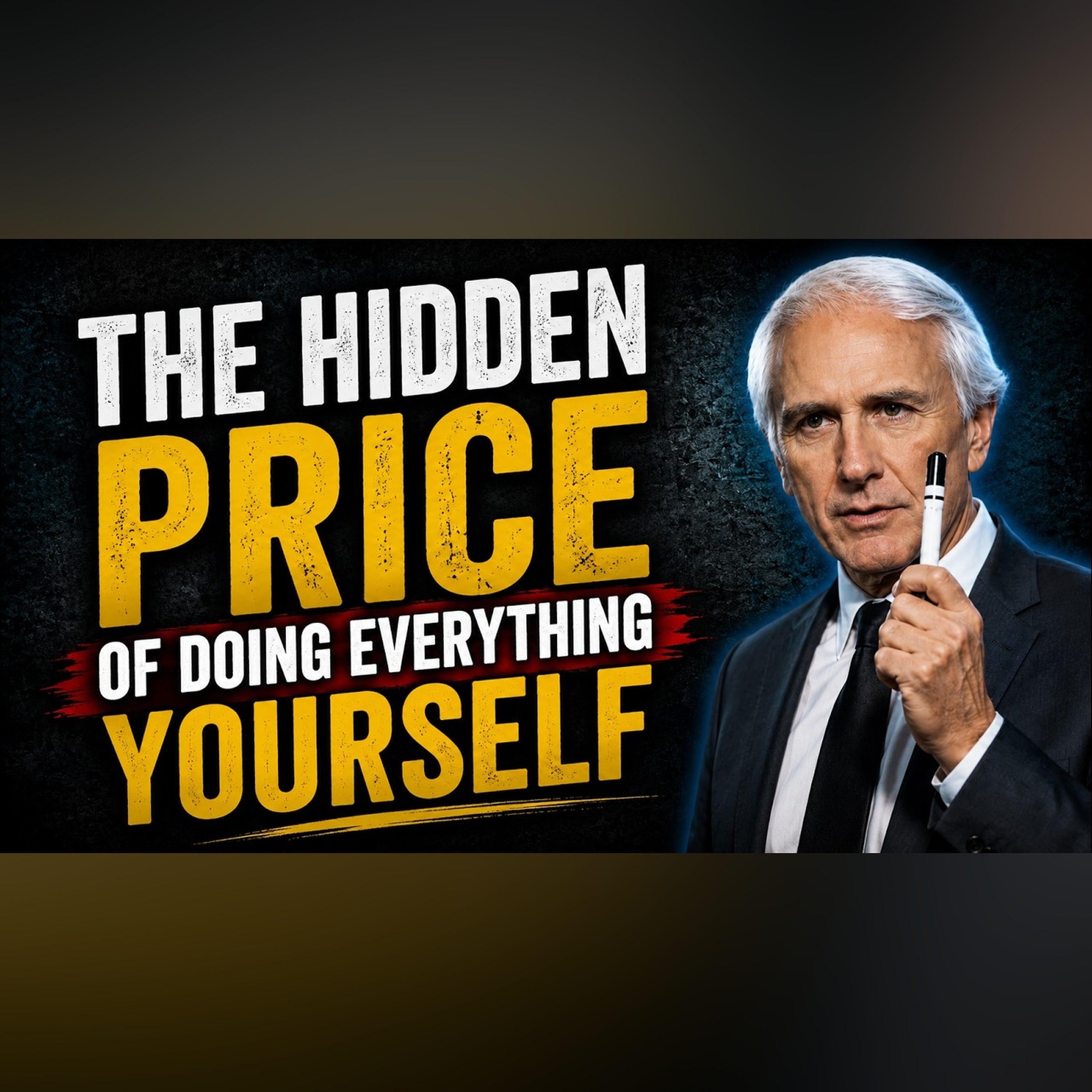
I've watched a lot of capable people over the years. People with more talent than they knew what to do with, more drive than most, a willingness to work that would put others to shame. And a strange thing kept happening. The most capable ones, the ones who could do anything, kept ending up buried under everything. Not because they lacked ability. Because they refused to let go of any of it. Uploaded 16-08-26 They told themselves this was strength. But it wasn't only strength. It was also a kind of quiet, slow-motion collapse — and the tragedy is that it looked like the opposite. It looked like competence. It looked like a person holding everything together. And that's exactly why it's so dangerous. Here is the truth: the habit of doing everything yourself is one of the most expensive habits a person can have, and almost nobody counts the cost, because the bill doesn't arrive all at once. It arrives in small quiet installments over years. This seminar walks through four things you must
Treasury Secretary Bessent and the Fed's Goolsbee are publicly at odds over whether energy price shocks are driving inflation, a rare disagreement that reveals deep uncertainty inside the policy establishment about the inflation outlook. We explore what this debate means for interest rates, bond markets, and how investors should position heading into 2027. Today's Stocks & Topics: The Estée Lauder Companies Inc. (EL), Leverage ETFs, Shopify Inc. (SHOP), Inflation's Fault Lines: When Energy Shocks and Fed Policy Disagree, IPOs Money, Key Benchmark Numbers: Treasury Yields, Gold, Silver, Oil and Gasoline, State Street SPDR Portfolio S&P 500 High Dividend ETF (SPYD), JPMorgan Equity Premium Income ETF (JEPI), iShares Silver Trust (SLV), Vanguard Morningstar Mid-Cap Value ETF (VOE). Our Sponsors:
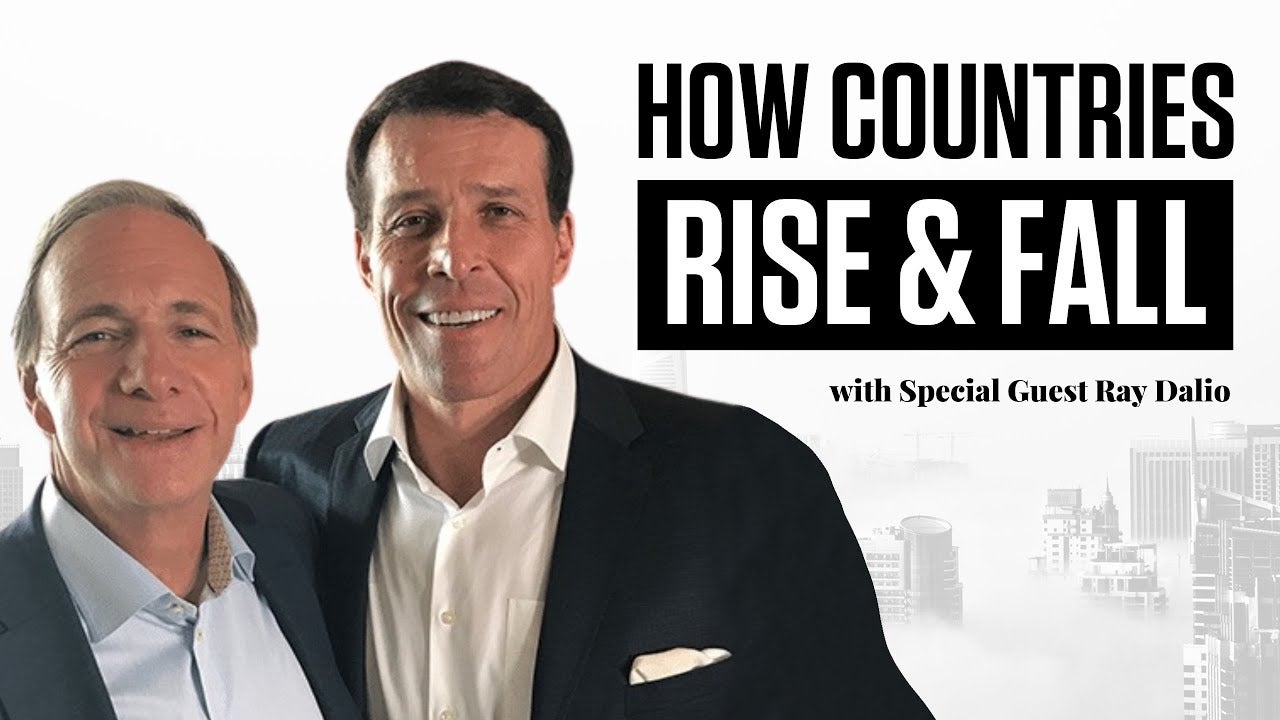
Changing World Order with Ray Dalio How countries rise and fall | What cycles of history can teach us now Uploaded 29-07-22 "Power comes to those that can recognize patterns" Tony Robbins SHOW NOTES : 1:39 Tony on the Power Patterns 8:51 The Cycle Explained: What's a New World Order? 16:00 What's a populist? 18:50 The 8 Measures of Power 23:52 The 3 Big Events that lead to a Changing World Order 28:40 Why did Donald Trump get elected in 2016? 31:02 The 5 Types of War 35:20 Ray's methodology of studying history 40:17 The collective experience is all about how we are with each other 41:29 Education, and disparity in the state of Connecticut 46:49 They call them revolutions but they're civil wars 54:03 Ukraine, Russia, and China 1:03:02 Inflation: What got us here and what do we do now? 1:10:00 Taking away buying power to fight inflation = period of stagflation 1:14:47 The Holy Grail of Investing = diversified uncorrelated assets 1:18:28 More on China 1:24:25 Ray's 3 Tips: How You Can Avo
Is the property downturn shifting from city to city, or are national headlines hiding what is happening on the ground? On this week's Australian Property Podcast, Pete Wargent and Chris Bates look at changing listings, buyer demand and price movements across Australia's housing markets. If you're considering a first home, an upgrade or an investment property, this episode offers questions to ask before acting. Check current lending and tax rules, and seek qualified personal advice rather than treating a podcast discussion as a recommendation. Episode resources Show partner resources Rask resources – Pete's Buyers Agency (https://www.allenwargent.com.au/) – All services (https://bit.ly/R-services) – Financial Planning (https://bit.ly/R-plan) – Invest with us (https://bit.ly/R-invest) – Access Show Notes (https://bit.ly/R-notes) – Ask a question (https://bit.ly/R-quest) – We love feedback! (https://raskau.typeform.com/to/ZbfHy6IP) – Instagram: @rask.invest (https://www.instagram.com/rask
November 20, 2026: Melissa Lee and the Fast Money traders unpack a brutal market sell-off, NVIDIA’s latest concerns, what's next for Anthropic, Bitcoin’s break below $59,000, and whether healthcare can still offer shelter. The key takeaway: traders see possible near-term bounces, but they remain cautious about unresolved risks in AI, rates, credit, and market leadership. Hosted by Simplecast, an AdsWizz company.
It's a bruising day for US technology stocks. Nvidia and Anthropic suffer double-digit losses as the Nasdaq plunges more than five percent in a brutal week for tech. What's behind the sell-off? The UK and European Union announce a new agreement covering food trade, carbon markets and youth mobility a decade after the Brexit vote. And Airbnb introduces new rules on household chores. What changes for hosts and holidaymakers? (FILE PHOTO: An Nasdaq logo, in this illustration taken September 28, 2026. REUTERS/Dado Ruvic/Illustration/File Photo) Presenter: Ed Butler Producers: Guy Kilty & Bisi Adebayo
Anthropic's share price has dropped to near $88, back towards its initial public offering price of of $83, after the company behind the Claude AI chatbot saw a soaring debut. What's behind the market reaction? The UK and EU agree a new deal covering food exports, youth mobility and carbon emissions. And Airbnb tells hosts to ditch the holiday chores. Presenter: Leanna Byrne Producer: Victoriya Holland Editor: Naomi Rainey
Anthropic makes stock market history with the biggest IPO ever. Its shares surge before falling back, as protesters raise concerns about the economic and environmental costs of AI. The leaders of China, Russia and the US agree to maintain strategic stability after talks in Shenzhen. Could this ease global tensions? And the Trump administration sells its first deep-sea mining leases off American Samoa, despite local protests and environmental concerns. (Photo: Anthropic logo in this illustration taken on November 18, 2026. Credit: REUTERS/Dado Ruvic/Illustration) Presenter: Ed Butler Producers Josh Martin & Bisi Adebayo
Retailers should show a product's recent normal price alongside advertised discounts.
Share your view, then see how readers voted. No sign-in required. This poll is shared across stories.
Do you agree or disagree?
Common Quandary
A Common Quandary to discuss
Another conversation to explore, separate from this news story.
A patient records every doctor visit for their followers. Can the doctor refuse to be filmed?
A patient with a large social-media following livestreams their health journey and wants to record every appointment. They say the videos help others and keep doctors accountable. Their physician finds the camera distracting and worries that casual remarks will be edited out of context.
Whose comfort should control a conversation about one person's body and another person's work?