AMERICA HAS CHANGED: ISRAEL, IRAN & THE ELECTION AFTERMATH
70 min
Listen through the publisher, then discuss the episode here or arrange an in-person Roundtable. Your city determines where to meet.
Roundtables are designed for groups of four, with a shared subject and room for everyone to speak. Come for discussion, with no dating expectation.
Iranian officials celebrate the reported Republican losses in the U.S. midterm elections while issuing new threats against President Trump, as Israel faces its own political deadlock and allegations of foreign election interference. With questions growing about the future of U.S.-Israel relations, a proposed phaseout of American military assistance, and Iran's nuclear and missile capabilities, the stakes for both nations remain high. Meanwhile, escalating unrest in Europe, AI-powered manipulation, cyberattacks on critical infrastructure, and the prophetic significance of Ezekiel 38 raise urgent questions about what lies ahead. Connect with us on social: Telegram: @beholdisraelchannel Instagram: https://www.instagram.com/amir.tsarfati/ Facebook: https://www.facebook.com/beholdisrael/ X: https://x.com/beholdisrael YouTube: https://youtube.com/@beholdisrael
Episode information is provided by the publisher. Listening takes place on the publisher’s service.
Is the Republican Party heading for a major reckoning in 2028? Dave Rubin joins The Chicks on the Right for a brutally honest conversation about Trump's final two years, the future of the GOP, and the growing divisions threatening conservatives. Dave weighs in on the Republican Party's recent election losses, whether JD Vance, Marco Rubio, or Ron DeSantis can carry Trump's agenda forward, and why he's increasingly concerned about the political direction of America. The conversation heats up as Dave takes on Nick Fuentes, the rise of extremist voices on the right, and the socialist movement gaining influence within the Democratic Party. He also discusses radical Islamism, antisemitism, the dangers of online outrage, and why he believes Western civilization faces serious challenges. Plus, with cyberattacks, banking disruptions, and nationwide outages raising concerns, Dave shares his thoughts on whether Americans should be preparing for more chaos. And don't miss the lighter side of Dave
Iran says it shot down a U.S. drone over the Strait of Hormuz as CBS News reports the U.S. and Israel are weighing a new assault on Iran. MIKE DROP NEWSROOM | 21 NOVEMBER 2026 Iranian state TV claimed Saturday that Iran downed a U.S. drone near Qeshm Island; the U.S. has not confirmed it. CBS News reported, citing sources, that the U.S. and Israel are considering a new assault in the short term, driven by Israeli concern over how fast Iran is rebuilding its missile production and moving sites underground. President Trump told Israel's Channel 12 he is not rushing any decision. At the same time, the New York Times reported Israeli warnings that Iran has made progress on chemical and biological weapons and could use them against U.S. officials, though some U.S. officials doubt those warnings. Mike Ritland breaks down why a single intelligence source shouldn't drive a decision this big, how corroboration works when lives are on the line, and what would actually change his mind. Also cover
Hey everybody, Tom Bilyeu here. On today’s episode of Impact Theory, we’re taking on a topic that’s got the whole world holding its breath: the escalating crisis between the United States and Iran. As tensions ratchet up, we’re asking the tough questions—how did we get stuck in this “escalation trap,” and what does it mean for America’s global leverage, our economy, and our very sense of security? The conversation focused on why the traditional idea of “strategy” might be failing policymakers, using powerful analogies—like chess versus roulette—to show how doubling down in conflict can spiral out of control. We’ll break down the risks of tactical “wins” that create even bigger crises, the real leverage Iran holds with control of the Strait of Hormuz, and the mounting pressure on President Trump as political support erodes and legacy hangs in the balance. A key theme that emerged is what happens when military might runs into decentralized opposition, and why high-stakes gambles—like the
A summit like no other. In a political first, President Trump sat down with President Putin and President Xi for an unprecedented trilateral meeting. He insists they’re all friends, but what does this mean for their conflicting agendas in Iran and Ukraine? Former Biden adviser Rush Doshi joins Christiane Amanpour to assess what was, or wasn’t, achieved. Then, in a landmark case, the International Court of Justice has found Myanmar guilty of committing genocide against the minority Rohingya population. The U.N. High Commissioner for Human Rights, Volker Türk, joins the show to discuss why this moment is so important. Plus, CNN’s Clare Sebastian takes us underground to look at how Ukraine’s innovative operation is helping the country make substantial gains. And best-selling author Elizabeth Strout discusses her new book ‘The Things We Never Say’, exploring the political and personal tensions of America that emerged during the 2024 presidential election. From the archive, my report from U
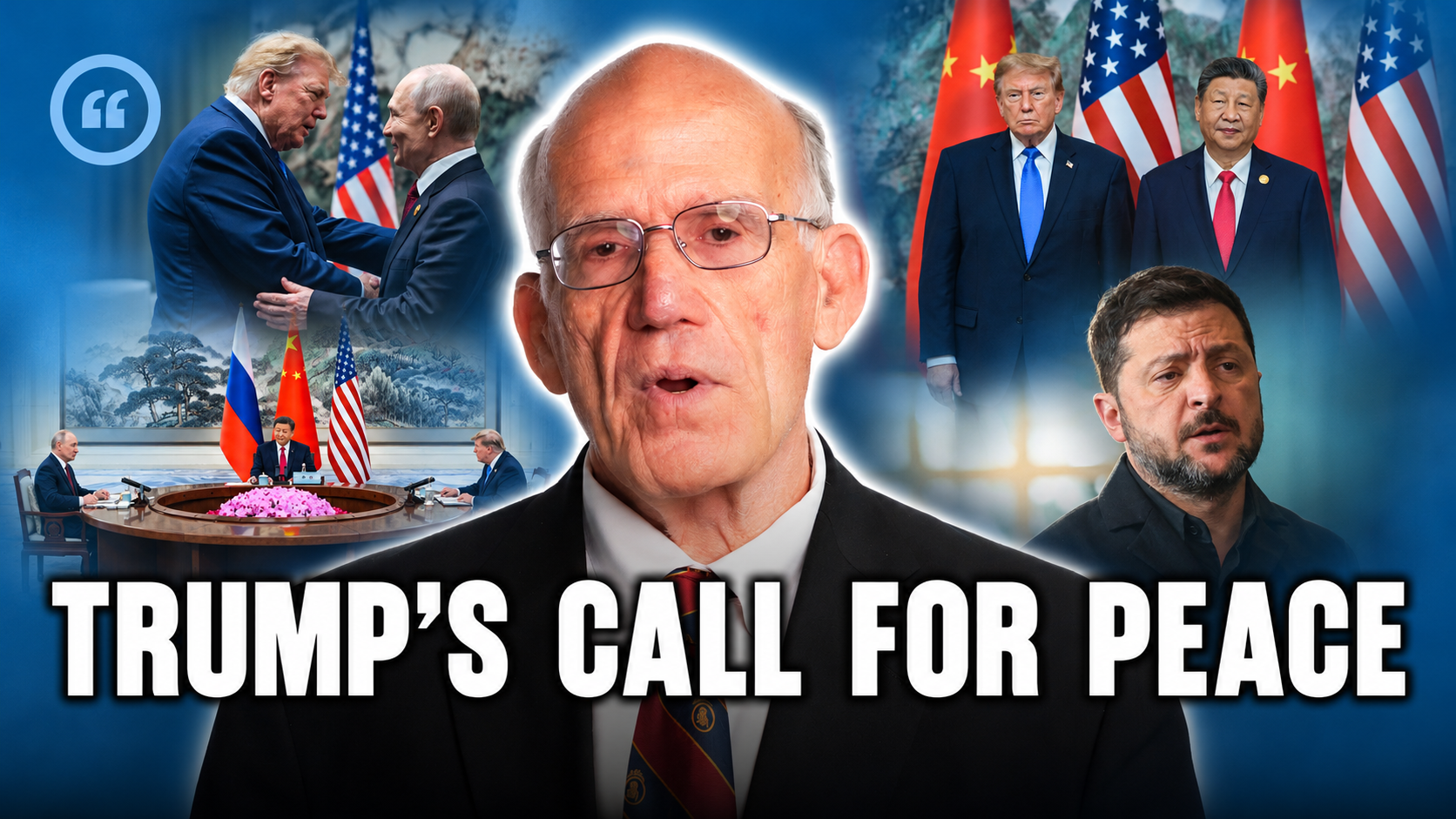
President Donald Trump's first ever trilateral summit with Vladimir Putin and Xi Jinping raises questions about the future of the war in Ukraine and whether a peace agreement could finally be within reach. Victor Davis Hanson and Sami Winc examine the summit on today’s edition of “Victor Davis Hanson: In His Own Words,” discussing Russia's declining influence, potential territorial concessions in Ukraine, and Europe's frustration over Trump's peace negotiations. Hanson criticizes Hillary Clinton's attacks on Trump's diplomacy; he also argues that European leaders have weakened their influence by neglecting defense spending and relying on American military protection. They discuss Elon Musk's shifting political allegiances, and Hanson warns that distancing himself from MAGA may not protect him from Democrat investigations. They also discuss the potential economic benefits of artificial intelligence and the challenges facing Hakeem Jeffries as Democrats prepare to take control of the Hou
For review: 1. Iraq has reached a compromise with the powerful Iran-backed militia Kataeb Hezbollah, three senior security officials said, after Prime Minister Ali al-Zaidi readied security forces to move against the group. Reflecting the gravity of the situation, Iraqi Shiite political sources said Esmail Qaani, commander of Iran’s elite Revolutionary Guards’ Quds Force, arrived in Baghdad late on Monday to help defuse tensions with Kataeb Hezbollah, Tehran’s most powerful militia ally in Iraq. 2. Lebanese President Joseph Aoun launched a lengthy rebuke of Iran in an Independence Day address, arguing that the Islamic Republic does not have the right to interfere in Lebanon’s internal affairs, as it long has via support for its local terror proxy, Hezbollah. 3. Yemen’s Houthis launched strikes on the Saudi capital Riyadh on Saturday, after vowing reprisals for a “special operation” by the Saudi-led coalition fighting them. The coalition later said it had “intercepted and destroyed” thr
Will the Holy Spirit still be on Earth after the Rapture, and who will stand before Jesus at the judgment of the nations? This CONNECT Q&A examines the Antichrist's possible origins, the Bema Seat of Christ, the Millennial Kingdom, and how people can still come to salvation during the Tribulation. The discussion also addresses Israel's election deadlock, the future of its government, and why understanding God's promises to Israel is essential to interpreting Bible prophecy. Connect with us on social: Telegram: @beholdisraelchannel Instagram: https://www.instagram.com/amir.tsarfati/ Facebook: https://www.facebook.com/beholdisrael/ X: https://x.com/beholdisrael YouTube: https://youtube.com/@beholdisrael
As Israel's new Knesset is sworn in and opposition campaign narratives unravel, Qatar's expanding geopolitical footprint raises urgent alarms over foreign influence across both Israeli and American elections. Meanwhile, Tehran unveils a vast underground "missile city" capable of striking Europe as Houthi rockets pound Saudi Arabia, and continental borders buckle under surging waves of illegal immigration. From AI-generated "Gazawood" propaganda and rising global antisemitism facing pushback from U.S. Attorneys General, to the perilous march of socialism in the West and intensifying persecution targeting over 220 million Christians worldwide, these accelerating global shifts reveal the high-stakes battles shaping our generation. Connect with us on social: Telegram: @beholdisraelchannel Instagram: https://www.instagram.com/amir.tsarfati/ Facebook: https://www.facebook.com/beholdisrael/ X: https://x.com/beholdisrael YouTube: https://youtube.com/@beholdisrael
Technology companies should address foreseeable misuse before releasing a new feature.
Share your view, then see how readers voted. No sign-in required. This poll is shared across stories.
Do you agree or disagree?
Common Quandary
A Common Quandary to discuss
Another conversation to explore, separate from this news story.
Your best friend is an AI that profits when you stay lonely. Is the friendship real?
A lonely adult considers an AI companion their closest confidant. The service is always patient and supportive, but the company profits when users spend more time engaged with it.
Does a comforting system have a duty to make itself less necessary?