America's Dark History: Human Experimentation & Eugenics (Part 1)
31 min
Listen through the publisher, then discuss the episode here or arrange an in-person Roundtable. Your city determines where to meet.
Roundtables are designed for groups of four, with a shared subject and room for everyone to speak. Come for discussion, with no dating expectation.
What happens when the people sworn to protect you become the ones experimenting on you? For decades, the United States government, prestigious universities, and powerful corporations conducted disturbing experiments on human beings—often without their knowledge or informed consent. And unlike many conspiracy theories, these experiments are documented history. In Part 1 of this new series, we're diving into America's dark history of human experimentation, beginning with the eugenics movement that led to the forced sterilization of tens of thousands of Americans and influenced policies in Nazi Germany. From there, we'll uncover the horrifying reality of the Tuskegee Syphilis Study, the CIA's MKUltra program, the Guatemala STD experiments, and the use of vulnerable children, prisoners, and hospital patients as human test subjects. We'll also examine the wealthy institutions that supported eugenics, Jeffrey Epstein's reported interest in genetic engineering, and the uncomfortable questions these historical abuses raise about modern science and government oversight. How did these experiments continue for decades? Who was held accountable? And have we truly learned from the past? This is just the beginning of a multi-part investigation into America's history of human experimentation. Stay Skeptical. Hosted by Simplecast, an AdsWizz company.
Episode information is provided by the publisher. Listening takes place on the publisher’s service.
This is a Grave Talks CLASSIC EPISODE! PART TWO On the eastern shores of Lake Winnebago sits the quiet town of Jericho, Wisconsin—a place that appears peaceful at first glance. But rising above it is the abandoned Holy Trinity Catholic Church, a towering reminder of a past that refuses to stay silent. Closed decades ago, the church, its neighboring convent, and former school have become collectively known as Jericho Haunted Trinity—one of Wisconsin’s most talked-about paranormal locations. Investigators report heavy footsteps echoing through the sanctuary, disembodied voices in empty hallways, and unexplained lights flickering through darkened windows long after the property was vacated. What happened within these walls? Why do so many who enter describe an overwhelming presence that feels anything but holy? Today on The Grave Talks, Cayla and Steve Gregory take us inside Jericho Haunted Trinity, sharing the history, the experiences, and the chilling phenomena that continue to draw inv
Louisiana State Penitentiary, more commonly known as Angola Prison, is America’s biggest maximum security prison in a state that incarcerates more people than any other. That means they are there for having committed the most serious crimes, including murder. Most will never leave jail. Several days a year, some inmates are allowed to take part in the US's last prison rodeo. Whilst the inmates are primarily black, the paying audience is mostly white. Supporters of the rodeo say it’s a chance for the prisoners to interact with people from outside the prison and also potentially earn some money to send back to family or make their life more palatable. Opponents say it is exploitation - not unlike a roman gladiatorial contest, where the audience gleefully waits to see if the bulls are going to get the better of the cowboys. Anna Adams reports from Louisiana.
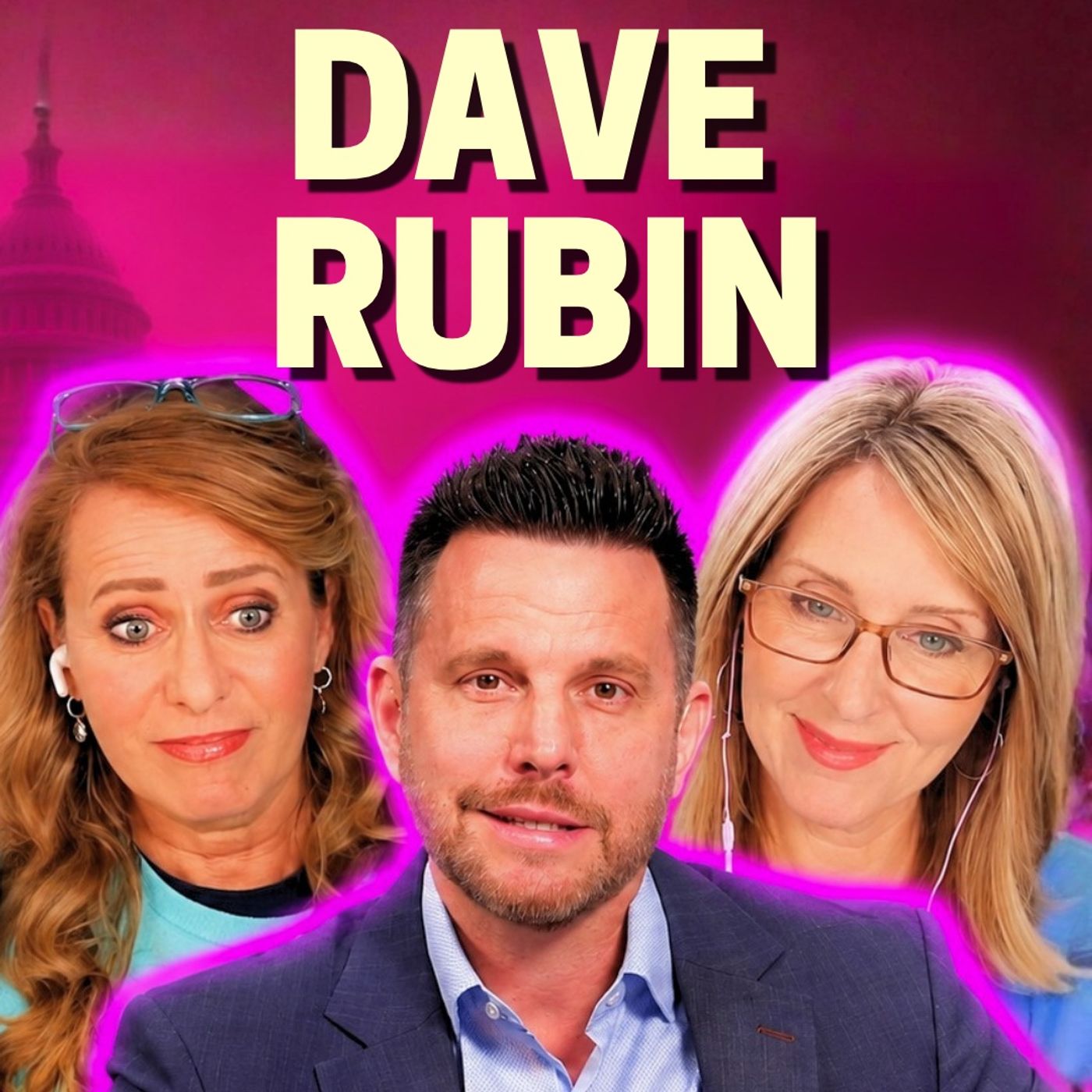
Is the Republican Party heading for a major reckoning in 2028? Dave Rubin joins The Chicks on the Right for a brutally honest conversation about Trump's final two years, the future of the GOP, and the growing divisions threatening conservatives. Dave weighs in on the Republican Party's recent election losses, whether JD Vance, Marco Rubio, or Ron DeSantis can carry Trump's agenda forward, and why he's increasingly concerned about the political direction of America. The conversation heats up as Dave takes on Nick Fuentes, the rise of extremist voices on the right, and the socialist movement gaining influence within the Democratic Party. He also discusses radical Islamism, antisemitism, the dangers of online outrage, and why he believes Western civilization faces serious challenges. Plus, with cyberattacks, banking disruptions, and nationwide outages raising concerns, Dave shares his thoughts on whether Americans should be preparing for more chaos. And don't miss the lighter side of Dave
Master the skills that change lives — enroll in your free human behavior course today: https://nci.university/learn Uploaded 01-03-26 Iran didn’t slowly become what you see on the news — it was psychologically taken. In this episode, I break down the real mechanism behind Iran’s transformation: the difference between a people and the system that cages them, how revolutions don’t shift power but shift who gets to use violence, and why fear — not religion — became the enforcement tool. From a modern, secular Iran in the 60s and 70s to a regime sustained by narrative control, surveillance, and compliance rituals, this is a case study in how educated civilizations get hijacked without realizing it. We’ll dissect the psychological trap that started in 1979, why today’s protests are memory colliding with fear, and the three paths Iran is likely to take next. This isn’t just about Iran — it’s a preview of what happens anywhere belief becomes mandatory and truth becomes a liability. Please not
In 1920, 14 people attending a Gaelic football match in Dublin, Ireland were killed when British Military officers opened fire. In 1783, the first human took flight in a hot air balloon. In 1916, the Titanic’s sister ship, the Britannic, hit a mine in the Aegean sea and sank in 55 minutes, killing 30 people. In 2002, NATO extended official invitations to Slovakia, Bulgaria, Estonia, Latvia, Romania, Lithuania, and Slovenia to become new alliance members.
On this week's episode, the legendary Kate Williams joins Nathen Amin (https://aspectsofhistory.com/authors/nathen-amin/) to discuss her recent bestselling epic, Regina: A New History of Women andPower (https://link.amazon/B058V3Hxf). In an illuminating discussion, Kate discusses historical queens like Cleopatra and Boudica, why the 16th Century was a flowering of queenship, and why study of past queens remains vitally important in today's world. Episode Links: Regina: A New History of Women and Power (https://link.amazon/B058V3Hxf) Kate Williams Links: Kate on Instagram (https://www.instagram.com/katewilliamsme/?hl=en) Kate on Twitter/X (https://x.com/KateWilliamsme) Nathen Amin Links: Nathen on Instagram (https://www.instagram.com/nathen_amin) Nathen on Substack (https://substack.com/@NathenAmin) Aspects of History Links AoH online (https://aspectsofhistory.com/) AoH on Twitter /X (https://x.com/AspectsHistory) AoH on Instagram (https://www.instagram.com/aspectsofhistory/) AoH on Sub
Radioactive substances injected into unsuspecting patients. Bacteria secretly released over American cities. Chemical weapons tested on US soldiers. What sounds like the plot of a conspiracy thriller is actually part of America's documented history. In Part 2 of our investigation into US government experimentation, Dani uncovers the disturbing history of secret radiation experiments, biological warfare tests, and chemical exposure programs carried out during the 20th century. From the Manhattan Project and the Green Run to Operation Sea-Spray, Edgewood Arsenal, and Project SHAD, we examine the experiments, the people affected, and the government's justifications for putting American lives at risk. Many of these programs remained classified for decades, leaving participants and entire communities unaware of what they had been exposed to. Were these experiments necessary for national security, or did the government cross an unforgivable ethical line? Stay Skeptical. www.stayskeptical.com
What if everything you believe, including your faith in God, was never really your choice? This week on The Rabbit Hole: Conspiracy Theories, Dani welcomes Jon Cohen, religious skeptic, debate host, and author of Unconvinced: How Belief Is Not a Choice and Why That Changes Everything. Jon argues that we cannot simply choose what convinces us, raising a difficult question for Christianity: If someone sincerely searches for God but remains unconvinced, is it just for that person to face eternal punishment? As a Christian, Dani brings a different perspective to the conversation, exploring the relationship between faith, free will, salvation, morality, and the evidence for God's existence. Are our religious beliefs the result of personal choice, or are they shaped by our upbringing, experiences, and environment? And can we truly hold someone responsible for what they believe? This episode invites believers and skeptics alike to question their assumptions, consider opposing perspectives, an
Is the healthcare industry designed to make us healthy, or has keeping people sick become one of the most profitable businesses in America? This week on The Rabbit Hole: Conspiracy Theories, Dani welcomes back Greg the Hydrogen Man from UPRISING144K for another thought-provoking conversation. But this time, we're leaving the mysteries of the afterlife behind and diving into the business of modern medicine. With 20 years of experience inside the conventional medical system and a personal history of serious health struggles, Greg shares why he believes the healthcare industry has lost sight of its original purpose: helping people get well. We explore the financial incentives behind pharmaceutical companies, the growing prevalence of chronic illness, the influence of money on medical research, and the possibility that treating symptoms has become more profitable than addressing the underlying causes of disease. Is Big Pharma putting profits before patients? Are financial incentives shapin
Temporary policies should require fresh approval before becoming permanent.
Share your view, then see how readers voted. No sign-in required. This poll is shared across stories.
Do you agree or disagree?
Common Quandary
A Common Quandary to discuss
Another conversation to explore, separate from this news story.
Your neighbor keeps playing music at midnight. How many friendly warnings do they get?
A neighbor regularly plays music late enough to disturb your sleep. Friendly requests help briefly, but a formal complaint could threaten their lease in a building with few affordable options.
How far should empathy extend when someone repeatedly ignores your needs?