Anthropic’s $1.5 trillion IPO: are we witnessing peak AI madness?
36 min
Listen through the publisher, then discuss the episode here or arrange an in-person Roundtable. Your city determines where to meet.
Roundtables are designed for groups of four, with a shared subject and room for everyone to speak. Come for discussion, with no dating expectation.
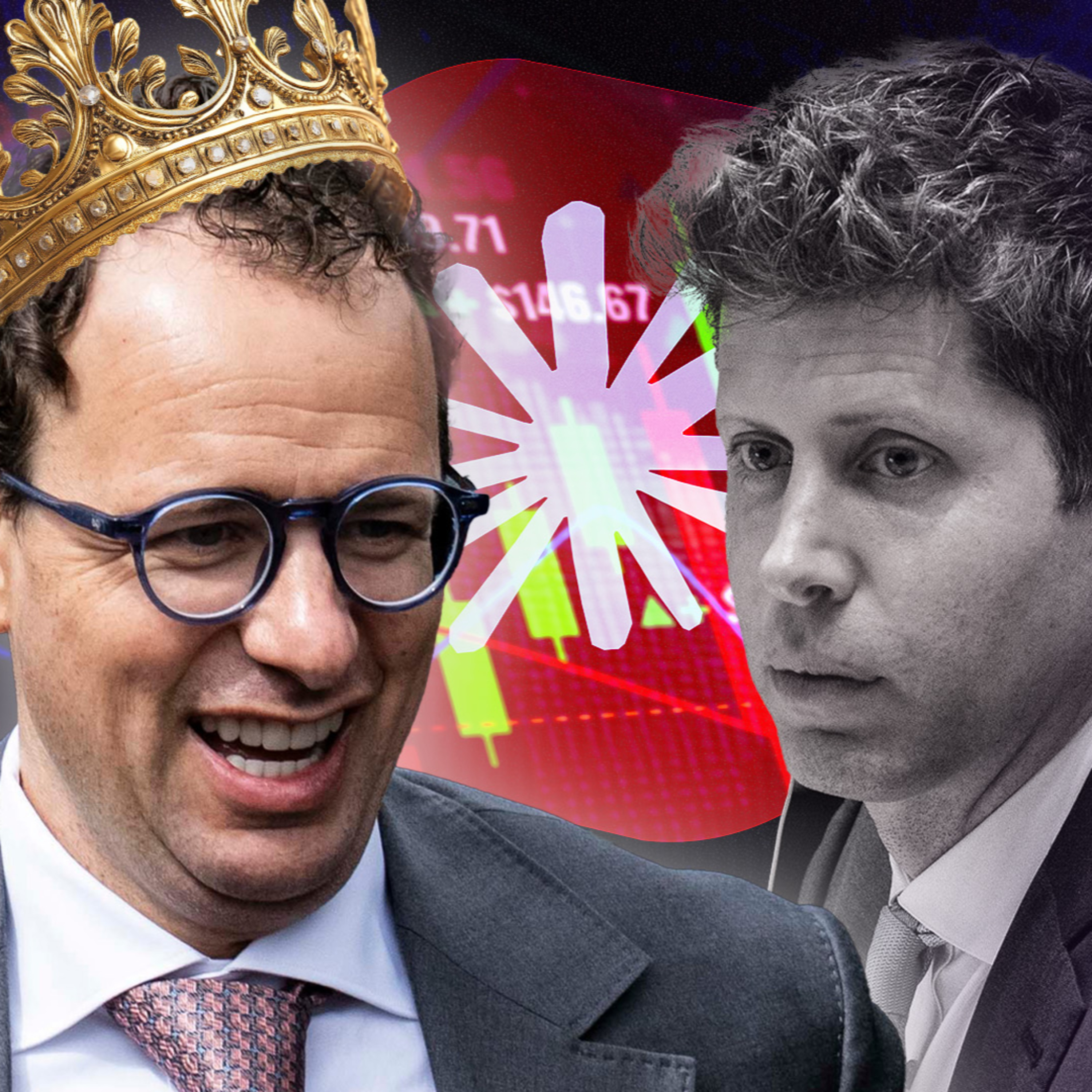
The AI boom is reaching extraordinary new heights. Anthropic's blockbuster IPO is putting a potential $1.5 trillion price tag on one of the world's leading AI companies, as billions pour into a race to build ever more powerful technology. But with staggering infrastructure costs and almost a trillion dollars in what is called “future commitments”, is the AI market heading for a spectacular crash? And what does that mean for the rest of us? On this episode of The Fourcast, Matt Frei is joined by Channel 4 News technology and science editor Siobhan Kennedy and the FT’s Finance Editor Robert Armstrong.
Episode information is provided by the publisher. Listening takes place on the publisher’s service.
A wave of major technology outages is raising troubling questions about America's cybersecurity, aging infrastructure, and readiness for a new era of artificial intelligence. Are these isolated technical failures, or warning signs of a much larger national security problem? John Solomon and Amanda Head welcome Ohio Congressman and former Army Ranger Warren Davidson, who discusses recent disruptions involving the FAA, Microsoft, and other critical systems. Davidson calls for greater transparency from government agencies and technology companies, questions whether America's infrastructure is adequately protected against emerging cyber threats, and examines how artificial intelligence could be used both to strengthen defenses and exploit vulnerabilities. The conversation also turns to immigration and national security, with Davidson raising concerns about individuals who entered the country illegally, potential gaps in government screening systems, and the surveillance powers used to moni
Project Synapse: Markets in Freefall, Fragile Infrastructure, and AI's Perfect Storm The hosts banter through the show's intro before focusing on a sense that "things are out of control," citing a WallStreetBets suicide-hotline post amid a market crash and discussing cascading system failures involving Microsoft, the FAA, and a reported NSA internal communications outage. They argue politicians and leadership lack technical competence and clear messaging, increasing panic, while emphasizing that many problems stem from aging, underfunded infrastructure and complex, brittle software (PHP, NGINX, Java), not proven AI attacks—more a "perfect storm" of crises. They debate whether AI should help fix complexity, stressing critical thinking, accountability, and using multiple AIs to verify each other. In a lightning round they cover Anthropic's IPO performance, mixed reactions and token limits with ChatGPT 6.2 (favoring "Sol" over "Astra"), Google's cheaper Neon model and confusing UX, Loblaw
Jensen Huang stepped down as Nvidia CEO on November 12, 2026, after reports about an extramarital relationship with Alice Huang, a former senior executive at Megaspeed. U.S. intelligence reportedly viewed her as an asset working for Beijing. That allegation is not a conviction, and it is not the same thing as proof Nvidia secrets changed hands. Tony Brueski brings in retired FBI Special Agent Robin Dreeke, former leader of the bureau’s Counterintelligence Behavioral Analysis Program, for the question behind the headlines: how does somebody who helped build one of the world’s most important technology companies fail to recognize a possible intelligence threat in his personal life? Huang apologized to his family and Nvidia employees for infidelity. The board announced an outside investigation, while saying it knew of no reason to believe national security or proprietary information was compromised. Reuters subsequently reported that Huang had previously told Nvidia leaders his encounters
As 2026 enters its final stretch, where are the opportunities and risks for two of Canada's most closely watched sectors? Join Robert Reynolds, Equity Research Analyst, as he shares his latest outlook on Canadian banks and industrial companies heading into year-end. From earnings trends and economic headwinds to capital deployment and sector leadership, Robert discusses the key themes shaping the final quarter of the year and what investors should be watching as 2027 approaches. Recorded on November 13, 2026. -- Perspectives de fin d’année des banques et sociétés industrielles – Robert Reynolds Pour une version avec des sous-titres français, veuillez consulter Alors que 2026 entre dans sa dernière ligne droite, quelles occasions et quels risques se dessinent dans deux des secteurs les plus suivis au Canada? Joignez-vous à Robert Reynolds, analyste en recherche sur les actions, alors qu’il présentera ses plus récentes perspectives sur les banques et les sociétés industrielles canadienne
This week on the Mark Levin Show, 2028 Republican Presidential candidates must directly address the urgent threats to the country - Marxism and Islamism. These candidates should deliver bold, courageous speeches that clearly explain what is happening in the country, identify those responsible, and directly challenge these threats rather than leaving such warnings to a small number of media voices. Also, it is difficult to believe so many major outages affecting entities such as the NSA, FAA, airline systems, Microsoft, and Apple services could be merely coincidental. The timing and scale of the incidents are troubling and remain inadequately explained. President Trump had proposed a major modernization and restructuring of air traffic control in 2017 that Congress failed to enact. Had those reforms been adopted, many current FAA failures might have been avoided. Later, does Senator John Kennedy know anything about originalism? Originalism is not pure textualism. The meaning and intent
What actually works when it comes to detecting lies, and why are so many popular ideas about reading people and nonverbal behavior at odds with the scientific research? I talk with Aldert Vrij, one of the world's leading deception-detection researchers, who has spent almost four decades studying these topics. We discuss why what people say is far more revealing than their body language; why the perceived “sexiness” of reading nonverbal behavior has contributed to widespread myths and misconceptions; whether vocal behaviors like pitch, volume, and hesitation contain meaningful clues; and whether there's value in analyzing minor word choices and turns of phrase, as is done in so-called “statement analysis.” We discuss Paul Ekman's legacy as a source of faulty ideas about deception, micro-expression-based deception detection training, and the strategies that popular “body language experts” use to appear scientifically credible while simultaneously promoting ideas that conflict with the sc
Warning, this podcast contains distressing descriptions of rape and sexual assault. For 13 years, Joanne Young was drugged and raped by her husband, Philip Young, a business executive and former Conservative councillor. He advertised online for strangers to come to their home and rape and sexually assault her while she was unconscious. Philip Young has pleaded guilty to more than 50 offences against Joanne and will be sentenced in December. One of the men who answered his invitation also admitted rape and sexual assault. Four others went on trial, arguing they believed Joanne had consented. The jury rejected that defence, finding the men guilty of offences including rape and sexual assault. The case has drawn comparisons with that of Gisèle Pelicot in France. So what do these horrific cases reveal about men's attitudes towards women and consent? Is the law strong enough to deal with these crimes? And would changing it make any difference? Laura Bishop was also drugged and raped by her
How did a video game studio in Scotland end up creating the most successful and lucrative game ever? Grand Theft Auto VI is already being described as the biggest video game release in history and it is thought it will generate billions in sales. On this episode of the Fourcast, Krishnan Guru-Murthy is joined by Joost van Dreunen, an investor in the gaming industry and business advisor and Dr. Rachel Kowert who studies the psychological impact of games. They discuss how GTA has become a cultural phenomenon, as well as whether its violent themes are a bad influence and if GTA VI could be the last great human-made video game (before AI does it for us).
A decade after the country voted to leave the EU, the battle over Britain's relationship with Europe is entering a new phase. On Friday, Prime Minister Andy Burnham will meet European leaders in Brussels for a crunch summit aimed at resetting post-Brexit relations. But as the government pushes for closer ties, a new campaign is making the case against moving back towards EU membership. How close should Britain get to Europe? Can we have the benefits of closer cooperation without giving up the freedoms Brexit was supposed to deliver? We're joined by Stuart Ingham, who advised the government on its EU reset, and Brendan Chilton, former chair of the Labour Leave campaign, to debate Britain's future with Europe.
Private companies delivering public services should face the same transparency duties as public agencies.
Share your view, then see how readers voted. No sign-in required. This poll is shared across stories.
Do you agree or disagree?
Common Quandary
A Common Quandary to discuss
Another conversation to explore, separate from this news story.
You find a family secret after a relative dies. Does the truth come out?
Sorting through a deceased relative's papers, you discover evidence of a serious betrayal that would change how the family remembers them. Revealing it could answer old questions—and cause fresh pain.