Listen through the publisher, then discuss the episode here or arrange an in-person Roundtable. Your city determines where to meet.
Roundtables are designed for groups of four, with a shared subject and room for everyone to speak. Come for discussion, with no dating expectation.
Over the past week, a series of tech outages at major companies around the world have caused chaos. There was the Microsoft glitch which caused a mass disruption of services; an aviation update grounded every plane across the US, an Apple outage crashed its platforms, and there was a software bug at JP Morgan Chase, just to name a few. Then there was a string of cyberattacks, including at supermarkets in Europe and this week at Coles. Today, cyber security expert Alastair MacGibbon on why we need to be better prepared for outages that could be far worse in the future. Featured: Alastair MacGibbon, cyber security expert and the founding head of the Australian Cyber Security Centre. ABC News Daily SURVEY LINK: https://forms.cloud.microsoft/r/guHgnjKm4b
Episode information is provided by the publisher. Listening takes place on the publisher’s service.
Billions in taxpayer dollars allegedly lost to fraud, Chinese-backed efforts to undermine American energy production, and a growing wave of AI-powered cyber threats. Is America doing enough to protect itself? John Solomon and Amanda Head are joined by Minnesota Congressman Pete Stauber, who discusses the expanding welfare fraud scandal, efforts to hold those responsible accountable, and allegations that Chinese-funded organizations are working to obstruct American mining and energy projects. Stauber also addresses permitting reform and the battle over America's critical mineral independence. Then, American Energy Institute CEO and former Texas state representative Jason Isaac warns that proposed electricity price controls could discourage investment, threaten grid reliability, and ultimately drive energy costs even higher. He also examines China's influence over global oil markets, America's growing energy production, and how AI data centers could generate their own electricity rather
Project Synapse: Markets in Freefall, Fragile Infrastructure, and AI's Perfect Storm The hosts banter through the show's intro before focusing on a sense that "things are out of control," citing a WallStreetBets suicide-hotline post amid a market crash and discussing cascading system failures involving Microsoft, the FAA, and a reported NSA internal communications outage. They argue politicians and leadership lack technical competence and clear messaging, increasing panic, while emphasizing that many problems stem from aging, underfunded infrastructure and complex, brittle software (PHP, NGINX, Java), not proven AI attacks—more a "perfect storm" of crises. They debate whether AI should help fix complexity, stressing critical thinking, accountability, and using multiple AIs to verify each other. In a lightning round they cover Anthropic's IPO performance, mixed reactions and token limits with ChatGPT 6.2 (favoring "Sol" over "Astra"), Google's cheaper Neon model and confusing UX, Loblaw
The world appears to be falling apart, and the Trawl ladies are beginning to wonder whether anyone is actually in charge. From America's air traffic control system grinding to a halt, banking glitches and our ever-growing dependence on technology, Jemma and Marina are asking what happens when the infrastructure we rely on is run by systems, and people, we can't trust. Trump's America is proving quite the masterclass in chaos. There's Transportation Secretary Sean Duffy, whose career has taken him from reality TV to running America's transport network; questions over the new AI technology, the FAA's failures and the government's handling of the crisis; and another extraordinary display of Trump's blame-shifting when things go wrong. We also look at Markwayne Mullin's rather unfortunate timing when it comes to a trip to a college football game, the questions surrounding donations to Trump's enormous new ballroom and the companies subsequently winning government contracts. Are these isola
Start earning interest in gold: https://Monetary-Metals.com/LinJay Singh, founder of Special Situations Report, discusses Nvidia's latest earnings and its future without Jensen Huang, growing concerns over AI financing and chip exports to China, and the upcoming Anthropic IPO. He also examines recent cyberattack concerns, the tech stock selloff, and investment opportunities emerging from market volatility.*This video was recorded on November 17, 2026Subscribe to my clips channel: https://www.youtube.com/@DavidLinReportClipsSubscribe to my free newsletter: https://davidlinreport.substack.com/Listen on Spotify: https://open.spotify.com/show/510WZMFaqeh90Xk4jcE34sListen on Apple Podcasts: https://podcasters.spotify.com/pod/show/the-david-lin-reportFOLLOW JAY SINGH:Special Situations Research Newsletter: https://www.specialsitsresearch.com/X (@SpecialSitsNews): https://x.com/SpecialSitsNewsFOLLOW DAVID LIN:X (@davidlin_TV): https://x.com/davidlin_TVTikTok (@davidlin_TV): https://www.tiktok
Trump's national cyber director, Sean Cairncross, is out amid the widespread tech outages, and Stephen Miller reportedly told DHS Secretary Markwayne Mullin to stop talking about them on TV. Meanwhile, the EU admitted it was hit by an AI cyberattack back in October, and the U.K. says it's running offensive cyber operations against Russia, China, Iran and North Korea. Tim tracks the outages still hitting Chase, Microsoft and Zelle, argues the U.S. is under cyberattack, and explains why the administration might stay quiet while Trump negotiates with Xi. Zohran Mamdani's plan for Rikers Island is getting framed as a closure, but Tim argues it actually keeps the jail open for about five more years, past the current August 2027 legal deadline. Meanwhile, the city builds four new borough jails and hundreds of therapeutic and psychiatric beds. Tim breaks down why that should please people who want law and order, why he still doesn't trust Mamdani, and the real problem of people sitting in jai
The Democrats swept the midterms. Donald Trump is still president. What will the next two years look like? And what can history teach us about what comes next? Martin Wolf speaks to historian Heather Cox Richardson about the cycles in the past 250 years of US politics — how renewal (and division) can both follow periods of oligarchy, and how the Democrats should react to a “constitutional crisis”. To enjoy future episodes, be sure to subscribe to ‘Martin Wolf on the World’ wherever you get your podcasts. You can also watch Martin’s podcast series on the FT’s YouTube channel here:https://www.youtube.com/@FinancialTimeshttps://www.youtube.com/@FinancialTimes Host: Martin Wolf Producer: Mischa Frankl-Duval Senior producer: Laurence Knight Video editor: Richard Topping Senior audio engineer: Breen Turner Broadcast engineer: Andrew Georgiades Podcast development: Laura Clarke FT Global Head of Audio: Flo Phillips Learn more at www.ft.com/martin-wolf-on-the-world (http://www.ft.com/martin-wo
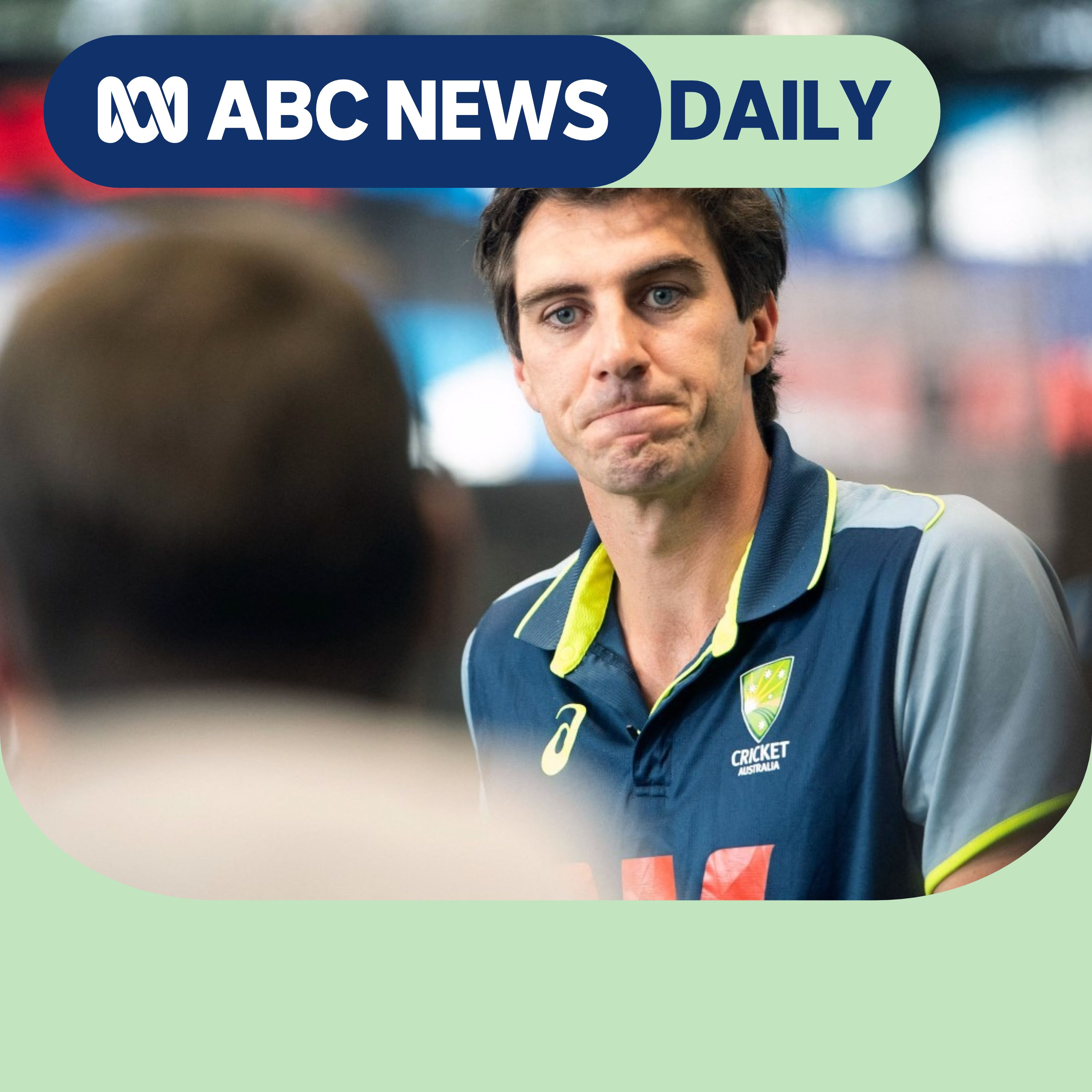
Just days after denying any involvement, Australian Test cricket captain Patrick Cummins is under pressure following an explosive 4,000-word essay by Cameron Bancroft, the man at the centre of the 2018 Sandpaper scandal, claiming the whole team knew about the ball tampering. It's the latest in a string of bombshell revelations, which began when Usman Khawaja shed new light on the scandal in his new book, eight years after it rocked Australian cricket. Today, ABC national sport reporter David Mark on the wound that never healed, and whether Australian cricket can ever recover. Featured: David Mark, ABC National Sport reporter
For the first time the leaders of the US, Russia and China are set to be in the same room. The meeting, at the APEC summit in China, is being compared to the 1945 Yalta conference, when world leaders gathered to shape the post-war world order. So, what are Donald Trump, Vladimir Putin and Xi Jinping hoping to get out of this meeting? Today, Samir Puri, author of Westlessness: The Great Global Rebalancing, on what each leader wants and what this gathering could mean for the global balance of power. Featured: Samir Puri, author of Westlessness: The Great Global Rebalancing ABC News Daily SURVEY LINK: https://forms.cloud.microsoft/r/guHgnjKm4b
After years of high inflation and mounting economic pressure, 2027 is shaping up to be an even tougher year for many Australians. And now the government is looking to tighten its own belt, flagging spending cuts in the mid-year budget update. Today, economics reporter Tom Crowley on why it already feels like we're in a recession, how much worse things could get, and when we might finally see some relief. Featured: Tom Crowley, ABC economics reporter ABC News Daily SURVEY LINK: https://forms.cloud.microsoft/r/guHgnjKm4b
Businesses that attract visitors should help reduce the disruption experienced by neighbors.
Share your view, then see how readers voted. No sign-in required. This poll is shared across stories.
Do you agree or disagree?
Common Quandary
A Common Quandary to discuss
Another conversation to explore, separate from this news story.
Your adorable child could pay for college by becoming an influencer. Do you start filming?
Parents post cheerful videos of their young child and earn enough to fund the child's education. The child enjoys filming now but cannot understand what it means for strangers to watch those moments years later.
Can parents consent to a permanent public identity on a child's behalf?