Are you a person? Social roles and human identity in early Confucianism
30 min
Listen through the publisher, then discuss the episode here or arrange an in-person Roundtable. Your city determines where to meet.
Roundtables are designed for groups of four, with a shared subject and room for everyone to speak. Come for discussion, with no dating expectation.
Confucianism is often described as a philosophy that puts social roles at the centre of human life, to the extent that social roles don't just shape our responsibilities but actually constitute who we are. But what does it mean when our social roles change - does the new social role create an entirely new person? This week we're looking to early Confucian texts and exploring the possibility that maybe we're not really 'persons' at all. Guest: Jenny Hung (https://huma.hkust.edu.hk/people/jenny-hung), Assistant Professor of Philosophy, The Hong Kong University of Science and Technology Producer: David Rutledge
Episode information is provided by the publisher. Listening takes place on the publisher’s service.
DISCOVER GRAD SCHOOL: https://nci.university/home-v2?utm_source=chase_youtube&utm_medium=social_video&utm_campaign=nci4_promo (https://nci.university/home-v2) Uploaded 02-05-26 LEARN ABOUT NCI LEVEL 2: https://nci.university/nci-2?utm_source=chase_youtube&utm_medium=social_video&utm_campaign=nci2_promo (https://nci.university/nci-2) There’s a moment in every conversation where everything gets decided. It happens before logic. Before persuasion. Before anyone thinks they’re “in control.” And most people miss it completely. That’s why conversations feel unpredictable… Why people react in ways that don’t make sense… Why you can say the right thing — and still lose the room. Because the outcome was already set. This video breaks down the hidden structure behind human interaction: * how conversations organize themselves before words matter * how frames control behavior without force * how categories decide what’s allowed (and what isn’t) * how identity and metaphor quietly shape every respo
This week, I'm talking about a particular kind of person: someone who's always doing things for everybody else, who never seems to have a moment for themselves, and who is absolutely determined that you should know about it. We're probably all guilty of a bit of martyrdom from time to time. I certainly am. The theatrical sigh as you empty the dishwasher for the third time; the "I'll just have a piece of toast"; the "no, no, you sit down, I'll do it" when what you really mean is "I can't believe you're sitting down while I'm doing this." But when martyrdom becomes someone's habitual way of relating to others, it can leave you feeling grateful and resentful at exactly the same time. Today's dilemma comes from a listener whose mum does everything for everyone, and then complains about how much she has to do. She'll spend the morning cooking a family lunch, refuse every offer of help, only to spend the afternoon telling everyone how tired she is. Now, our listener is finding herself snappi
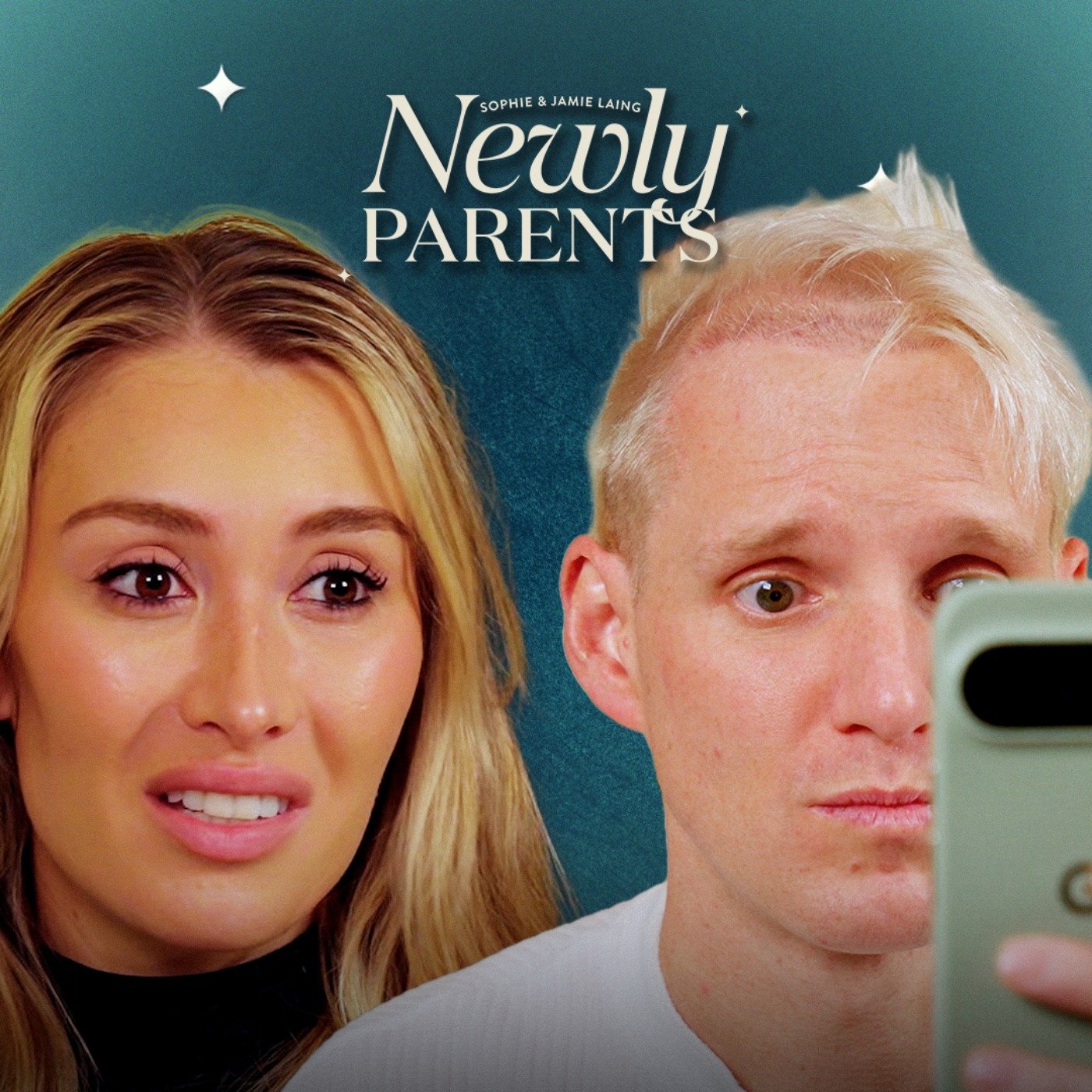
This week, Jamie’s got ANOTHER bowel-related concern, reveals what REALLY happened at a LinkedIn event, and does Sophie’s masseuse REALLY hate her feet?! PLUS, who should be the next JAMES BOND?! Why do ROBOT DOGS need human dog walkers?! And Sophie finally gets her hands on Jamie’s hair… with DISASTROUS results! And OF COURSE, we love your listener messages. Thanks for watching x A HUGE THANK YOU TO MAX OAKLEY! ♂️ The absolute LEGEND Max Oakley came to Jamie’s rescue after Sophie’s haircut disaster! #NEWLYPARENTSPODCAST #SOPHIEHABBOO #JAMIELAING Instagram: / newlyparentspodcast TikTok: / newlyparents Email: [email protected] Credits: Senior Producer: Alex Bell Assistant Producer: Lydia Brownell Video: Joe Ferrari Sound: Rafi Amsili Geovannetti Social Media: Olivia Brown Exec Producer: Ewan Newbigging-Lister Hosted on Acast.
Imagine if every big change in our lives came with a whole community stepping up beside us… In this episode, I sit down with Dr Arne Rubinstein, former GP and emergency doctor, founder of the Rites of Passage Institute, and a man who's spent more than 30 years walking young people across the threshold into adulthood. Arne's work began around a fire at his very first men's gathering, listening to a hundred men wrestle with the same handful of wounds. Then in the Emergency Dpt, he kept meeting teenagers who'd pushed it one step too far... kids trying to become adults with nobody there to hold them. He came to believe every young person will go through a rite of passage either way. The question is whether we leave them to create their own, or gather around and help. We talk about why our culture is so good at turning away from the big moments - from first periods to menopause to death - and what opens up when we turn towards them. We explore: Separation, transformation and integration, an
Today, Mel is doing something she's never done before on The Mel Robbins Podcast. She's bringing members of her team into the studio for live coaching with world-renowned communications expert Vinh Giang. Vinh is known for teaching millions of people online how to stop sounding insecure, speak more clearly, and get people to listen when you talk. And when you hear him coaching today, it will be like he’s coaching you. One person freezes when they're put on the spot. Another can't stop interrupting people. Someone else has great ideas but stays quiet because they're afraid of being judged. Does any of that sound familiar? And Vinh isn't just giving advice. He's coaching real people through practical exercises, right there in the studio, so you can hear the difference and start making those same changes in your own life. As Mel says, put yourself in their shoes. As Vinh works with each person, you'll recognize things you struggle with, too. You'll learn: -What to do when your mind goes b
This is a Grave Talks CLASSIC EPISODE! PART TWO Built in 1901 in the small railroad town of Wymore, Nebraska, the Haunted Stephenson Building has carried more than a century of stories within its walls. Located in the heart of downtown near the railroad line that built the town, the structure was part of the early business district and reportedly served over the years as a dance hall, saloon, gambling space, and possibly even a brothel — the kind of place where money flowed, tempers flared, and secrets were buried. Today, it operates as a paranormal investigation site and oddities museum, attracting those who want to see if the rumors are true. Visitors consistently report footsteps pacing on empty upper floors, whispers captured in silent rooms, cold air that moves against logic, and shadow figures that vanish the moment you focus on them. Owner Christie Ayers joins us to discuss the building’s layered past and the unsettling question at the center of it all: are these simply echoes o
With the world in its current state, is it still ethical to have children? And does it matter how the baby-making itself is done? Philosophers have long debated this topic, with pronatalism as the "have as many babies as you can" position, and antinatalism as the "don't have any babies at all" position. But in between these two poles, declining birthrates and the expansion and normalisation of assisted reproductive technology - including for same-sex couples - are creating new reproductive orders. Guests: Rivka Weinberg (https://www.scrippscollege.edu/offices/profile/rivka-weinberg), Professor of Philosophy and Mary W. And J. Stanley Johnson Chair in the Humanities at Scripps College, Claremont CARobert Pralat (https://www.bbk.ac.uk/our-staff/9560709/robert-pralat), Lecturer in Sociology and Public Health in the School of Social Sciences, Birkbeck, University of London Producers: Julia Brown (https://research.monash.edu/en/persons/julia-brown-2/), Senior Research Fellow, Reproduction i
Is everything we do just for pleasure? For the Ancient Greek hedonists, and utilitarians such as Jeremy Bentham (1748-1832), pleasure is what motivates us. And for most of us, if we think of a good life, we're probably imagining one filled with things that bring us pleasure. Because of its role in motivation, pleasure is now a major topic in psychology, biology and neuroscience - but pleasure is a surprisingly ambiguous concept. Not all pleasures are good, and in fact some can make us worse off. What can philosophy tell us about pleasure and the role it plays in our lives? Guest: Katarzyna de Lazari-Radek (https://www.uni.lodz.pl/en/employee/katarzyna-de-lazari-radek), Professor of Philosophy at the University of Łódź, Poland Producers: Declan Humphreys (https://www.unisc.edu.au/people/dr-declan-humphreys), Lecturer in the School of Science, Technology and Engineering, University of the Sunshine Coast, QueenslandDavid Rutledge The Philosophy of Pleasure: An Introduction (https://www.ro
Predictable working hours are more important than maximum scheduling flexibility.
Share your view, then see how readers voted. No sign-in required. This poll is shared across stories.
Do you agree or disagree?
Common Quandary
A Common Quandary to discuss
Another conversation to explore, separate from this news story.
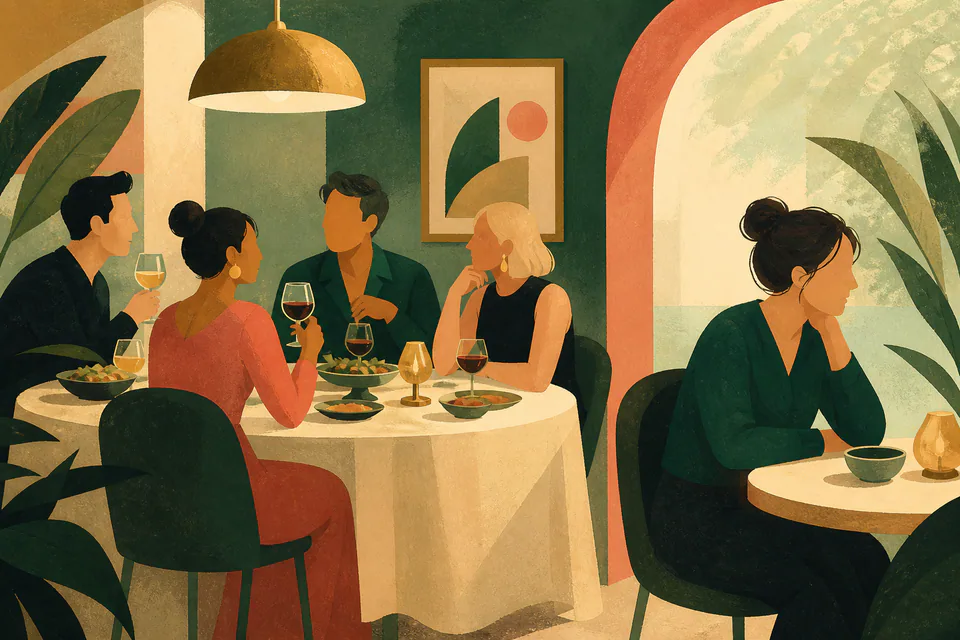
One friend is rich, one is broke, and everyone ordered differently. How do you split dinner?
A group of longtime friends traditionally divides restaurant bills equally. Their incomes have grown increasingly unequal, and one friend now declines gatherings because even their share is difficult to afford while others order without thinking about price.
When should friendship adjust for differences in wealth?