Listen through the publisher, then discuss the episode here or arrange an in-person Roundtable. Your city determines where to meet.
Roundtables are designed for groups of four, with a shared subject and room for everyone to speak. Come for discussion, with no dating expectation.
Welcome to ASO v. Everyone, a three-part mini series dedicated to two big questions: Can pro cycling change? And even if it can, should it? ASO is a mountain, and nobody seems to be able to summit. Efforts to reform pro cycling stretch back decades, and none have had the impact their proponents were hoping for. But that doesn't mean they failed entirely, and it doesn't mean more aren't coming. As Collective Cycling Group gets off the ground, we connected with reporter Chris Marshall Bell to dig into the history of these efforts, what happened to them, and what might happen next. In part one, we focus on the history of these efforts. To sign up and get parts two and three in your podcast app of choice, become a member. (https://escapecollective.com/spin/)
Episode information is provided by the publisher. Listening takes place on the publisher’s service.
Hey everybody, Tom Bilyeu here. On today’s episode of Impact Theory, we’re taking on a topic that’s got the whole world holding its breath: the escalating crisis between the United States and Iran. As tensions ratchet up, we’re asking the tough questions—how did we get stuck in this “escalation trap,” and what does it mean for America’s global leverage, our economy, and our very sense of security? The conversation focused on why the traditional idea of “strategy” might be failing policymakers, using powerful analogies—like chess versus roulette—to show how doubling down in conflict can spiral out of control. We’ll break down the risks of tactical “wins” that create even bigger crises, the real leverage Iran holds with control of the Strait of Hormuz, and the mounting pressure on President Trump as political support erodes and legacy hangs in the balance. A key theme that emerged is what happens when military might runs into decentralized opposition, and why high-stakes gambles—like the
In a late-November slugfest with its College Football Playoff hopes hanging in the balance, BYU survived a furious test in Lawrence, outlasting Kansas 31–29 in triple overtime. While the box score shows a nail-biting escape—complete with a missed 37-yard field goal at the end of regulation that nearly derailed the Cougars’ postseason trajectory—BYU ultimately relied on its defining calling card to survive: downhill rushing and line-of-scrimmage physicality. When passing lanes tightened against a scrappy Jayhawks defense, BYU leaned squarely into its ground game, piling up 208 rushing yards at 4.4 yards per carry and controlling possession for over 33 minutes. Running back LJ Martin set the physical tone with 127 yards on 25 carries—including an 11-yard touchdown burst in the second overtime—while quarterback Bear Bachmeier added 59 hard-earned rushing yards and two scores on the ground. Even after Kansas rallied from a 16–6 fourth-quarter deficit behind quarterback Isaiah Marshall to f
One of the best Christian films that Glenn Beck has ever seen was written by… Ben Shapiro? Glenn speaks with Ben about his new film, “Confession,” starring Rob Lowe and James Franco, a gritty drama about a prisoner in Stalin’s USSR. They discuss why Ben wanted to tell this story, why it feels very different from your standard Christian film, and what it may signal about Hollywood, which is snubbing it. Glenn also gets Ben’s thoughts on why antisemitism has become so popular on both the left and right, as well as what it truly means to be a man. Plus, Ben gives his rapid-fire takes on this week’s biggest news stories: the release of GTA VI, the outages, Jensen Huang and Nvidia, Robert Pattinson’s casting as James Bond, the midterms, the next leaders of the Republican and Democratic parties, data centers in space, how Joe Rogan became a right-wing icon, and whether woke is coming back. Glenn’s Sponsors: PreBorn: This Christmas, you can sponsor an ultrasound and help save a baby’s life fo
Denise Salcedo and Tommy Dreamer debate whether Kevin Owens should be the next WWE Champion. Plus, they discuss who should be the fifth member of Team USA heading into Survivor Series WarGames! Hosted by Simplecast, an AdsWizz company.
Can artificial intelligence replace the voices of rock’s greatest singers? And if it can, what happens to the musicians who spent decades developing those unmistakable sounds? On this episode of CHRIS AKIN PRESENTS, Chris welcomes Danny Vaughn of TYKETTO for a revealing conversation about the band’s latest release, CLOSER TO THE SUN, the changing music industry, and the growing influence of AI-generated music. Get Tyketto's CLOSER TO THE SUN on Vinyl while supplies last! https://link.amazon/B0c4HJfbA Danny doesn’t hold back when discussing artificial intelligence. From computer-generated singers that sound eerily similar to established rock vocalists to technology that can imitate an artist’s unique phrasing, he raises serious questions about where creativity ends and exploitation begins. Could AI eventually produce new AC/DC albums without AC/DC? And who should profit when technology recreates a musician’s signature sound? But there’s much more to this interview than AI. Danny takes u
Until a little under two weeks ago, Silicon Valley Bank was the sixteenth largest bank in the United States, the favoured choice of tech startups due to the tailored services it provided. But by 10th March 2023, American authorities were taking control of SVB following its collapse. It had assets of over $200bn, making for the second biggest bank failure in US history. There were a number of factors behind the collapse, and it’s causing concern as it’s common for one bank collapse to be followed by another, due to what’s called financial contagion. Indeed, just a few days later it was the turn of New York-based Signature Bank to collapse. And over in Europe, Switzerland’s second largest bank Crédit Suisse had to take out a $54bn to stay afloat, before then being bought out by the country’s largest bank UBS, in a bid to halt the crisis. Why did Silicon Valley Bank collapse? How do stock market crashes happen? In under 3 minutes, we answer your questions! To listen to the last episodes,
Today on the show, Zwift's latest update goes awry. Tadej Pogacar will become a domestique next year, and there's one Frenchman who simply can't get enough of cycling, even in November. Already a member? Get the member feed here (https://escapecollective.com/member-only-podcasts/) to listen to every full-length episode.
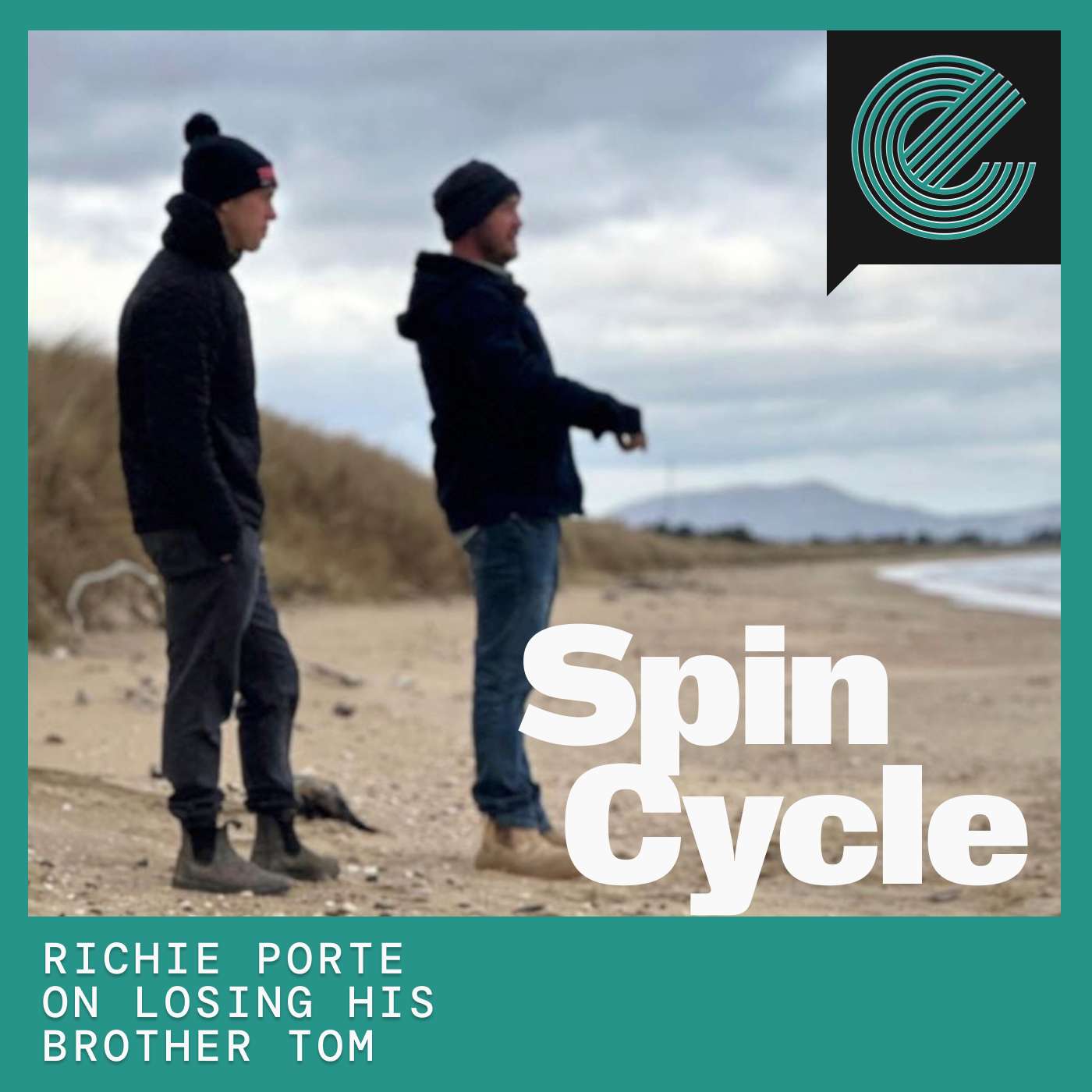
In October 2025, Richie Porte’s youngest brother, Tom, died by suicide. He was 37. A builder in Launceston, a husband and a father of three, and in Richie’s words, his best mate. After retiring from professional cycling, Richie spent two and a half years working alongside Tom on building sites with the two going into business together. A year on, Richie sits down with Wade Wallace to talk about who Tom was, the last day they spent together building a fence, the phone call the next morning, and what the year since has been like. He talks about the questions he can’t answer, the friends who showed up, getting help himself, and why the hammer that now hangs on his lounge-room wall means more to him than his Tour de France podium photo. This conversation exists in the hope that it might help someone else. Content warning: This episode discusses suicide and grief. If you need support: Australia — Lifeline 13 11 14 (24/7), text 0477 13 11 14, or Beyond Blue 1300 22 4636 US and Canada — call
Today on the show: Tadej Pogačar opens up, Charly Wegelius is out at EF, and Victor Lafay doesn’t know if he’s in or out. Already a member? Get the member feed here (https://escapecollective.com/member-only-podcasts/) to listen to every full-length episode.
Officials should step aside from decisions involving a potential personal conflict of interest.
Share your view, then see how readers voted. No sign-in required. This poll is shared across stories.
Do you agree or disagree?
Common Quandary
A Common Quandary to discuss
Another conversation to explore, separate from this news story.
Everyone loves the group photo except you. Can you forbid them from posting it?
At a reunion, someone takes a joyful group photo that captures the night perfectly. Everyone looks wonderful except you, caught at an awful angle. The group wants to post it publicly and promises nobody else will care.
How much control should one person have over a memory shared by many?