English-language podcasts

Squawk on the Street

Atreides CIO Gavin Baker, Apollo CEO Marc Rowan & Nike CEO Commentary

51 min

Listen through the publisher, then discuss the episode here or arrange an in-person Roundtable. Your city determines where to meet.

Roundtables are designed for groups of four, with a shared subject and room for everyone to speak. Come for discussion, with no dating expectation.

November 17, 2026; 11am: Squawk on the Street covers Jensen Huang’s NVIDIA resignation fallout, AI export controls, market volatility, Apollo’s role in AI infrastructure finance, and Nike’s investor day reset. Gavin Baker, Phil Camporelli and Mark Rowan weigh in on what the latest developments mean for NVIDIA, hyperscalers, private credit and investors. Hosted by Simplecast, an AdsWizz company.

Episode information is provided by the publisher. Listening takes place on the publisher’s service.

Listen at the source ↗

Featured places to meet in Palo Alto, CA

Explore these places and arrange a conversation through ThinkMatch.

City guide for Palo Alto, CA

More from Squawk on the Street

Squawk on the Street

Anthropic Dips Near IPO Price, Tech Sell-Off and Warner Music’s AI Strategy

43 min

November 20, 2026; 9am: Squawk on the Street breaks down the extension of Thursday's AI-fueled tech sell-off. Anthropic gets caught in the downdraft, trading near its $83 IPO price one day after its strong public debut. NVIDIA and AMD shares also under pressure, while cyber outages spark a White House shake-up. The hour also covers chip export risks, the Marvell-Lumentum deal, banks, and Warner Music's CEO on streaming, AI licensing and GTA 6. Hosted by Simplecast, an AdsWizz company.

Discuss this episode

Community Poll

Public officials should meet ethical standards higher than the minimum required by law.

Share your view, then see how readers voted. No sign-in required. This poll is shared across stories.

Do you agree or disagree?

Choose one answer

Common Quandary

A Common Quandary to discuss

Another conversation to explore, separate from this news story.

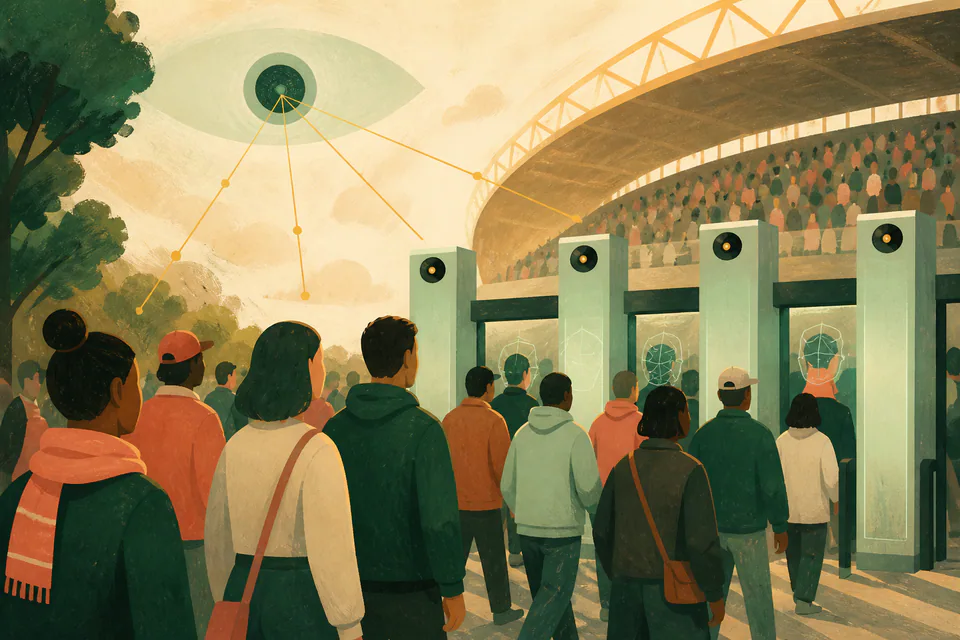
The stadium can ban violent fans by scanning every face at the gate. Would you walk in?

A stadium can use facial recognition to identify people banned for violence and shorten security lines. Every visitor would be scanned, error rates are not zero, and the resulting biometric data could become useful to police or advertisers.

How much privacy may a crowd be asked to trade for collective safety?

Explore this quandary