Australian Senator: The Terrifying Future of Australia's Housing Market | Andrew Bragg
56 min
Listen through the publisher, then discuss the episode here or arrange an in-person Roundtable. Your city determines where to meet.
Roundtables are designed for groups of four, with a shared subject and room for everyone to speak. Come for discussion, with no dating expectation.
Australia is in a housing crisis. The big banks have been caught costing everyday Australians millions, and owning a home is becoming harder than ever. But who's actually being held accountable? Senator Andrew Bragg joins Graeme Holm to expose what's happening behind the scenes, reveal his plans to confront Australia's biggest banks, and explain what it could take to save the Australian dream of homeownership. With even Bragg admitting his own party helped create the mess, can Australia's leaders really turn things around? Want to improve your own financial future? Our free webinar is where to start: #AndrewBragg #HousingCrisis #TheMoneyMentor
Episode information is provided by the publisher. Listening takes place on the publisher’s service.
Is the property downturn shifting from city to city, or are national headlines hiding what is happening on the ground? On this week's Australian Property Podcast, Pete Wargent and Chris Bates look at changing listings, buyer demand and price movements across Australia's housing markets. If you're considering a first home, an upgrade or an investment property, this episode offers questions to ask before acting. Check current lending and tax rules, and seek qualified personal advice rather than treating a podcast discussion as a recommendation. Episode resources Show partner resources Rask resources – Pete's Buyers Agency (https://www.allenwargent.com.au/) – All services (https://bit.ly/R-services) – Financial Planning (https://bit.ly/R-plan) – Invest with us (https://bit.ly/R-invest) – Access Show Notes (https://bit.ly/R-notes) – Ask a question (https://bit.ly/R-quest) – We love feedback! (https://raskau.typeform.com/to/ZbfHy6IP) – Instagram: @rask.invest (https://www.instagram.com/rask
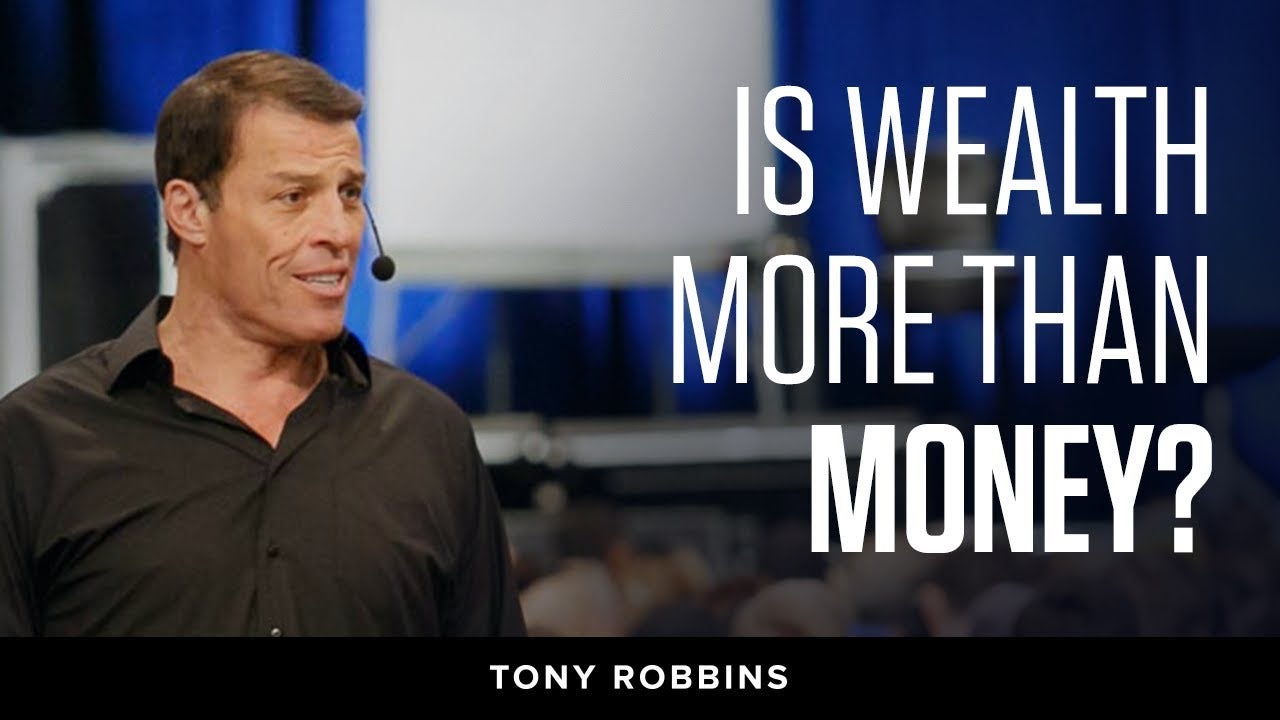
How will you know when you’ve reached true wealth? Is it when you have your dream home? Once you own an expensive car? Perhaps the signifier is when you’re wealthy enough to have your own private airplane? In Tony’s opinion, these are the wrong things to use when measuring your wealth. Uploaded 12-09-19 The people with mansion-sized homes, with three sports cars sitting in the garage, with a private plane that takes them to and from their vacation home – these people may not necessarily have access to true wealth. None of these are indicators of true wealth; they’re indicators of monetary wealth. True wealth is the ability to live life on your own terms. It’s freedom. Tony explains that money itself isn’t wealth, it’s a vehicle – a tool you can use to achieve financial freedom, to go after the dreams you didn’t think were possible, to design your life in a way that makes you feel alive and fulfilled. While Unshakeable is a financial freedom playbook, the process of becoming unshakeable
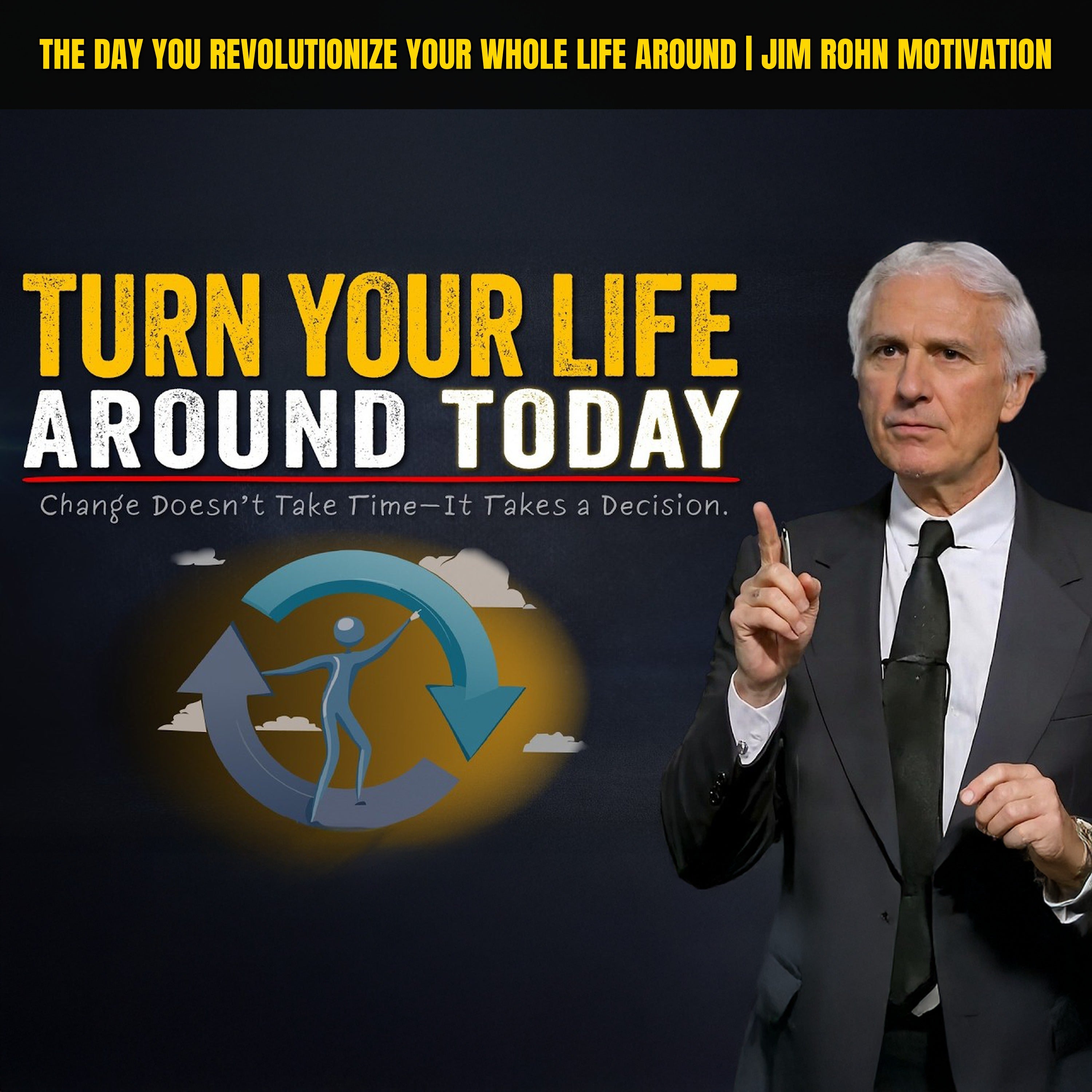
In this Jim Rohn Motivation speech, discover the power of one decision to change everything. This isn’t about inspiration—it’s about ownership, discipline, and the mindset required to reclaim your life and create lasting transformation. Key Topics From This Motivational speech: The day you decide is the day everything changes Why philosophy shapes results more than circumstances The link between pain, frustration, and personal growth Discipline, momentum, and the test of time How your environment and associations impact your future This powerful Jim Rohn motivational speech outlines the complete journey of personal transformation—starting with a single decision. You'll learn how to shift from wishing to acting, from blaming to owning, from reacting to creating. With deep insights on discipline, responsibility, and mindset, this video is a blueprint for becoming the kind of person who doesn't just start—but endures, thrives, and leads with purpose. This Jim Rohn Motivational speech Is P
After five interest rate hikes this year, Australia's economy is starting to show some worrying signs. Unemployment has hit a five-year high, and recession fears are growing. Has the Reserve Bank gone too far in its cutting? And what is a closely watched recession indicator telling us? Plus, it's been a brutal week on Wall Street - even the biggest IPO in history couldn't rescue the AI trade. Is this a correction we had to have, or the start of something much worse? Lin Lin and ABC Business Reporter Steph Chalmers break it all down on ABC Business Daily. Read Lin's latest analysis here (https://www.abc.net.au/news/2026-11-23/sahm-rule-recession-indicator-australia-november-2026/107408750). Got a burning business question? We'd love to hear your questions!
Bitcoin doesn't excite Ran Neuner anymore, and the Crypto Banter founder explains where he sees the real opportunity in crypto now. Ran tells me why he took profits at $84K, how he's deploying that cash now that sentiment has hit extreme fear, and the two tests he's watching to tell whether the bull market is still on. He explains why he thinks tokenized stocks and AI agents will run on blockchain rails, how he values tokens on "pressure" instead of FDV, why he thinks the old Bitcoin crowd is moving to Zcash, and how worried he really is about quantum. We also get into the midterms, World Liberty Financial, Solana Breakpoint and STRC. Recorded Thursday, November 19. In this episode: 00:00 Intro 01:10 Is the bull market still on? 02:17 What a correction is supposed to do 03:28 Two tests for the bull market 04:12 Why Bitcoin excites Ran less now 05:11 Trading tokenized Anthropic before the IPO 07:24 How AI agents will move your money 09:31 Why agents will settle on blockchain rails 13:25
Everyone is saying the same thing: higher rates are depressing the usual AI buy-the-dip mentality. Investors supposedly became less enthusiastic because the Federal Reserve is, in its view, tightening, bond yields are or were rising, and so the discount rate applied to future profits is becoming more painful. Or something. That explanation isn’t just incomplete, it’s dead wrong. Eurodollar University's Money & Macro Analysis ---------------------------------------------------------------------------------- That’s exactly what Monetary Metals does. No selling. No trading. Just more gold every month. Check it out here: https://monetary-metals.com/snider ---------------------------------------------------------------------------------- We need to confront our biggest challenge, but hardly anyone knows what it truly is or how to do it. Eurodollar University Live in February 2027 will change all that. Join us and fight for America's future. Start with the next generation. ------------------
At just 25, Jayden and Kyarna have already knocked over $100,000 off their mortgage in approximately 2 years, despite earning ordinary incomes and navigating multiple job changes. Together for 10 years, the young Australian couple signed their first property contract at 21 and moved into their home at 23, determined to build a different financial future. Growing up, they saw how stressful money could be for their families and promised themselves they wouldn't spend their lives worrying about the next mortgage repayment. They were disciplined savers, avoided credit cards and even had 8 separate bank accounts to manage their money. But despite doing everything they thought was right, they discovered their first year of mortgage repayments had reduced their loan principal by only around $8,000. Today, they own an investment property, have reduced their mortgage by over $100,000 and are working towards becoming mortgage-free before turning 30. So what did they discover that completely chan
Chris and Jaclyn were spending over $1,000 a week, juggling 10 bank accounts and trying to manage a home loan that started at approximately $832,000. With a young child, credit card debt and a habit of spending whatever money came in, they knew something needed to change. Amazon purchases, takeaway coffees, holidays and everyday spending were adding up, while overtime earnings disappeared almost as quickly as they arrived. Even though they were earning money, they weren't building the financial future they wanted for their family. After attending Infinity's masterclass, they began questioning their spending habits, simplifying their finances and working together towards a common goal. But their journey wasn't straightforward. They initially weren't in a position to work with Infinity and had to make changes before returning. Now, after their first 90 days as clients, they've eliminated credit card debt, reduced their bank accounts to just 2 and begun exploring property investment. So w
A 40-year mortgage could save you $236 a month, but cost you an extra $903,383 over its lifetime. On the Money Mentor Podcast, Alex Hyndman-Hill challenges Graeme Holm on why Australians focus on lower repayments instead of paying off their mortgages faster. Using a $500,000 mortgage at 6.5%, Graeme breaks down the true cost of 30 and 40 year loans and explains how changing the way you manage your money could help you become mortgage free sooner. He also reveals how more than 1,000 Infinity clients have become debt free, with some clearing their mortgages in under five years. Want to improve your own financial future? Our free webinar is where to start: #MortgageTips #MortgageRepayment #MoneyManagement
Changing a public decision in response to new evidence is a sign of responsible leadership.
Share your view, then see how readers voted. No sign-in required. This poll is shared across stories.
Do you agree or disagree?
Common Quandary
A Common Quandary to discuss
Another conversation to explore, separate from this news story.
A better public school is one borrowed address away. Would you use it?
Your child is struggling at the assigned school. A grandparent lives inside the boundary of a much stronger public school and offers to let you use their address. The desired school has limited places and verifies residency unevenly.
Can a parent's duty justify taking an opportunity allocated by an unfair boundary?