Australian Women War Heroes - Your Shortcut... From the Vault
13 min
Listen through the publisher, then discuss the episode here or arrange an in-person Roundtable. Your city determines where to meet.
Roundtables are designed for groups of four, with a shared subject and room for everyone to speak. Come for discussion, with no dating expectation.
A secret rescue mission, a resistance fighter known as the White Mouse, and a radio operator who crossed crocodile-infested waters to send lifesaving reports. Ahead of Remembrance Day on November 11, Christie heads into the Squiz Kids Vault to revisit the remarkable stories of three Australian women who risked their lives to help others during World War II. Join Amanda and Bryce to discover how Joice NanKivell Loch helped families escape to safety, why Nancy Wake kept the German secret police guessing, and what kept Ruby Boye-Jones at her remote island radio post despite threats and danger. Three women whose courage, determination and compassion deserve to be remembered. Listen carefully, there’s a S’Quiz at the end!
Episode information is provided by the publisher. Listening takes place on the publisher’s service.
Vanessa Vazquez was a new mum in the Blue Mountains when she and her husband started dreaming of a different life. His long commute meant he barely saw their baby, and something had to change. They considered New York. Instead, they landed in Orange NSW, a move Vanessa was so terrified of, she initially talked him out of taking the job. But what she feared would leave her isolated turned out to be the best decision of their lives. Today, Vanessa is a mum of three, a solicitor and the founder of Birds in the Bush, a volunteer-run organisation fighting to create safer rural communities for women and children through domestic and family violence awareness, education and advocacy. With White Ribbon Day and the International Day for the Elimination of Violence Against Women this week, Vanessa's message couldn't be more timely. Today, she shares her journey into country motherhood, finding her village and why she's determined to make the invisible visible. Motherland’s Black Friday sale is h
For review: 1. Iraq has reached a compromise with the powerful Iran-backed militia Kataeb Hezbollah, three senior security officials said, after Prime Minister Ali al-Zaidi readied security forces to move against the group. Reflecting the gravity of the situation, Iraqi Shiite political sources said Esmail Qaani, commander of Iran’s elite Revolutionary Guards’ Quds Force, arrived in Baghdad late on Monday to help defuse tensions with Kataeb Hezbollah, Tehran’s most powerful militia ally in Iraq. 2. Lebanese President Joseph Aoun launched a lengthy rebuke of Iran in an Independence Day address, arguing that the Islamic Republic does not have the right to interfere in Lebanon’s internal affairs, as it long has via support for its local terror proxy, Hezbollah. 3. Yemen’s Houthis launched strikes on the Saudi capital Riyadh on Saturday, after vowing reprisals for a “special operation” by the Saudi-led coalition fighting them. The coalition later said it had “intercepted and destroyed” thr
Have you ever seen pictures of giant stone heads sitting in the grass and wondered how they got there? Get ready for a mind-blowing adventure to one of the most remote places on Earth: Rapa Nui, also known as Easter Island! About 800 years ago, expert Polynesian sailors found this tiny island in the middle of the Pacific Ocean using only the stars and ocean currents to guide them. Once there, they carved nearly a thousand massive stone statues called moai! But here is the biggest surprise: these statues aren't just heads—they have full bodies buried underground! Some weigh as much as 40 cars, and the islanders moved them without wheels, cranes, or metal tools. How did they do it? The local legends say the statues literally walked to their places, waddling side to side with the help of ropes and incredibly smart human engineering! Join Mira and Finn as they uncover the secrets of the moai, find out how the island got its English name from a Dutch captain, and learn all about the giganti
Wednesday, November 20th, 2024 Today, DA Alvin Bragg tells Judge Juan Merchan that he’s not going to drop the charges against Donald Trump; Nancy Mace introduces a bathroom bill for the Capitol; as more details about the Matt Gaetz ethics committee investigation, someone has hacked a deposition from the Dorworth case files; meanwhile, the top Democrat on the House Ethics Committee is calling for its release; plus concrete steps we can take to survive the next four years; and Allison and Dana deliver your Good News. Guest: Andrea Pitzer Find the Next Comes What Podcast on YouTube (https://www.youtube.com/@DegenerateArtNewsletter/videos), Apple Podcasts (https://podcasts.apple.com/us/podcast/next-comes-what/id1779885475), and Spotify (https://open.spotify.com/show/7lUaIWeKl0oET2DJVTWhy4) AndreaPitzer.com (https://andreapitzer.com/) Stories: DA Alvin Bragg Refuses to Dismiss Trump's 34 Felony Counts (Muellershewrote.com) (https://www.muellershewrote.com/p/da-alvin-bragg-refuses-to-dismiss
Having been jailed for 10 years and six months, disgraced entertainer Russell Brand remains very much in the headlines. Since his conviction, six more women have come forward with allegations of misconduct. Meanwhile, Brand's voice and image continue to be broadcast around the world, and not just in the form of news stories and documentaries. Brand's X account remains open, and his popular YouTube channel recently uploaded a pre-recorded episode of his Sunday Service programme that also featured a post-sentencing letter penned by Brand and read aloud by his wife, Laura Gallacher. In addition, the UK government is under pressure to change laws related to the age of sexual consent in the wake of Brand’s imprisonment. Fionnán Sheahan is joined by Daily Mail feature writer Fred Kelly and Irish Independent features journalist Kirsty Blake Knox to look at the impact that the jailing of Russell Brand has had on the disgraced comedian’s brand. Hosted on Acast.
Screen time in schools, kids and AI: why Australian students just posted their worst ever reading and maths results. The federal Education Minister says screens are part of the problem. Sweden led the world putting tablets in classrooms and is now pulling them back out. NSW will cap kindy kids at 15 minutes of screen time a day from next year. So were the "hippie" Steiner schools ahead of their time all along? Karl sits down with Andrew Hill, CEO of Steiner Education Australia, which represents 53 schools that keep screens out of early childhood classrooms. Andrew explains why some Silicon Valley tech executives sent their own kids to a screen-free Steiner school, who has profited from a laptop for every kid ("the terrible thing about handwriting is that it's free"), and why he believes Bluey's creator modelled the show's school on a Steiner school in Queensland. Karl also puts the tough questions: Will kids without screens be left behind? Is it all woo-woo? What about bullying, fees a
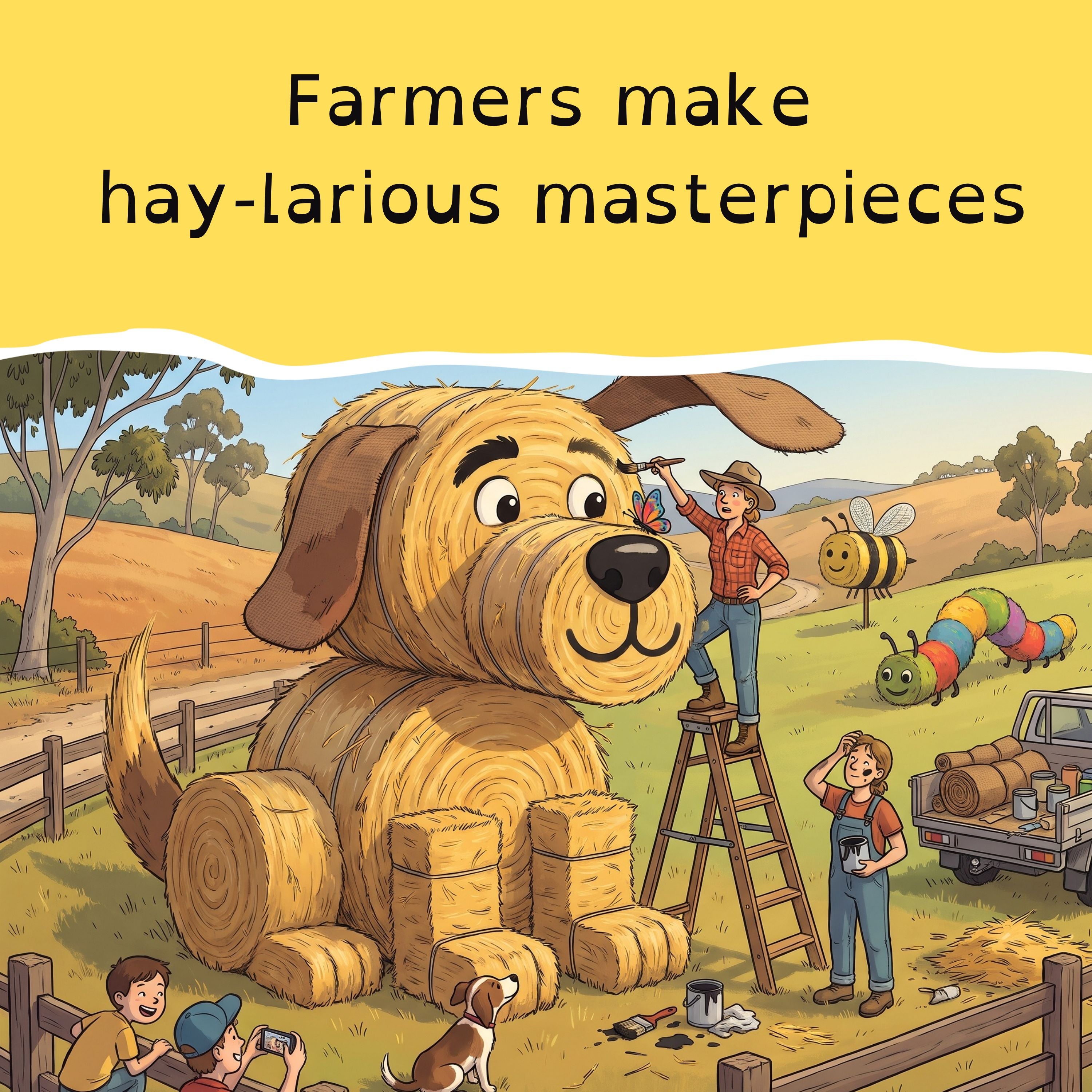
Your daily kids news podcast. Why ‘human’ is word of the year; Whale speed limits in Tahiti; AFLW grand finalists decided; and Toy Story hay sculptures. Cambridge Dictionary has crowned human its Word of the Year for 2026! One incredible photograph of a humpback whale's eye (https://www.bbc.com/future/article/20261118-the-tragic-tale-of-sweet-girl-the-whale-death-that-changed-the-law) is making a big splash in Tahiti! North Melbourne's Kangaroos are one win away from an AFLW three-peat after beating the Sydney Swans! What a cricket cracker! Australia chased down England's total with just one ball to spare, thanks in part to Nikhil Chaudhary's explosive 66 runs and two wickets. Victorian farmers have turned ordinary hay bales into giant cartoon characters (https://www.abc.net.au/news/2026-11-22/upper-murray-hay-bale-art-trail-fire-flood-recovery/107390424)! For the full episode transcript, click here (https://www.squizkids.com.au/wp-content/uploads/2026/11/261123-Quiz-Transcript.pdf). R
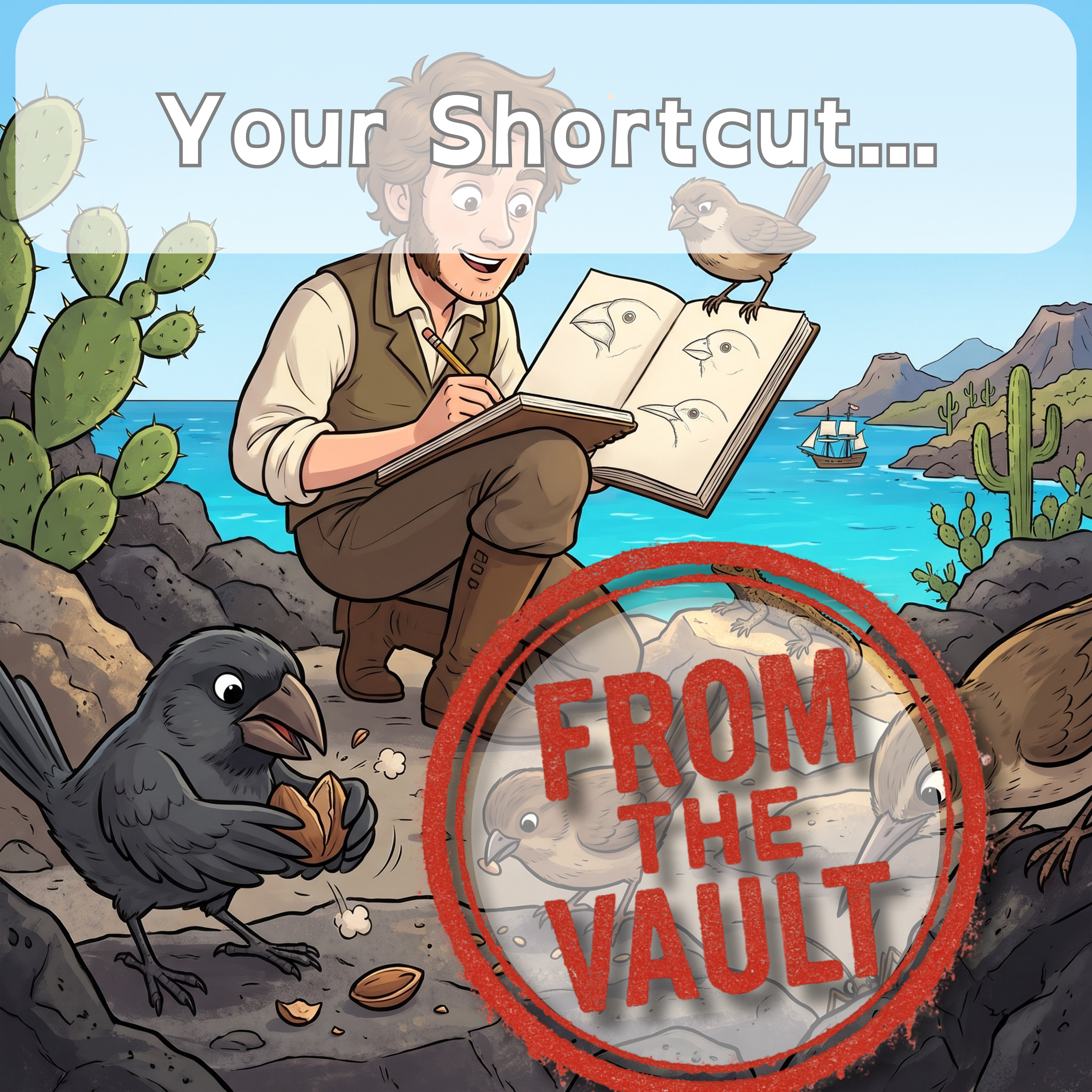
Tuesday 24 November marks the anniversary of the publication of Charles Darwin’s On the Origin of Species in 1859. So this week, we’re dusting off our Shortcut to Evolution to find out how living things change over generations and how all life on Earth is connected. Join Christie and Bryce as they travel back in time in the Squiz Kids Time Machine, dig into the clues fossils leave behind and meet two scientists who came up with the idea of natural selection independently, Charles Darwin and Alfred Russel Wallace. Along the way, find out what bird beaks can tell us about survival and how tiny changes in DNA can help shape life over generations. Listen carefully … there’s a S’Quiz at the end!
Say cheese! Now hold that smile… and keep holding it. In the early days of photography, you might have had to sit still for several minutes to get your portrait taken. So how does the camera on your phone snap a picture in the blink of an eye and save it for later? That’s what seven-year-old Chloe from Northcote, Victoria, wants to know. This week, Christie takes us from photos made on shiny metal plates and cameras you had to send in the post to the millions of tiny pixels in a digital photo. Plus, find out why there might be a grown-up hiding under a blanket in an old baby picture. Got a science question of your own? Email us at [email protected] and Christie might investigate it in a future Science Short.
Anonymous sources are justified when naming them would prevent important public-interest reporting.
Share your view, then see how readers voted. No sign-in required. This poll is shared across stories.
Do you agree or disagree?
Common Quandary
A Common Quandary to discuss
Another conversation to explore, separate from this news story.
A parent clearly built the winning science project. Who should lose the prize?
An elementary student submits an elaborate science project far beyond their apparent ability. The parent proudly describes working together all weekend, and the child clearly learned something, but other students completed simpler projects themselves.
What is a fair response when help improves learning but distorts achievement?