Listen through the publisher, then discuss the episode here or arrange an in-person Roundtable. Your city determines where to meet.
Roundtables are designed for groups of four, with a shared subject and room for everyone to speak. Come for discussion, with no dating expectation.
You finished a demanding day and have little energy left. Calling yourself weak will not tell you what to do next. An accurate picture of your capacity can. In this episode of The Level Up Podcast, Paul Alex breaks down how to respond to tiredness honestly while taking responsibility for your goals and commitments. A difficult shift or responsibilities at home can consume what you expected to have available. Paul asks listeners to distinguish that reality from avoidance, without automatically using tiredness to explain every decision. Describe the actual constraint before choosing a response. Needed recovery, adjusted effort, or a clear return time may fit the situation. If someone else depends on the promise, communicate the adjustment. Honest limits give you something practical to work with instead of turning a hard day into a judgment about your worth. In this episode, you’ll learn: • How to distinguish limited capacity from a sweeping character judgment. • Why an honest review includes both effort and avoidance. • What a specific constraint reveals about a workable next decision. • When an adjustment needs communication with someone depending on you. The truth is simple: Ambition belongs to a person with real responsibilities and limits. Replace one harsh label with an accurate description, then choose the recovery or adjustment you can stand behind. Respect your effort enough to respond honestly. --- Your Network is your NETWORTH! Make sure to add me on all SOCIAL MEDIA PLATFORMS: Instagram: https://jo.my/paulalex2024 Facebook: https://jo.my/fbpaulalex2024 LinkedIn: https://jo.my/inpaulalex2024www.CashSwipe.com (https://www.cashswipe.com/) www.officialPaulAlex.com (https://www.officialpaulalex.com/) ---
Episode information is provided by the publisher. Listening takes place on the publisher’s service.
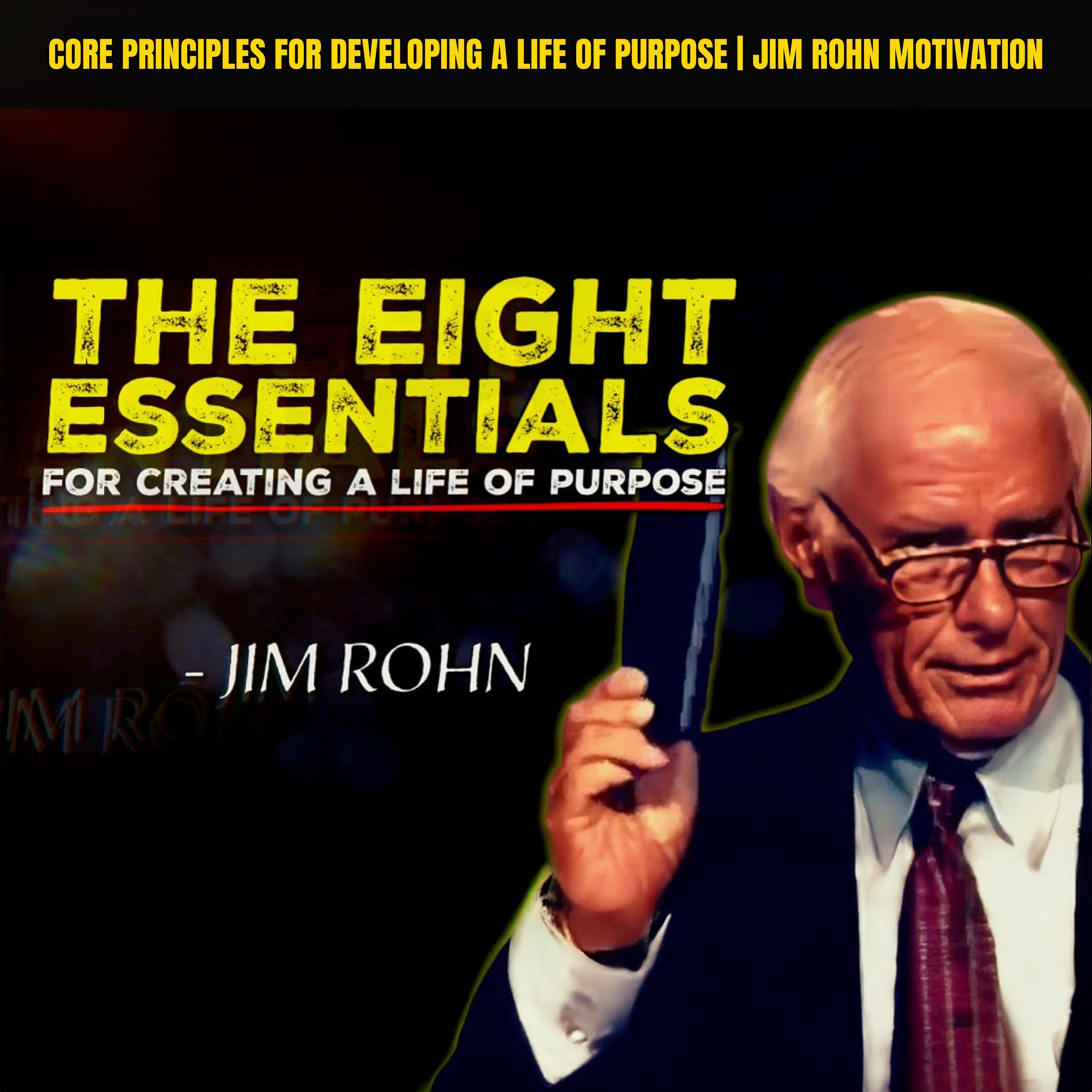
In this Jim Rohn Motivation video, *Living With Purpose*, you’ll discover the powerful principles that separate a busy life from a meaningful one. From defining your core values to honoring your season and serving something greater than yourself, this message will ground you in what truly matters. Key Topics From This Motivational Video: Why purpose starts with values—not goals How to make peace with your past so it stops stealing your future The power of rhythm, rest, and honoring your life season How to serve, contribute, and create lasting impact Why real fulfillment comes from alignment—not applause This Jim Rohn motivational video is a timely reminder that purpose doesn’t shout—it leads quietly through presence, integrity, and contribution. You don’t need to chase more. You need to live with deeper clarity. These principles will help you stop performing and start aligning with the version of you that’s grounded, honest, and unshakably clear. This Jim Rohn Motivational Video Is Per
What if everything you've been chasing was already inside you? It took me 40 years to understand that happiness isn't somewhere in the future, it's here, in this moment. As a younger woman, I avoided pain, resisted it, distracted myself from it. What I know now is that pain doesn't break us. It rearranges us. And on the other side of it is something I wouldn't trade for anything, lived wisdom, inner comfort, and a clarity that simply cannot be rushed. Uploaded 04-03-26 In this conversation with @lewishowes, I share what I wish I had known decades sooner: about fulfillment, presence, the gift hidden inside our most difficult moments, and why it might just be the simplest things that wake us up the most. Watch more videos like this How To End Self Sabotage with 1 Simple Choice: https://youtu.be/-0Ln4-h4LQQ Do This When You Feel Triggered and Your Life Will Transform: https://youtu.be/h7YylJ3nuok Creating Moments of Stillness in the Chaos: https://youtu.be/eR6e50AmeRY Turning Towards Fear
Support Stoicism Philosophy on Ko-fi Do you enjoy our content? Help us keep sharing Stoic wisdom by supporting us on Ko-fi. Click here to support us (https://ko-fi.com/stoicpodcast) Thank you for being a key part of Stoicism Philosophy. Your generosity keeps Stoic philosophy alive! HOW TO GET WHAT YOU WANT does not begin with wanting more, but with learning to master your mind, your impulses, and your actions. In this video, you will discover 8 Stoic secrets for pursuing your goals with discipline, calm, and clarity, without depending on luck or letting yourself be carried away by anxiety. Stoicism teaches that true power lies in controlling what depends on you: your decisions, your character, your focus, and your response to obstacles. Through principles inspired by the wisdom of Marcus Aurelius, Seneca, and Epictetus, you will learn how to turn desire into action, strengthen your self-control, maintain inner peace, and keep moving forward even when circumstances are not perfect. If y
Today, Ryan sits down with Academy Award-winning actor and bestselling author Matthew McConaughey to talk about the power of poetry and how it can help us make sense of life. They talk about the difference between being good and being nice, the courage to stand by your principles, knowing when to say no, how poetry can help us navigate life’s challenges, and more. Grab the NEW Poems & Prayers: Deluxe Edition by Matthew McConaughy (https://www.thepaintedporch.com/products/poems-prayers-deluxe-edition-unsigned?_pos=2&_sid=f59711761&_ss=r): https://www.thepaintedporch.com/products/poems-prayers-deluxe-edition-unsigned?_pos=2&_sid=f59711761&_ss=r Greenlights by Matthew McConaughy (https://www.thepaintedporch.com/products/bio2?_pos=1&_sid=0b6db1b34&_ss=r): https://www.thepaintedporch.com/products/bio2?_pos=1&_sid=0b6db1b34&_ss=r Greenlights: Your Journal, Your Journey by Matthew McConaughy (https://www.thepaintedporch.com/products/greenlights-your-journal-your-journey?_pos=2&_sid=0b6db1b34&
Crypto News: Bitcoin, altcoins, and the crypto market crash along with stocks, gold, and silver. Will we see a recovery soon? ️ Learn Crypto with Expert Commentary - http://MyCryptoCourse.com (http://mycryptocourse.com/) iTrustCapital Representative: [email protected] ⭐️ Trade crypto perps with a free $25 bonus on Kalshi. ♂️Merlin - http://tinyurl.com/MerlinTCYouTube “I am a Merlin partner and get compensated for purchases made through links in this content"this content"Follow on social media: ️ X(Twitter) - https://x.com/thinkingcrypto ️ Facebook - https://www.facebook.com/thinkingcrypto/ ️ LinkedIn - http://linkedin.com/company/thinking-crypto ️ Instagram - https://www.instagram.com/thinkingcrypto/ ️ TikTok - https://www.tiktok.com/@thinkingcrypto5 ️ Threads - https://www.threads.net/@thinkingcrypto ️ Website - https://www.ThinkingCrypto.com/ (https://www.thinkingcrypto.com/) Business Inquiries [email protected]⏰ Time Stamps ⏰ 00:00 (https://rumble.com/v7inwo8-da
Is selling Bitcoin now a smart move or the biggest crypto mistake? Today, we break down Bitcoin price predictions, market trends, and the latest crypto news to uncover what could be next for BTC. Plus, we cover top altcoin opportunities and what Bitcoin's next move could mean for the entire crypto market! Trade at Bitbase - https://www.bitbase.com/en/accounts/invite/jwpe3h Join Skool Community - https://www.skool.com/discovercrypto/about Trade wtih Toobit- https://www.toobit.com/activities/c/tradingdashdc ●▬▬▬▬▬▬▬▬▬▬▬▬▬▬▬▬▬▬▬▬▬▬▬▬▬▬▬▬● All of our contents are strictly personal opinions. Please make sure to do your own research. Never take one person's opinion for financial guidance. Our contents ARE NOT financial advice. Our contents are sponsored & include affiliate content. Only use exchanges for trading digital assets. We never keep our entire portfolio on an exchange. #bitcoin #crypto
The sharp reply is ready before you finish reading the message. Some of it addresses the issue. Some of it only aims to hurt. Which response will you stand behind afterward? In this episode of The Level Up Podcast, Paul Alex breaks down how to communicate firmly under frustration while remaining accountable for your words. Paul connects lessons from police work with the responsibility to communicate clearly under pressure. Strong feelings can be acknowledged without turning the exchange into a personal attack. Before responding, identify the fact that needs attention and what you want the conversation to accomplish. Ask for the answer, correction, or boundary you need. Also check whether pressure from elsewhere is entering the exchange. Keeping the reply close to the actual situation gives your message a clearer purpose. In this episode, you’ll learn: • How to identify the result you need from a heated conversation. • Why firm communication does not require a personal attack. • What to
An optional overtime shift opens up and you automatically say yes. What is that time buying? The income and the hours you trade both deserve a clear purpose. In this episode of The Level Up Podcast, Paul Alex breaks down how to evaluate a genuinely optional extra shift against your needs, goals, and available time. Paul reflects on long law enforcement weeks and wanting greater control over his time. The episode distinguishes a real choice from required work or income needed for essentials, then asks what the next additional shift serves. There may be a strong reason to take it. Name that reason and consider what the hours would otherwise support, including recovery, a personal commitment, or learning. A deliberate comparison can help you decide without assuming that either money or time should always win. In this episode, you’ll learn: • Why required hours and essential income change the context of the decision. • How to identify the specific need or goal an optional shift serves. • W
The same complaint takes another hour of your week. You may have every reason to be upset. What change would you want that time and attention to help create? In this episode of The Level Up Podcast, Paul Alex breaks down how to turn recurring frustration into a direction you can begin working toward. Paul makes room for unfair situations and appropriate ways to address them. A necessary conversation, request for help, or formal concern may deserve action. Repeating the same argument in your head can still leave your own future waiting. Name the change beneath the complaint, whether it involves time, a role, or a boundary. Then look for movement that does not require someone else to apologize or agree. The step can matter while you are still upset; you do not have to resolve every feeling before acting. In this episode, you’ll learn: • How to notice when replaying a complaint has stopped providing useful information. • Why naming the desired change gives frustration a practical directio
Health advice should account for people's income, time, and practical circumstances.
Share your view, then see how readers voted. No sign-in required. This poll is shared across stories.
Do you agree or disagree?
Common Quandary
A Common Quandary to discuss
Another conversation to explore, separate from this news story.
An old friend refuses to use someone's new name. Do you correct them at the reunion?
At a reunion, an old friend repeatedly uses the name a former classmate had years ago. They say shared history gives the old name affectionate meaning; the classmate has clearly introduced themselves with a different name.
When does preserving your shared past deny who someone is now?