English-language podcasts

Morbid

Bernhard Goetz

44 min

Listen through the publisher, then discuss the episode here or arrange an in-person Roundtable. Your city determines where to meet.

Roundtables are designed for groups of four, with a shared subject and room for everyone to speak. Come for discussion, with no dating expectation.

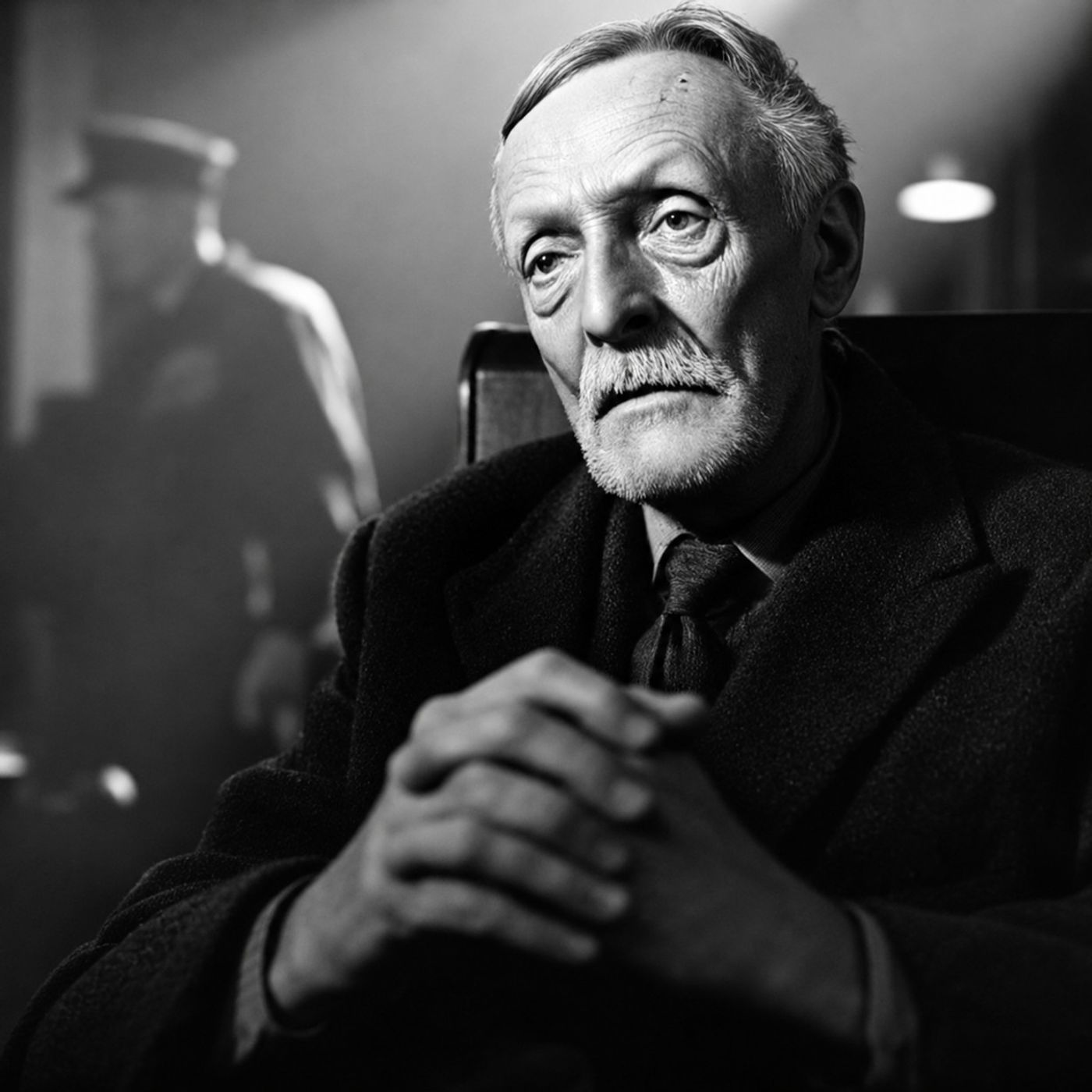
On the afternoon of December 22, 1984, thirty-seven-year-old Bernhard Goetz boarded the Manhattan subway at the 14th Street station, bound for home. At one point during the train ride, one of a group of young Black boys approached Goetz and asked him for money, to which Goetz responded by pulling out a handgun and shooting at the group of teenagers, striking three of them. After the shooting had stopped, a witness testified that Goetz stood over one the boys and said, “You don’t look so bad. Here’s another,” then shot the boy a second time. After evading police for several days, Goetz was arrested and claimed he’d shot the teenagers in self-defense after they tried to rob him. To many residents of New York, who were fed up with the high crime rates and deteriorating landscape of the city, Goetz became a kind of folk hero who took it upon himself to do the job the New York Police Department seemed unable to do. But to many others, particularly the city’s Black community, Goetz’s actions were symbolic of the every day racism and unequal justice people of color had experience every day in New York. References Buder, Leonard. 1981. "1980 called worst year of crime in city history." New York Times, February 25: B3. Chmela, Ann Marie. 1985. "When crime victims fight back." New York Times, April 14: LI24. Daley, Suzanne. 1985. "Goetz drove across New England for several days before surrender." New York Times, January 4: B3. Engelberg, Stephen. 1985. "Riders of Subway need guards, D'Amato says." New York Times, January 18: B3. Flake, Floyd H. 1987. "Blacks are fair game." New York Times, June 19: A35. Goetz, Bernhard. 1984. The Trial of Bernhard Goetz: Goetz's Videotaped Confession. Accessed May 01, 2025. https://www.famous-trials.com/goetz/154-confession. Johnson, Kirk. 1987. "Youth shot in subway says he didn't approach Goetz." New York Times, May 20: B3. McFadden, Robert D. 1984. "A gunman wounds 4 on IRT train, then escapes." New York Times, December 23: 1. McLaughlin, Peter, and Don Gentile. 1984. "Finest to flood the subways." Daily News (New York, NY), December 24: 3. New York Times. 1987. "The legal journey of Berhard Goetz." New York Times, June 17: B6. Rosario, Ruben, Bob Kappstatter, and Don Singleton. 1984. "'Victim' on subway shoots 4." Daily News (New York, NY), December 23: 91. Rubin, Lillian B. 1986. Quiet Rage: Bernie Goetz in a Time of Madness. New York, NY: Farrar, Straus & Giroux. Sanger, David E. 1984. "Callers support subway gunman." New York Times, December 25: 1. Smith, David. 2023. "‘A shock to the system’: looking back on the 1984 New York subway shooting." The Guardian, August 9. Socha, Molly. 2014. Bernie Goetz, Squirrel Vigilante. July 25. Accessed May 4, 2025. https://www.narratively.com/p/bernie-goetz-squirrel-vigilante. Stengal, Richard. 1985. "A troubled and troubling life." Time Magazine, April 8. Produced & Edited by Mikie Sirois (Since 2023) Listener Correspondence & Collaboration by Debra Lally Listener Tale Video Edited by Aidan McElman (Since 6/2025) Hosted by Simplecast, an AdsWizz company.

Episode information is provided by the publisher. Listening takes place on the publisher’s service.

Listen at the source ↗

Featured places to meet in Palo Alto, CA

Explore these places and arrange a conversation through ThinkMatch.

City guide for Palo Alto, CA

More from Morbid

Morbid

Getting Eerie & Existential with Ethan Hawke

96 min

Today we’re joined by the incredible Ethan Hawke for a fascinating conversation about his new podcast, Midnight Radio (https://podcasts.apple.com/us/podcast/midnight-radio/id6821125433)and the many facets of his creative career! Ethan shares his thoughts surrounding the paranormal, exploring the mysteries of the unexplained and the stories that keep us questioning what might be out there. It's an intriguing conversation that ventures beyond the ordinary and into the unknown! Be sure to check out season 2 of The Lowdown (https://www.imdb.com/title/tt31289994/?ref_=nv_sr_srsg_0_tt_8_nm_0_in_0_q_the+lowdown). New episodes drop every Wednesday! Looking for the Films and books referenced in this episode? Strange Darling (https://www.imdb.com/title/tt22375054/) Waking Life (https://www.imdb.com/title/tt0243017/?ref_=fn_t_1) North Woods (https://www.barnesandnoble.com/w/north-woods-daniel-mason/1142833884?ean=9780593597040) Good Lord Bird (https://www.barnesandnoble.com/w/the-good-lord-bird-j

Discuss this episode

Morbid

The Ghosts of Summerwind

58 min

When Ginger Hinshaw first saw Summerwind in the summer of 1969, she knew she had to have the house. Recently remarried and looking for a new home for her large family, she convinced her husband, Arnold, to buy the house and the two planned to renovate the place together, since all of their resources were tied up in the house. Ginger couldn’t believe her luck, but very soon after moving in, Ginger’s luck seemed to have run out. When the Hinshaws moved into Summerwind, they were the picture of a happy American family. But just a few months later, Arnold’s personality had changed entirely, as the house began to possess him and take him over completely. In time, the marriage fell apart and the family fled the house, but that was only the beginning. References Fries, Jane. 1981. "Only bats, rats haunt decayed mansion, but sight-seers are driving police batty." Vilas County News-Review, February 18: 1. Hollatz, Tom. 1982. "Ghost or no, mansion has haunting presence." Green Bay Press-Gazette,

Discuss this episode

Morbid

Colton Harris-Moore: The Barefoot Bandit (AKA AyleSteelya Earhart)

65 min

When Colton Harris-Moore was ten years old, a series of unfortunate events turned his world upside-down. Within a few months, his behavior worsened significantly, he became destructive and defiant, and he began what would be a considerable criminal career that would eventually reach epic proportions. Colton’s first arrest came at twelve years old, after he was picked up by police for breaking into homes and stealing property. Another arrest soon followed and by the time he was fifteen, Colton was on the run from police, who wanted him in connection with several robberies on Camano Island, a small island community in Puget Sound. After six months on the run, Colton was arrested and taken to a juvenile facility, but he escaped two months later and embarked on a crime spree, stealing everything from cameras and credit cards to cars and airplanes. Although he would be captured a little over two years later, by the time he was, Colton Harris-Moore had become notorious, with some going so fa

Discuss this episode

Community Poll

Sports eligibility rules should be based on transparent evidence and allow meaningful appeal.

Share your view, then see how readers voted. No sign-in required. This poll is shared across stories.

Do you agree or disagree?

Choose one answer

Common Quandary

A Common Quandary to discuss

Another conversation to explore, separate from this news story.

You both hate the invitation. Which partner has to become the excuse?

A couple receives an invitation neither wants to accept. One suggests claiming the other is ill, reasoning that friends will question a vague excuse but respect sickness. The proposed patient dislikes lying but also wants to stay home.

Is a shared lie fair when only one person's reputation carries it?

Explore this quandary