[Bible] Episode 344: Daniel Spencer - Rethinking Original Sin
49 min
Listen through the publisher, then discuss the episode here or arrange an in-person Roundtable. Your city determines where to meet.
Roundtables are designed for groups of four, with a shared subject and room for everyone to speak. Come for discussion, with no dating expectation.
In this week’s episode of The Bible for Normal People, Pete and Jared talk with Daniel Spencer about the doctrine of original sin and how different Christian traditions have understood the relationship between Adam and Eve’s actions and the human condition. They explore the Augustinian, Greek, and Catholic approaches to original sin, the challenges of explaining why Adam and Eve sinned in the first place, and how Paul’s interpretation of Adam in Romans 5 shaped centuries of Christian theology. Together, they consider how biblical scholarship, evolutionary theory, and a closer reading of Genesis might challenge traditional understandings of the Fall while opening up new ways to think about sin, human nature, and the work of Jesus. Show Notes → https://thebiblefornormalpeople.com/episodes/episode-344-daniel-spencer-rethinking-original-sin Watch this episode on YouTube → https://youtu.be/rbKUDGNmD-k
Episode information is provided by the publisher. Listening takes place on the publisher’s service.
Jen Wilkin, JT English, and Kyle Worley answer questions submitted by their Patreon supporters. See the show notes to learn how you can be part of the community! Questions Covered in This Episode: How do you tread the line and hold your conviction while being charitable on second-tier and third-tier issues? What are your thoughts on the traditional doctrine of hell vs. eventual annihilationism? What is a good filter to choose the right songs to sing with your church on a Sunday? Can I get JT’s AI prompt for the chore chart? What to do when you are praying to God for a life decision but you are note getting anything back? How can I think theologically about space travel? If Jesus returns and someone is in space, what happens? What does it mean that “love covers a multitude of sins (1 Peter 4:8)? What role do the gender forms of words play in translating the original language of the Bible, and how does that help us define the two persons in the Trinity that don't exist in human form? Wou
Nick Spencer from Theos Think Tank drops in to discuss what makes the West the West, secularism’s debt to Christianity and what to make of Christian Nationalism. Nick was here in Australia doing a bunch of events for ISCAST – an organisation that looks at the intersection of science and faith – a topic that Nick has written a lot about. As an accomplished historian Nick is brilliant at taking complex events and ideas and making them accessible and really engaging. On this episode of Life & Faith, in a wide-ranging discussion, we consider the ways Christianity influenced the West in both good and bad ways, and how that influence is sometimes misunderstood by both sceptics and believers. We also look at the way Christianity, ironically, had a role in the development of secularism and whether the thoroughly secular vision of life is running out of steam. And we consider the rise of Christian Nationalism around the world. Where does this come from, and what does it mean? Explore: Theos Thi
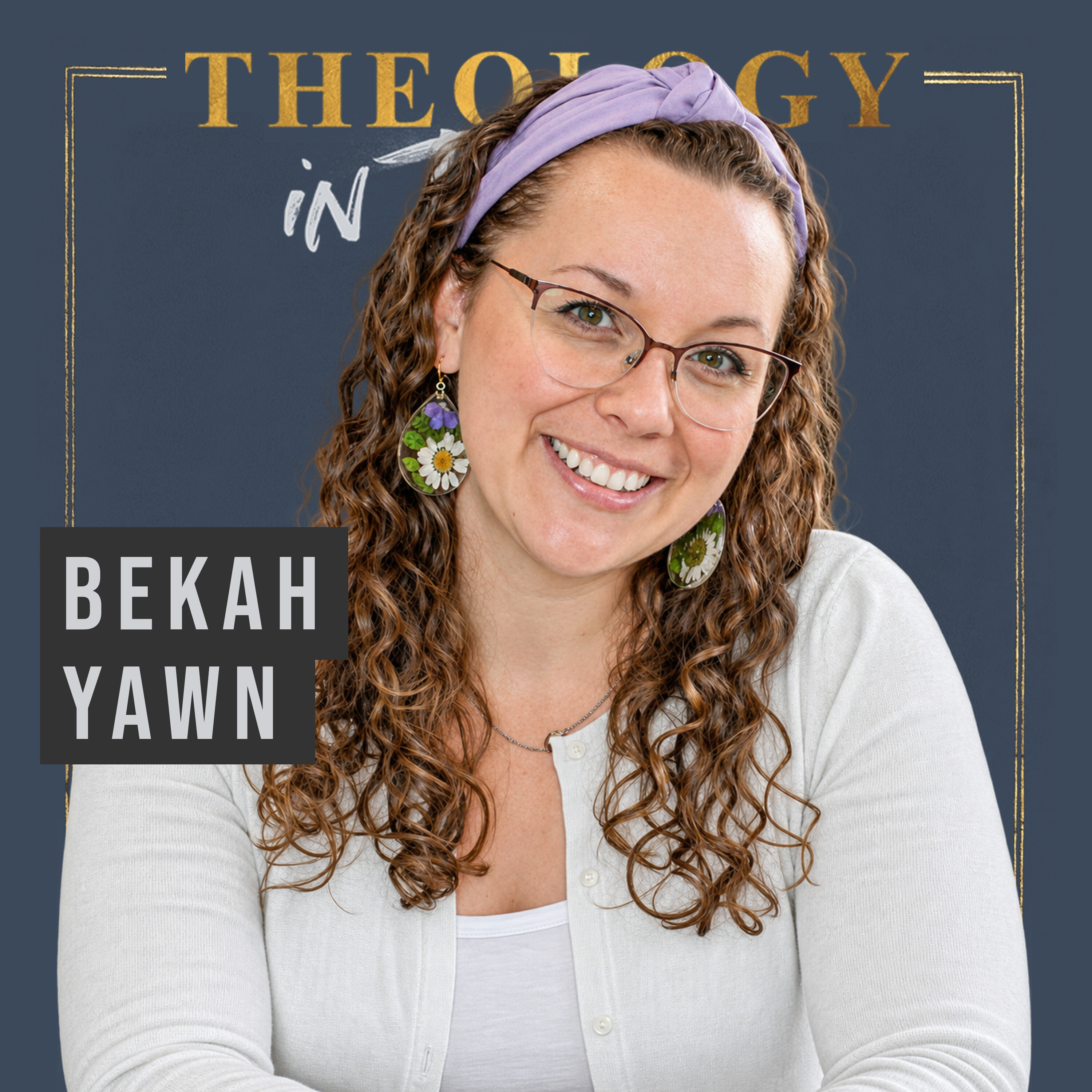
What happens when your church celebrates growing families while you’re grieving a miscarriage or struggling to conceive? How do you hold on to faith when the children you’ve prayed for haven’t come? Bekah Yawn joins Preston to discuss infertility, pregnancy loss, and how the church can better care for women and couples experiencing both. Drawing on her own experience of three pregnancy losses, Bekah shares the loneliness of grieving in a church culture that can make motherhood feel like the measure of a woman’s faithfulness. They explore infertility in the biblical storyline, the relationship between motherhood and Christian calling, and finding purpose when life looks different from what you hoped. They also discuss spiritual warfare, fertility awareness, and Bekah’s convictions about IVF—subjects on which Christians hold differing views. At the heart of the conversation is a practical question: How can we offer more than “I’m sorry” to families navigating infertility and miscarriage?
When Turning the Other Cheek Hurts (Luke 6:29-31) | Daily Devotional and Bible Study What does it mean to turn the other cheek? In Luke 6:29-31 Jesus describes defiance without violence, not staying within reach of someone who keeps swinging. In today's Bible study we look at the three examples Jesus gives right after "love your enemies": the slap on the cheek, the stolen cloak, and giving without demanding it back. We step into an honor and shame culture to see why a backhanded slap cost so much, why Luke pictures a mugging and not a lawsuit, and why handing over your tunic leaves the thief ashamed. If this verse has ever been handed to you to keep you quiet, this episode is for you. Join me on an immersive Bible Study Experience. Learn more at BibleStudyLive.org (https://biblestudylive.org/) Have a question about the series or a prayer request? Ad-free episodes and the full library of past series: Patreon (https://www.patreon.com/c/HearingJesus) Questions we answer today What does it
P.S. Calling All Pastors! As I step back to focus full-time on Seedbed and the Wake-Up Call, we're praying and looking for the next pastor for our Global Methodist Church in Gillett, Arkansas—about 100 on Sundays in a town of 500 with a parsonage, good nearby schools, and unbeatable hunting and fishing. If God's nudging you toward that transition or you know someone, email me at [email protected]. P.P.S. Ordinary Sowing, Extraordinary Seeds Tina’s Banding Story (https://givebutter.com/tinasbandingstory) is featured this week for our Ordinary Sowing, Extraordinary Seeds: Fall Harvest Campaign. I hope it invites you to sow a gift into the Wake-Up Call and banding. You can give here: https://givebutter.com/tinasbandingstory. And if you’d like to send my dad a birthday note and join his $500 Matching Challenge, just leave a message in the giving platform! - - - - - - - - - - - - - - - - - - - On Thanksgiving Day, JD reads Romans 16:17–19, "A Closing Zinger," in which Paul warns believers to w
Read: Psalm 51:1-10; John 1:12-13 (https://www.biblegateway.com/passage/?search=Psalm+51%3A1-10%3B+John+1%3A12-13) “Grandpa, remember last Thanksgiving when Grandma let me help her roast the turkey?” asked Lisa. Grandpa nodded. “Yes, it was delicious.” “We did all the work together. It smelled great, and when it was finished, the turkey was golden brown and juicy and the skin was crispy. Then Grandma asked you to slice it. And you said what you always say—‘The real proof is on the inside.’” “I remember,” said Grandpa with a smile. But Lisa seemed troubled. “Last night I dreamed that I roasted the turkey all by myself, like Grandma taught me. When I took it out of the oven, it was golden brown and the skin was crispy, so I asked you to slice it. And you said, ‘The real proof is on the inside.’” “In your dream, did I slice it?” Grandpa asked. “You started to, but inside the turkey was raw. Only the outside looked good.” “Well, honey, it was only a dream,” Grandpa said. “But my dream remi
In this week’s episode of Faith for Normal People, Pete and Jared talk with Micha Boyett about Advent, the spiritual practice of slowing down, and how learning to pay attention can transform the way people experience their faith. They explore how the pressure to be productive and the fear of wasting time can distract people from what matters most, why embodied practices like simple prayer and stillness can sustain faith, and how Mary’s experience of pregnancy and motherhood offers a more human way to approach the Christmas story. Together, they consider how Advent invites people to make room for longing, grief, and joy, let go of the need to have everything figured out, and discover the presence of God in the ordinary moments of life. Show Notes →https://thebiblefornormalpeople.com/episodes/episode-77-micha-boyett-an-unhurried-advent Watch this episode on YouTube → https://youtu.be/2uOoyBmAGD4
In this week’s episode of The Bible for Normal People, Pete talks with philosopher James K. A. Smith about contemplative Christianity and how the mystical tradition can offer a different way of approaching faith, uncertainty, and the presence of God. They explore how experiences of suffering, depression, and the unraveling of old beliefs can lead people away from the need for certainty and control, and toward silence, spiritual openness, and a deeper trust in God. Together, they consider how contemplative practices invite people to move beyond rigid either-or thinking, embrace the mystery of faith, and discover the deeper truth that God is love and that we are beloved. Show Notes → https://thebiblefornormalpeople.com/episodes/episode-343-pete-ruins-everything-with-james-ka-smith Watch this episode on YouTube → https://youtu.be/ZvgxNaubfH4
In this week’s episode of The Bible for Normal People, Pete and Jared talk with biblical scholar Leslie Baynes about C.S. Lewis and the ways his literary background, imagination, and theological commitments shaped how he interpreted the Bible. They explore Lewis’s approach to biblical scholarship, his tendency to harmonize the Gospels, and the tension between his acceptance of biblical contradictions and his reluctance to recognize differences between the accounts of Jesus. Together, they consider what Lewis got right and wrong about Scripture, why the Bible should be read through a lens of love for God and neighbor, and how his understanding of myth, story, and faith can challenge familiar assumptions about biblical authority and interpretation. Show Notes →https://thebiblefornormalpeople.com/episodes/episode-342-leslie-baynes-cs-lewiss-surprising-takes-on-the-bible Watch this episode on YouTube → https://youtu.be/aLx8KUCPiGA
Advertised prices should include all unavoidable charges.
Share your view, then see how readers voted. No sign-in required. This poll is shared across stories.
Do you agree or disagree?
Common Quandary
A Common Quandary to discuss
Another conversation to explore, separate from this news story.
Someone holds a grocery line spot while their partner fills the cart. Is that cutting?
A shopper with one item stands ahead of you in a long checkout line. Just before reaching the register, their partner arrives with a cart packed to the top and joins them. They insist they were shopping together all along.
Can one person reserve a place in line for an unknown amount of work?